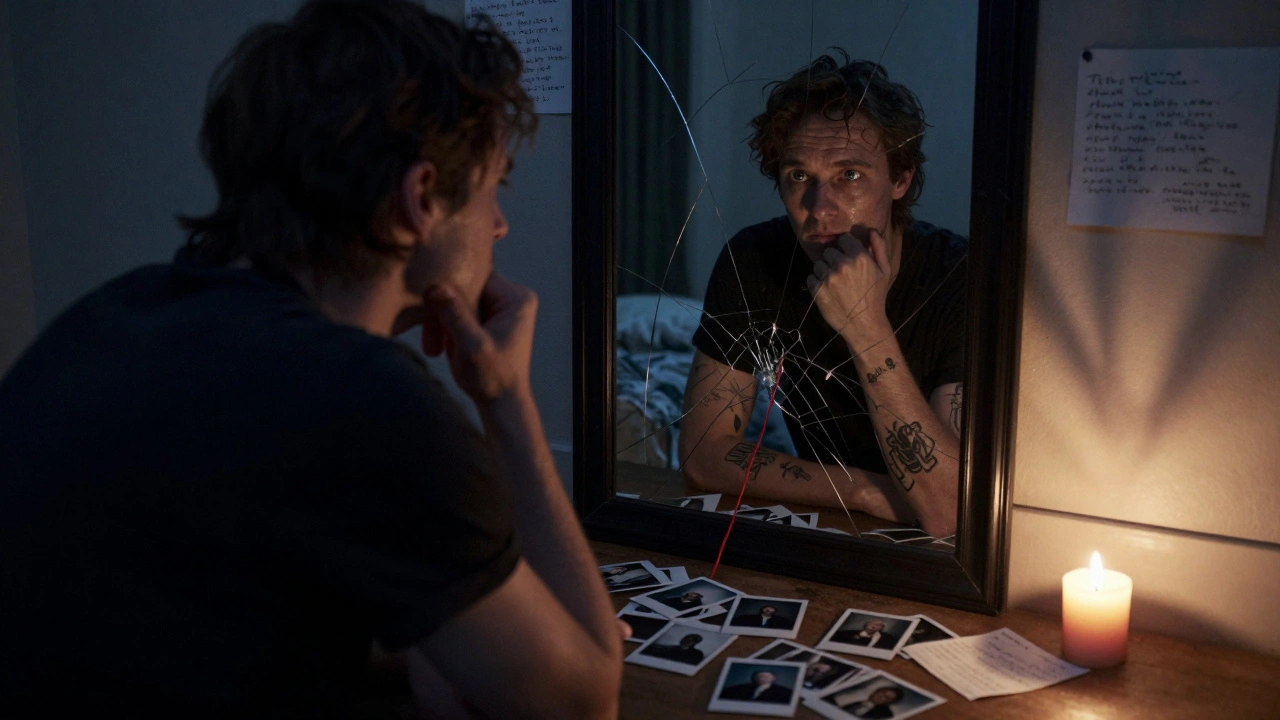
Have you ever watched a movie and later realized the main character lied to you-not out of malice, but because they genuinely believed their own version of events? That’s not a plot twist. That’s how human memory works. And filmmakers have been using it to mess with our heads for decades.
What Is an Unreliable Narrator?
An unreliable narrator isn’t just someone who lies. It’s someone whose version of reality is shaped by trauma, bias, mental illness, or faulty memory. The audience thinks they’re seeing the truth. Then, slowly, cracks appear. A detail doesn’t add up. A face changes in a flashback. A key event is contradicted later. That’s when you realize: we’ve been inside someone’s broken mind the whole time.
Think of unreliable narration as a filter. Not all filters are dishonest. Some are just broken. A character might not remember the color of a car because they were too scared to look. Or they might rewrite a betrayal as self-defense because their brain won’t let them face guilt. The film doesn’t show you what happened. It shows you what the character thinks happened. And that’s not the same thing.
How Memory Distorts Reality on Screen
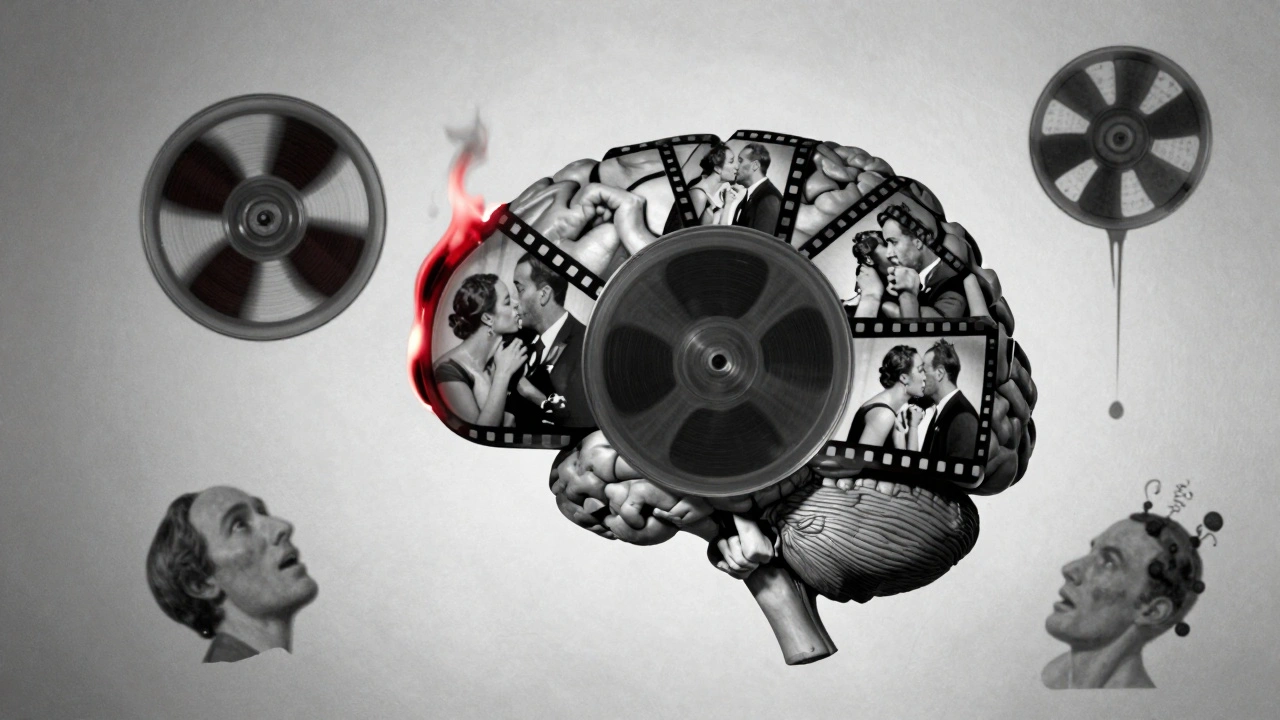
Human memory isn’t a video recorder. It’s a reconstruction. Every time you recall something, your brain edits it. It fills gaps. It drops details that don’t fit your self-image. It amplifies emotions. Neuroscience confirms this: the hippocampus doesn’t store memories like files. It rebuilds them each time, using fragments and assumptions.
Films like Memento (2000) turn this into a structure. Leonard Shelby’s short-term memory loss forces him to rely on tattoos and notes. But the film doesn’t just show his confusion-it shows how he manipulates his own system. He writes down facts, but he chooses which ones to believe. The audience learns the truth not from what’s shown, but from what’s missing.
In The Sixth Sense (1999), the entire story is told from Dr. Malcolm’s perspective. We assume he’s alive. We don’t question his interactions, his movements, his reflection in mirrors. Only at the end do we realize: we never saw him as he truly was. We saw him as he believed himself to be. The film doesn’t trick us with a jump scare. It tricks us with memory.
Why We Believe Broken Stories
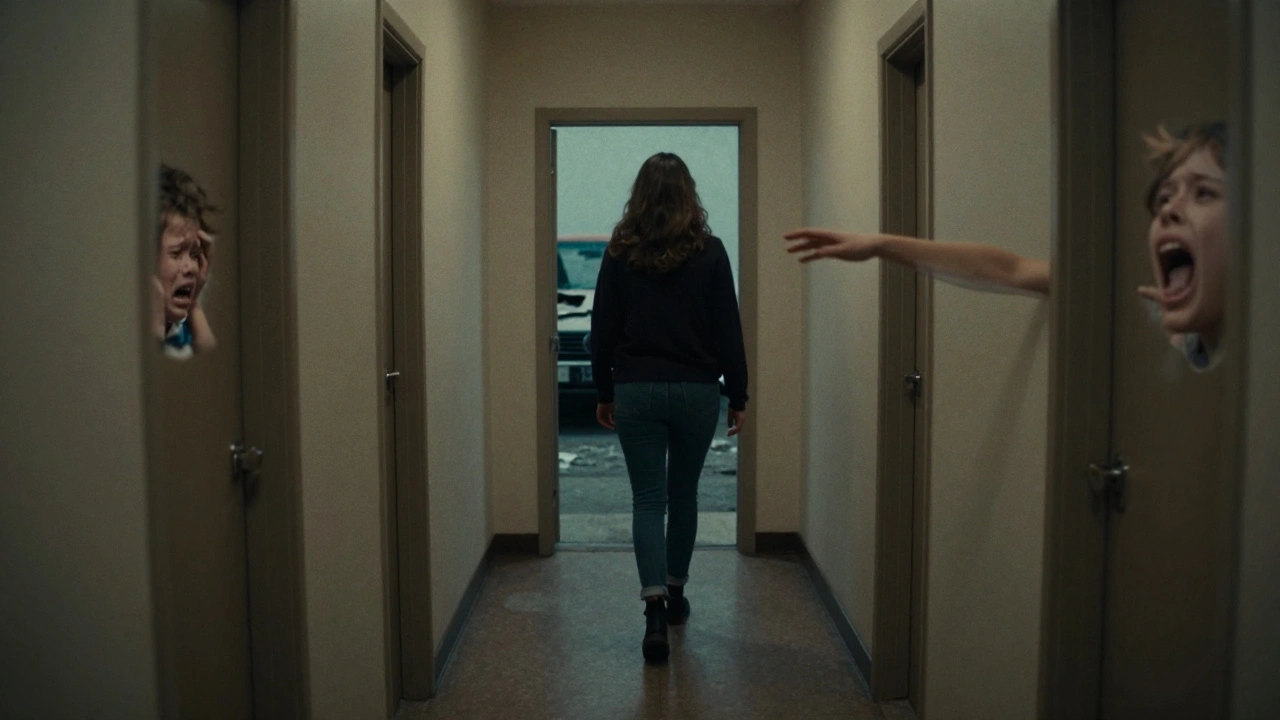
Why do we let unreliable narrators fool us? Because we’re wired to trust. We assume characters are honest unless proven otherwise. We fill in gaps with our own experiences. We want closure. We want a hero. We want a clear villain. And filmmakers exploit that.
Take Fight Club (1999). The narrator doesn’t lie-he’s unaware he’s lying. His dissociative identity disorder isn’t labeled until the final act. Before that, we see him as a victim of consumerism. We cheer when he destroys things. We don’t notice the inconsistencies: the same man appears in different rooms, the same woman reacts differently to the same man. We don’t question because the story feels emotionally true. And that’s the point.
It’s not about deception. It’s about identity. When a character reconstructs their past to survive, we see ourselves. Who hasn’t rewritten a painful memory to make it bearable? Who hasn’t convinced themselves they were the victim, even when they weren’t?
Techniques That Sell the Lie
Filmmakers use specific tools to make unreliable narration feel real:
- Visual repetition with variation: A character appears in different clothes or settings across flashbacks. The audience assumes continuity. The film exploits that.
- Sound design shifts: Music changes tone when a memory is recalled. A lullaby becomes distorted. A scream fades into silence. The emotion lingers, even if the event didn’t.
- Camera perspective: First-person shots. Blurry edges. Out-of-focus backgrounds. These aren’t just stylistic choices-they mimic how trauma affects perception.
- Contradictory dialogue: A character says, “I didn’t mean to hurt her,” while the scene shows them pushing her. The audience notices the mismatch. But they blame the editing, not the narrator.
These techniques don’t shout, “This is fake!” They whisper. They nudge. They let you convince yourself.
Real-World Parallels
This isn’t just cinema. It’s psychology. Studies from the University of California, Berkeley show that 70% of eyewitnesses change their story after being exposed to misleading information-even when told the original version was incorrect. Our brains don’t resist false memories. They embrace them if they fit a narrative.
Think about real-life cases: wrongful convictions based on faulty recollection. Confessions extracted under stress. People who remember abuse that never happened because therapy suggested it. These aren’t rare. They’re normal. Films like Shutter Island (2010) or Gone Girl (2014) don’t invent unreliable narration. They reflect it.
When Gone Girl reveals Amy’s diary entries were forged, we don’t just feel betrayed. We feel complicit. We believed her. We rooted for her. We didn’t question the tone, the pacing, the perfect phrasing-because it sounded like truth.
Why This Matters
Unreliable narration isn’t a gimmick. It’s a mirror. It forces us to ask: How much of what I believe is real? How much is just the story I tell myself to sleep at night?
When a film makes us question memory, it’s not playing tricks. It’s asking us to look inward. Are we the hero of our own story? Or are we the unreliable narrator, editing our past to stay sane?
That’s why these stories stick. Not because they’re clever. But because they’re true.
Can a film have multiple unreliable narrators?
Yes, and it’s often used to show how truth becomes more fractured with each perspective. Films like Rashomon (1950) pioneered this by showing the same event through four conflicting accounts. Each narrator believes their version is true. The film doesn’t reveal the real event-it shows how memory, ego, and fear shape storytelling. Modern films like The Lighthouse (2019) use this technique to blur the line between sanity and delusion.
Is unreliable narration always intentional by the filmmaker?
Not always. Sometimes, a character’s unreliability emerges during editing or performance. A director might shoot a scene assuming the audience will take the narrator at face value, only to realize later that inconsistencies create a deeper layer. In Prisoners (2013), Hugh Jackman’s character becomes increasingly erratic, and the audience isn’t sure if he’s hiding something or losing his mind. That ambiguity was partly discovered in post-production, not planned from the start.
Do all unreliable narrators have mental illness?
No. Mental illness is one reason, but not the only one. Some narrators are biased, self-deceptive, or protecting someone else. In The Great Gatsby (2013), Nick Carraway calls himself “one of the few honest people” he’s ever known-but he romanticizes Gatsby, ignores his own complicity in the chaos, and downplays his privilege. His unreliability comes from class loyalty and nostalgia, not psychosis.
Can a documentary have an unreliable narrator?
Absolutely. Documentaries rely on interviews, archives, and narration. But interviewees lie, forget, or reshape events to fit their image. Films like The Thin Blue Line (1988) use this intentionally, showing conflicting testimonies to prove how unreliable memory is-even in legal settings. The film doesn’t say who’s guilty. It shows how truth is constructed, not discovered.
Why do audiences enjoy being fooled by unreliable narrators?
Because it feels like solving a puzzle. We like to think we’re smarter than the story. When we catch the inconsistency, we feel clever. But the deeper appeal is emotional. These stories make us question our own memories. They remind us that truth isn’t objective-it’s personal. That’s why films like Black Swan or Shutter Island leave us unsettled long after the credits roll.






Comments(7)