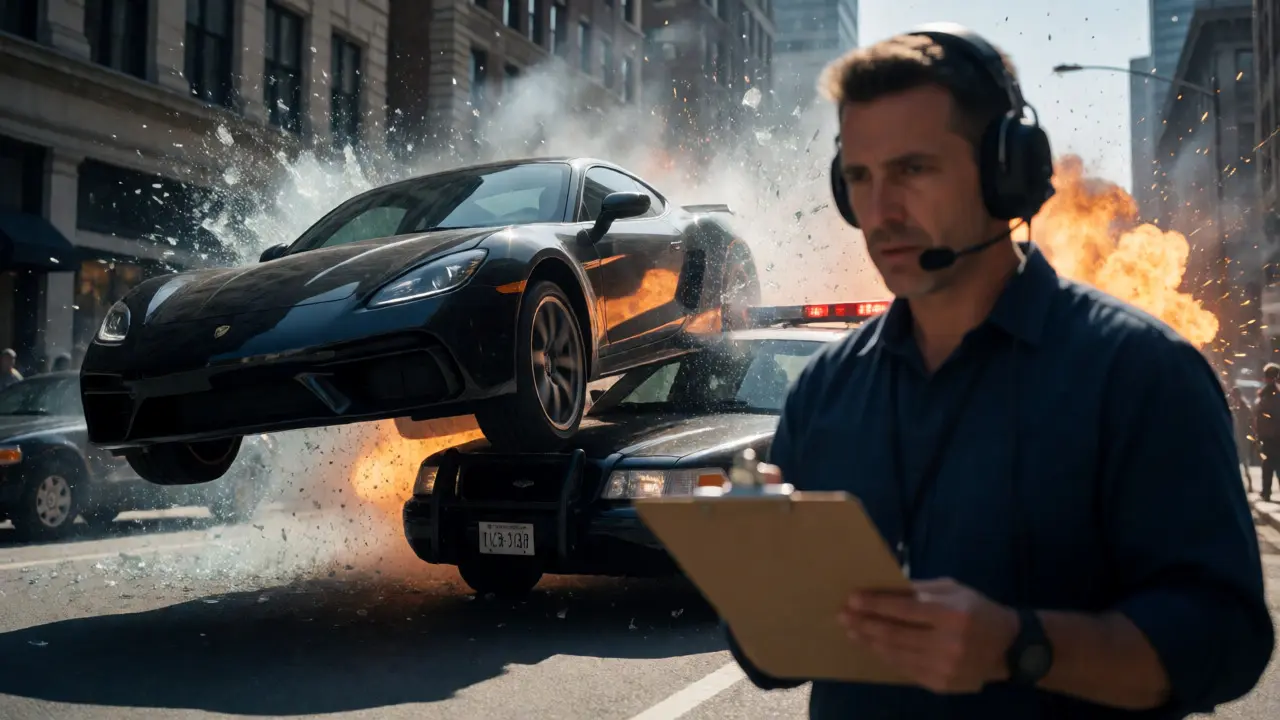
Think about the last time you watched a movie where the hero jumped off a burning building or crashed a car through a storefront. Did your heart stop? Did you wonder if they actually did it? That moment of tension isn't just entertainment; it's a legal minefield. When a production decides to push physical limits, Stunt Safety is no longer just a checklist-it becomes the primary shield against massive financial ruin and criminal negligence charges.
You might think big studios have bottomless pockets to cover accidents. The reality is sharper. Insurance companies scrutinize every frame. If a stunt goes wrong because someone cut a corner on protocol, the liability doesn't just hit the actor. It hits the producer, the director, and sometimes the studio executives personally. Understanding how High-Risk Film Scenes are managed legally and operationally separates professional productions from amateur disasters.
The Core Triangle of Stunt Liability
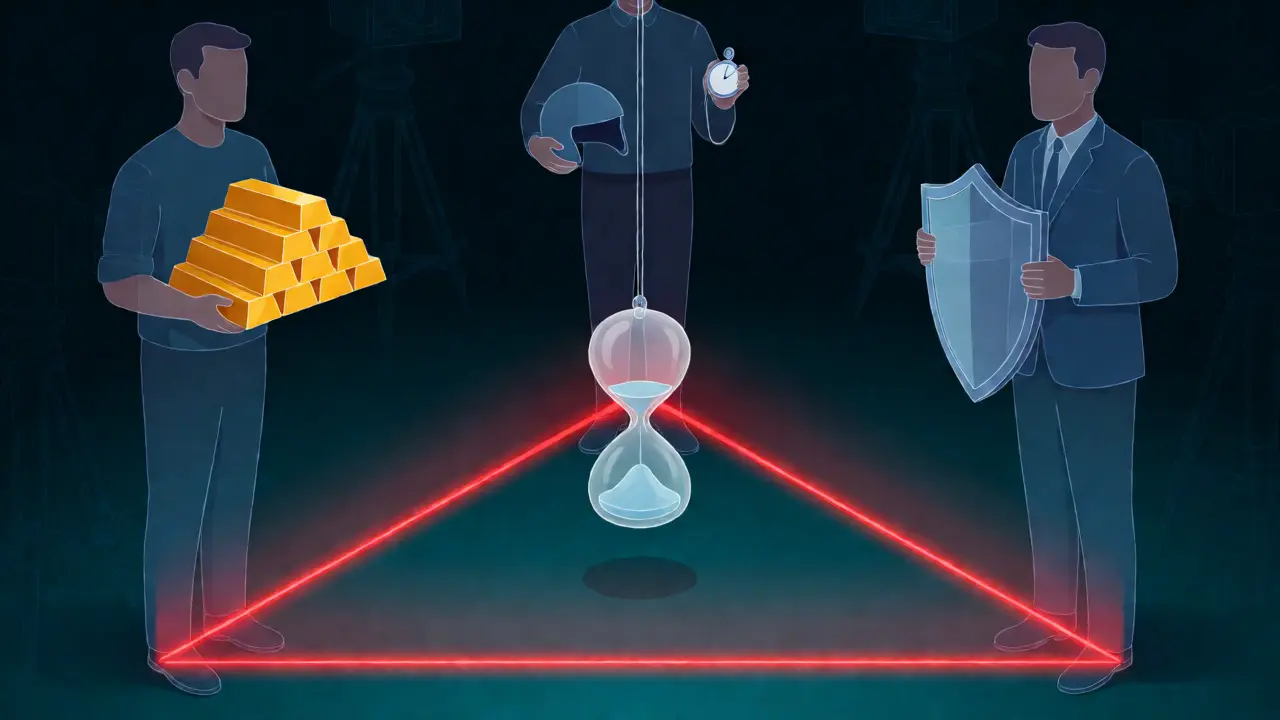
Liability in stunts isn't a single point of failure. It's a triangle involving three distinct entities: the Production Company, the Stunt Coordinator, and the Insurance Carrier. Each has different responsibilities, and when things break, fingers point everywhere.
The Production Company holds the ultimate financial risk. They hire the crew and own the footage. But here’s the catch: they rarely have the technical expertise to judge if a jump is safe. That’s where the Stunt Coordinator comes in. This person is the gatekeeper. If a coordinator says "no," and the director pushes anyway, the liability shifts dramatically. Courts often look at who had the final authority on safety decisions. If a director overrules a certified professional, the production company usually eats the loss.
Then there’s the Insurance Carrier. They don’t care about your artistic vision. They care about actuarial tables. Before a camera rolls, insurers require a detailed breakdown of every risky action. If you deviate from that plan-even slightly-you might void your coverage. Imagine doing a car flip with a different type of harness than approved. If an injury occurs, the insurer can deny the claim, leaving the production liable for hundreds of thousands in medical bills and lost wages.
Who Actually Pays When Things Go Wrong?
Let’s get specific. Who pays the hospital bill? In most jurisdictions, workers' compensation covers employees. But actors are often classified as independent contractors, especially in smaller films. This creates a gray area. If an actor is injured during a stunt, do they sue the production for negligence? Or does their personal accident policy kick in?
Most major unions, like SAG-AFTRA, mandate that productions provide specific safety protocols. If these aren't followed, the union can step in. But for non-union projects, it’s wild west territory. A common mistake is assuming that a waiver signed by the actor protects the producer. It doesn’t. You cannot waive liability for gross negligence. If the rigging was faulty, or if the stunt driver was speeding beyond the agreed limit, that waiver is worthless.
| Incident Type | Primary Liable Party | Insurance Coverage | Legal Defense Cost |
|---|---|---|---|
| Faulty Rigging Equipment | Production Company / Vendor | General Liability | Covered (usually) |
| Director Overrules Safety Protocol | Production Company | Errors & Omissions (E&O) | Not Covered |
| Actor Refuses Safety Gear | Shared Liability | Workers' Comp / Personal | Disputed |
| Unapproved Stunt Variation | Stunt Coordinator / Producer | Voided Policy | Out-of-Pocket |
The Role of the Stunt Coordinator in Legal Defense
A qualified Stunt Coordinator is more than a choreographer; they are a legal witness. Their documentation is your best defense in court. Every rehearsal, every equipment check, and every safety briefing needs to be logged. Why? Because memory fades, but paperwork doesn’t.
If an accident happens, lawyers will ask: "Was this stunt rehearsed?" "Did the performer wear the correct protective gear?" "Was the environment cleared?" The coordinator’s log answers these questions. Without it, you’re relying on testimony, which is shaky. With it, you have evidence of due diligence.
This role also involves managing the chain of command. In high-risk scenes, confusion kills. If a pyrotechnician triggers an explosion while a stuntman is still in the blast zone, who gave the order? Was it the coordinator? The second AD? The director? Clear communication channels defined in pre-production prevent these errors. And when they happen, those definitions determine who gets sued.
Insurance Nuances: What Policies Actually Cover
Standard production insurance isn't enough for high-risk work. You need specific riders. Let’s break down the key types:
- Cast Insurance: Covers the cost of reshoots if a lead actor is injured. Note: This rarely covers the medical bills themselves, just the production delay costs.
- General Liability: Protects against third-party injuries. If a stunt car crashes into a parked civilian vehicle, this covers the damage.
- Errors & Omissions (E&O): Essential for distribution. If a lawsuit claims copyright infringement or defamation arising from the content, E&O helps. But some policies exclude intentional acts, so read the fine print.
- Specialty Stunt Coverage: For extreme risks like underwater dives, aerial work, or animal handling. These require separate underwriting and often higher deductibles.
One critical detail many producers miss: the definition of "accidental." If a stunt is designed to fail-like a controlled crash-and the car flips unexpectedly, is that an accident? Insurers argue yes. Productions argue it’s part of the design. Disputes like this can tie up funds for years. Clarifying these definitions before signing the policy saves headaches later.
Pre-Production Risk Assessment: The Practical Checklist
You can’t manage what you don’t measure. Before shooting begins, conduct a thorough risk assessment. This isn’t just a formality; it’s a survival tool.
- Identify Hazards: List every potential danger. Fire, height, water, speed, animals, weapons.
- Evaluate Severity: How bad could it get? Minor bruise vs. permanent disability.
- Determine Likelihood: Has this been done before? Is the team experienced?
- Implement Controls: Can we remove the hazard? Substitute it? Engineer a safer way? Use PPE (Personal Protective Equipment)?
- Document Everything: Sign-offs from all department heads.
For example, if you’re filming a motorcycle chase, the hazard is speed. The control might be using a low-loader truck for the background plates instead of actual riding at 60mph. If you must ride, the control is mandatory leather suits and helmets. Documenting that you chose the safest viable option shows good faith to insurers and courts.
Case Study: The Cost of Cutting Corners
Remember the Twilight Zone accident in 1983? Three people died, including two children, when a helicopter crashed during filming. The investigation revealed that the pilot wasn’t briefed on the special effects being used. The legal fallout was massive. Settlements reached millions, and it changed how Hollywood handles aviation stunts forever.
Fast forward to recent years. Smaller indie films have faced lawsuits because they skipped hiring a dedicated safety officer to save $500 a day. When a stunt double broke an ankle due to improper mat placement, the production faced six-figure medical and legal costs. Saving money upfront often costs ten times more when things go south.
The lesson? Budget for safety as a fixed line item, not a variable expense. You wouldn’t skip buying cameras because you’re tight on cash. Don’t skip safety personnel either.
Emerging Risks: Drones and Digital Doubles
Technology changes the landscape. Drone operations introduce new liabilities. Who owns the drone? Is the pilot licensed? If a drone falls on a bystander, general liability might not cover it if the drone wasn’t registered properly with the FAA.
Similarly, digital doubles reduce physical risk but increase contractual complexity. If an actor’s face is scanned and used in a dangerous virtual scene, do they get stunt pay? Does their likeness usage extend to marketing materials showing the fake stunt? Contracts must address these nuances to avoid post-production disputes.
Final Thoughts: Building a Culture of Safety
Safety isn’t just about avoiding lawsuits. It’s about respect. Respect for the performers putting their bodies on the line, and respect for the audience expecting authenticity. When crews feel safe, they perform better. Creativity thrives when fear doesn’t dominate the set.
Start small. Enforce strict rules early. Make sure everyone knows that stopping a take for safety concerns is encouraged, not punished. Build a reputation for professionalism. Insurers offer better rates to productions with clean safety records. Actors prefer working with reputable teams. Ultimately, managing stunt liability well means fewer surprises and more finished films.
Does a signed waiver protect the production from all stunt injuries?
No. Waivers generally protect against inherent risks of the activity, but they do not cover negligence. If the production failed to provide proper equipment, training, or supervision, the waiver is likely invalid in court.
Who is responsible if a stunt coordinator makes a mistake?
Typically, the production company bears vicarious liability for its employees, including the stunt coordinator. However, if the coordinator acted outside their scope of employment or violated explicit instructions, they may share liability. Professional indemnity clauses in contracts help clarify this.
Are actors covered by workers' compensation for stunt injuries?
It depends on their classification. Union actors are typically employees covered by workers' comp. Non-union actors classified as independent contractors may not be covered unless the production purchases specific accident insurance for them. Misclassification can lead to significant legal penalties.
What is the most common cause of stunt-related lawsuits?
Inadequate preparation and lack of communication. Many incidents stem from unbriefed participants, malfunctioning equipment due to poor maintenance checks, or deviations from the rehearsed sequence without notifying safety personnel.
Do I need special insurance for using drones in stunts?
Yes. Standard general liability policies often exclude aircraft. You need specific drone liability insurance that covers bodily injury and property damage caused by unmanned aerial vehicles, ensuring compliance with local aviation regulations.



Comments(7)