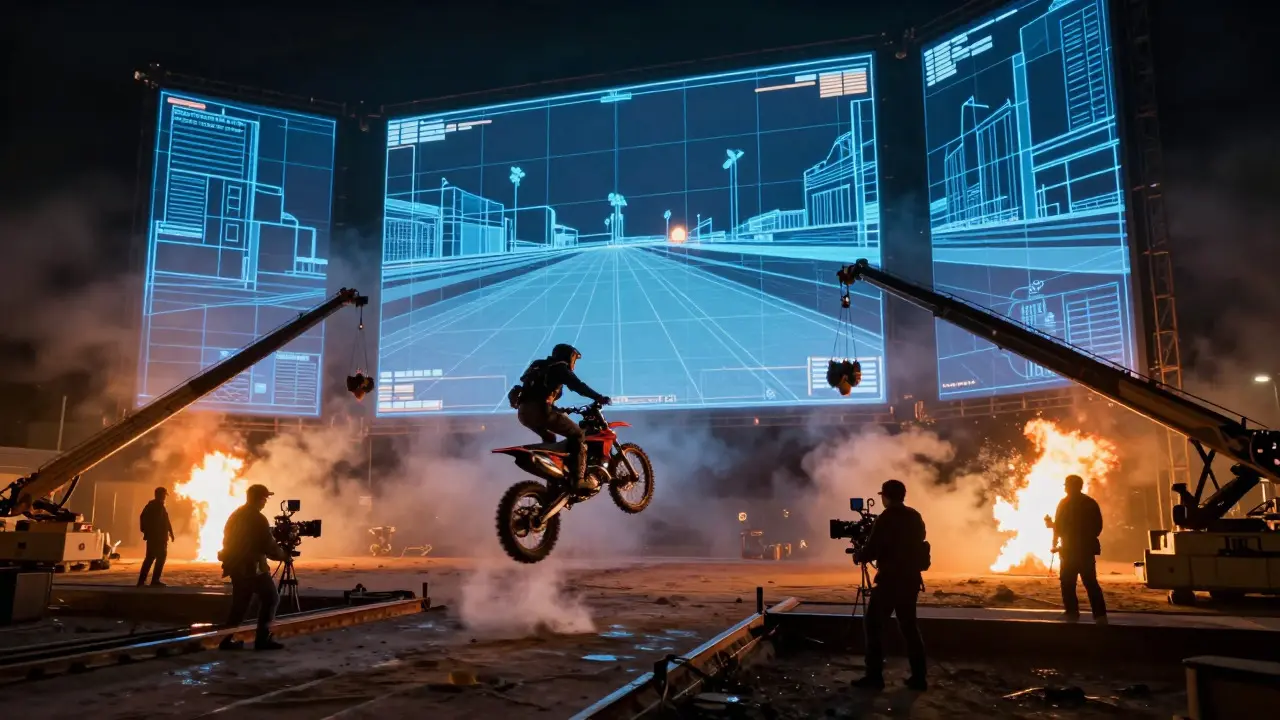
Ever watched a car chase where the driver looks terrified but the camera stays perfectly stable? That’s not luck. It’s the result of a tight handshake between stunt previz is a pre-visualization technique that simulates stunt sequences using 3D animation to plan camera angles, timing, and safety before physical filming begins. When this process merges with VFX collaboration is the ongoing creative and technical partnership between practical effects teams and visual effects artists to ensure seamless integration of real and digital elements, you get action scenes that feel both visceral and impossible.
The problem in modern action filmmaking isn’t just making things look cool. It’s making them believable while keeping actors safe and budgets intact. If the stunts team plans a jump over a gap without knowing exactly where the VFX team will extend the background, you end up with mismatched lighting or physics that don’t hold up in post-production. This article breaks down how these two worlds collide, why it matters more than ever, and how you can manage the workflow effectively whether you’re a director, producer, or coordinator.
Why Stunt Previz Changed the Game
Before high-end simulation tools became affordable, stunt planning relied on storyboards and verbal descriptions. That worked fine for simple falls or punches. But once you add wirework, vehicle crashes, or large-scale explosions, ambiguity becomes dangerous. Stunt previz allows the stunt coordinator to test the sequence virtually. They can adjust the speed of a motorcycle jump, change the angle of a falling platform, or verify if a specific camera move captures the impact without getting too close for comfort.
This isn’t just about aesthetics. It’s about risk management. By running simulations, the team can identify potential hazards early. For instance, if a previz shows that debris from an explosion will fly toward the camera operator’s position, they can shift the shot slightly before building the set. This saves money because you aren’t rebuilding sets or reshooting due to safety concerns. It also builds trust among the crew. When everyone sees the same digital model, there are fewer arguments about what “fast” means or how high a jump should be.
The VFX Side: More Than Just Adding Explosions
Many people think VFX only kicks in after the cameras stop rolling. In reality, the best VFX departments start working during the previz phase. The goal is to define the “digital extension” of the practical set. If the stunt team performs a fight in a narrow alley, the VFX team needs to know how much of that alley is real and how much will be added digitally. This distinction affects everything from lens choice to lighting design.
VFX supervisors often attend previz reviews to flag issues. Maybe the previz shows a character running through a wall that doesn’t exist in the real world. Or perhaps the lighting in the simulation doesn’t match the time of day planned for the shoot. Catching these discrepancies early prevents costly fixes later. It also ensures that the final composite feels unified. The audience shouldn’t be able to tell where the practical element ends and the digital one begins. That seamlessness requires constant communication between the two camps.
Key Roles in the Collaboration Pipeline
Successful integration depends on clear roles. Here’s who does what in a typical high-end action production:
- Stunt Coordinator: Designs the physical movements and safety protocols. They provide the choreography data to the previz artists.
- Previz Artist: Creates the 3D simulation based on the coordinator’s notes. They handle rough geometry and basic motion paths.
- VFX Supervisor: Oversees the visual style and technical feasibility. They ensure the previz aligns with the final look and budget constraints.
- Director of Photography (DP): Defines the camera language. They use the previz to plan lens choices, movement, and exposure settings.
- Production Designer: Ensures the set design matches the previz environment. They might need to build partial sets if the rest will be digital.
These roles must overlap. If the DP changes the camera angle late in the game, the previz artist has to re-simulate the sequence. If the production designer realizes a wall is too thin to support a stunt, the VFX team might have to reinforce it digitally. This iterative loop is where the magic happens, but it also creates bottlenecks if communication breaks down.
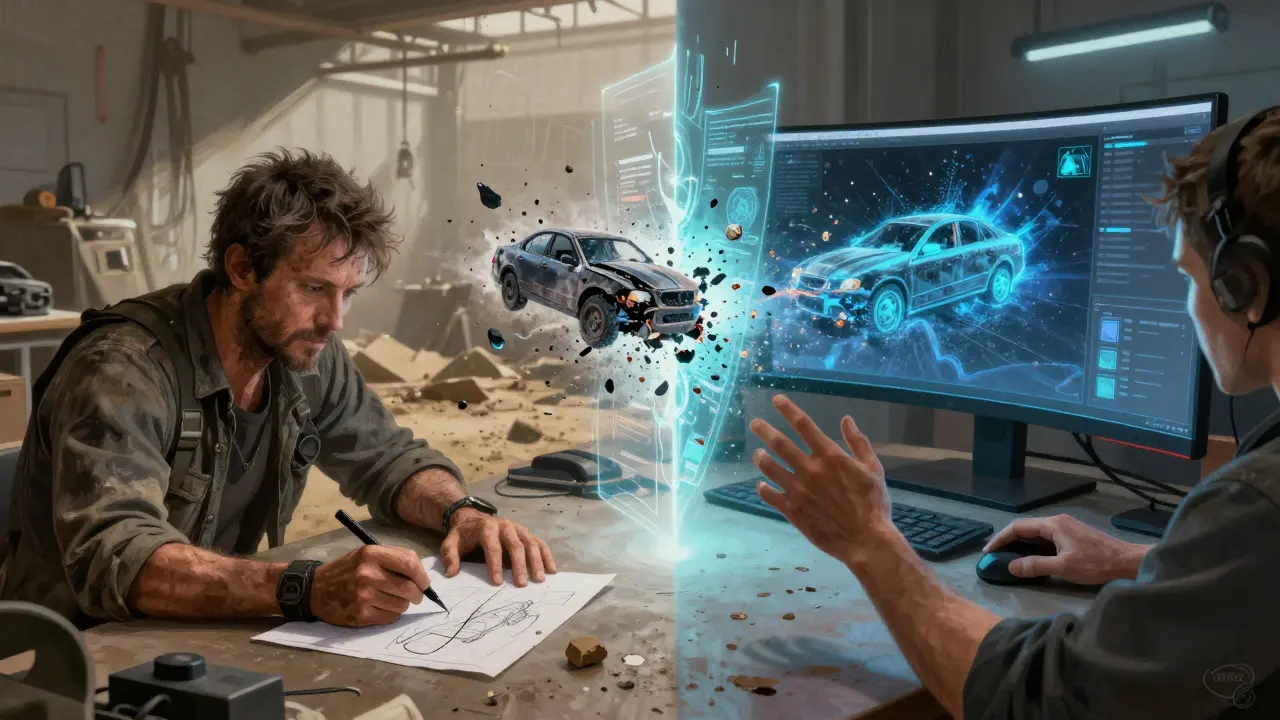
Workflow: From Concept to Final Frame
The process generally follows a structured timeline, though it varies by studio. Understanding the stages helps you anticipate where delays might occur.
- Script Breakdown: The director and stunt coordinator identify which scenes require previz. Not every scene needs it. Simple dialogue or static shots can skip this step to save resources.
- Rough Previz: Artists create a low-poly version of the environment and characters. Focus is on blocking and timing, not detail. This stage usually takes 1-2 weeks per complex sequence.
- Camera Lock: The director and DP review the rough previz and finalize camera moves. Once locked, significant changes become expensive.
- Technical Previz: Higher fidelity models are added. Lighting rigs, vehicle dynamics, and particle effects are simulated. This helps the VFX team plan their asset creation.
- On-Set Integration: The previz footage is played back on monitors during the shoot. Actors and stunts perform against markers or green screens that correspond to the previz positions.
- Post-Production Match: VFX artists compare the live-action footage to the previz. They adjust digital elements to match the actual performance, ensuring consistency.
A common pitfall is treating previz as a finished product. It’s a tool for planning, not the final render. If the team gets too attached to the previz look, they might force the live-action shoot to mimic it, even when the real-world conditions differ. Flexibility is key.
Common Pitfalls and How to Avoid Them
Even with good intentions, collaborations can fail. Here are three frequent issues and practical solutions.
1. Mismatched Scale and Physics
If the previz uses simplified physics engines, the results might look unrealistic compared to real-world gravity. For example, a car flip in previz might seem smooth, but in reality, the suspension behaves differently. To avoid this, use physics-based simulation software that accounts for mass, friction, and air resistance. Test with real-world data whenever possible.
2. Communication Silos
When the stunt team and VFX team work in separate offices or time zones, information gets lost. Use shared project management tools where both teams can comment on the same files. Hold weekly sync meetings where representatives from both sides discuss progress and blockers. Visual aids, like annotated screenshots of the previz, help clarify points faster than text alone.
3. Budget Overruns from Scope Creep
Directors often want to tweak the sequence after seeing the previz. While creative freedom is important, every change adds cost. Establish a “change freeze” date. After this point, any modifications require approval from the producer and a revised budget estimate. This keeps the project on track and prevents last-minute surprises.
Tools and Technologies Driving the Process
The right software makes or breaks the workflow. Here’s a comparison of popular tools used in the industry:
| Tool | Primary Use | Strengths | Limitations |
|---|---|---|---|
| Unreal Engine | Real-time previz and virtual production | Instant feedback, high-fidelity graphics, wide adoption | Steep learning curve, requires powerful hardware |
| Houdini | Simulation and procedural generation | Excellent for fluids, destruction, and complex physics | Complex interface, slower iteration times |
| Maya | Animation and modeling | Industry standard for character animation, robust rigging | Less efficient for real-time rendering |
| Nuke | Compositing and finishing | Powerful node-based editing, precise control over layers | Not suitable for previz, focused on post-production |
Most productions use a combination of these tools. Unreal Engine is increasingly favored for its ability to render photorealistic environments in real-time, allowing directors to make decisions on the spot. Houdini remains the go-to for heavy simulation work like car crashes or building collapses. Maya handles the character animations that drive the stunt performers’ movements. Nuke ties it all together in the final composite.
Case Study: The Importance of Timing
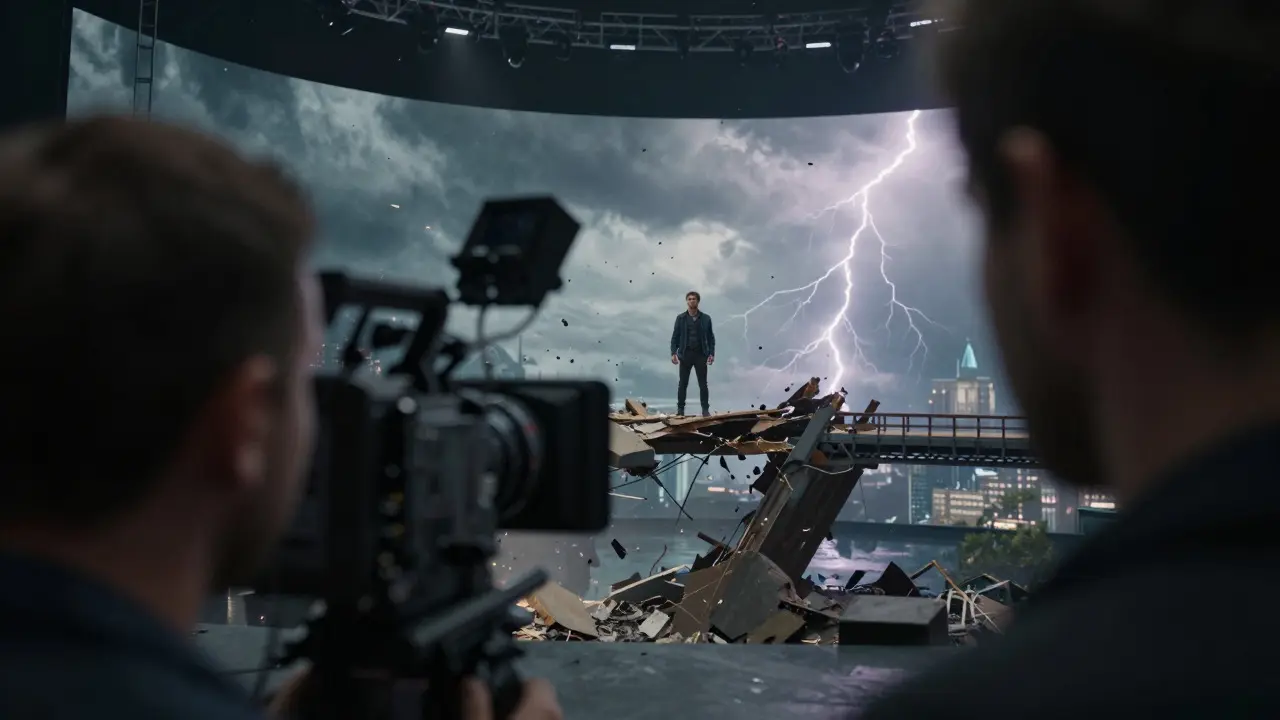
Consider a recent action film where a hero had to leap across a collapsing bridge. The stunt coordinator wanted a dramatic slow-motion effect. The VFX team needed to know exactly how long the jump would take to generate the appropriate motion blur and particle effects. By syncing the previz timing with the VFX schedule, they ensured that the digital debris matched the real-world fall speed. Without this alignment, the debris would have appeared to float or lag behind the actor, breaking immersion. This level of detail is invisible to the audience but critical to the illusion.
Future Trends in Stunt-VFX Integration
As technology advances, the line between previz and final output is blurring. Virtual production volumes, like those used in The Mandalorian, allow directors to see the final VFX-enhanced environment during the shoot. This reduces the guesswork entirely. Actors can react to digital backgrounds in real-time, improving performance quality. Additionally, AI-driven tools are starting to automate parts of the previz process, suggesting optimal camera angles based on previous successful sequences. While human creativity remains essential, these tools streamline the workflow and reduce manual labor.
The future isn’t about replacing humans with machines. It’s about giving humans better tools to collaborate. Whether you’re working on a blockbuster or an independent film, the principles remain the same: clear communication, shared vision, and respect for each discipline’s expertise. When stunts and VFX work together, the result is cinema that feels larger than life.
What is the difference between previz and animatic?
An animatic is typically a sequence of still images or rough sketches edited together to show pacing and story flow. Previz involves 3D animation with simulated camera movements and physics. Previz is more detailed and interactive, allowing for technical planning, while animatics are primarily for narrative storytelling.
How much does stunt previz cost?
Costs vary widely based on complexity. A simple 30-second previz might cost $5,000-$10,000. A complex 2-minute sequence with vehicles and destruction can range from $50,000 to $150,000. These costs are often offset by savings in set construction and reshoots.
Do all action films use previz?
Not necessarily. Low-budget films might rely on storyboards and experienced stunt coordinators. However, most mid-to-high-budget action films use previz for at least the most complex sequences. The decision depends on the scale of the stunts and the desired visual effects integration.
Who leads the previz team?
The previz supervisor or lead previz artist typically manages the team. They report directly to the director and VFX supervisor. Their role is to translate the director’s vision into a technical plan that the rest of the crew can execute.
Can previz be used for non-action scenes?
Yes. While most common in action films, previz is also used for complex dialogue scenes with moving cameras, musical numbers, or any sequence requiring precise timing and spatial awareness. It helps visualize the flow of the scene before committing to physical setups.


Comments(5)