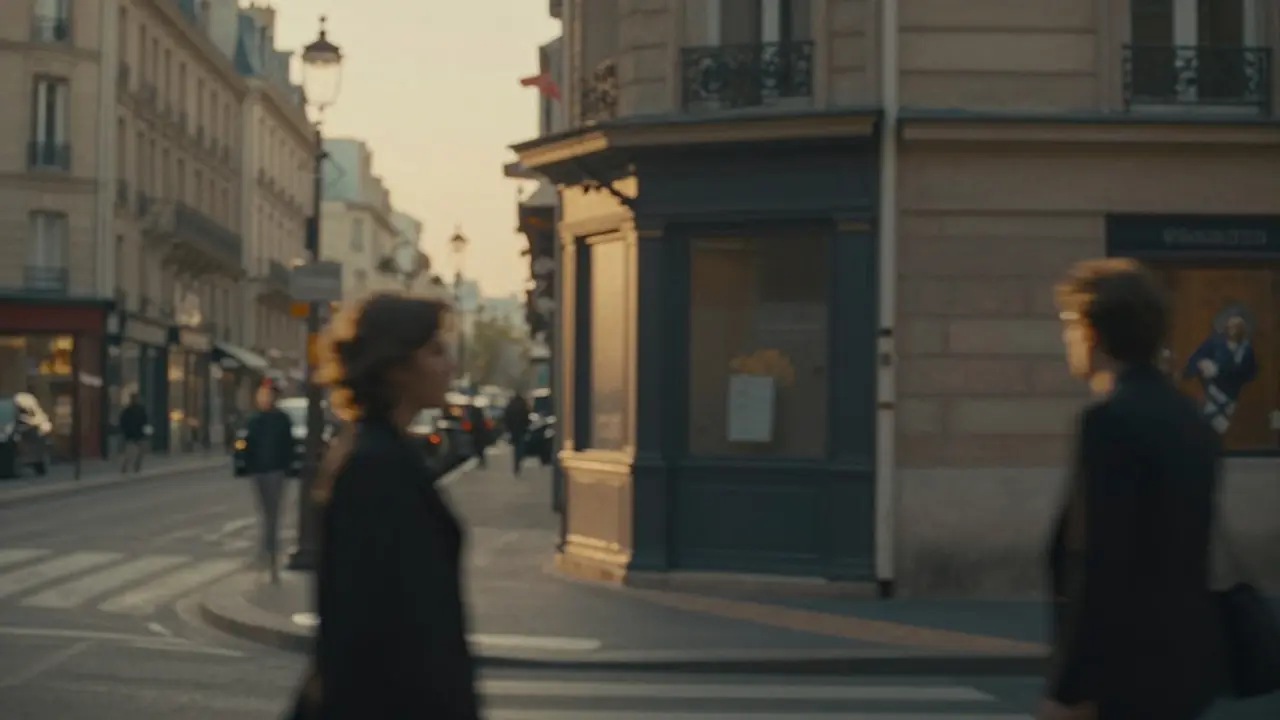
Ever noticed how a movie’s color palette or camera angle suddenly feels like you’re looking at a painting? That’s not an accident. Filmmakers have long borrowed from international art movements is a series of historical periods defined by distinct visual styles and philosophical approaches to creativity. From the soft light of Parisian cafés to the jagged shadows of Berlin streets, these artistic shifts didn’t just change how we paint; they changed how we watch movies.
When you understand the link between canvas and screen, films stop being just entertainment. They become visual arguments. This guide breaks down how major global art trends shaped cinematic language, giving you the tools to spot these influences in both classic and contemporary films.
Key Takeaways
- Impressionism introduced natural lighting and fragmented time to early cinema, moving away from theatrical staging.
- Expressionism created the visual grammar for horror and noir through distorted sets and high-contrast lighting.
- Surrealism freed the editing room, allowing for non-linear narratives and dreamlike logic.
- Modern digital effects rely on the conceptual foundations laid by Cubism and Abstract Art.
- Understanding these movements helps viewers decode directorial intent beyond surface-level plot points.
The Bridge Between Canvas and Screen
Cinema was born in the late 19th century, but it quickly outgrew its roots in photography. Early filmmakers realized that if they could capture reality, they could also distort it. The relationship between fine art and film is not just about copying paintings; it’s about adopting a philosophy. An artist might use brushstrokes to convey emotion, while a filmmaker uses cuts, angles, and light to do the same.
This cross-pollination started almost immediately. In the 1910s and 1920s, directors were explicitly hired by artists, or vice versa. The boundaries blurred. When a director chooses a specific lens or color grade, they are often reacting to or referencing a specific era of visual art. Recognizing this connection transforms passive viewing into active analysis. You start seeing the “why” behind the look of a film.
Impressionism: Capturing Light and Time
Impressionism is an art movement originating in France in the 1870s that focused on capturing fleeting moments of light and atmosphere. While famous for painters like Claude Monet and Pierre-Auguste Renoir, its impact on cinema was profound. Before Impressionism, film scenes were often staged with artificial studio lights that made everything look flat and theatrical. Impressionist principles pushed filmmakers toward naturalism.
In cinema, this translated to two main techniques. First, the use of available light or practical sources (like lamps or windows) rather than harsh overhead studio rigs. Second, the fragmentation of time. Just as Impressionists broke images into small dabs of paint, early filmmakers began breaking action into multiple shots from different angles. This technique, known as montage, allowed editors to control the rhythm of the story. Instead of one long take, you got a sequence of moments that the viewer’s brain assembled into a whole experience.
| Element | Painting Approach | Cinematic Translation |
|---|---|---|
| Light | Soft, diffused, changing throughout the day | Natural daylight, golden hour shoots, avoiding hard shadows |
| Form | Blurred edges, focus on atmosphere over detail | Shallow depth of field, soft focus lenses, atmospheric haze |
| Time | Capturing a single fleeting moment | Rapid cutting, jump cuts, non-linear sequencing |
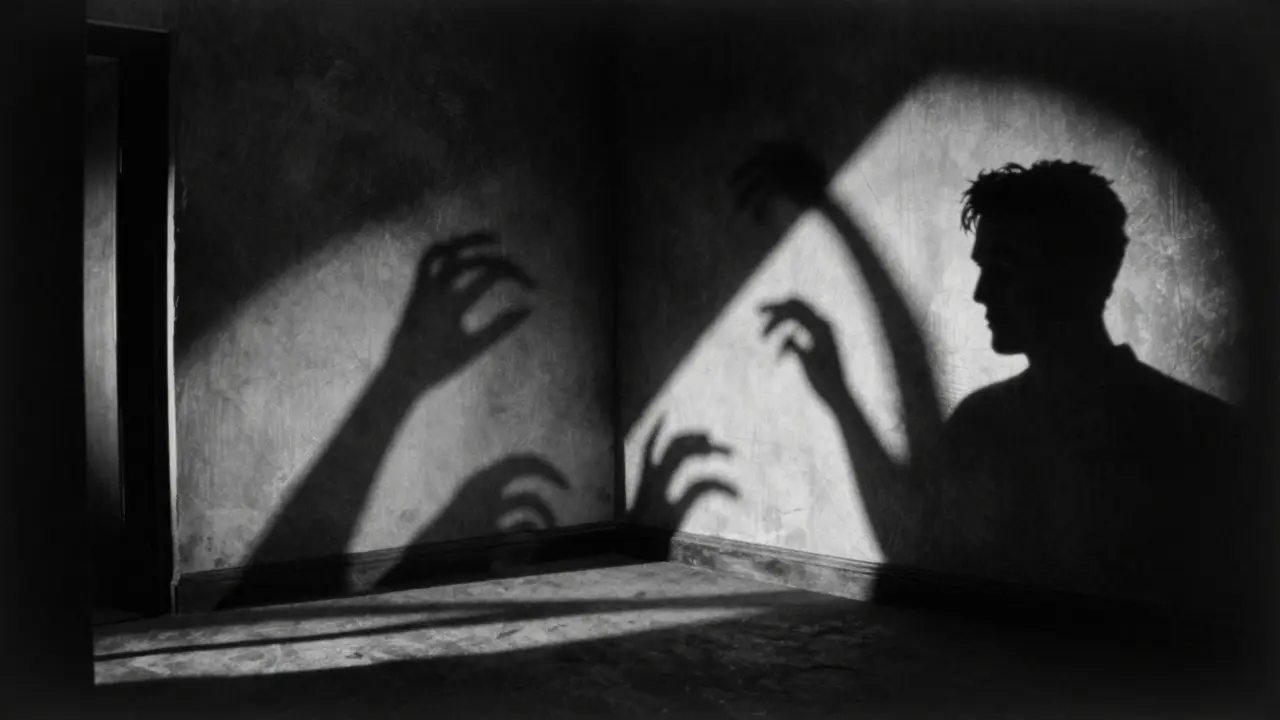
Expressionism: Distorting Reality for Emotion
If Impressionism was about observing the world, German Expressionism is a movement from the early 20th century that used exaggerated forms and stark contrasts to express inner psychological states. Emerging in Germany after World War I, this style rejected realism entirely. Why show the world as it is when you can show how it *feels*?
Films like The Cabinet of Dr. Caligari (1920) became blueprints for decades of cinema. The sets were painted, slanted, and sharp. Shadows were stretched across walls to create unease. This wasn’t just aesthetic choice; it was narrative. If a character is paranoid, the environment becomes hostile. This direct influence is visible in every film noir from the 1940s and every horror movie that follows. The chiaroscuro lighting-high contrast between light and dark-became a standard tool for creating tension. Even today, when a thriller uses heavy shadows to hide a threat, it’s borrowing from the Expressionist toolkit.
Surrealism: Breaking the Logic of Editing
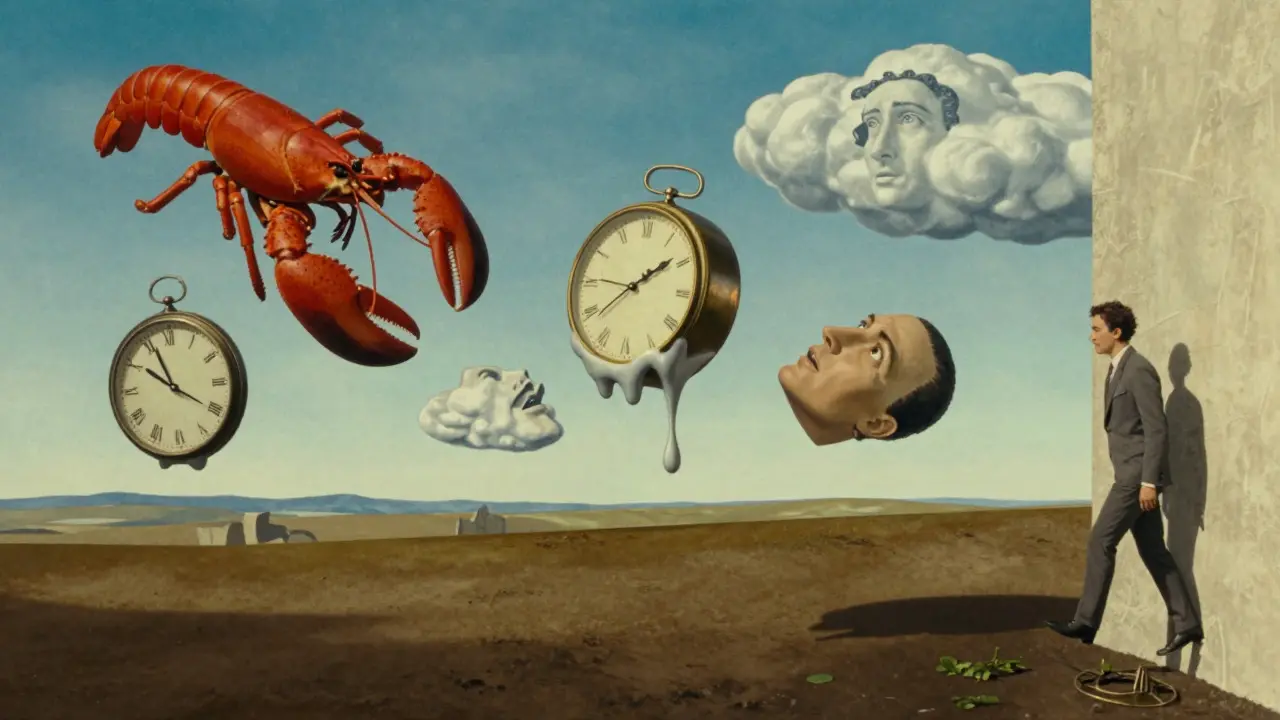
Surrealism is an art and literary movement founded in the 1920s that sought to release the creative potential of the unconscious mind. Led by figures like Salvador Dalí and André Breton, Surrealists wanted to bypass rational thought. For cinema, this was revolutionary because traditional storytelling relies on cause and effect. A does B, so C happens. Surrealism asked: what if A turns into a cloud, and then C is a giant lobster?
This movement gave filmmakers permission to break the rules of continuity. It validated the dream sequence where physics doesn’t apply. It encouraged the use of symbolic imagery that might not make logical sense but hits emotionally. Directors like Luis Buñuel and later Stanley Kubrick used Surrealist principles to create films that feel more like waking dreams than straightforward stories. The editing itself became a form of surrealism, juxtaposing unrelated images to create new meanings in the viewer’s mind.
Cubism and Abstract Art: Deconstructing Space
Cubism is an avant-garde movement pioneered by Pablo Picasso and Georges Braque that depicted subjects from multiple viewpoints simultaneously. How does that translate to a moving image? By deconstructing space. Cubist principles influenced how filmmakers approached composition. Instead of a single, stable perspective, a scene might be shot from three angles at once, or the set might be designed to look fragmented.
Abstract art took this further. If you remove recognizable objects, what remains? Form, color, and motion. Experimental films in the mid-20th century, such as those by Maya Deren or Stan Brakhage, treated the film strip as a canvas for abstract expression. These works didn’t tell stories in the traditional sense; they explored the medium itself. Today, this legacy lives on in music videos and commercial spots where visual rhythm and color theory matter more than narrative clarity. It also informs modern VFX, where environments are built from scratch using geometric primitives before being textured to look real.
How to Spot These Influences in Modern Films
You don’t need a degree in art history to see these connections. Here is a simple checklist to help you identify which movement is influencing a film’s visual style:
- Check the Lighting: Is it soft and natural (Impressionism), or harsh and shadowy (Expressionism)?
- Analyze the Sets: Are they realistic and detailed, or stylized and distorted? Slanted walls usually point to Expressionism.
- Watch the Editing: Does the cut follow logical cause-and-effect, or does it jump around unpredictably? Non-linear or disjointed cuts often signal Surrealist or Modernist influences.
- Look at the Colors: Is the palette muted and earthy, or vibrant and unnatural? Post-Impressionism often brought bolder, more symbolic colors to the screen.
- Assess the Narrative Logic: Do events happen because of previous actions, or do they feel random and dreamlike? Dream logic is a hallmark of Surrealism.
Common Pitfalls in Analysis
One mistake people make is assuming that if a film looks old, it must be influenced by early art movements. Style cycles. A modern indie film might use grainy film stock and handheld cameras to evoke a gritty, realist feel, which is actually closer to Neo-Realism than Impressionism. Always consider the context. Another pitfall is ignoring sound. While art movements are visual, their cinematic counterparts often involve sound design choices. Expressionist films often used dissonant scores, while Impressionist-influenced pieces might feature ambient, natural sounds. Don’t just watch; listen.
Frequently Asked Questions
Which art movement had the biggest impact on horror films?
German Expressionism is widely considered the most influential. Its use of distorted architecture, extreme shadows, and exaggerated makeup established the visual vocabulary for horror. Films like The Nosferatu and The Cabinet of Dr. Caligari directly inspired the genre’s look for nearly a century.
Is Surrealism still relevant in contemporary cinema?
Yes, though often blended with other styles. Directors like Christopher Nolan and David Lynch frequently employ Surrealist techniques, particularly in their handling of time and dream sequences. The rise of psychedelic visuals in recent years also draws heavily on Surrealist ideas of altered perception.
What is the difference between Impressionism and Realism in film?
Realism aims to depict the world exactly as it appears, focusing on social truths and everyday life without artistic embellishment. Impressionism focuses on the *experience* of the moment, often prioritizing mood, light, and atmosphere over strict factual accuracy. In film, this means Impressionist styles might use softer focus and more subjective camera angles, while Realist styles stick to objective, wide shots.
How did Cubism influence camera angles?
Cubism encouraged viewing subjects from multiple perspectives simultaneously. In cinema, this led to the development of complex multi-angle shooting and the use of low or high angles to disrupt the viewer’s normal perspective. It helped legitimize the idea that the camera doesn’t have to mimic human eye level.
Can digital special effects be linked to any specific art movement?
Digital effects draw from many sources, but Abstract Art and Futurism are key. The ability to create impossible geometries and fluid transitions mirrors the abstract exploration of form. Additionally, the seamless blending of live-action and CGI reflects the Futurist desire to merge technology with human experience.





Comments(9)