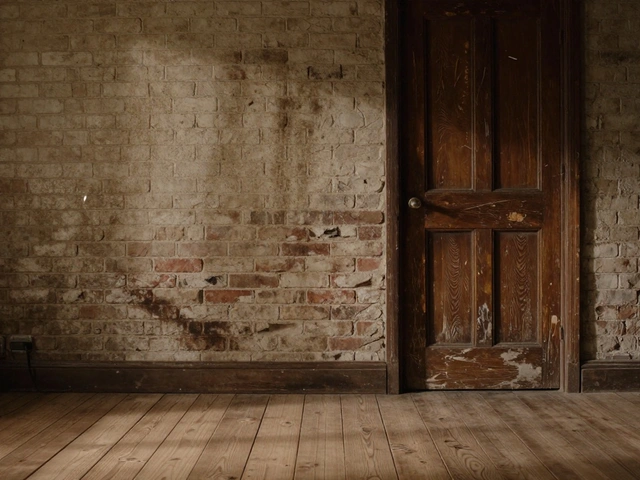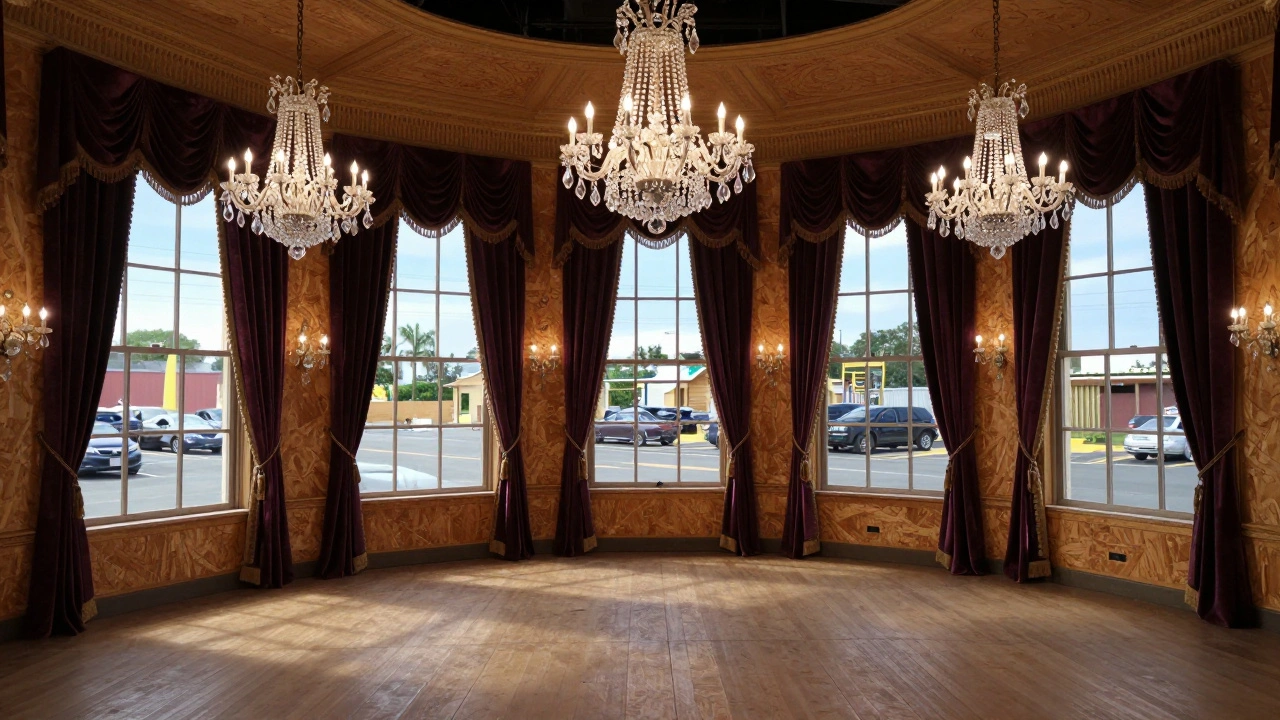
Imagine standing in the middle of a grand ballroom. Crystal chandeliers hang overhead, velvet drapes frame massive windows, and a grand piano sits center stage. It looks like the climax of a period drama. But look closer. The walls are plywood painted to look like plaster. The floor is covered in temporary carpet tiles. And outside that "window" is a parking lot in Burbank. This is the magic of production design. But what happens when the director yells "Cut" for the last time? Does this world vanish into thin air?
The short answer is no. The long answer involves a chaotic, fascinating industry known as the "strike." When filming ends, the crew doesn't just pack up and go home. They dismantle entire worlds. Some pieces become museum artifacts. Others end up in thrift stores, private collections, or even landfills. The post-film life of sets and props is a complex logistical puzzle that balances art, commerce, and environmental responsibility.
The Anatomy of a Strike
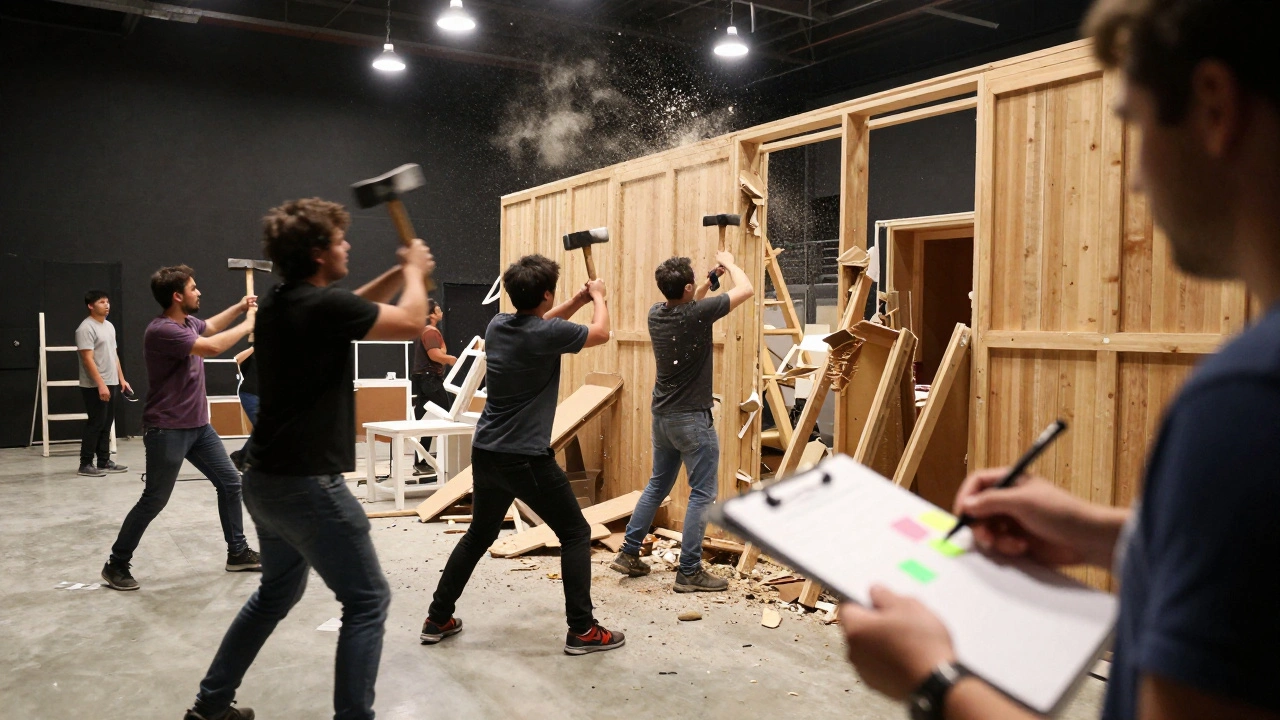
In Hollywood terminology, "striking" a set means dismantling it. It is not a gentle process. It is fast, loud, and often destructive. Once the cameras stop rolling, the set is no longer a sacred artistic space; it is a liability. Insurance policies expire, warehouse space costs money, and the next production is waiting for the soundstage.
The process begins with the Art Department. They tag every item that has value. A vintage lamp might be marked for return to a rental house. A custom-built bookshelf might be marked for auction. A fake wall might be marked for demolition. The rest of the crew then tears everything down. Walls are smashed with sledgehammers because rebuilding them for reuse is often more expensive than buying new lumber for the next project. This destruction can feel wasteful, but it is driven by tight budgets and tighter schedules.
Not all sets are struck immediately. If a show is a series, the sets are stored. Think about the iconic living room from a sitcom like Friends or The Office. Those sets were built once and kept in storage for years, allowing actors to step back into the same physical space season after season. But for feature films, which are usually one-off stories, the strike is almost always final.
Where Do the Props Go?
Props (properties) have a much longer lifespan than sets. While a wall is hard to store, a sword, a car, or a piece of jewelry is portable. The journey of a prop after filming wraps up depends on its origin and value.
- Rented Items: Most everyday items-cars, furniture, electronics-are rented from specialized companies. After the shoot, they are cleaned and returned to the rental pool. A classic car used in a chase scene goes back to the owner, who rents it out again for the next action movie.
- Custom-Built Props: These are items created specifically for the film. A futuristic laser gun or a magical staff cannot be returned to a rental house. These often enter the secondary market. High-profile custom props are frequently sold at auction houses like Heritage Auctions or Sotheby's. Fans pay thousands of dollars for authentic pieces touched by their favorite stars.
- Purchased Items: Sometimes, the production simply buys an item. If a character needs a specific painting, the art department might buy it from a gallery. After filming, the cast or crew sometimes purchases these items cheaply, or they are donated to charity.
There is also a gray market. Occasionally, props disappear during the strike. Crew members take small items home as souvenirs. While officially against studio policy, it is an open secret that minor props often find their way into eBay listings or local antique shops, sometimes without anyone knowing their cinematic history.
The Rise of Sustainable Set Construction
For decades, the film industry was notorious for waste. Entire forests made of cardboard trees would be burned after a single scene. However, pressure from environmental groups and stricter regulations in places like California and New Zealand have changed the game. Today, sustainable production design is a growing priority.
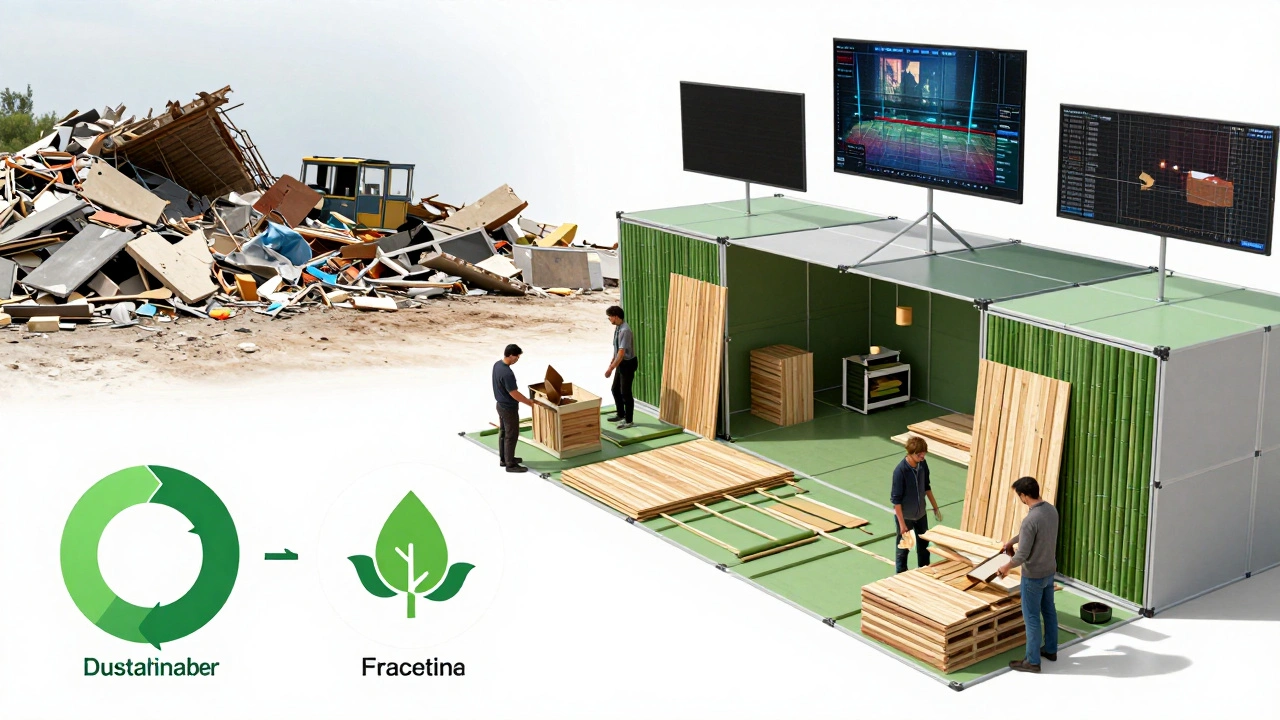
Modern productions are increasingly using modular construction techniques. Instead of building a unique set for each scene, designers create interchangeable modules. A hallway can be flipped around to look like a different location. Doors can be moved to change the layout. This reduces the amount of material needed and allows sets to be reused across multiple projects.
Materials matter too. Productions are shifting away from toxic paints and heavy plastics. They are using recycled lumber, bamboo, and digital matte paintings instead of physical builds where possible. Some studios now partner with organizations that recycle set materials. Wood becomes mulch, metal is melted down, and fabric is repurposed. The goal is to keep the carbon footprint of a blockbuster as low as possible.
| Aspect | Traditional Method | Sustainable Method |
|---|---|---|
| Construction Material | New lumber, drywall, plastic | Recycled wood, modular panels, bamboo |
| Dismantling Process | Destructive (smashing walls) | Deconstruction (unscrewing joints) |
| Waste Destination | Landfill | Recycling centers, donation hubs |
| Reusability | Low (single-use) | High (modular components) |
| Cost Impact | Lower upfront, higher disposal fees | Higher upfront, lower long-term costs |
Auctions, Museums, and Private Collections
When a high-budget film wraps, there is often a formal sale of assets. Studios hire auctioneers to sell costumes, props, and sometimes even large set pieces. These auctions serve two purposes: they recover some of the production budget, and they generate publicity for the film.
Museums play a significant role in preserving film history. The Academy Museum of Motion Pictures in Los Angeles and the American Film Institute Library acquire key artifacts for educational purposes. A script with handwritten notes from a famous director or the dress worn by a lead actress becomes part of the cultural record. These items are preserved in climate-controlled environments, ensuring they survive for future generations to study.
Private collectors also drive the market. Wealthy fans will pay premium prices for authentic memorabilia. In recent years, we have seen original lightsabers from Star Wars and the One Ring from The Lord of the Rings sell for hundreds of thousands of dollars. This market incentivizes studios to preserve certain items rather than destroy them. However, most everyday props do not command such prices and are sold for pennies on the dollar to liquidators.
The Digital Shift: Virtual Sets and VFX
The rise of virtual production is changing the physical reality of sets. With technologies like LED volumes (popularized by The Mandalorian), less physical scenery is needed. Actors perform in front of giant screens displaying digital backgrounds. This means fewer walls to build and fewer props to manage.
However, this does not eliminate the need for physical objects. Actors still need something to touch, hold, and interact with. A digital door must have a physical handle. A digital table must have a solid surface. The trend is toward "hero" props-high-quality physical objects that stand in for digital elements-while the background remains virtual. This hybrid approach reduces the scale of the strike but keeps the core principles of prop management intact.
Furthermore, digital assets themselves become part of the studio's library. A 3D model of a spaceship or a city street can be reused in sequels or spin-offs. This creates a digital archive that parallels the physical storage of props. The line between physical and digital production design is blurring, but the need for careful asset management remains critical.
Legal and Ethical Considerations
Who owns the set? Who owns the prop? Legally, the production company retains ownership of all assets created for the film. Even if an actor brings their own watch to a scene, the contract usually states that the production has the right to use it, and sometimes, to keep it. This leads to disputes when actors want their personal items back.
There are also ethical concerns regarding the treatment of crew members during the strike. Striking a set is physically demanding work. It often involves lifting heavy equipment, working late hours, and dealing with hazardous materials like asbestos in older buildings or chemicals in paint. Unions like IATSE (International Alliance of Theatrical Stage Employees) negotiate safety standards and overtime pay to protect workers during this phase. Ensuring that the strike is safe and fair is as important as managing the assets themselves.
Additionally, there is the issue of authenticity. When props are sold, how do we verify they are real? The market is flooded with replicas. Studios provide certificates of authenticity for high-value items, but for smaller props, verification is difficult. This lack of transparency can undermine the trust between collectors and the industry.
The Future of Post-Production Asset Management
As the industry evolves, so does the lifecycle of sets and props. We are seeing a shift toward circular economies in film production. Studios are investing in permanent warehouse spaces dedicated to storing reusable set pieces. Instead of striking a set completely, they disassemble it and store the components for future use. This requires better inventory tracking systems, often powered by AI and RFID tags, to locate specific items quickly.
We are also seeing more collaborations between productions. One studio might lend set pieces to another, reducing the need to build from scratch. This sharing culture fosters creativity while minimizing waste. As audiences become more environmentally conscious, the sustainability of a film's production process may become a marketing point in itself. Viewers want to know that the movies they love are made responsibly.
The post-film life of sets and props is no longer just about cleanup. It is about stewardship. It is about deciding what parts of our cinematic dreams deserve to be preserved, what parts can be repurposed, and what parts must be let go. From the sledgehammer swing to the gavel drop at auction, every step tells a story of its own-a story of creation, destruction, and rebirth.
What does "striking a set" mean in filmmaking?
Striking a set refers to the process of dismantling and removing all physical structures, decorations, and props from a soundstage or location after filming has concluded. It involves taking down walls, removing flooring, and packing up equipment. The goal is to clear the space for the next production as quickly and efficiently as possible.
Do actors get to keep their costumes and props?
Generally, no. Costumes and props are owned by the production company. However, actors can sometimes purchase their costumes from the wardrobe department after filming wraps. This is common for high-profile roles where the costume is iconic. Personal items brought by the actor, like jewelry, are usually returned, but contracts vary.
Where can I buy authentic movie props?
Authentic movie props are often sold through major auction houses like Heritage Auctions, Sotheby's, or Christie's. Studios also sell items directly through their official merchandise channels or authorized dealers. Be cautious of online marketplaces like eBay, where replicas are common. Always look for a certificate of authenticity from the studio.
Are movie sets recycled?
Increasingly, yes. Modern productions are adopting sustainable practices. Modular sets are designed to be disassembled and reused. Materials like wood and metal are sent to recycling facilities. Some studios have partnerships with organizations that donate usable set pieces to schools, theaters, or community centers. However, many sets are still destroyed due to cost and time constraints.
Why are some sets destroyed instead of stored?
Storage is expensive. Warehousing large set pieces requires significant space and insurance. If a set is not likely to be reused soon, it is often cheaper to demolish it and dispose of the materials than to pay for long-term storage. Additionally, some sets are built specifically for one camera angle and cannot be easily reconfigured for other uses.
How do virtual sets affect prop management?
Virtual sets reduce the need for large physical structures, but they do not eliminate props. Actors still need physical objects to interact with. The focus shifts to "hero props"-high-quality items that are visible close-up-while backgrounds are handled digitally. This simplifies the strike process for large structures but maintains the complexity of prop logistics.