
For decades, the golden rule of awards season was simple: if it wasn't on a big screen in New York or Los Angeles, it didn't count. But that line has blurred significantly. Today, a movie released exclusively on a streaming platformdigital service for watching movies and TV shows at home can compete head-to-head with a blockbuster that spent $100 million on marketing. Yet, a persistent question lingers among critics and voters: does the method of release still carry an unspoken weight?
The debate isn't just about nostalgia. It's about how algorithms, voter psychology, and industry politics interact to determine who takes home the trophy. Whether you're a filmmaker planning your next project or a cinephile trying to understand the landscape, knowing how theatrical release status impacts Oscar eligibilitythe criteria required for a film to be considered for Academy Awards nominations is crucial.
The Shift from Celluloid to Cloud
To understand the current bias, we have to look at where we came from. Historically, the Academy of Motion Picture Arts and Sciences (AMPAS) required films to have a seven-day theatrical run in Los Angeles to qualify. This rule protected the cinema experience but also created a gatekeeping mechanism. Independent films often struggled to secure these runs, while major studios had the muscle to force them through.
The pandemic changed everything. In 2020, AMPAS relaxed its rules, allowing films to stream directly if they had a limited theatrical window. This opened the floodgates. Suddenly, prestige dramas were appearing on Netflixa global subscription-based streaming service known for original content, HBO Maxa streaming platform owned by Warner Bros. Discovery offering HBO and other channels, and Apple TV+an over-the-top media service operated by Apple Inc.. The result? A surge in nominated titles that never truly lived in theaters.
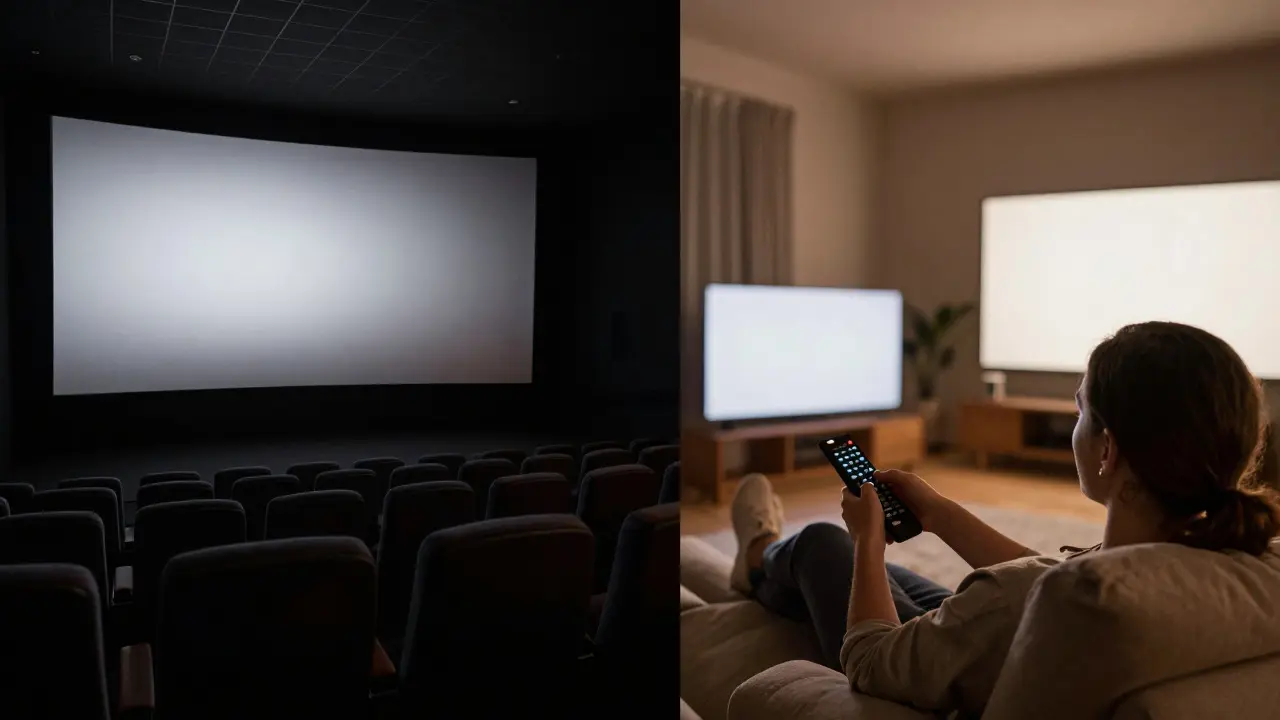
This shift forced voters to adapt their habits. Instead of seeing a film once in a dark room, many now watch nominees multiple times at home, pausing to analyze cinematography or re-listen to dialogue. Does this change the perception of quality? Some argue that the comfort of home viewing allows for deeper appreciation of technical craft. Others believe the lack of communal energy diminishes the impact of large-scale spectacles.
How Voters Perceive Distribution Models
Human psychology plays a massive role in voting. There is a subtle but measurable bias toward exclusivity and event-driven experiences. When a film releases in theaters, it becomes an "event." People talk about it at dinner parties. They feel they are part of a cultural moment. Streaming releases, by contrast, are often perceived as "library content"-something to consume later, perhaps during a rainy weekend.
However, this perception is changing rapidly. Younger voters, who make up a growing segment of the Academy, grew up with on-demand content. For them, a premiere on a streaming platform is just as valid as a theater opening. They judge the film on its merits, not its distribution path. This generational divide creates a complex dynamic within voting blocs.
- Traditionalists: Tend to favor theatrical releases, associating them with higher production values and artistic intent.
- Digital Natives: Judge based on accessibility and content quality, viewing streaming as a neutral medium.
- Craft Categories: Cinematographers and editors may prefer theatrical releases because the visual fidelity is harder to replicate on consumer-grade screens.
It’s worth noting that the "bias" isn't always against streaming. Sometimes, streaming platforms use their data advantages to target specific voter demographics more effectively than traditional studios can. If a film resonates with a particular group of voters, the algorithm ensures they see it repeatedly, reinforcing positive sentiment.
Economic Realities and Marketing Power
You can’t talk about awards bias without talking about money. Theatrical releases require significant upfront investment. You need prints, advertising billboards, and box office tracking. If a film underperforms, the studio loses millions. This financial risk often leads studios to play it safe, choosing proven genres and stars for their awards contenders.
Streaming platforms operate differently. Their revenue model is subscription-based, so the cost of acquiring a film is spread across millions of subscribers. This means they can take bigger risks on niche, artistic, or foreign-language films. Consequently, you see more diverse stories making the shortlist when they come from streaming services. This diversity can appeal to voters looking for fresh perspectives, potentially offsetting any bias against the medium itself.
| Factor | Theatrical Release | Streaming Release |
|---|---|---|
| Initial Cost | High (marketing + distribution) | Medium (acquisition fee + digital marketing) |
| Voter Exposure | Concentrated in key cities | Global, targeted via algorithms |
| Perceived Prestige | High (event-driven) | Moderate to High (increasingly accepted) |
| Risk Profile | Box office dependent | Subscription retention dependent |
| Technical Showcase | Optimized for large screens | Optimized for varied devices |
The Role of Limited Releases
A third option exists: the limited release. This strategy involves releasing a film in a few select theaters before pushing it to streaming. It’s a hybrid approach that satisfies the technical requirements of Academy rulesthe official guidelines set by AMPAS for award nominations while maximizing accessibility. Films like Parasite and Poor Things used this model to great effect. They built buzz in New York and Los Angeles, creating a sense of exclusivity, then went wide to capture the broader audience.
This approach minimizes the downside of both models. You get the "prestige" halo of a theatrical debut without the financial gamble of a wide release. For voters, it signals that the film is serious enough for cinemas but accessible enough for everyone. It’s become the default strategy for most serious awards contenders in recent years.
Does the Medium Matter for Craft Categories?
While Best Picture might be influenced by narrative and star power, craft categories like Sound Mixing, Visual Effects, and Cinematography are heavily reliant on presentation. A sound mix that feels immersive in a Dolby Atmos theater might feel flat on a laptop speaker. This creates a structural disadvantage for streaming-only releases in these categories.
However, technology is closing the gap. Modern smartphones and tablets offer high-fidelity audio and 4K HDR displays. As home entertainment systems improve, the technical disparity between a mid-tier theater and a high-end home setup shrinks. Voters are increasingly aware of this, and some even test films on different devices to ensure fairness. Still, for now, theatrical releases hold a slight edge in pure technical showcase categories.

Future Trends and Voter Adaptation
Where is this going? The lines will continue to blur. We’re seeing more theatrical windows shorten, and more streaming originals getting physical releases for collectors. The concept of "release" is becoming less about location and more about timing and marketing push.
Voters are adapting too. The Academy has been experimenting with new voting structures and outreach programs to ensure all members are engaged. As the industry evolves, the bias is likely to shift from "where did I see it?" to "how well did it resonate with me?" The focus is moving away from the container and toward the content.
For filmmakers, the takeaway is clear: don't let distribution strategy dictate your creative choices. Make the best film you can, and choose the release model that best serves your story. The awards community is more open-minded than ever, provided the work speaks for itself.
Frequently Asked Questions
Do streaming films have a harder time winning Best Picture?
Not necessarily. While there was initial skepticism, several streaming films have won top honors in recent years. The bias has diminished significantly as voters have grown accustomed to the format. Success depends more on the quality of the film and the strength of the campaign than the release method alone.
What is the minimum theatrical requirement for Oscar eligibility?
As of recent rule changes, films generally need a one-week theatrical run in Los Angeles, though specific requirements can vary by category and year. Always check the latest AMPAS guidelines, as they are updated periodically to reflect industry changes.
How do voters watch films for consideration?
Voters can watch films in theaters, at home, or even on mobile devices. The Academy provides access to screenings and digital copies. Many voters watch films multiple times to fully appreciate the details, regardless of whether the film was released theatrically or on streaming.
Is there a bias against foreign language films on streaming?
Foreign language films often perform very well on streaming platforms because subtitles are standard practice for international audiences. This accessibility can actually give them an advantage over theatrical releases where subtitling might be less consistent or harder to read in certain venues.
Which release strategy is best for independent filmmakers?
A limited theatrical release followed by a streaming deal is often the most viable path. It builds critical momentum and meets eligibility requirements without requiring the massive budget needed for a wide theatrical rollout. This hybrid approach maximizes visibility while managing financial risk.