There is a distinct magic in watching something that shouldn’t move, actually move. Unlike computer-generated imagery (CGI), which can feel weightless or overly perfect, stop-motion animation is a filmmaking technique where physical objects are moved in small increments between individually photographed frames, creating the illusion of movement when the series of frames is played as a continuous sequence. It carries the fingerprints of its creators-literally. You can see the texture of the clay, the weave of the fabric, and the slight imperfections that give characters soul. In an era dominated by digital pipelines, this tactile art form remains stubbornly relevant, proving that audiences still crave authenticity.
If you’ve ever wondered how movies like WALL·E’s opening scenes or the grotesque charm of Coraline were made, you’re looking at stop-motion. It’s not just about patience; it’s about physics, lighting, and meticulous planning. Today, we’ll break down exactly how these films are built, from the armatures inside the puppets to the software that stitches the frames together, and look at the recent masterpieces that have kept the medium alive and thriving.
The Mechanics Behind the Magic
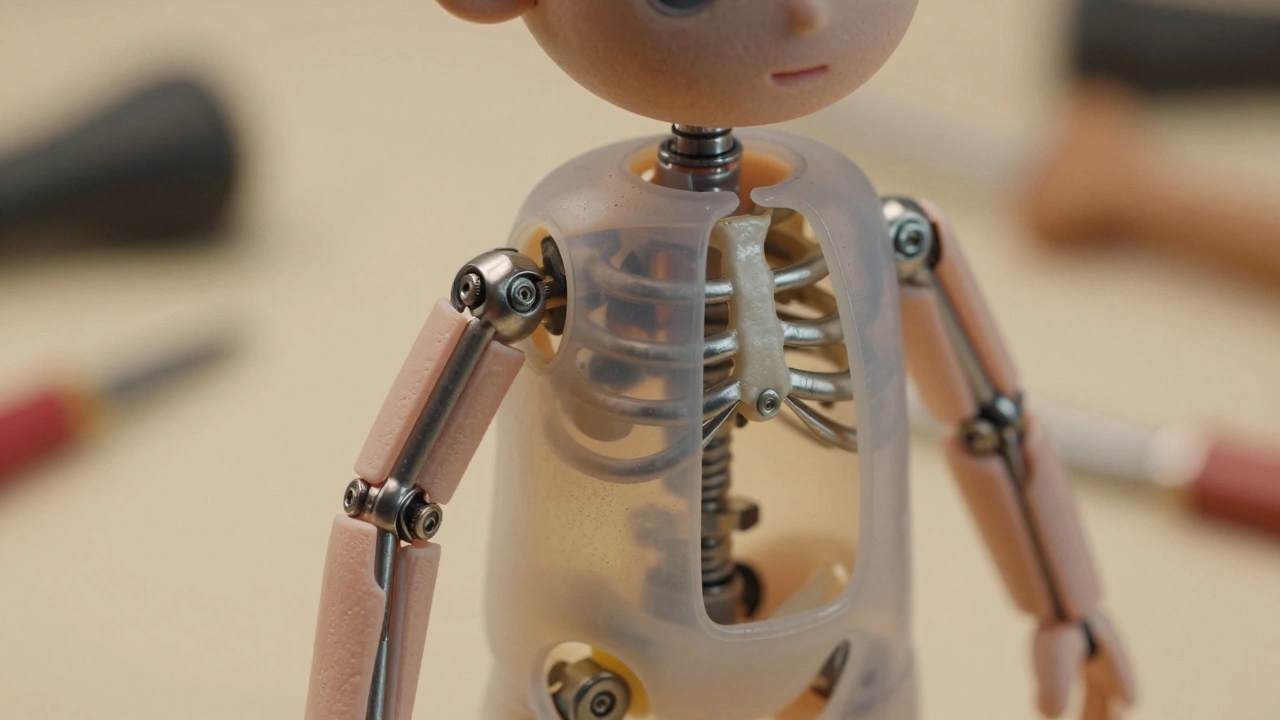
At its core, stop-motion is simple: take a picture, move the object slightly, take another picture. But doing this thousands of times without losing consistency is incredibly difficult. The heart of any stop-motion character is the armature, which is an internal skeleton structure, usually made of metal wire or plastic joints, that allows animators to pose the puppet and hold those poses steadily during filming.
Without an armature, a clay figure would slump under its own weight between shots. Modern armatures are often custom-built using materials like Armature Wire or 3D-printed plastic joints. For facial expressions, animators use face replacements or mechanical rigs with wires that pull strings inside the head to change expressions without reshaping the entire face. This technique was perfected by studios like Laika, a Portland-based animation studio known for pioneering digital tools within traditional stop-motion workflows.
Lighting is another critical factor. Since every frame must match the previous one perfectly, lights cannot flicker or heat up unevenly. Studios use LED panels that run on direct current to prevent any thermal expansion that might shift the light color or intensity. Even the air conditioning in the studio is often turned off to avoid drafts moving lightweight props.
Key Materials and Styles
Stop-motion isn’t just one thing. It branches into several sub-genres based on the materials used. Understanding these distinctions helps you appreciate the specific challenges each style presents.
| Style | Primary Material | Key Characteristic | Famous Example |
|---|---|---|---|
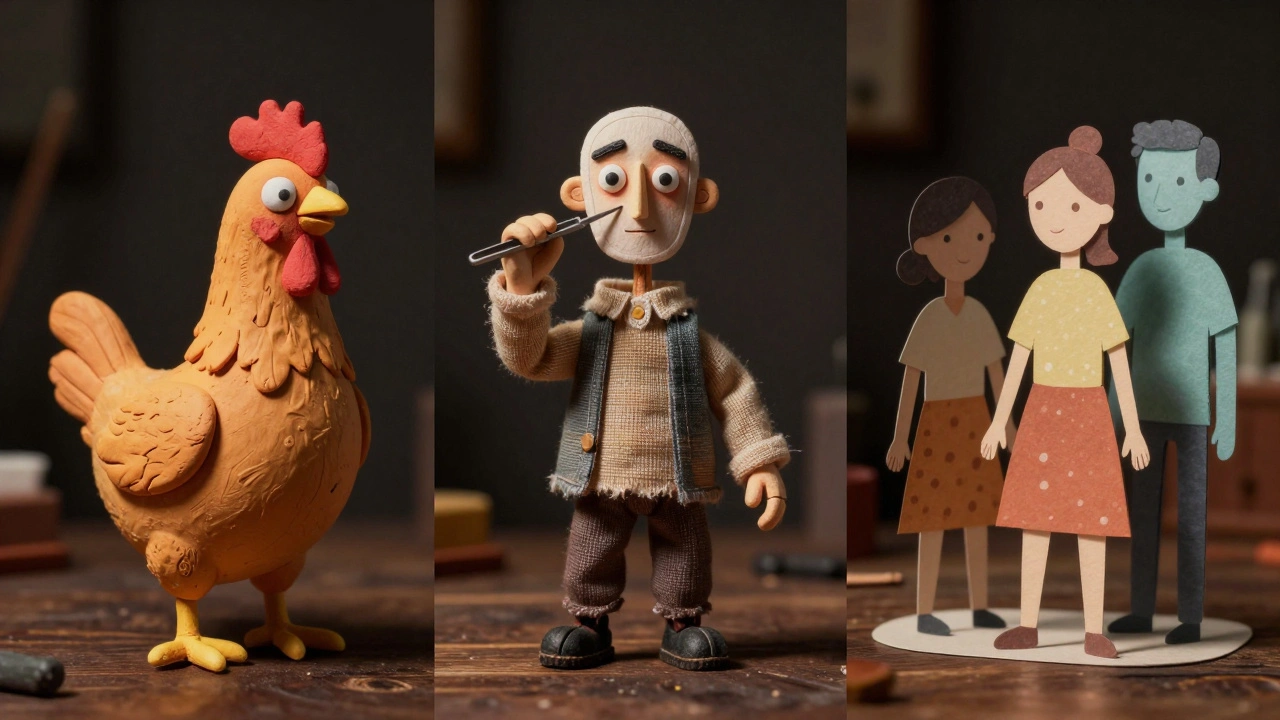
| Claymation | Plasticine Clay | Malleable, organic shapes; requires constant retouching | Chicken Run |
| Puppet Animation | Foam, Silicone, Fabric | Detailed textures, reusable faces, complex armatures | Coraline |
| Cut-out Animation | Paper, Cardboard, Fabric | Flat, 2D appearance; limited depth but high stylization | Loving Vincent |
| Object Animation | Everyday Items | Uses real-world objects as characters | Wallace & Gromit shorts |
Claymation, popularized by Nick Park’s Wallace & Gromit, relies on the animator’s hands to reshape the character slightly for every frame. This gives it a soft, fluid look but means the surface texture changes constantly. Puppet animation, favored by Laika and Aardman, uses rigid materials. This allows for more detailed costumes and consistent skin textures, but it requires swapping out hundreds of pre-made face plates for different emotions.
Recent Masterpieces (2024-2026)
Stop-motion has seen a renaissance in recent years. While CGI dominates blockbusters, indie and mid-budget films have embraced the aesthetic for its unique visual language. Here are the standout titles from the last few years that define the current state of the art.
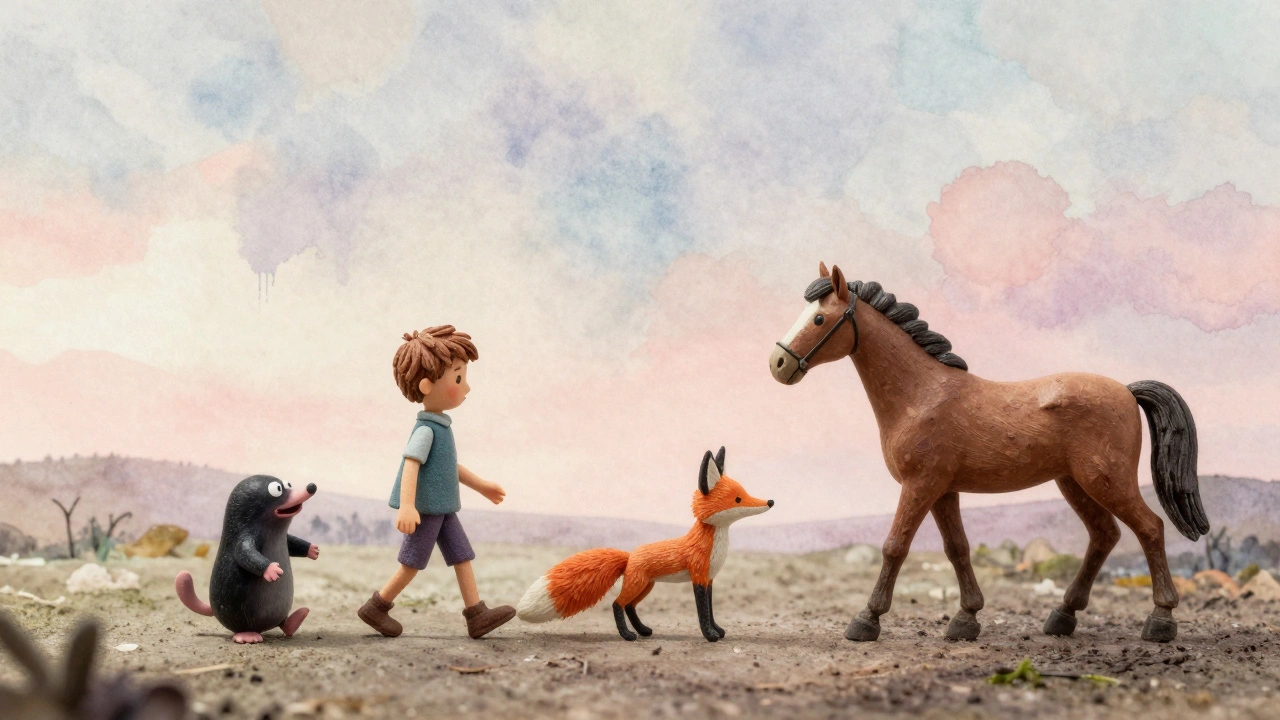
1. The Boy, the Mole, the Fox and the Horse (2023/2024)
This film took a different approach. Instead of traditional puppets, it used digital ink-and-watercolor backgrounds combined with minimalist 3D models animated using stop-motion principles. It proved that the *feel* of stop-motion-slow, deliberate, handcrafted-can be achieved even when the tools are digital. It resonated deeply because it stripped away complexity to focus on emotional storytelling.
2. Wendell & Wild (2022)
Tim Burton’s return to his roots was a technical marvel. The film pushed the boundaries of what puppets could do, featuring complex interactions between human actors and stop-motion monsters. The team used motion capture data to inform the puppeteers' movements, ensuring that the digital and practical elements matched perfectly. It was dark, funny, and visually dense, showcasing how modern technology can enhance, rather than replace, traditional techniques.
3. Nimona (2023)
While primarily a hybrid film, Nimona utilized stop-motion-style shading and texturing to create a world that felt tangible yet fantastical. It demonstrated how the aesthetic of stop-motion can influence broader animation styles, bridging the gap between 2D and 3D rendering.
4. Flow (2024)
A surprise hit from Estonia, Flow is a wordless adventure about animals surviving on a raft. Though technically 3D CGI, its lighting, texture work, and deliberate pacing mimic the weight and presence of stop-motion. It highlights a trend: audiences are craving the "imperfection" and tactile quality that stop-motion represents, regardless of the actual tool used.
Tools of the Trade: Software and Hardware
You don’t need a million-dollar studio to start. However, professional productions rely on specific software to manage the sheer volume of frames.
- Dragonframe: The industry standard. It controls cameras, lights, and motors directly. It allows animators to see "onion skins" (translucent overlays of previous frames) to ensure smooth movement.
- Synfig Studio: A free, open-source option for 2D vector animation that can simulate stop-motion effects.
- Stop Motion Studio: A user-friendly app for beginners, available on tablets and phones. Great for learning the basics of timing and spacing.
For hardware, most professionals use DSLR or mirrorless cameras with macro lenses. The key is stability. Tripods must be heavy and non-adjustable once set. Motors are often added to move the camera smoothly along rails, eliminating the need for manual dolly moves which are hard to replicate frame-by-frame.
Why Stop-Motion Still Matters
In a world of infinite digital possibilities, why choose the hardest path? Because limitations breed creativity. When you can’t just "fix it in post," you solve problems physically. This results in visuals that feel grounded. There is a psychological connection viewers have with physical objects. We trust them. They occupy real space. This tangibility creates an emotional resonance that pure CGI sometimes struggles to achieve.
Moreover, stop-motion preserves craftsmanship. It employs sculptors, textile artists, carpenters, and painters alongside animators. It is a collaborative, multidisciplinary effort that celebrates human skill. As AI begins to generate images and video at scale, the value of handmade art only increases. Stop-motion is a testament to human patience and precision.
Getting Started: Your First Project
Want to try it? Start small. Don’t aim for a feature film. Aim for five seconds.
- Gather Props: Use LEGO bricks, action figures, or clay. Keep it simple.
- Set Up Lighting: Use two lamps. One key light, one fill light. Tape them down so they don’t move.
- Use a Phone App: Download Stop Motion Studio. Set the frame rate to 12 fps (frames per second). This is slower than film (24 fps) but easier for beginners to manage.
- Move Slowly: Move your object just a millimeter between shots. Too much movement looks jerky; too little looks static.
- Edit: Trim the start and end. Add sound effects. Sound sells the reality of the movement.
The learning curve is steep, but the satisfaction of seeing your creation come to life is unmatched. Every wobble, every slight blur, is part of the charm. Embrace the imperfections. That’s where the humanity lies.
What is the difference between stop-motion and CGI?
Stop-motion involves photographing physical objects frame-by-frame, resulting in tangible textures and lighting interactions. CGI is created entirely digitally using software, allowing for unlimited flexibility but often requiring careful texturing to avoid looking "too clean." Stop-motion feels handmade; CGI feels constructed.
How long does it take to make a stop-motion movie?
It varies, but typically one minute of screen time takes about one month of animation work. A full feature film can take 3-5 years from concept to completion due to the slow pace of shooting and the extensive prep required for puppets and sets.
Can I make stop-motion animation with my smartphone?
Yes. Apps like Stop Motion Studio allow you to use your phone’s camera to capture frames. Ensure your phone is stabilized on a tripod or stack of books to prevent shake. Good lighting is more important than camera quality.
Who are the biggest studios in stop-motion today?
Laika (USA) is the leader in high-tech puppet animation. Aardman Animations (UK) is famous for claymation and cut-out styles. Other notable players include Cartoon Saloon (Ireland), which blends 2D and stop-motion aesthetics, and Studio Ghibli, which occasionally incorporates stop-motion elements.
Why do stop-motion films look grainy or textured?
This is often intentional. The texture comes from the physical materials (clay, fur, fabric) interacting with light. Additionally, filmmakers may add film grain in post-production to hide minor inconsistencies between frames and to give the image a warmer, more organic feel compared to sterile digital renders.