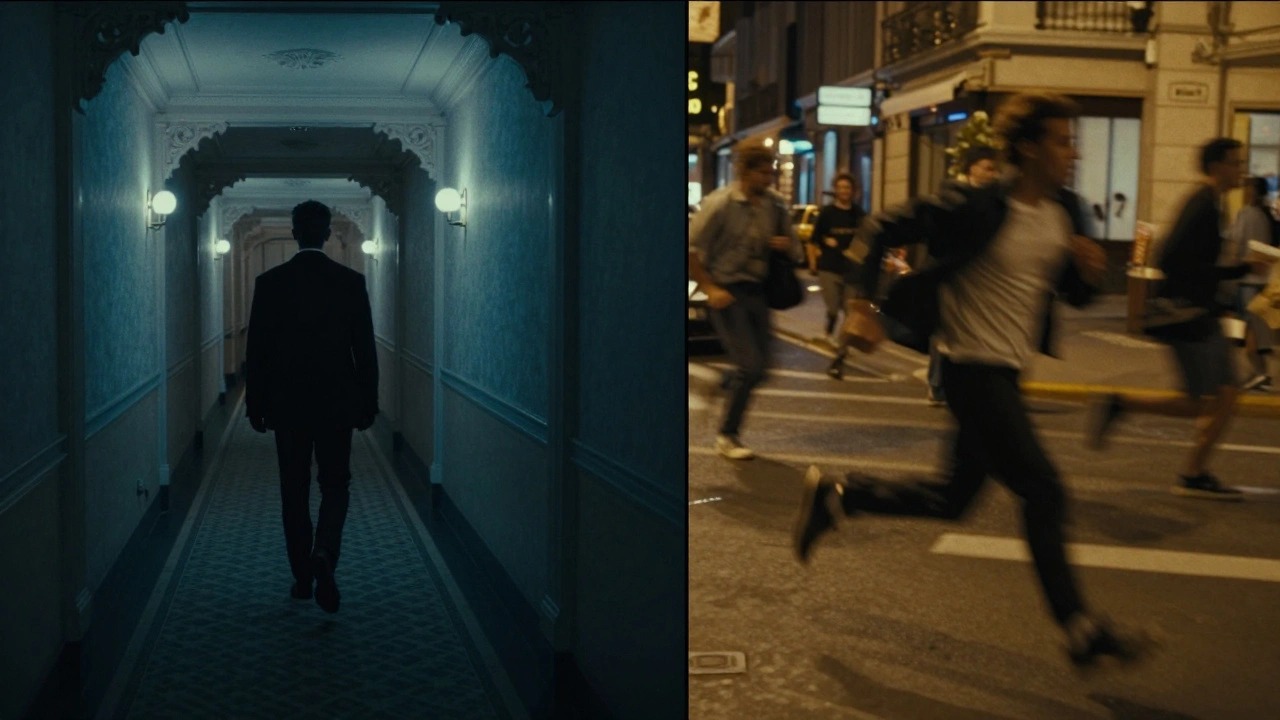
Imagine two scenes from the same movie. In one, you glide smoothly through a crowded hallway, feeling like an invisible observer. In the other, the camera shakes violently as it follows a character running for their life. The difference isn't just in the acting or the script-it’s in how the camera moves. This is the core battle of cinematography, which uses visual storytelling to convey emotion and narrative without words. Directors choose between Steadicam, a gyroscopic camera stabilizer that isolates the camera from the operator's body movements and handheld shooting, a technique where the camera is held directly by the operator to capture natural motion and vibration based on the psychological effect they want to create.
You might think stable footage is always "better," but in filmmaking, stability often means detachment. Shaky footage means immersion. When you understand why a director picks one over the other, you start seeing movies differently. You stop watching the plot and start feeling the tension.
The Psychology of Stability: Why Steadicam Works
When you see a shot that glides effortlessly around corners, up stairs, and through crowds, you are looking at the work of a Steadicam. Invented by Garrett Brown in 1976, this device separates the camera from the human body’s natural bounce. It creates a sense of fluidity that feels dreamlike, surreal, or authoritative.
Directors use fluid camera movement to create a seamless visual experience that guides the viewer's attention without interruption when they want you to feel like an omniscient observer. Think about the famous long takes in *Birdman* or *1917*. These films used stabilized rigs (including digital extensions of Steadicam principles) to make you feel trapped inside the protagonist’s continuous timeline. There is no cut to relieve your tension. The smoothness forces you to stay present.
Consider the opening of *The Shining*. The camera glides silently behind Jack Nicholson as he drives into the hotel. It’s not shaky; it’s predatory. The stability makes the horror feel inevitable and cold. If that same shot were handheld, it would feel frantic and chaotic. But Stanley Kubrick wanted us to feel the dread of something ancient and unmovable approaching. That is the power of isolation from human error.
- Immersive Observation: Steadicam allows the audience to explore spaces freely, mimicking the eye’s natural focus while moving.
- Dream Logic: Smooth transitions between rooms or locations suggest memory, dreams, or supernatural elements.
- Character Authority: Following a character with perfect stability can emphasize their control over a situation, even if they are losing it internally.
The Raw Energy of Handheld Cinema
Now, imagine the opposite. The camera breathes. It stumbles. It bumps into walls. This is documentary-style realism, a visual approach that prioritizes authenticity and immediacy over technical perfection. Handheld shooting removes the barrier between the actor and the lens. It captures micro-expressions, sweat, and the chaos of real-time interaction.
Sam Raimi pioneered this technique in *Evil Dead II*, using handheld cameras to make horror feel visceral and immediate. Later, directors like Steven Soderbergh (*Traffic*) and the Daniels (*Everything Everywhere All At Once*) used it to convey anxiety, urgency, and emotional fragmentation. When the world is falling apart, a smooth camera feels dishonest. A shaky camera tells you, "This is happening right now, and we don’t have time to be polite."
Handheld isn't just about shaking; it's about proximity. Because the operator doesn't need a heavy rig, they can get closer to the actors. This intimacy changes the performance. Actors react to the camera's presence, making their reactions more spontaneous. The slight blur of motion adds energy to every frame.
| Feature | Steadicam | Handheld |
|---|---|---|
| Visual Feel | Smooth, floating, detached | Rough, intimate, urgent |
| Operator Effort | High physical endurance required | Moderate, relies on reflexes |
| Best For | Long takes, tracking shots, dreams | Action, horror, dialogue, realism |
| Audience Perception | Observer, voyeur | Participant, witness |
Hybrid Approaches: The Gimbal Revolution
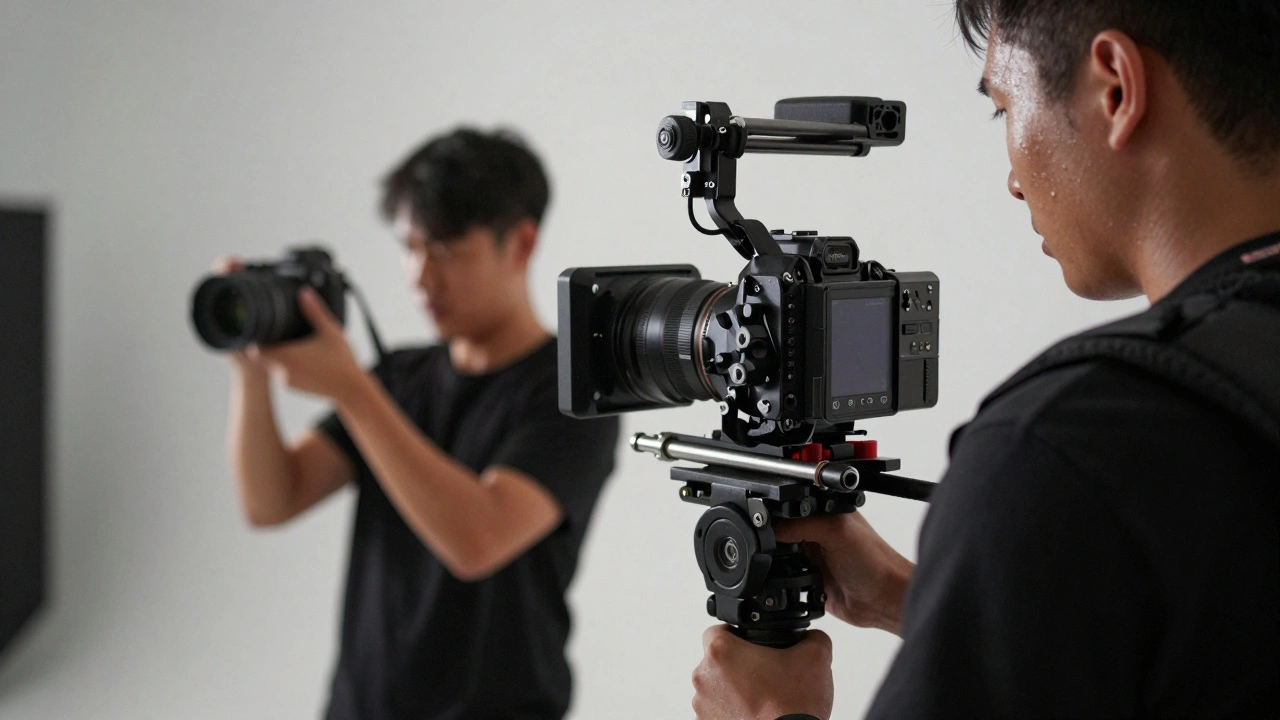
In recent years, the line between these two has blurred thanks to motorized gimbals, which use electric motors and sensors to stabilize camera movement automatically. Devices like the DJI Ronin or Moza Air offer Steadicam-like smoothness without the heavy vest and counterweights. However, they lack the organic "human" feel of a pure Steadicam because they correct motion too perfectly.
Many modern productions mix techniques. They might use a gimbal for wide establishing shots to show geography clearly, then switch to handheld for close-ups to increase emotional intensity. This hybrid approach gives editors more flexibility. You can match the energy of the scene beat-by-beat rather than committing to one style for the entire sequence.
For example, in *Mad Max: Fury Road*, the camera is almost always shaking because the vehicles are vibrating. But during moments of calm reflection, the camera stabilizes slightly to let the audience breathe. The shift itself tells you what to feel.
Practical Constraints: Budget, Crew, and Time
Artistic vision is important, but logistics matter too. A Steadicam requires a specialized operator who has trained for years. They wear a vest that weighs 30-50 pounds and must maintain balance while walking backward, climbing stairs, or navigating tight spaces. This limits how fast you can shoot. If you are on a tight schedule with limited daylight, Steadicam might be too slow.
Handheld is faster. Any competent camera assistant can pick up the rig and start shooting. This speed is crucial for indie films or documentaries where you cannot predict what will happen next. You miss fewer moments because you are ready instantly.
Additionally, sound recording affects your choice. Steadicam operators wear vests that can rustle or squeak, requiring careful microphone placement. Handheld cameras allow boom operators to get closer, often resulting in cleaner audio in noisy environments.
Choosing the Right Technique for Your Story
So, how do you decide? Ask yourself what the audience should feel. Do you want them to analyze the scene objectively? Use Steadicam. Do you want them to panic alongside the character? Use handheld. There is no wrong choice, only mismatched intent.
If you are filming a romantic drama, handheld can capture the awkwardness of first dates-the fidgeting, the nervous glances. Steadicam might make those same moments feel staged and artificial. Conversely, in a thriller, a smooth Steadicam shot following a killer through a house builds suspense because it feels controlled and deliberate. A shaky cam here would just look messy.
Ultimately, camera movement is silent acting. It supports the story without saying a word. By mastering both Steadicam and handheld techniques, you give yourself a broader vocabulary to express complex emotions. The best filmmakers don't stick to one rule-they break them intentionally to serve the narrative.
Is Steadicam easier to learn than handheld?
No, Steadicam is significantly harder to master. It requires months of training to balance the rig properly and move smoothly without introducing unwanted shake. Handheld is intuitive but requires skill to avoid excessive jitter that distracts the viewer.
Can I simulate Steadicam movement with editing?
You can use post-production stabilization software like Adobe After Effects or DaVinci Resolve to smooth out handheld footage, but it rarely looks as natural as true Steadicam. Digital stabilization often crops the image and can introduce warping artifacts.
Why did handheld become popular in the 1990s?
Filmmakers like Kevin Smith and Quentin Tarantino embraced handheld to reject the polished look of Hollywood blockbusters. They wanted gritty, authentic visuals that felt closer to independent cinema and documentary traditions.
Does Steadicam cost more than handheld?
Yes, hiring a dedicated Steadicam operator is more expensive than having a standard camera operator hold the rig. Additionally, renting the vest and hardware adds to the budget, though modern gimbals have reduced some costs.
Which technique is better for interviews?
Static tripod shots are usually best for formal interviews. However, handheld can add energy and spontaneity to conversational interviews, making the subject feel more relaxed and engaged. Steadicam is rarely used unless you are moving through a location during the interview.


Comments(8)