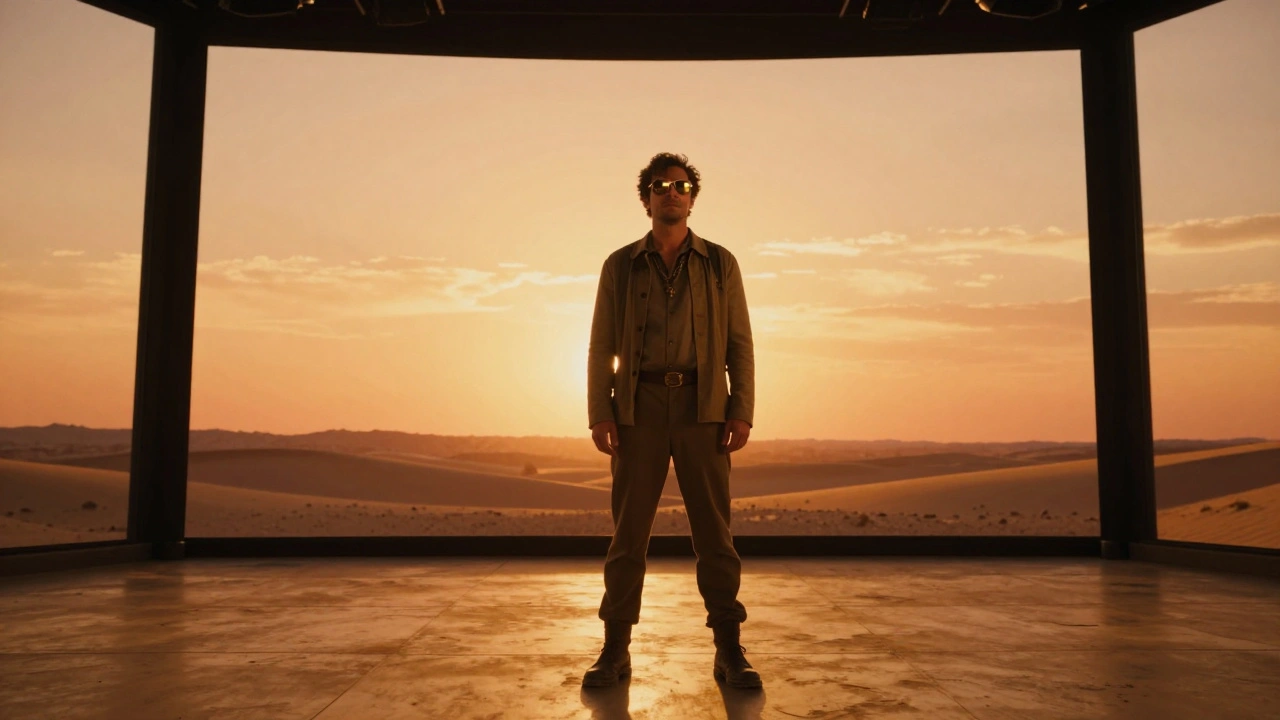
When you walk onto a modern film set and see a giant wall of LEDs glowing with a sunset over a desert, or a bustling city skyline at night, it’s easy to think it’s all CGI. But here’s the truth: that background isn’t rendered in post. It’s real-time, live footage playing on actual LED panels - and if those panels aren’t perfectly calibrated, the whole scene falls apart.
Why LED Volume Calibration Matters
LED volumes, also called volume stages, have replaced green screens in high-end film and TV production. Companies like Industrial Light & Magic and StageCraft (used on The Mandalorian) now shoot entire scenes inside these glowing rooms. But here’s the catch: the LEDs have to match the lighting and color of the virtual environment exactly - or the actors look like they’re standing in front of a TV screen.
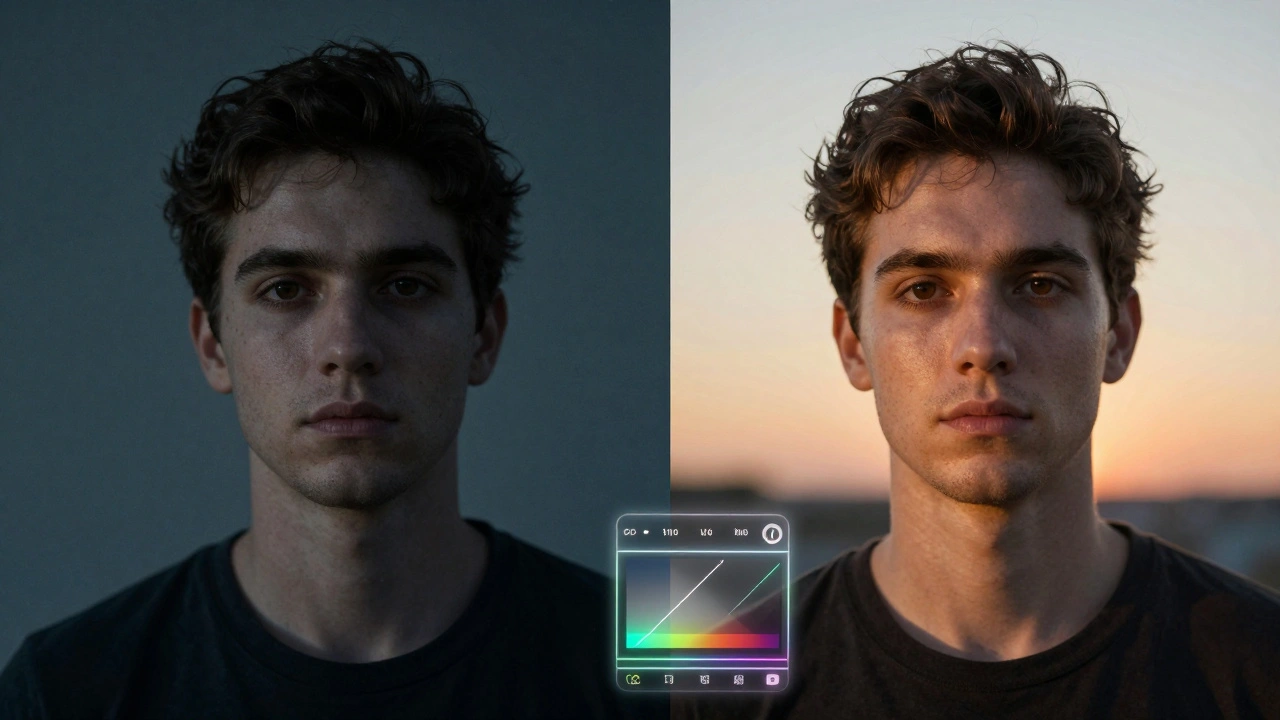
Think about it this way: if the LED wall shows a golden-hour sunset, but the wall’s white balance is too cool, the actor’s skin tone will look unnatural. Shadows won’t fall right. Reflections on their sunglasses won’t match. The camera picks up every mismatch. And once it’s in the shot, there’s no fixing it in editing.
Calibration isn’t just about brightness. It’s about color science - the physics of how light behaves, how human eyes perceive color, and how cameras record it. Get it wrong, and you ruin the illusion. Get it right, and the actors feel like they’re really there.
The Three Pillars of LED Volume Calibration
There are three things you must balance to make an LED volume look real:
- Color Temperature - Measured in Kelvin (K). A sunset is around 2000K - warm orange. A cloudy sky is 7000K - cool blue. The LED panels must match the exact temperature of the scene they’re displaying.
- Color Accuracy - Not all reds are the same. A good LED panel should hit the exact red of a fire truck, not a slightly different shade. This is measured using CIE color space and Delta E values. A Delta E under 3 is professional-grade. Over 5? You’ll see it.
- Dynamic Range - The difference between the darkest black and the brightest white the LEDs can produce. Real skies have extreme contrast: a sunburst can hit 100,000 nits, while shadows are near zero. Most consumer LEDs top out at 1000 nits. Professional volume panels? They hit 2000-5000 nits. Without this range, highlights blow out and shadows look gray.
These aren’t optional settings. They’re physics. If the LED wall doesn’t match the environment’s color and brightness, the camera captures it - and so does the human brain. We’re wired to spot inconsistencies in light. Even if you can’t name why, you’ll feel something’s off.
How Calibration Is Done (Step by Step)
Here’s how a real production team calibrates an LED volume before shooting:
- Map the Environment - The art department sends the VFX team a 3D model of the virtual scene. This includes exact lighting angles, color values, and time of day.
- Render the Content - The virtual environment is rendered in real-time using Unreal Engine or similar. Each pixel on the LED wall must match the intended color and brightness.
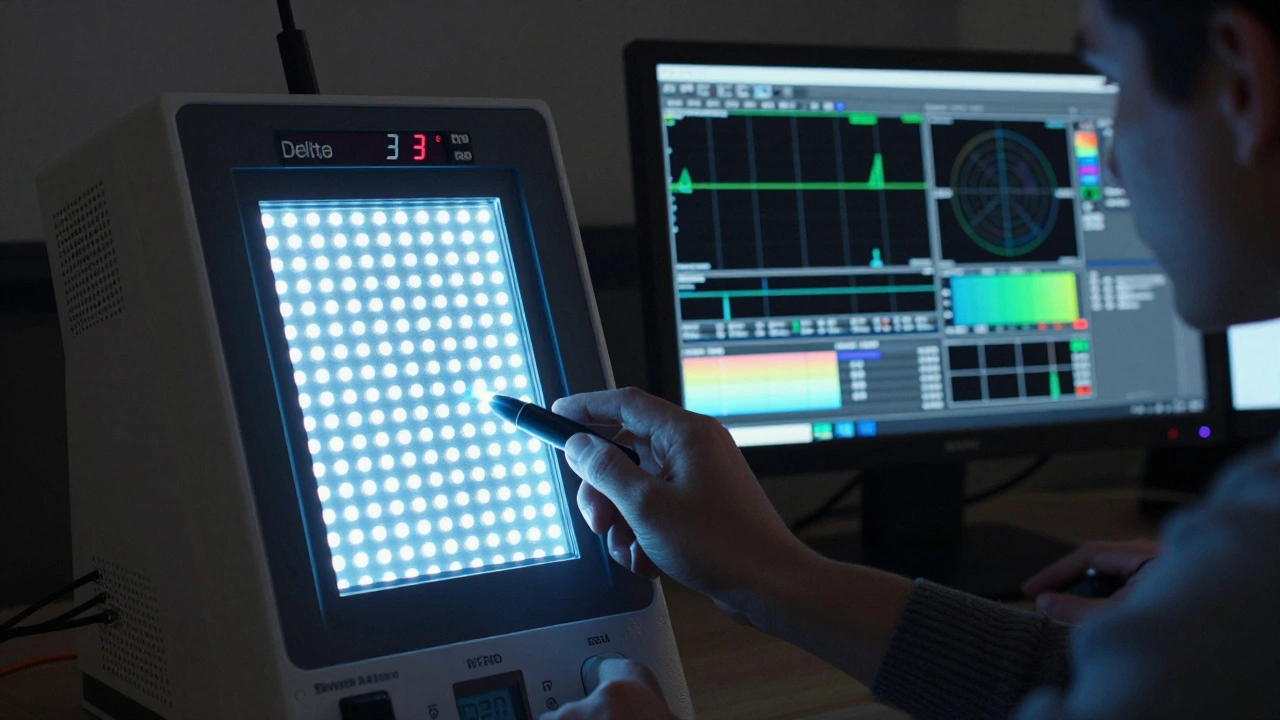
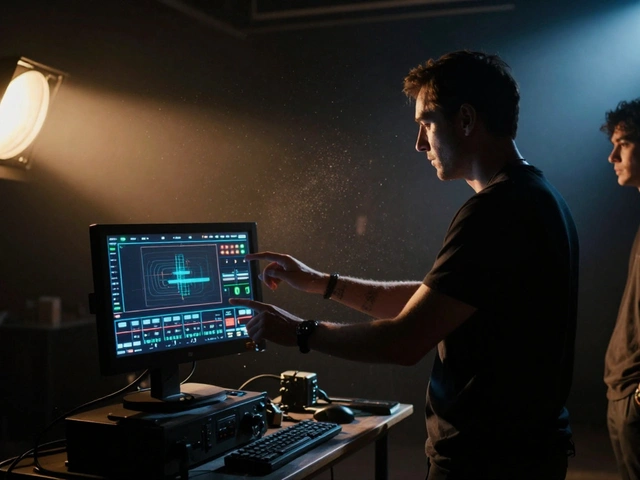
- Measure the Wall - A colorimeter (a device that reads light color and intensity) is placed in front of each panel. It scans hundreds of points across the entire surface.
- Adjust Panel-by-Panel - If one section is too green, the system tweaks its RGB output. If a corner is dimmer than the center, brightness curves are adjusted. This isn’t done manually - software auto-calibrates using the colorimeter data.
- Test with the Camera - A test shot is filmed with the actual camera and lens that will be used on set. The footage is analyzed for color shifts, bloom, or flare that the human eye might miss but the camera captures.
- Lock the Profile - Once everything matches, the calibration profile is saved and locked. No changes are made during shooting unless the virtual environment changes.
This process takes hours - sometimes a full day - but it’s the difference between a scene that feels alive and one that feels like a video game.
What Happens When Calibration Fails
On one indie film in 2024, the crew skipped full calibration to save time. The LED wall showed a forest at dusk, but the panels were set to 6500K - too blue. The actors’ faces looked washed out. Their skin tones had a gray cast. The director had to reshoot the entire sequence under natural light - costing $180,000 and two weeks of production.
Another time, a commercial used a sunset scene, but the LED wall’s reds were oversaturated. The actor’s red coat looked like it was on fire. The client rejected the footage. The VFX team had to re-render the entire background with adjusted color curves, then recalibrate the wall from scratch.
These aren’t rare mistakes. They happen every week on sets that treat LED volumes like fancy screens instead of light sources.
Tools of the Trade
Professional LED volume calibration relies on specialized tools:
- Colorimeters - Devices like the X-Rite i1Pro3 or SpectraCal C6 measure exact color values. They’re the gold standard.
- Calibration Software - Tools like LEDCAL or CalMAN Studio automate adjustments. They compare measured data against target color profiles (like DCI-P3 or Rec. 2020).
- Camera LUTs - Look-Up Tables that match the camera’s color response to the LED output. If your camera sees green where the LED emits red, the LUT fixes it.
- Reference Monitors - High-end monitors (like the Sony BVM-HX310) used by colorists to verify the virtual environment looks correct before it’s sent to the wall.
These aren’t consumer gadgets. They cost thousands. But they’re cheaper than reshoots.
The Human Factor
Calibration isn’t just technical - it’s artistic. A cinematographer might want the sunset to feel warmer than the reference file. A director might ask for the sky to look more dramatic. That means tweaking the calibration to match creative intent - not just technical specs.
This is where experienced color scientists come in. They don’t just run software. They understand how light behaves in the real world. They know how a 5000K LED will look when reflected on wet pavement. They’ve seen how skin tones shift under different lighting. They’re part scientist, part artist.
That’s why top studios hire color scientists who’ve worked on feature films - not just technicians who know how to press buttons.
What’s Next for LED Volume Tech
By 2026, LED volumes are no longer just for blockbusters. Studios are starting to use them for commercials, music videos, and even live TV. But as adoption grows, so do the risks.
Some cheaper LED panels now claim to be “studio-ready.” They’re not. They lack the brightness, color depth, and consistency needed. A 4K LED panel with only 1000 nits of brightness and a Delta E of 8 might look fine on a laptop - but under a film camera? It’s a disaster.
The future is smarter calibration: AI-driven real-time adjustments, sensors that auto-detect lighting shifts, and panels that self-calibrate based on camera feedback. But until then, the rule is simple: if you’re shooting on an LED volume, you don’t skip calibration. You don’t cut corners. You don’t guess.
You measure. You test. You lock. And you trust the science.
What’s the difference between LED volume calibration and green screen keying?
Green screen relies on removing a solid color in post-production, which often leaves fringing, uneven lighting, or unnatural shadows. LED volume calibration replaces the background in real time with accurate light and color, so the camera captures natural reflections, shadows, and ambient glow. There’s no keying - just real light hitting real surfaces.
Can I calibrate an LED volume with a smartphone app?
No. Smartphone cameras aren’t color-accurate enough. They have auto-white balance, compression, and inconsistent sensors. Professional calibration requires a colorimeter and studio-grade software that measures light in nanometers, not pixels. Using a phone will give you false readings and ruin your shots.
How often do LED volumes need recalibration?
Every time the virtual environment changes - like switching from a forest to a cityscape. Also, after long shoot days, LED panels heat up and their color shifts slightly. Most studios recalibrate between scenes or at least once per day. Some high-end sets have sensors that monitor color drift and auto-adjust.
Do all LED panels work for virtual production?
No. Consumer LED TVs lack the brightness, uniformity, and refresh rate needed. Professional volume panels (like those from Sony, Samsung, or Leyard) are built with pixel pitch under 1mm, 10-bit color depth, and 2000+ nits of brightness. They’re also designed to minimize moiré patterns under camera lenses - something regular TVs can’t do.
Is LED volume calibration only for big-budget films?
Not anymore. With rental services and modular LED walls becoming more affordable, even low-budget indie films and commercials are using them. The key is investing in proper calibration - not the wall itself. A $50,000 LED setup with poor calibration is worse than a $20,000 setup with perfect calibration.


Comments(5)