Before Hollywood perfected the art of storytelling with seamless editing and star power, filmmakers in Russia were experimenting with radical new ways to capture reality. They didn't just record life; they reconstructed it using scissors, glue, and pure intellect. This era, often called Soviet Montage, changed how every filmmaker on Earth edits a scene today.
When you watch a fast-paced action movie or a tense thriller, you are seeing the legacy of early 20th-century Russian directors. They proved that meaning doesn't come from what is inside the frame, but from the collision of two separate shots. This shift from passive observation to active construction is the core contribution of Soviet cinema to global film history.
The Birth of Montage Theory
To understand Soviet cinema, you have to start with one word: montage. In English, we use this word for a quick sequence of clips. In the Soviet Union during the 1920s, montage was a philosophical tool. Directors like Sergei Eisenstein, a pioneering Soviet director known for his intense visual style, believed that editing could create intellectual ideas in the viewer's mind.
Eisenstein developed five types of montage, but the most famous is dialectical montage. He borrowed this concept from Hegelian philosophy. The idea is simple but powerful: if you show Shot A (a man smiling) and then Shot B (a coffin), the audience doesn't see a happy man next to a box. They see irony, death, or tragedy. The meaning emerges from the conflict between the two images.
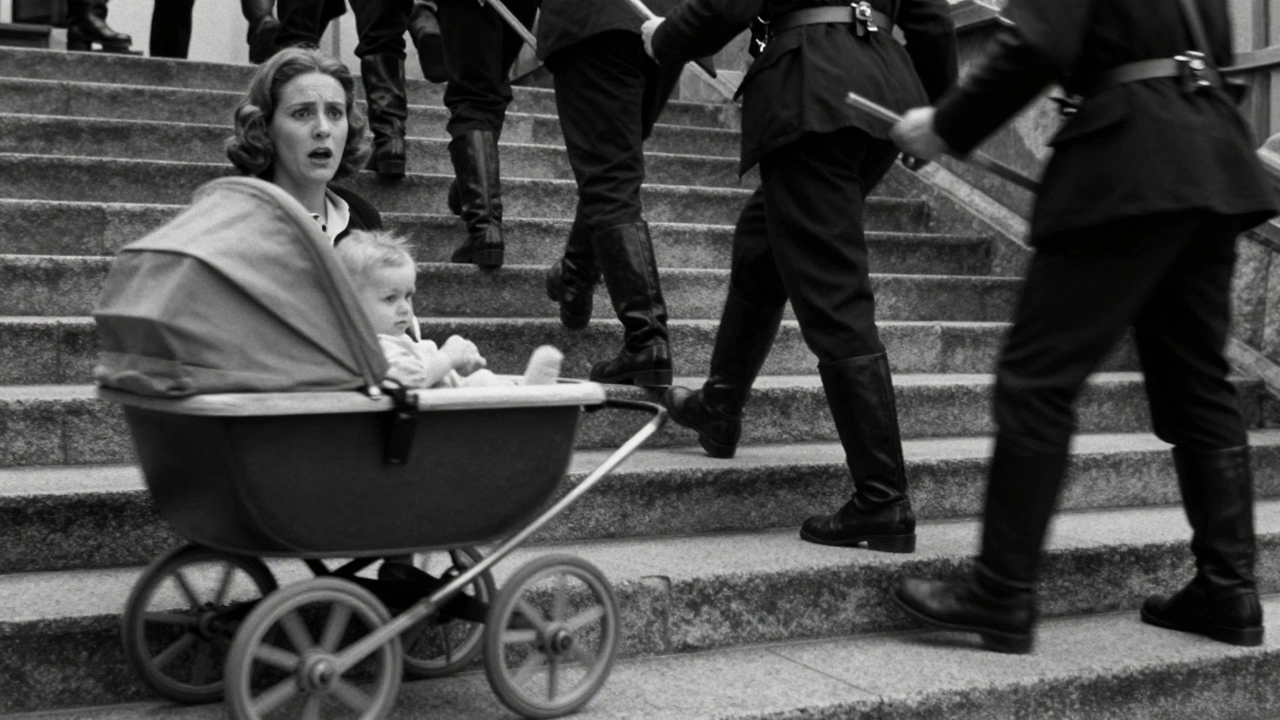
This wasn't just theory. It was practice. In his 1925 masterpiece Battleship Potemkin, Eisenstein created the "Odessa Steps" sequence. He intercut shots of soldiers marching down stairs, mothers clutching babies, and a baby carriage rolling uncontrollably. By speeding up the rhythm of these cuts, he created panic and horror without using a single line of dialogue. This technique taught the world that editing controls time and emotion.
Five Pioneers Who Changed Filmmaking
Soviet cinema wasn't a monolith. Several distinct voices emerged, each pushing boundaries in different directions. While Eisenstein focused on mass movements and ideological conflict, others looked inward or explored psychological realism.
| Director | Signature Style | Major Work | Contribution |
|---|---|---|---|
| Sergei Eisenstein | Dialectical Montage | Battleship Potemkin (1925) | Defined editing as intellectual collision |
| Dziga Vertov | Kino-Eye / Documentary | Man with a Movie Camera (1929) | Pioneered modern documentary techniques |
| Vsevolod Pudovkin | Linkage Montage | Mother (1926) | Used editing to build emotional continuity |
| Alexander Dovzhenko | Poetic Realism | Zvenigora (1928) | Blended nature imagery with human drama |
| Andrei Tarkovsky | Scalpting in Time | Stalker (1979) | Focused on spiritual depth and long takes |
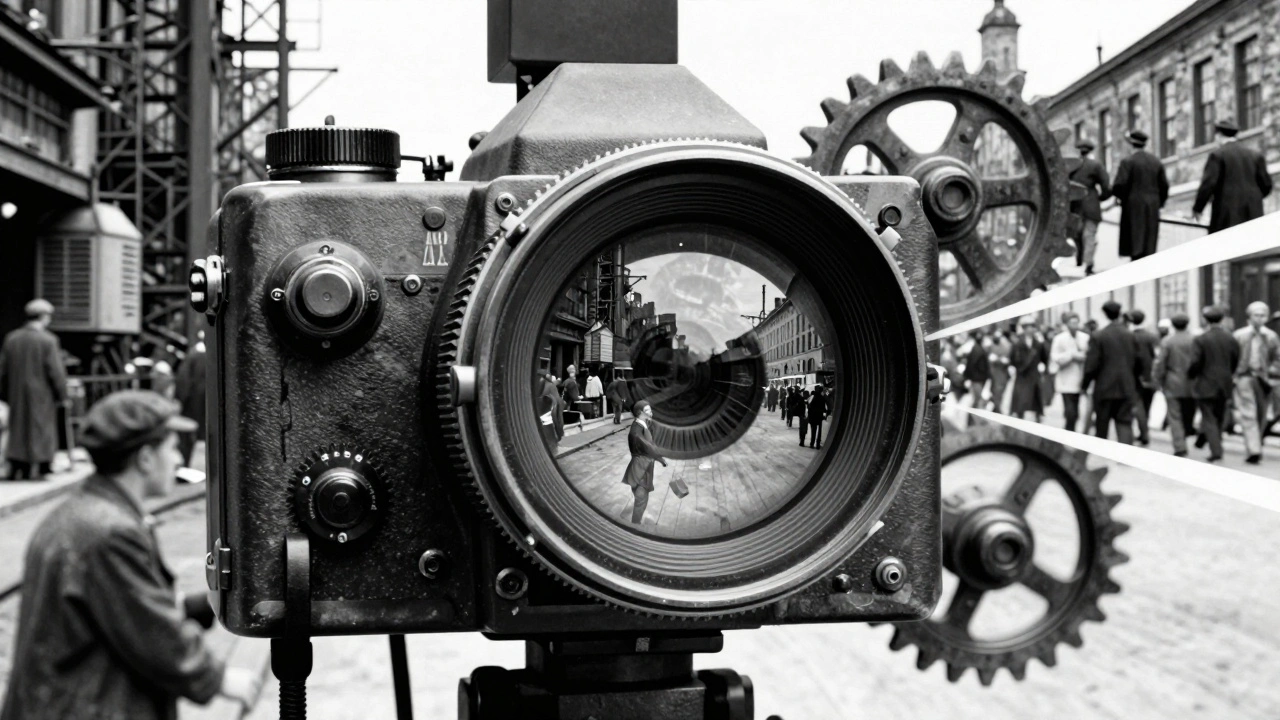
Dziga Vertov took a different path. He rejected actors and scripts entirely. In Man with a Movie Camera, he used split screens, double exposures, and fast-forward effects to show the mechanical eye of the camera capturing everyday life. This film is still studied today in video production classes because it anticipated modern digital editing tricks by decades.
Vsevolod Pudovkin offered a counterpoint to Eisenstein. While Eisenstein wanted conflict, Pudovkin wanted connection. His "linkage montage" aimed to guide the viewer’s eye smoothly from one detail to another, building a coherent narrative arc. If Eisenstein was a hammer, Pudovkin was a scalpel.
The Thaw and the Rise of Poetic Cinema
After the strict censorship of the Stalinist era, the late 1950s brought a cultural relaxation known as the Khrushchev Thaw. This period allowed filmmakers to explore personal themes rather than just state propaganda. It also paved the way for the later emergence of Andrei Tarkovsky, widely considered one of the greatest directors in history, who challenged the very notion of cinematic time.
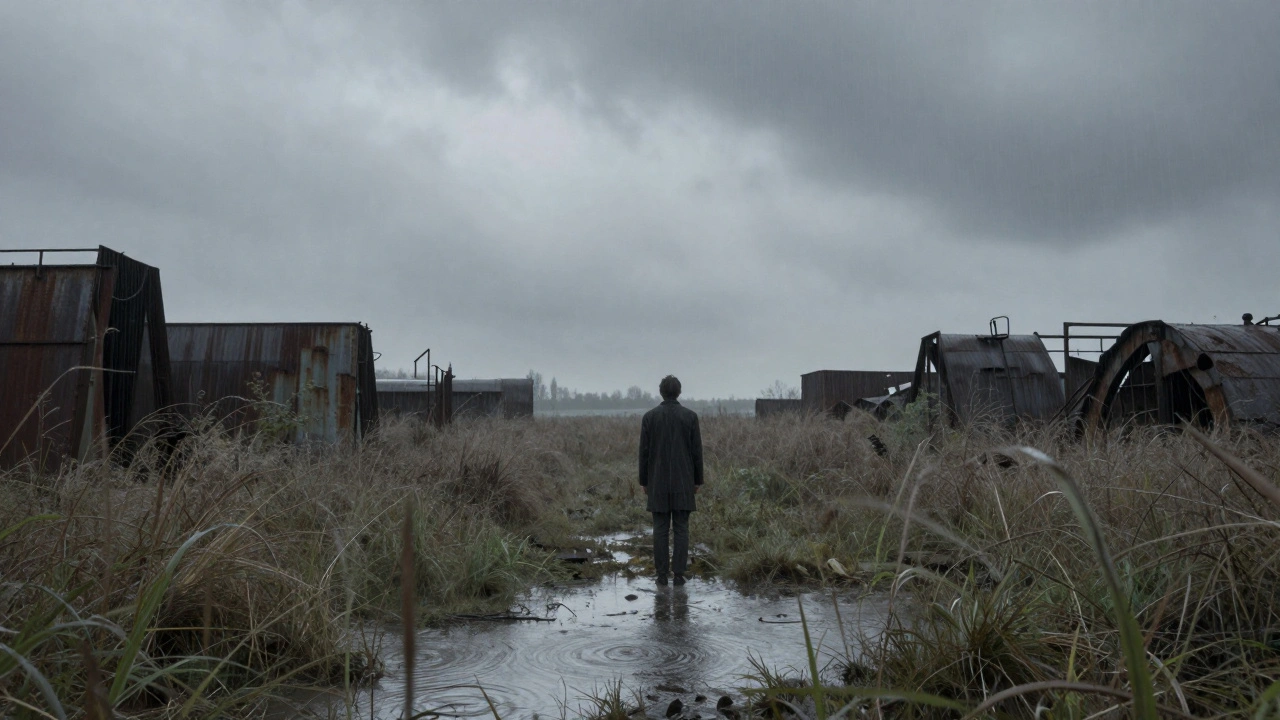
Tarkovsky hated the rapid-fire editing of Western commercial cinema. He called his approach "sculpting in time." For him, a film shouldn't cut away when the tension rises; it should stay with the character, forcing the audience to sit with their discomfort. In films like Stalker and Andrei Rublev, scenes last minutes at a time. Rain falls. Dust settles. Characters breathe.
This slow, meditative style influenced a generation of international auteurs. Directors like Martin Scorsese, Christopher Nolan, and Denis Villeneuve have all cited Tarkovsky as a major influence. Nolan’s use of long, unbroken sequences in Inception and Dunkirk owes a debt to Tarkovsky’s belief that time itself is a character.
War Films and Moral Complexity
No discussion of Russian contributions to film history is complete without addressing war cinema. Unlike Hollywood, which often presents clear heroes and villains, Soviet war films frequently grappled with trauma, loss, and moral ambiguity.
Grigori Chukhrai’s Fate of a Man (1959) is a prime example. Based on a story by Mikhail Sholokhov, it follows a soldier who survives the front lines, only to return home to find his family dead. The film avoids grand speeches about glory. Instead, it focuses on the quiet resilience of ordinary people. This humanistic approach shifted the genre from propaganda to profound emotional storytelling.
Later, in the 1980s, Elem Klimov directed Come and See. Often cited as the most terrifying anti-war film ever made, it uses surreal imagery and sound design to depict the horrors of the Nazi occupation of Belarus. The protagonist ages visibly over the course of the film, symbolizing the loss of innocence. This level of psychological intensity raised the bar for war dramas worldwide.
Global Influence Beyond Borders
The impact of Soviet cinema extends far beyond Eastern Europe. When American directors visited Moscow in the 1920s, they brought back notes on editing techniques. D.W. Griffith, often credited with inventing narrative editing, actually refined his methods after studying Soviet experiments.
In the 1960s, French New Wave directors like Jean-Luc Godard explicitly referenced Eisenstein. Godard’s jump cuts and disjointed narratives were direct challenges to classical Hollywood continuity, inspired by the Soviet idea that film should be constructed, not hidden.
Even modern television shows use Soviet techniques. The rapid cross-cutting in series like Sons of Anarchy or Breaking Bad relies on the principle that juxtaposing two actions creates suspense. This is pure montage theory applied to serialized storytelling.
Preserving the Legacy
Today, many original Soviet films exist only in fragmented forms due to political suppression or physical decay. However, restoration efforts by institutions like the Gosfilmofond in Russia and various international archives are preserving these works. Digital restoration has allowed viewers to see Man with a Movie Camera in its original high-contrast black and white, revealing details lost in earlier prints.
Understanding these films isn't just an academic exercise. It helps us decode the language of visual media. Every time you see a trailer that cuts quickly between unrelated scenes to build excitement, you are witnessing the ghost of Sergei Eisenstein. Every time a documentary uses shaky handheld footage to feel "real," you are seeing Dziga Vertov’s legacy.
Who is the most influential Soviet filmmaker?
While opinions vary, Sergei Eisenstein is generally considered the most influential due to his development of montage theory. His work defined how editors think about pacing and meaning. However, Andrei Tarkovsky holds equal weight in terms of artistic influence on contemporary auteurs.
What is the difference between Soviet montage and Hollywood editing?
Hollywood editing traditionally aims for "invisible" continuity, making the viewer forget they are watching a film. Soviet montage makes the editing visible and intellectual, using cuts to create new ideas or emotions through the clash of images.
Are Soviet films still relevant today?
Yes. The technical innovations in editing, camera movement, and sound design pioneered by Soviet filmmakers are foundational to modern cinema. Many contemporary directors cite them as primary influences.
Which Soviet film is best for beginners?
For those interested in editing, Battleship Potemkin is essential. For a more narrative-driven experience, The Cranes Are Flying offers a powerful look at love and war. Both are accessible and visually stunning.
How did politics affect Soviet cinema?
Politics heavily dictated content. During the Stalin era, Socialist Realism was enforced, requiring films to promote state ideology. This led to censorship and self-censorship, though some directors found subtle ways to critique society through allegory.



Comments(10)