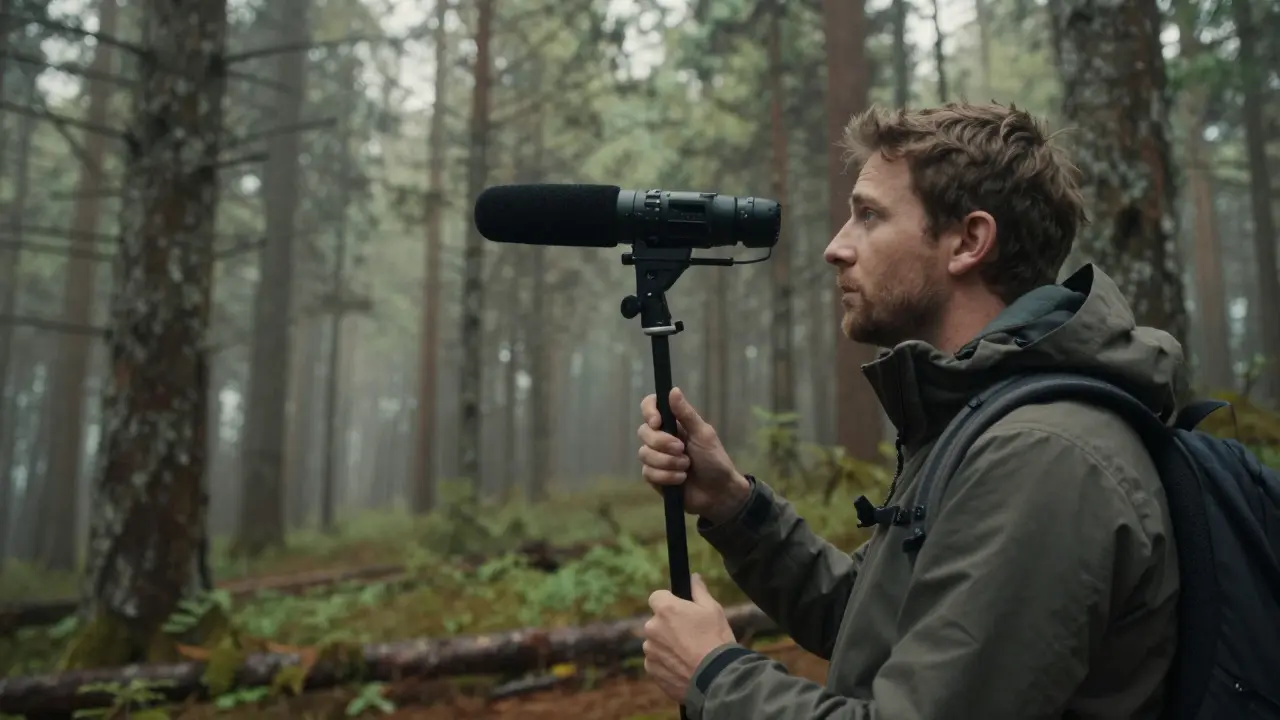
Imagine watching a documentary about the deep ocean. You see the vast blue expanse, but what makes you feel the crushing pressure and the eerie silence is not the image-it’s the sound. Sound Design is the process of creating and manipulating audio elements to evoke emotion, establish setting, and guide narrative attention in visual media. In documentaries, this craft is often invisible yet indispensable. It bridges the gap between raw footage and emotional truth, turning observational recording into an immersive experience. Unlike fictional films where every sound can be invented from scratch, documentary sound designers work with constraints. They must respect the reality of the scene while enhancing it for dramatic effect. This balance requires a unique blend of technical skill and artistic intuition. The goal is never to distract, but to deepen the viewer’s connection to the subject matter.
The Core Elements of Documentary Audio
To build a convincing sonic world, you need to understand the three pillars of audio production: dialogue, ambient noise, and foley. Each serves a distinct purpose in shaping the audience's perception. Dialogue is the primary carrier of information in most documentaries. However, real-world interviews are rarely clean. Wind, traffic, and room echoes can muddy the voice. Sound editors spend hours cleaning up these tracks using spectral repair tools to ensure clarity without making the voice sound artificially perfect. Ambient Noise, or "room tone," provides the background texture that tells us where we are. A hospital hallway sounds different from a bustling city street. By layering specific environmental sounds-like distant sirens, rustling leaves, or hum of machinery-designers create a sense of place that grounds the viewer in the physical reality of the story. Finally, there is Foley Artistry, which involves recording synchronized sound effects like footsteps, clothing rustles, and object interactions. While less common in static talking-head interviews, foley becomes crucial in observational segments where characters move through spaces. The subtle creak of a chair or the clink of a coffee cup adds a layer of tactile realism that silent footage lacks.Capturing Reality vs. Creating Atmosphere
A common misconception is that documentary sound is just "recording what happens." In practice, it is a hybrid of capture and construction. Field recordists use high-quality microphones to grab authentic moments, but post-production teams often rebuild scenes entirely if the original audio was compromised. Consider a scene filmed in a windy forest. The wind might overpower the dialogue. Instead of discarding the shot, the editor might replace the noisy background with a cleaner library track of forest ambience recorded on a calm day. Then, they re-record the dialogue in a controlled studio environment, matching the actor's lip movements. This technique, known as ADR (Automated Dialogue Replacement), preserves the visual integrity while ensuring auditory clarity. The challenge lies in consistency. If one shot has crisp, dry audio and the next has wet, reverb-heavy sound, the viewer will subconsciously notice the shift. Sound designers maintain continuity by standardizing frequency responses and reverberation times across all clips in a sequence. This invisible editing is what allows the audience to stay immersed in the story rather than analyzing the technical flaws.Emotional Storytelling Through Music and Silence
Music is the emotional engine of many documentaries. But its role is not always to fill space; sometimes, it is to punctuate it. A well-placed musical cue can signal a transition, highlight a revelation, or underscore a tragic moment. Conversely, silence can be deafening. Removing all background noise during a key statement forces the viewer to focus entirely on the speaker’s words and expression. Score Composition in documentaries often differs from feature films. Instead of constant orchestral swells, composers may use sparse, minimalist themes that leave room for the natural soundscape. For example, a documentary about wildlife might use a single, sustained string note that blends with the wind, rather than a full orchestra that would compete with the animals' calls. The relationship between music and diegetic sound (sound originating within the story world) is delicate. If a character is playing a guitar, the score should either complement that instrument or step back entirely. Clashing frequencies or rhythmic conflicts can pull the viewer out of the moment. Experienced mixers listen for these clashes and adjust levels or EQ settings to ensure harmony.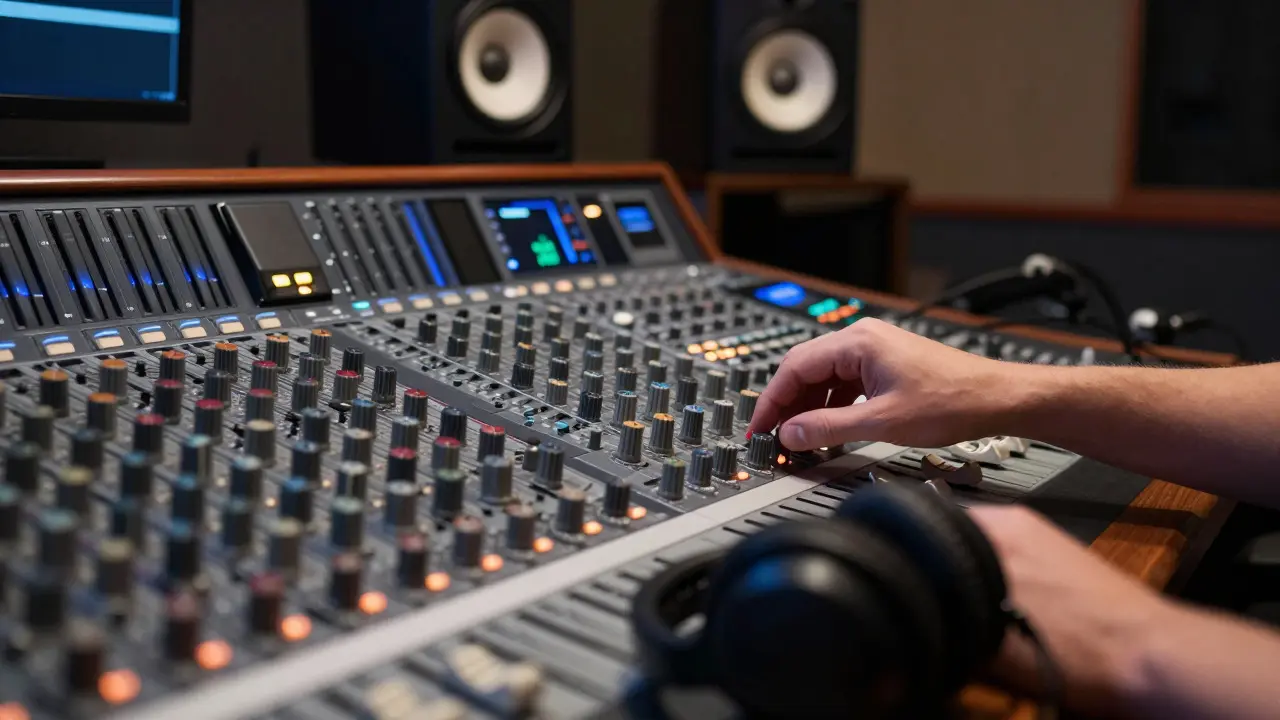
Technical Tools and Workflows
Building a sonic world requires specific software and hardware. Most professional sound designers work within Digital Audio Workstations (DAWs) like Pro Tools or Logic Pro. These platforms allow for non-linear editing, meaning you can rearrange, loop, and manipulate audio clips with precision. Key plugins play a vital role in this workflow:- De-essers: Reduce harsh sibilant sounds in dialogue to prevent listener fatigue.
- Dynamics Processors: Compressors and limiters control volume dynamics, ensuring quiet whispers are audible and loud shouts don’t distort.
- Spatializers: Plugins that simulate 3D audio environments, allowing designers to place sounds in specific directions relative to the stereo field.
- Restoration Tools: Algorithms that remove hum, buzz, and transient noises from recordings.
Common Pitfalls to Avoid
Even experienced professionals make mistakes. One frequent error is over-processing. When too much compression and EQ are applied, dialogue can sound thin or unnatural. The rule of thumb is: if you have to ask whether it sounds processed, you’ve probably gone too far. Another pitfall is ignoring the mix context. Sounds that work perfectly in isolation can clash when layered with other elements. Always check your audio in the full context of the scene, including music and other voices. A bass-heavy ambient track might bury the low end of a narrator’s voice, requiring careful equalization to carve out space. Lastly, beware of clichés. Using the same "mystery" sting or "sad piano" motif for every emotional beat can feel manipulative and cheap. Trust the material. Often, the natural sound of the environment tells the story better than any added effect.| Element | Purpose | Common Challenges | Best Practice |
|---|---|---|---|
| Dialogue | Convey information and character voice | Noise interference, inconsistent levels | Clean with spectral repair, normalize loudness |
| Ambience | Establish location and atmosphere | Lack of variety, looping artifacts | Layer multiple sources, avoid obvious loops |
| Foley | Add tactile realism to movement | Timing synchronization, over-dubbing | Record in real-time, keep subtle and minimal |
| Music | Guide emotion and pacing | Clashing with diegetic sound | Use sparingly, prioritize natural sound |
Case Study: The Power of Restraint
Look at acclaimed nature documentaries like those produced by BBC Studios. Their sound design is characterized by restraint. They capture the actual calls of birds and the crash of waves with extreme fidelity. Rather than adding dramatic scores over every scene, they let the natural sounds breathe. A whale song is allowed to fade naturally into the water noise, creating a seamless transition that feels organic. This approach builds trust with the audience. Viewers know they are hearing something real, even if it has been enhanced. The credibility of the sound reinforces the credibility of the facts being presented. In contrast, overly stylized sound design can undermine the documentary’s claim to truthfulness, making the viewer question what is real and what is fabricated.Frequently Asked Questions
What is the difference between sound design and sound editing?
Sound editing focuses on selecting and placing existing audio clips to match the picture. Sound design goes further by creating new sounds, manipulating existing ones, and crafting the overall atmospheric texture of the film. In documentaries, these roles often overlap significantly.
Do documentaries always use ADR?
Not always. If the original dialogue is clear and consistent, ADR is unnecessary. However, ADR is frequently used when field recording conditions were poor, when actors spoke off-camera, or when language translation is required. The decision depends on the quality of the source material and the director's vision.
How important is silence in documentary sound design?
Silence is extremely important. It creates dynamic range, allowing loud moments to impact more strongly. It also gives the audience time to process information and reflect on the visuals. Strategic use of silence can emphasize key statements or transitions without relying on musical cues.
What software do professional documentary sound designers use?
Pro Tools is the industry standard for post-production sound editing and mixing due to its robust editing capabilities and integration with DAWs. Other popular options include Adobe Audition for restoration tasks and Logic Pro for music composition. The choice often depends on the studio's existing infrastructure and personal preference.
Can you fix bad audio in post-production?
You can improve bad audio, but you cannot always fix it completely. Severe clipping, heavy wind noise, or extreme reverberation may require replacing the dialogue with ADR or using alternative footage. Prevention is always better than cure, so investing in good field recording equipment and techniques is crucial.