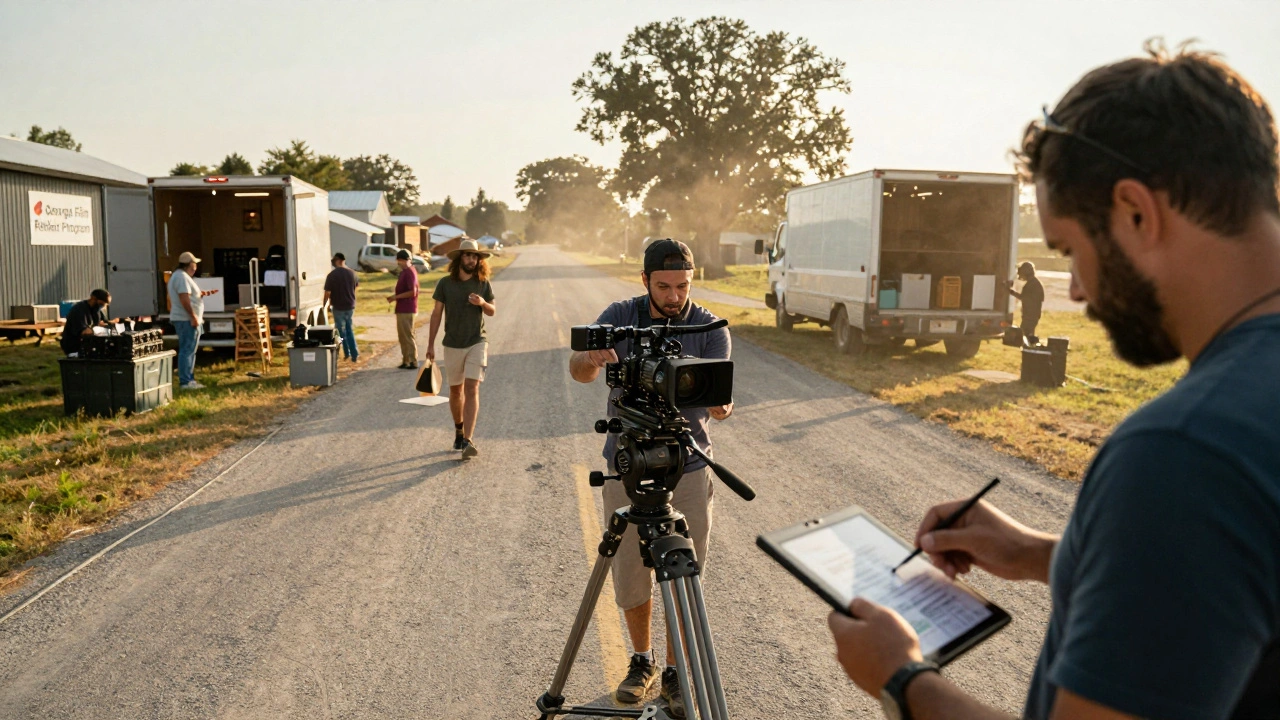
When you hear the word "soft money" in film, it doesn't mean loose change. It means real cash-often millions-that studios and producers can access just by filming in certain states or countries. This isn’t charity. It’s a calculated trade: governments offer cash back to bring jobs, tourism, and economic activity to their regions. For indie filmmakers, this can mean the difference between shooting a movie and shelving it forever.
What Exactly Is Soft Money in Film?
Soft money isn’t a loan. It’s not equity. It’s a direct cash payment or tax credit given to filmmakers after they spend money locally. Think of it like a rebate on your car purchase, but instead of a dealership, the state is giving you money back for hiring local crew, renting gear, staying in hotels, and buying food from local vendors.
Unlike hard money-like studio financing or private investors-soft money doesn’t require you to give up creative control or ownership. You don’t owe anyone a cut. You just have to spend the money in the right places. That’s why it’s called "soft": it’s flexible, non-dilutive, and doesn’t come with strings attached beyond spending rules.
For example, if you shoot a movie in Georgia and spend $5 million locally, you might get back $1.5 million in cash. That’s a 30% rebate. In Louisiana, it’s 40% for qualified spending. In Canada, some provinces offer up to 45% in tax credits. These numbers aren’t theoretical. They’ve funded everything from Stranger Things to Black Panther.
How Film Incentives Work: Rebates vs. Tax Credits
Not all incentives are the same. There are two main types: rebates and tax credits. They sound similar, but they work very differently.
- Rebates are direct cash payments. You apply, get approved, spend the money, submit receipts, and get a check. Georgia, New Mexico, and Louisiana use this model.
- Tax credits reduce your state income tax liability. You don’t get cash upfront-you get a credit you can use to offset taxes you owe. If you don’t owe taxes (like many indie producers), you can often sell the credit to someone who does. That’s how you turn it into cash. California and New York use this system.
The key difference? Timing and liquidity. Rebates give you cash faster. Tax credits require a buyer or a tax situation that lets you use them. If you’re a small production with no tax liability, tax credits can be useless unless you sell them-often at a discount.
Where the Money Is: Top U.S. States for Film Incentives in 2026
Not every state offers incentives. Some used to, then cut them. Others ramped up competition. Here’s what’s hot right now:
| State | Type | Max Incentive | Cap | Requirements |
|---|---|---|---|---|
| Georgia | Rebate | 30% | $10M annual cap | Must spend $500K+; use local crew |
| Louisiana | Rebate | 40% | $150M annual cap | Must spend $300K+; 75% local labor |
| New Mexico | Rebate | 35% | $50M annual cap | Must spend $250K+; 70% local spend |
| California | Tax Credit | 25-30% | $330M annual cap | Must film in CA; apply early; sell credits |
| North Carolina | Tax Credit | 25% | $100M annual cap | Must spend $100K+; 50% local crew |
Georgia still leads in volume-over 100 productions filmed there in 2025. Louisiana’s program is the most generous per dollar spent. New Mexico is quietly becoming a hub for sci-fi and fantasy shoots because of its unique landscapes and reliable incentives. California’s program is massive but hard to access without a tax attorney.
What You Need to Spend to Qualify
You can’t just show up with a camera and a dream. Every state has minimum spending thresholds. These aren’t suggestions-they’re hard cutoffs.
- Georgia: $500,000 minimum spend
- Louisiana: $300,000 minimum spend
- New Mexico: $250,000 minimum spend
- North Carolina: $100,000 minimum spend
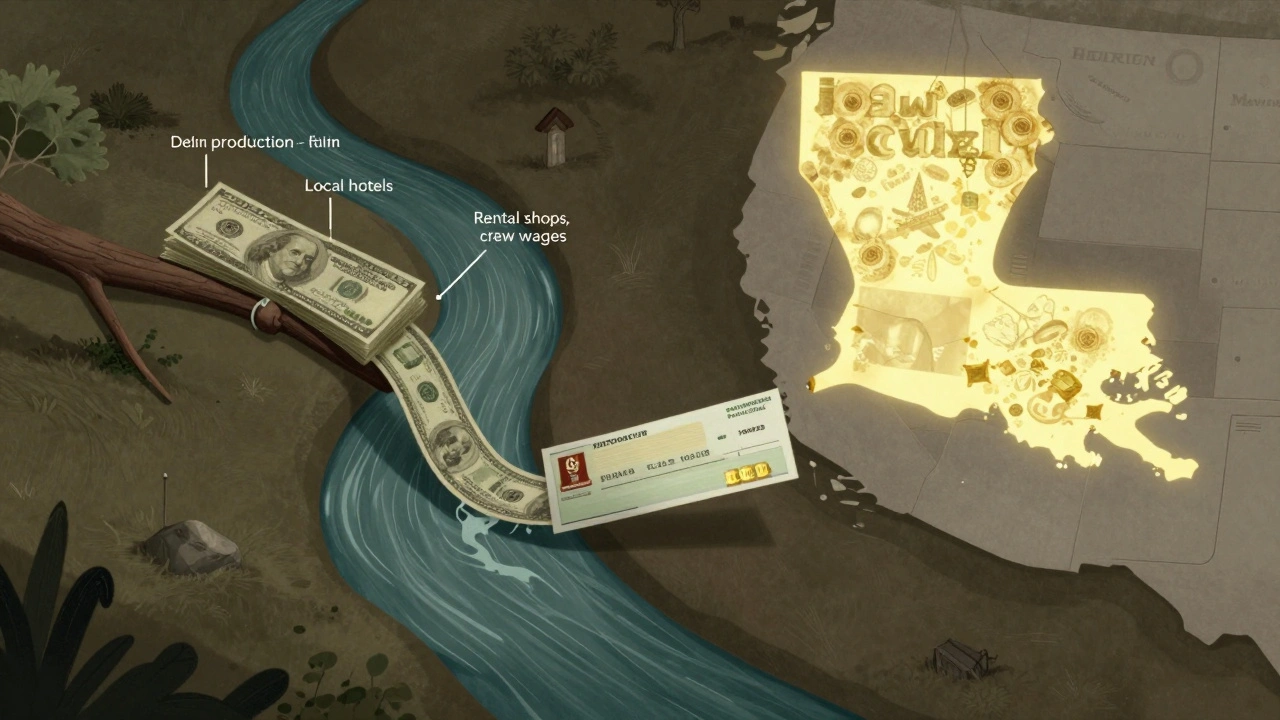
And it’s not just about paying actors. You have to spend on local vendors: equipment rentals, catering, hotels, transportation, local crew wages. Paying a New York editor remotely? That doesn’t count. Renting a van from a local company? That does.
Some states even require a percentage of your crew to be local. Louisiana mandates 75% of your paid crew must be residents. That means you’re not just getting money-you’re building local industry.
The Hidden Costs of Soft Money
It sounds too good to be true. And sometimes, it is.
First, there’s paperwork. Every state has its own application, audit process, and reporting requirements. Georgia requires itemized receipts for every dollar. Louisiana uses a third-party auditor who checks every hotel receipt and craft services invoice. One missing receipt can cost you 10% of your incentive.
Second, there’s delay. Even if you qualify, you might not get paid for 6-12 months. That means you need to cover production costs upfront. Many small productions go into debt hoping the rebate comes through.
Third, competition. States cap their programs. Georgia’s $10 million cap fills up in weeks. If you apply too late, you’re out. You need to file months before production starts.
And finally, some states change the rules. In 2024, Florida eliminated its incentive program overnight. Producers who had already committed to shoots were left holding the bag. That’s why smart filmmakers lock in their incentives before signing any contracts.

How to Maximize Your Incentive
If you’re serious about using soft money, here’s how to do it right:
- Start early. Apply for incentives at least 6 months before shooting.
- Build relationships with local vendors. They know the rules and can help you spend correctly.
- Use a film incentive consultant. They charge 1-3% of the rebate, but they often recover 10-20% more than you’d get on your own.
- Track every dollar. Use software like Frame.io or ProductionHUB to log expenses in real time.
- Don’t assume your state has a program. Check the International Film Incentive Database (IFID) or your state’s film office website.
One producer in Asheville spent $800,000 on a documentary and got back $280,000-enough to cover post-production and distribution. She didn’t win a grant. She didn’t get a backer. She just followed the rules.
What’s Next for Film Incentives?
More states are launching programs. Tennessee, Arizona, and even Ohio are now offering incentives. At the same time, some states are tightening rules to prevent abuse.
There’s also a shift toward "content localization." States now care less about big studio blockbusters and more about shows that hire local talent long-term. That’s why Georgia’s program now rewards productions that train apprentices and hire local film schools.
And internationally, Canada, the UK, and Australia are doubling down. The UK’s tax credit now offers up to 53% for high-end TV. That’s why House of the Dragon shot in the UK, not the U.S.
Soft money isn’t going away. It’s evolving. The winners will be those who treat it like a business tool-not a lucky break.
Do I need to be a U.S. company to qualify for film incentives?
No. Foreign productions can qualify for U.S. incentives as long as they meet the spending and labor requirements. Many Canadian, British, and Australian films shoot in Georgia and Louisiana specifically because of the rebates. You just need a U.S. bank account to receive the payment.
Can I combine incentives from multiple states?
Generally, no. Most states require you to certify that you’re not claiming incentives elsewhere. However, you can shoot part of your film in one state and another part in another-each with its own incentive. You’ll need separate budgets and applications for each location.
What if I overspend on my budget?
You can’t get more than the program’s maximum. If Georgia caps incentives at $10 million and you spend $50 million, you still only get up to $10 million. The cap is the ceiling, not a multiplier. Always check the cap before planning your budget.
Are digital services like editing or VFX eligible for incentives?
It depends. Most states only count physical, on-location spending: crew wages, equipment rentals, location fees, catering. Post-production services like editing, VFX, or sound mixing usually don’t qualify unless they’re done in-state with local vendors. Some states, like Georgia, now allow up to 25% of post-production spend to count if done locally.
How long does it take to get paid after filming?
Typically 6 to 12 months. States need time to audit your receipts, verify spending, and process payments. Georgia’s average turnaround is 8 months. Louisiana takes 9-10. If you need cash faster, you can sell your incentive rights to a third-party financier-but you’ll lose 10-20% of the value.






Comments(6)