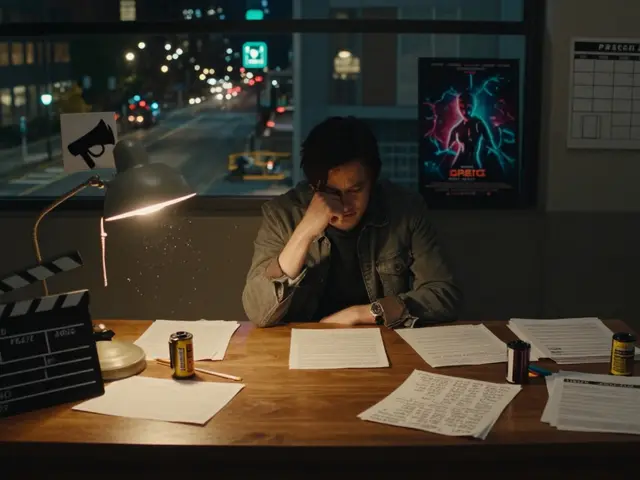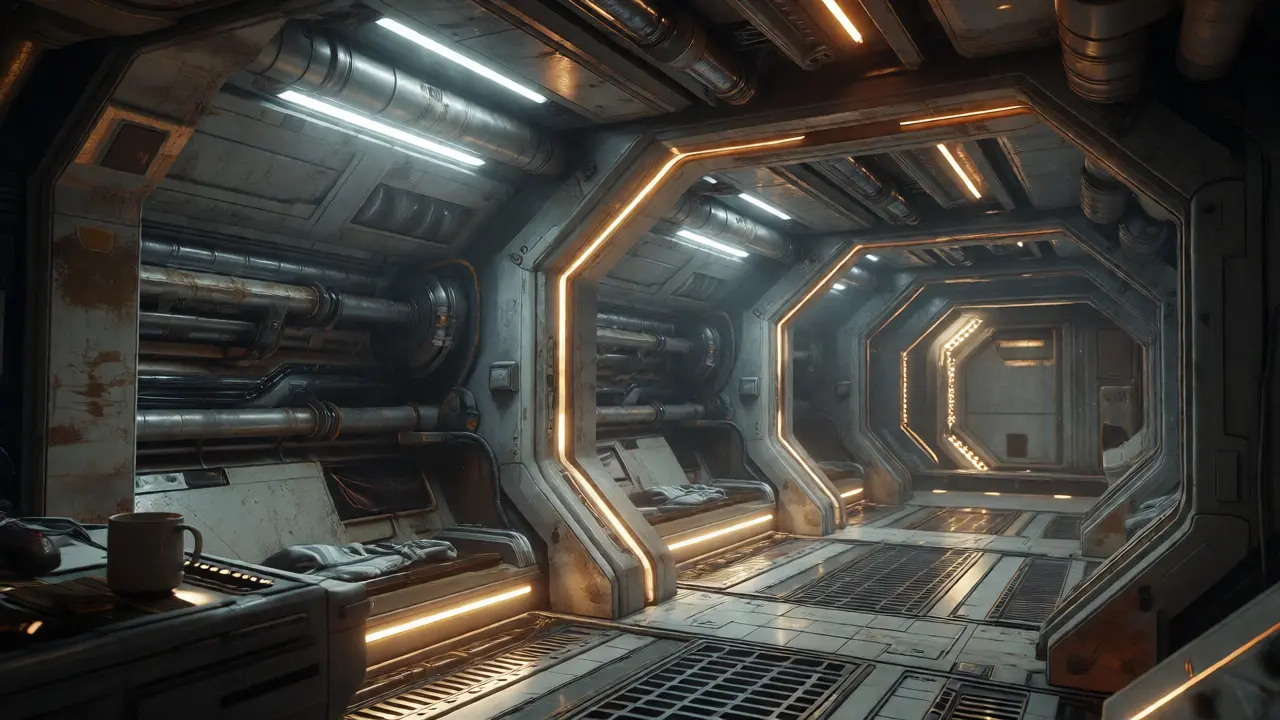
Imagine walking into a room that doesn’t exist yet. The air smells like ozone and old metal. The light comes from panels embedded in walls that look like they grew there, not were built. This is the magic of science fiction world-building: it’s not just about cool gadgets or laser swords; it’s about creating a lived-in reality for the audience. When you watch a film like Blade Runner 2049, you don’t question if people actually live there. You feel the weight of the history. That feeling? That’s the job of production design.
Most people think world-building is writing lore in a notebook. But on screen, it’s visual storytelling. It’s deciding why a spaceship has rust stains. It’s choosing whether a futuristic city looks clean and sterile or cluttered and chaotic. These choices tell us who lives there, how much money they have, and what their society values. If you’re interested in how filmmakers make the impossible feel real, you need to understand the mechanics behind the sets.
The Core Principle: Function Follows Fiction
In traditional architecture, form follows function. In science fiction, we flip that script. Here, speculative architecture must serve the narrative first. Every prop, every wall texture, every lighting choice needs to answer a question: What does this say about the character using it?
Take the difference between the pristine white corridors of Star Trek and the grimy, industrial pipes of Alien. Both are spaceships. Both use similar technology levels. But one feels optimistic and utopian; the other feels like a blue-collar workplace where things break constantly. The production designer didn’t just pick colors. They picked a socioeconomic statement. The clean lines of Starfleet suggest unlimited resources and order. The exposed wiring in the Nostromo suggests budget cuts and danger.
This is where many beginners fail. They focus on the "wow" factor-the big hologram, the flying car-instead of the mundane details. But audiences connect with the mundane. A coffee mug left on a console tells us more about daily life than a warp drive core ever could. When designing future environments, ask yourself: How do these people eat? How do they sleep? Where do they hide their secrets?
Materiality and Texture: Making the Fake Feel Real
One of the biggest giveaways of bad sci-fi is plastic that looks like plastic. Good production design relies on material authenticity. Even if an object is made of foam and painted silver, it needs to behave like metal. It needs scratches. It needs dust in the crevices. It needs to reflect light differently depending on its age.
| Material Type | Narrative Implication | Example Film | Visual Cue |
|---|---|---|---|
| Polished Chrome | High-tech, sterile, corporate control | Oblivion | Perfect reflections, no fingerprints |
| Rusted Steel | Post-apocalyptic, resource scarcity | Mad Max: Fury Road | Flaking paint, visible corrosion |
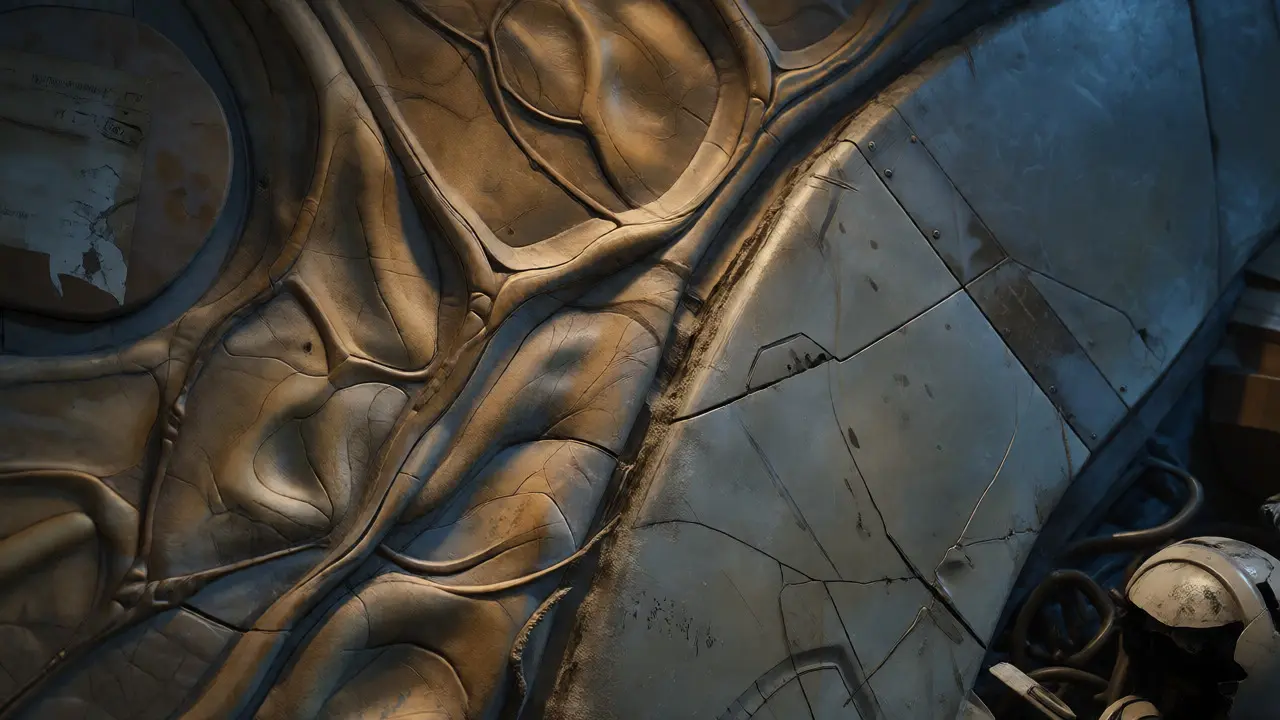
| Bio-Organic Surfaces | Advanced biology, alien influence | Annihilation | Vein-like patterns, soft textures |
| Weathered Concrete | Dystopian, brutalist government | Children of Men | Cracks, graffiti, water damage |
Notice how each material carries a specific emotional weight. Rusted steel isn’t just dirty; it’s a timer ticking down on civilization. Polished chrome isn’t just shiny; it’s cold and unwelcoming. When you build a set, you aren’t just decorating. You’re manipulating the audience’s subconscious reaction to the environment.
Consider the work of production designers like Dennis Gassner or Adam Stockhausen. They don’t just sketch ideas; they curate objects. In Arrival, the heptapod ship wasn’t just a giant rock. Its surface was designed to be non-reflective and matte, absorbing light rather than bouncing it. This subtle choice made the aliens feel mysterious and ancient, not just technologically advanced. The texture told us they had been here longer than we could comprehend.
Lighting as Environmental Storytelling
You can have the most detailed set in the world, but if the lighting is wrong, the illusion breaks. In science fiction, light often defines the boundaries of the known world. Think about the dark corners in The Matrix. The green tint wasn’t just a style choice; it represented the digital simulation’s artificial nature. When Neo steps outside the matrix, the color palette shifts to warmer, natural tones. The environment changed because the reality changed.
Future environments often rely on practical light sources integrated into the set. Instead of hanging lamps from the ceiling, designers embed LEDs into floors, ceilings, and furniture. This creates a sense of immersion. If a character walks past a wall and the light shifts subtly, it feels alive. It suggests the building itself is reactive. This technique is crucial for making static sets feel dynamic without relying solely on CGI.
Here’s a quick rule of thumb for writers and directors working with designers:
- Hard Light: Use for clinical, authoritarian, or high-stakes scenes. It exposes everything.
- Soft Diffused Light: Use for dreamlike sequences, memory, or safe zones.
- Practical Sources: Always try to justify the light source within the story. Why is that neon sign buzzing? Who installed it?
Social Stratification Through Space
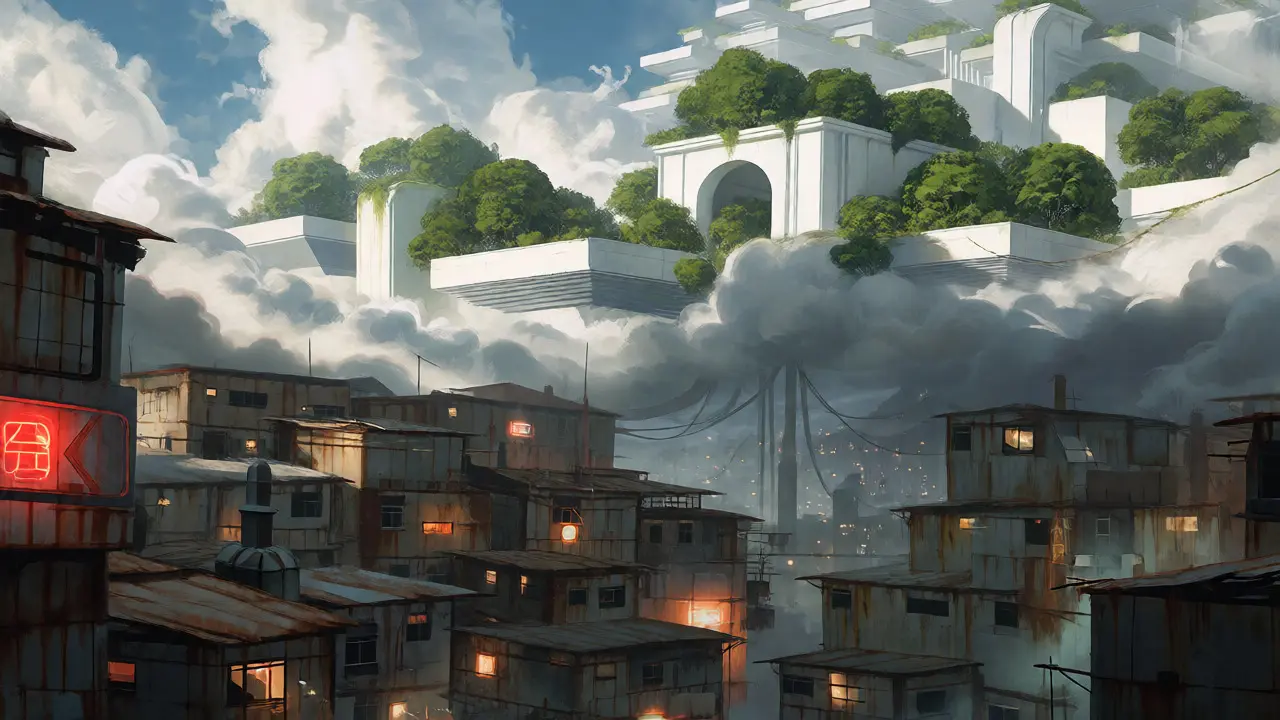
How do you show inequality without dialogue? You use vertical space. In almost every dystopian sci-fi film, the rich live up and the poor live down. This is a physical manifestation of social hierarchy. Look at Elysium or Snowpiercer. The distance between classes is measured in meters of elevation or kilometers of train cars.
This spatial logic helps viewers instantly understand power dynamics. If a character has to climb ten flights of stairs to meet their boss, we know they lack status. If the elite have gardens while the workers have cages, we know who controls the resources. Production designers map out these relationships before drawing a single line. They create a "geography of power."
But it’s not always vertical. Sometimes it’s horizontal. In District 9, the slums were cramped and chaotic, reflecting the refugees’ lack of agency. The military compound was wide, open, and heavily fortified. The contrast wasn’t just aesthetic; it was political. The environment enforced the segregation.
The Role of Technology: Visible vs. Invisible
A common mistake in modern sci-fi is over-designing technology. We see screens everywhere. Buttons everywhere. But true futurism might mean less clutter, not more. As devices become smaller and more powerful, they tend to disappear. Think of smartphones today compared to the bulky computers of the 1980s. In the future, interfaces might be invisible-controlled by voice, gesture, or thought.
When designing future environments, consider the level of technological maturity. Is this a society that just discovered space travel? Then the tech will be clunky, loud, and dangerous. Is this a post-scarcity society? Then the tech will be seamless, silent, and perhaps even organic.
For example, in Her, the technology is barely noticeable. There are no massive screens. People talk to thin earpieces. The world feels near-future because the tech has blended into everyday life. Contrast this with Minority Report, where the tech is flashy, interactive, and central to the plot. Both are valid approaches, but they serve different stories. One explores intimacy; the other explores surveillance.
Building the Backstory Through Clutter
Empty rooms feel fake. Real places accumulate debris. In sci-fi, this debris should hint at a history. A broken robot part in a corner suggests a war happened recently. A faded poster on a wall suggests a cultural shift. These small details, often called "set dressing," do heavy lifting in world-building.
Production designers spend weeks sourcing or fabricating these items. They look for objects that feel familiar but slightly off. A chair that looks like a standard office chair but has weird ergonomic supports. A drink container that looks like a soda can but has a strange logo. This uncanny valley effect keeps the audience engaged. It makes them curious. They start asking questions: Who made this? Why is it shaped like that?
This curiosity is gold. It turns passive viewing into active exploration. When you notice the details, you’re co-creating the world with the filmmaker. You’re filling in the gaps with your own imagination. That’s the ultimate goal of effective world-building.
Pitfalls to Avoid in Future Environments
Not all sci-fi designs land. Some fall flat because they ignore basic human needs. Here are common traps:
- The Sterile Trap: Everything is white and smooth. No dirt, no wear, no personality. It feels like a hospital, not a home.
- The Clutter Overload: Too many lights, too many wires, too many screens. The eye doesn’t know where to look. Simplicity often reads as more advanced.
- Ignoring Scale: Characters interacting with objects that are clearly too big or too small for them. This breaks immersion instantly.
- Cultural Homogeneity: A galactic empire where everyone dresses and builds exactly the same way. Real cultures vary, even when unified politically.
Avoiding these pitfalls requires constant reference to real-world behavior. Watch how people interact with their current environments. Notice how they lean against walls, how they stack books, how they leave trash. Then project those behaviors into the future. Humans haven’t changed much biologically. Our habits persist.
Frequently Asked Questions
What is the difference between set decoration and production design?
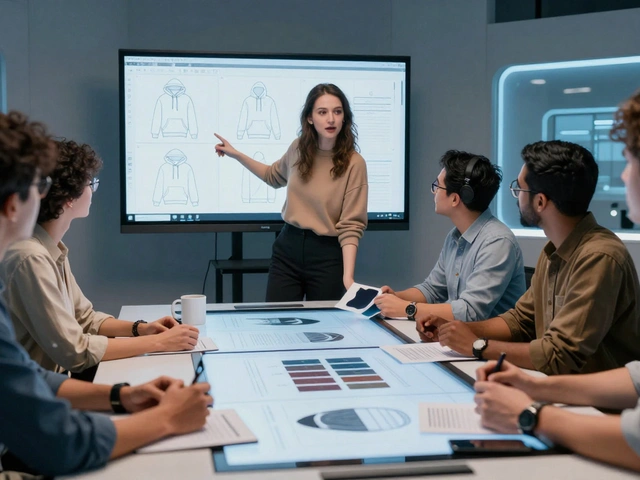
Production design oversees the overall visual concept and structural elements of the sets, ensuring they align with the director's vision. Set decoration focuses on the movable props, furniture, and accessories that fill those structures. While the production designer decides the shape of the room, the set decorator chooses the rug, the lamp, and the scattered papers on the desk.
How does CGI impact traditional production design?
CGI allows designers to extend physical sets infinitely. However, good practice still involves building practical elements for actors to touch and interact with. CGI is often used to add distant skylines or complex moving parts, but the immediate foreground usually remains practical to maintain realistic lighting and actor performance. Hybrid approaches are now the standard in major sci-fi films.
Why is texture important in futuristic set design?
Texture provides realism. Without imperfections like scratches, dust, or wear, surfaces look synthetic and computer-generated. Texture also conveys information about the age, usage, and maintenance level of the environment. A scratched floor implies foot traffic and neglect, while a polished floor implies care and wealth. These cues help the audience subconsciously understand the setting.
Can real-world architecture inspire sci-fi designs?
Absolutely. Many iconic sci-fi designs borrow from brutalism, gothic, or art deco styles. For instance, the Empire State Building influenced Metropolis, and Soviet constructivism inspired many retro-futuristic aesthetics. Grounding fantastical designs in recognizable architectural principles makes them feel plausible and relatable, preventing them from looking like arbitrary shapes.
How do sound and lighting complement set design?
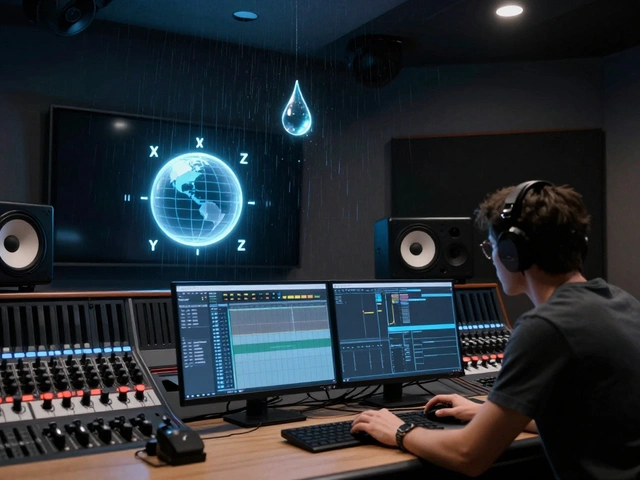
Set design is rarely experienced in silence or neutral light. Practical lights built into sets provide motivated illumination, which affects mood and visibility. Sound design, such as the hum of machinery or the echo in a large hall, enhances the perceived scale and material properties of the set. Together, sight, sound, and structure create a cohesive sensory experience.