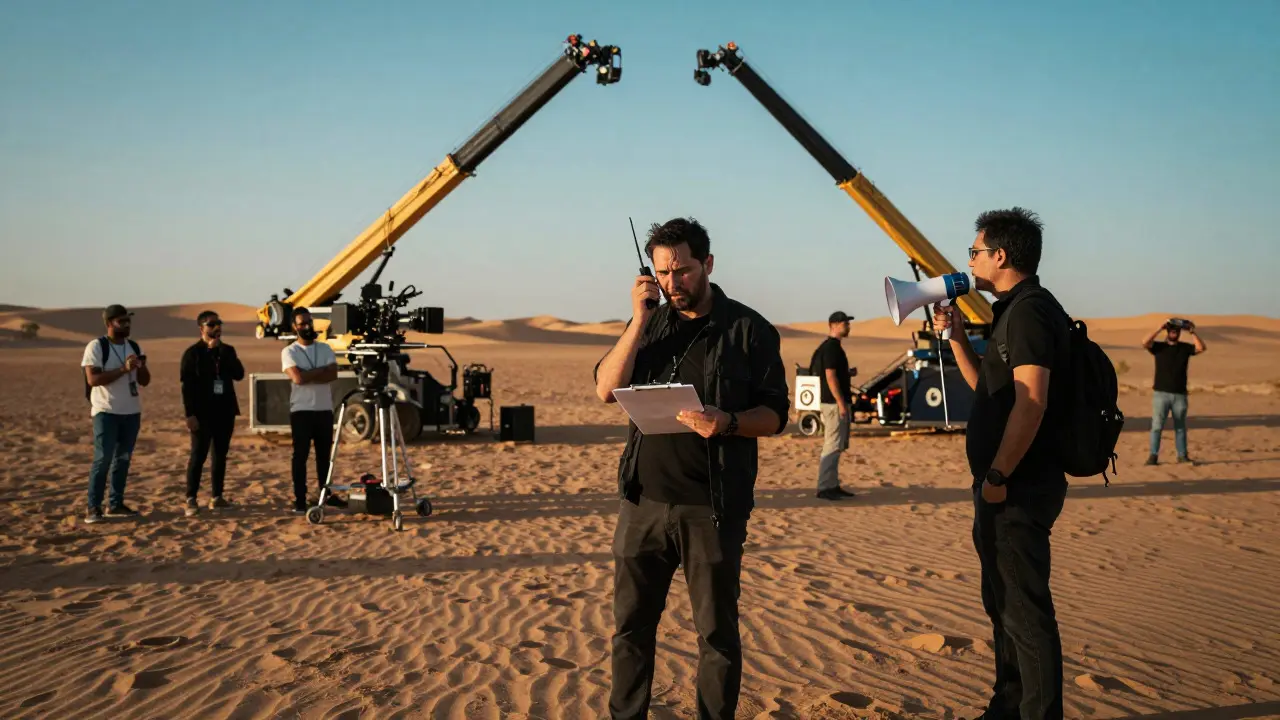
Imagine trying to fit a square peg into a round hole while the clock is ticking. That’s essentially what happens every time a major studio tries to greenlight a blockbuster. The title Scheduling Tetris isn’t just a metaphor; it’s the daily reality for line producers and directors who must align dozens of A-list actors, complex locations, and tight budgets into a single, coherent shooting calendar.
When you see a star like Tom Cruise or Zendaya in a trailer, you don’t think about the months of logistical nightmare that preceded the first take. You think about the action or the drama. But behind the scenes, the "when" often matters more than the "who." If an actor is unavailable for six weeks in the spring, the entire production might shift by three months. This shift ripples out to crew contracts, location permits, and even the release date strategy.
The Core Problem: Aligning Human Calendars with Machine Deadlines
Film production is not a linear process where you start on Day 1 and end on Day 90. It’s a puzzle with moving parts. The central entity here is the Shooting Window, which is the specific period during which principal photography takes place, constrained by actor availability, location weather, and budget burn rates. Unlike a factory assembly line, you can’t just add another worker to speed up the process if the lead actor is tied up in another project.
Let’s look at a real-world scenario. Suppose a director wants to shoot a war film in Morocco. The weather is perfect from October to March. However, the two leads are both committed to other projects until January. Now, the producer faces a dilemma: wait for the actors (risking a delay in the release date) or find substitutes (risking a drop in box office potential). In this case, the Actor Availability becomes the bottleneck. It dictates the start date, which in turn dictates the end date, which then determines when the film enters Post-Production.
Why "Tetris" Is the Perfect Analogy
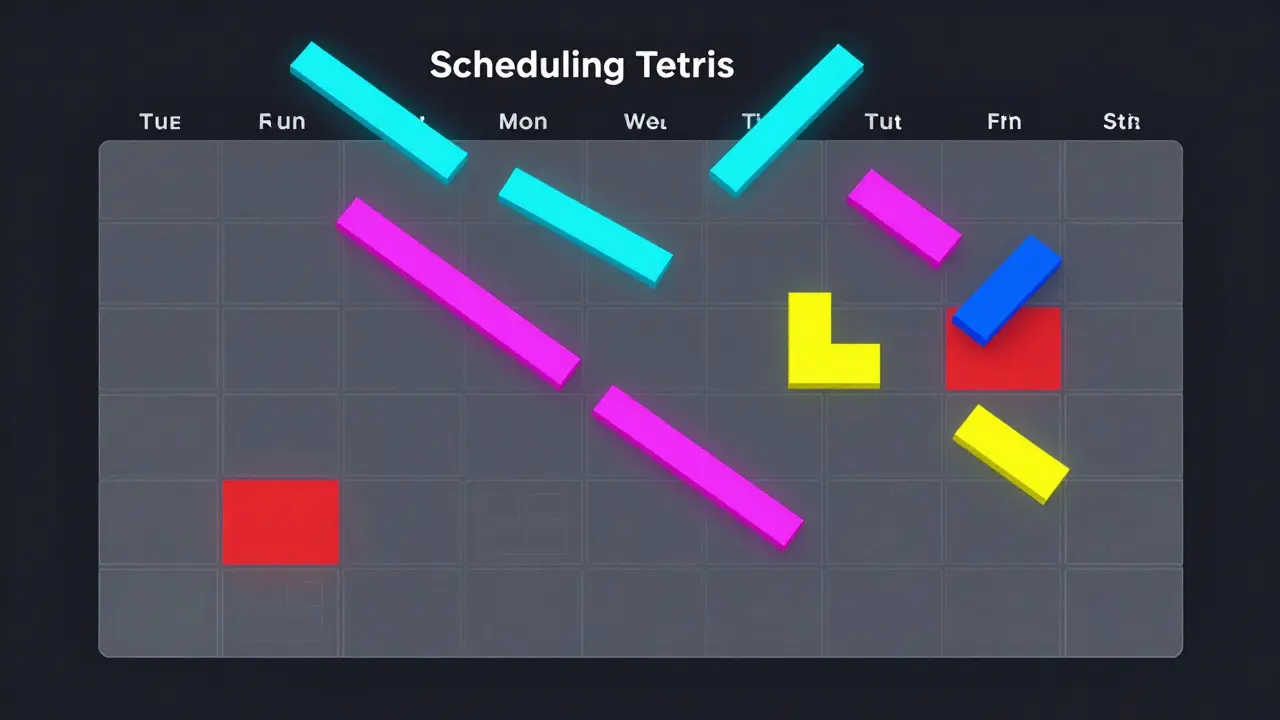
In the game Tetris, blocks fall from above, and you have to rotate them to fit them together without leaving gaps. In film scheduling, the "blocks" are the actors' free days. The "board" is the production calendar. The goal? Fit all the required scenes into the available days without wasting money on idle crew or paying overtime for expensive talent.
- The Blocks: Each actor has a limited number of available days per month. Some are "L-shaped" (available only for short bursts), others are "I-shaped" (available for long stretches).
- The Board: The total number of shooting days allowed by the budget. Every day over budget costs thousands of dollars in crew, equipment, and location fees.
- The Goal: Complete all scenes before the board fills up (budget runs out) and before the pieces get stuck (actors leave for other jobs).
If you make one wrong move-say, scheduling a scene with the lead actor on a day they’re actually filming a commercial-you create a gap. Filling that gap later is incredibly expensive because you have to rebook locations and crew.
The Impact of Streaming Schedules on Traditional Films
In the past, movie stars had clear off-seasons. Now, with streaming services like Netflix and Amazon Prime releasing content year-round, actors are busier than ever. This has changed the dynamics of Casting Logistics. Producers can no longer assume a star will be free during the traditional summer break. Instead, they have to negotiate complex schedules that involve splitting time between multiple projects.
This leads to a phenomenon known as "split-shoots," where an actor films scenes for Project A in Los Angeles, flies to London for Project B, and then returns to New York for Project C. While this maximizes their income, it complicates the scheduling for each individual film. The director has to work around these fragmented availability windows, often leading to non-linear shooting orders. Scenes that logically follow one another might be filmed weeks apart because the actor was busy elsewhere.
How Line Producers Solve the Puzzle
The person responsible for solving this Tetris game is the Line Producer. They are the master schedulers, working closely with the director, casting directors, and studio executives. Their job is to create a Master Schedule that balances creative needs with financial constraints.
- Identify Constraints: Determine which actors are most flexible and which are rigid. Identify hard deadlines (e.g., a festival premiere date).
- Map Locations: Check weather patterns and permit restrictions for all planned shooting locations.
- Create Draft Schedules: Build multiple versions of the schedule, testing different combinations of actor availability.
- Negotiate Dates: Work with agents to lock in dates, often offering incentives like higher daily rates or better working conditions.
- Finalize and Monitor:** Once the schedule is set, monitor it daily. If an actor gets sick or a location becomes unavailable, the line producer must immediately adjust the remaining days to compensate.
This process requires constant communication. A single phone call can change the entire plan. For example, if a supporting actor decides to extend their stay on another set by two days, the line producer might need to swap two days of shooting, potentially affecting the order of scenes and the continuity of the story.
Case Study: The Blockbuster Bottleneck
Consider a hypothetical superhero film featuring five major stars. Each star is also involved in a sequel to a previous hit. The producer must coordinate five separate franchises’ schedules. If Star A is unavailable in June, but the visual effects team needs their performance capture data by July to meet the VFX deadline, the pressure mounts. The solution might be to shoot Star A’s scenes earlier in the year, even if the rest of the cast isn’t ready yet. This creates a "pre-production" phase for specific actors, adding complexity to the overall workflow.
This example highlights how Visual Effects timelines intersect with actor availability. VFX artists need clean plates and performance data early in the process. If the actor’s schedule slips, the VFX pipeline slows down, potentially delaying the final edit. Thus, actor availability doesn’t just affect shooting; it impacts every downstream department.

Strategies for Mitigating Scheduling Risks
Experienced producers use several strategies to reduce the risk of scheduling failures. One common approach is to build "buffer days" into the schedule. These are extra days added to the shooting calendar to account for unexpected delays, such as bad weather or actor illness. Another strategy is to hire versatile actors who can cover multiple roles or who have more flexible schedules.
Additionally, some productions use "stunt doubles" or "background extras" to fill in for missing actors during certain scenes, allowing the camera to keep rolling. While this isn’t a perfect substitute, it prevents the entire set from going idle. Finally, digital technology has introduced new solutions. Motion capture can be done remotely, allowing an actor to perform in a small studio in one city while the main unit shoots in another. This flexibility has expanded the possibilities for scheduling, but it also adds technical complexity that must be managed.
| Production Type | Primary Constraint | Typical Shooting Duration | Risk Level |
|---|---|---|---|
| Indie Drama | Budget Limits | 4-8 Weeks | Low (Small Cast) |
| Mid-Budget Action | Location Permits | 8-12 Weeks | Medium (Complex Logistics) |
| Blockbuster Franchise | Actor Availability | 12-20+ Weeks | High (Multiple Stars, VFX Dependencies) |
The Future of Scheduling: AI and Data Analytics
As the industry evolves, technology is playing an increasingly large role in solving the scheduling Tetris. Artificial intelligence tools are now being used to predict potential bottlenecks based on historical data. These systems analyze past production schedules, actor availability patterns, and location weather data to suggest optimal shooting dates. While human judgment is still essential, AI provides a powerful layer of analysis that helps producers make faster, more informed decisions.
For example, an AI tool might alert a line producer that a particular location has a high probability of rain in late September, suggesting they schedule outdoor scenes earlier in the month. Or it might flag that a specific actor has a history of last-minute cancellations, prompting the producer to secure a backup option. These insights help transform scheduling from a reactive process into a proactive one.
Frequently Asked Questions
What is the biggest factor in determining a film's shooting schedule?
While budget is critical, actor availability is often the primary constraint for major productions. Since top-tier actors are in high demand, their limited free days dictate when the film can start and finish. If the leads are unavailable, the entire schedule must shift, regardless of budget.
How do line producers handle last-minute actor cancellations?
They rely on buffer days and flexible shooting orders. If an actor cancels, the line producer may reshuffle the schedule to shoot scenes that don't require that actor first. They might also use stunt doubles or background extras to keep the set active. In extreme cases, they may need to renegotiate dates with other cast members to find a new window.
Does streaming content make scheduling harder for traditional films?
Yes, significantly. Streaming services release content year-round, meaning actors are rarely fully available for extended periods. This forces traditional film producers to work around fragmented schedules, often leading to split-shoots and non-linear filming orders, which increases logistical complexity and cost.
What is a "shooting window" in film production?
A shooting window is the specific timeframe allocated for principal photography. It is determined by actor availability, location constraints, and budget limits. Missing this window can result in significant delays and increased costs due to expired permits and crew contract extensions.
How does visual effects impact actor scheduling?
VFX teams often need performance data early in the process to begin work. If an actor's schedule slips, it can delay the VFX pipeline, which in turn delays the final edit. Therefore, actors with heavy VFX requirements are often scheduled earlier in the production to ensure enough time for post-production work.




Comments(10)