The Festival Launchpad
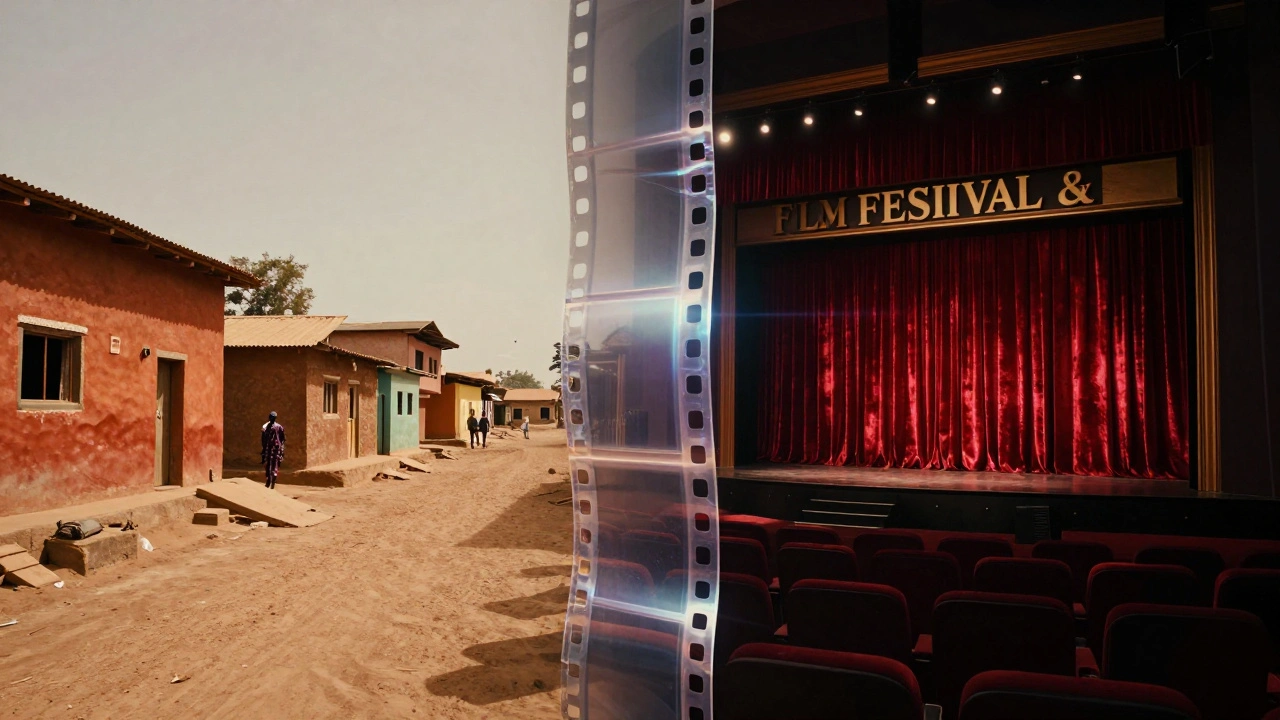
Most global hits don't start in a multiplex. They start in the dark, crowded theaters of International Film Festivals. Think of places like the Cannes Film Festival or the Sundance Film Festival. These aren't just parties for celebrities; they are the world's most important marketplaces for cinema. When a regional film premieres here, it undergoes a 'stress test.' A movie from Thailand might screen for a mixed audience of French critics, American buyers, and Japanese cinephiles. If the emotional beat-like a father's grief or a teenager's first love-lands across all those different cultures, the film gets a 'stamp of approval.' This validation is what attracts Film Distributors, the companies that actually buy the rights to show the movie in other countries.| Festival Type | Primary Goal | Impact on Local Films |
|---|---|---|
| A-List (Cannes, Venice) | Prestige & Critical Acclaim | High visibility, attracts major studio buys |
| Independent (Sundance, SXSW) | Discovery & Innovation | Finds niche audiences and streaming deals |
| Regional (Busan, TIFF) | Market Growth | Strengthens the local industry's infrastructure |
The Paradox of Specificity
There is a common mistake where filmmakers try to make their movie "global" by adding generic plot points or using English dialogue. This usually kills the film's appeal. People don't go to a regional breakout film to see a Hollywood movie filmed in a different country; they want to see something they've never seen before. Take a look at the rise of Korean Cinema. Films like *Parasite* didn't become global hits by ignoring their local context. Instead, they leaned heavily into the specific social hierarchies of Seoul. Because the struggle with class and wealth is something a person in New York or London understands deeply, the specific Korean setting became a window into a universal truth. This is the 'Specificity Paradox': the deeper you dig into the local, the more global the story becomes.
The Digital Shift and Streaming Power
In the past, a regional film needed a physical theater and a lot of marketing spend to travel. Now, Streaming Platforms like Netflix and Mubi have changed the game. They've removed the 'middleman' of the traditional cinema chain. Streaming services use algorithms to find "taste clusters." If you like a specific type of psychological thriller from Spain, the algorithm will push a similar vibe from a film made in Turkey. This creates a direct pipeline from a local producer's laptop to a global audience's living room. We're seeing a shift where "foreign language" is no longer a barrier, but a feature. Subtitles, which used to be a deterrent for many viewers, are now widely accepted, allowing the original performance and atmosphere to remain intact.Navigating the Distribution Maze
Even with streaming, getting a film from a regional shoot to a global screen involves a complex chain of events. It starts with the producer finding a Sales Agent. This person is essentially a talent agent for the movie, pitching it to different territories. For example, a sales agent might sell the distribution rights for a Mexican indie film to one company in Germany, another in Canada, and a third in Japan. Each of these distributors will then handle the localization: translating the script, creating new posters that appeal to that specific culture, and deciding whether the film should hit theaters or go straight to VOD (Video on Demand).
Common Pitfalls for Regional Filmmakers
Not every local story makes the jump. Many filmmakers fall into the trap of over-explaining their culture. When a movie spends twenty minutes explaining a local tradition through dialogue, it stops being a story and starts being a documentary. The most successful breakout films trust the audience to figure things out or let the visuals do the talking. Another issue is the "festival bubble." A film might get a standing ovation at a prestigious event, but that doesn't always mean it will sell tickets in a suburban mall. There is a gap between "critical darling" and "commercial success." Bridging this gap requires a strategy that balances artistic integrity with a clear understanding of who the audience is outside the festival circuit.The Future of Global Storytelling
We are moving toward a world of "decentralized cinema." The old model where Los Angeles dictated what the world watched is crumbling. We are seeing the emergence of new hubs-Nigeria's Nollywood is already one of the largest film industries by volume. As infrastructure for high-quality digital production becomes cheaper, the barrier to entry drops. What happens next is the rise of hybrid storytelling, where regional films collaborate across borders. Imagine a co-production between a Brazilian director and a Vietnamese studio. By sharing resources and audiences, these regional powerhouses can compete with big-budget studios without losing their local soul.Why are subtitles no longer a barrier for global audiences?
The rise of streaming has normalized subtitles for a generation of viewers. People are now more interested in authentic storytelling and unique perspectives than in the convenience of a dubbed track. This shift has opened the door for regional films to maintain their original linguistic nuance and emotional weight.
What is the role of a sales agent in regional film distribution?
A sales agent acts as the bridge between the filmmaker and the global market. They represent the film at markets (like the Marché du Film at Cannes), negotiate deals with distributors in various countries, and manage the legal rights to ensure the producer gets paid while the film reaches the widest possible audience.
Can a movie be too "local" to succeed globally?
Rarely. In fact, hyper-locality often creates the most curiosity. The risk isn't being "too local," but rather being "too generic." When a film captures the specific texture of a place honestly, it creates a sense of discovery that global audiences crave.
How do regional films typically fund their initial production?
Funding often comes from a mix of government grants (common in Europe and Canada), private investors, and crowdfunds. Some filmmakers also use a "stepping stone" approach, making a high-quality short film to attract a producer who can fund a full-length feature.
What is the difference between a breakout film and a cult classic?
A breakout film achieves wide, mainstream visibility and often commercial success across multiple territories. A cult classic may have a smaller, more intense following that persists over decades, often regardless of whether the film was a hit in theaters or not.







Comments(6)