You might have noticed a strange trend in recent movie trailers. Suddenly, stories you thought were locked away in library archives or owned by massive media conglomerates are popping up on the big screen. It’s not just a coincidence. A specific legal mechanism is unlocking decades of storytelling potential, allowing filmmakers to take risks that would be impossible with licensed properties. This phenomenon centers on public domain works, which are creative materials no longer protected by copyright law. For directors and studios, this isn’t just about saving money on licensing fees; it’s about accessing a vast, untouched reservoir of narrative gold.
The timing matters more than you think. Copyright laws aren’t static; they expire. In the United States, for instance, works published before 1929 entered the public domain in 2025. By 2026, we are seeing the cinematic fruits of labor from creators who died over 70 years ago. When a book, play, or silent film loses its copyright protection, anyone can adapt it. No negotiations. No royalties. Just pure creative freedom. This has sparked a renaissance in how we retell classic stories, moving beyond safe, familiar remakes into bold, often bizarre interpretations that challenge our understanding of the source material.
Why Public Domain Status Matters for Filmmakers
Let’s get the legal jargon out of the way quickly. Copyright exists to protect authors and their estates, usually for a set period after the creator’s death or publication date. Once that clock runs out, the work belongs to everyone. This status transforms a property from an expensive asset into a free resource. For independent filmmakers working with tight budgets, this is a game-changer. You don’t need a $5 million option fee to adapt a Bram Stoker novel if the rights have expired. You just need a script and a camera.
But it’s not just about cost. It’s about control. When you license a modern bestseller, the original author or publisher often retains approval rights over the adaptation. They can veto changes to the ending, the tone, or even the character names. With public domain works, that leash is cut. A director can decide that Sherlock Holmes is actually a vampire hunter, or that Alice in Wonderland is a psychological horror thriller. The only limit is your imagination and your ability to convince investors that the idea will sell tickets.
The Timeline: What Becomes Free When?
Understanding when works enter the public domain requires looking at the calendar. In the US, the rule of thumb for older works is straightforward: anything published before 1929 is fair game as of 2024-2025. However, for newer works, the rules are complex. Generally, copyright lasts for the life of the author plus 70 years. This means we are currently watching the early 20th century slowly open up. Each January 1st brings a new batch of books, films, and music into the public realm.
This staggered release creates a unique market dynamic. Studios know exactly what will become available next year. If you’re planning a major production, you might wait for a specific title to drop its copyright status to avoid paying upfront fees. Conversely, savvy producers scout ahead. They look for obscure novels from the 1930s that will become public domain in five years, buying the physical copies now and preparing scripts in advance. It’s a long-game strategy that rewards patience and legal literacy.
| Source Type | Cost to Adapt | Creative Control | Risk Factor |
|---|---|---|---|
| Licensed Modern Bestseller | High (Option fees + Royalties) | Low (Author/Publisher approval) | Medium (Market saturation) |
| Public Domain Classic | Zero (Free to use) | High (Full artistic freedom) | High (Requires fresh angle) |
| Original Screenplay | Variable (Writer fees) | High (Studio dependent) | Very High (No built-in audience) |
Case Studies: Successes and Failures
We’ve seen this strategy pay off spectacularly. Take the recent wave of Frankenstein adaptations. Mary Shelley’s Frankenstein has been public domain for ages, yet every few years, a new version hits theaters. Why? Because each filmmaker wants to put their own spin on the monster. Some focus on the science, others on the tragedy. Since no one owns the rights to Victor Frankenstein, multiple projects can exist simultaneously without legal battles. This competition drives innovation. We got a punk-rock Frankenstein, a feminist retelling, and a body-horror nightmare-all from the same source text.
However, not every attempt lands. The downside of free access is oversaturation. If ten studios all try to make a movie about Dracula in the same year, audiences get tired. Quality suffers because rushed productions try to capitalize on the trend without adding value. The key lesson here is differentiation. You can’t just copy the 1931 Universal Monsters aesthetic. You have to find a new lens. Maybe you set Dracula in space. Maybe you make him a corporate CEO. The story is free, but making it interesting costs effort.
Beyond Literature: Silent Films and Music
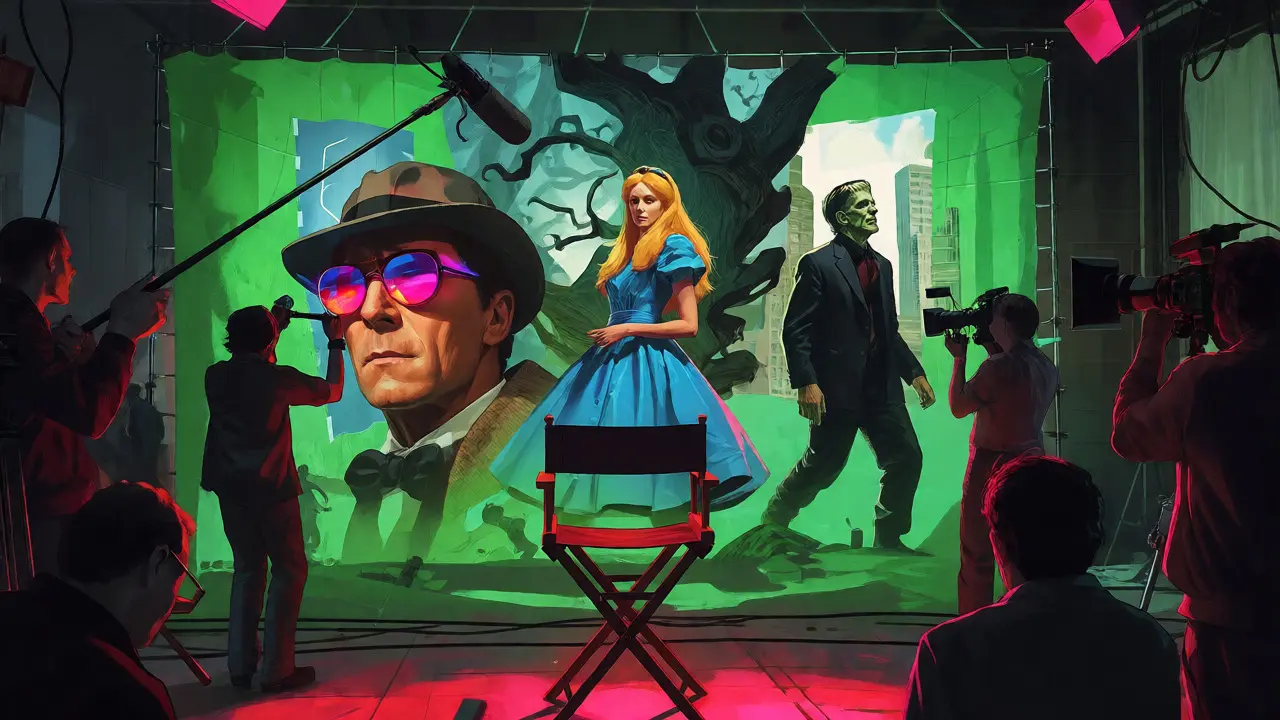
While books get most of the attention, silent films are quietly becoming a treasure trove for modern directors. Many early cinema classics, like Buster Keaton’s The General or Fritz Lang’s Metropolis (in certain edits), are entering or have entered the public domain. Filmmakers can now restore these visuals, add new soundtracks, or even remake them entirely without worrying about rights issues. This has led to some fascinating hybrid projects where modern actors interact with archival footage, creating a dialogue between eras.
Music plays a huge role too. Composers can sample old recordings or use classical scores without clearing rights. Imagine a modern thriller scored entirely with jazz tracks from the 1920s that are now free to use. This lowers the barrier for indie composers who can’t afford to license popular songs. It also encourages experimentation. You can mix electronic beats with ragtime piano because neither side demands a check. The result is often a sonic landscape that feels both nostalgic and cutting-edge.
The Pitfalls of "Free" Content
Just because something is free doesn’t mean it’s easy. One major trap is the "trademark" issue. While the character of Tarzan might be in the public domain regarding his story, the name "Tarzan" itself might still be trademarked by Edgar Rice Burroughs, Inc. This means you can write a story about a man raised by apes, but you might not be able to call him Tarzan in your marketing materials. Lawyers spend a lot of time drawing these lines. Always consult legal experts before assuming a famous name is totally free to use.
Another pitfall is quality control. Public domain works vary wildly in literary merit. Many pulp novels from the early 1900s are poorly written, dated, or contain problematic cultural attitudes that don’t sit well with modern audiences. Adapting these requires careful editing. You might love the plot twist in a 1920s mystery, but if the protagonist uses slurs that haven’t aged well, you have to rewrite those scenes. Ignoring this leads to backlash. Audiences today expect sensitivity and relevance, even from historical sources.
How to Spot the Next Big Hit
If you’re a writer or producer looking for opportunities, start digging. Visit digital libraries like Project Gutenberg or the Internet Archive. Look for books published between 1900 and 1928. These are guaranteed to be public domain in the US right now. Focus on genres that translate well to screen: sci-fi, horror, and adventure. These genres rely on concepts rather than nuanced prose, making them easier to adapt visually.
Pay attention to under-adapted works. Everyone knows Sherlock Holmes and Alice in Wonderland. But what about the weird fiction of Lord Dunsany? Or the early detective novels of Anna Katharine Green? These authors offer rich worlds that haven’t been fully exploited by Hollywood. Finding a gem in the rough gives you a first-mover advantage. You can define the visual language for a new franchise before competitors jump in.
Frequently Asked Questions
Can I change the ending of a public domain book?
Yes, absolutely. Since there is no copyright holder to approve changes, you can alter the plot, characters, setting, and ending however you wish. The only restriction is trademark law, which may prevent you from using specific brand names associated with the work.
Are all Disney movies based on public domain stories?
Many are, such as Cinderella, Snow White, and Beauty and the Beast, which originated from folklore and fairy tales collected by the Brothers Grimm or Charles Perrault. However, Disney’s specific versions of these stories are copyrighted. You can adapt the original fairy tale, but you cannot copy Disney’s unique character designs or musical scores without permission.
What happens if I adapt a book that is public domain in the US but not in Europe?
Copyright laws vary by country. In the US, many works from the early 20th century are public domain, while in the European Union, copyright often lasts for the life of the author plus 70 years. If you plan to distribute your film internationally, you must ensure the work is public domain in every territory where you intend to show it, or secure licenses for those regions.
Do I need to credit the original author?
Legally, no. There is no requirement to credit the original author for public domain works. However, ethically and for marketing purposes, it is standard practice to include "Based on the novel by..." in the credits. This helps establish credibility and connects your film to the existing fanbase of the original work.
Can I make a sequel to a public domain movie?
If the original movie is public domain, yes. However, if the original movie contains elements that are still under copyright (like a specific soundtrack or a later-added scene), you must exclude those. Also, note that sequels created by other studios might themselves be copyrighted, so you can only base your sequel on the original public domain source, not on someone else’s interpretation.
Final Thoughts on Creative Freedom
The return of classic stories to cinema isn’t just a legal loophole; it’s a creative opportunity. It invites us to revisit foundational narratives and ask new questions. Who was the real villain in The Great Gatsby? What if Pride and Prejudice was set in a cyberpunk future? The answers lie in the public domain, waiting for someone brave enough to tell them differently. So next time you see a trailer for a "new" take on an old favorite, remember: the story wasn’t bought. It was freed.


Comments(3)