When you watch a streaming film and forget you’re on your phone or TV - when the lighting feels like a cinema, the sound wraps around you, and the actors seem to breathe real life - you’re seeing production values done right. Streaming originals aren’t just catching up to theaters anymore. They’re outpacing them. In 2024, Netflix’s The Night Agent and Amazon’s The Boys had budgets that matched or exceeded major studio releases. But budget alone doesn’t create cinematic quality. It’s the choices behind the camera - the crew, the gear, the process - that turn a good show into something that feels like it was meant for the big screen.
What Makes Production Value Different from Budget
Production value isn’t how much money you spend. It’s how smartly you spend it. A $10 million film can look cheaper than a $20 million one if the lighting is flat, the sound is muddy, or the editing feels rushed. Streaming originals have learned this lesson the hard way. Early Netflix films like Beasts of No Nation (2015) had strong performances but looked like TV movies. By 2023, films like The Power of the Dog (Netflix) and The Lost City (Amazon) had the depth, texture, and scale of Oscar-winning features - and they were made for home viewing.
The difference? Attention to detail. Cinematographers now use ARRI Alexa LF cameras - the same ones used in Top Gun: Maverick - on Netflix sets. Sound teams bring in Dolby Atmos mixers who’ve worked on Oppenheimer. Even the grip trucks are the same. Streaming studios don’t just hire talent; they hire the same talent that works on theatrical releases. And they pay them the same rates.
The Crew That Makes It Happen
Streaming platforms don’t cut corners on crew size. A typical theatrical film might have 120 crew members. A high-end streaming film? Often 180 to 220. Why? Because scale demands precision. When you’re filming in remote locations - like the Canadian Rockies for The Last of Us or the deserts of Jordan for House of the Dragon - you need more people to manage logistics, lighting, and continuity.
Streaming originals also bring back roles that theaters phased out. The digital intermediate artist, who color-grades every frame, now works alongside the director for weeks. The production designer doesn’t just build sets - they build entire worlds with historical accuracy. For 1899 on Netflix, the team recreated a 19th-century ocean liner with 1,200 custom-made props, each aged by hand. That’s not a budget line item. That’s a commitment.
Technology That Bridges the Gap
Streaming platforms don’t just use better cameras - they use the same ones theaters do. The ARRI Alexa 35, released in 2022, is now the standard on Amazon Prime and Apple TV+ originals. It captures 4.6K resolution with 16+ stops of dynamic range. That means shadows hold detail, highlights don’t blow out, and skin tones look real - even on a 4K TV.
Virtual production, once reserved for big-budget films like The Mandalorian, is now routine. LED walls with real-time rendering let actors perform in virtual environments - forests, cities, alien planets - without leaving the soundstage. This saves time, reduces travel costs, and gives directors immediate visual feedback. For The Lord of the Rings: The Rings of Power, this tech cut post-production time by 40% while increasing visual fidelity.
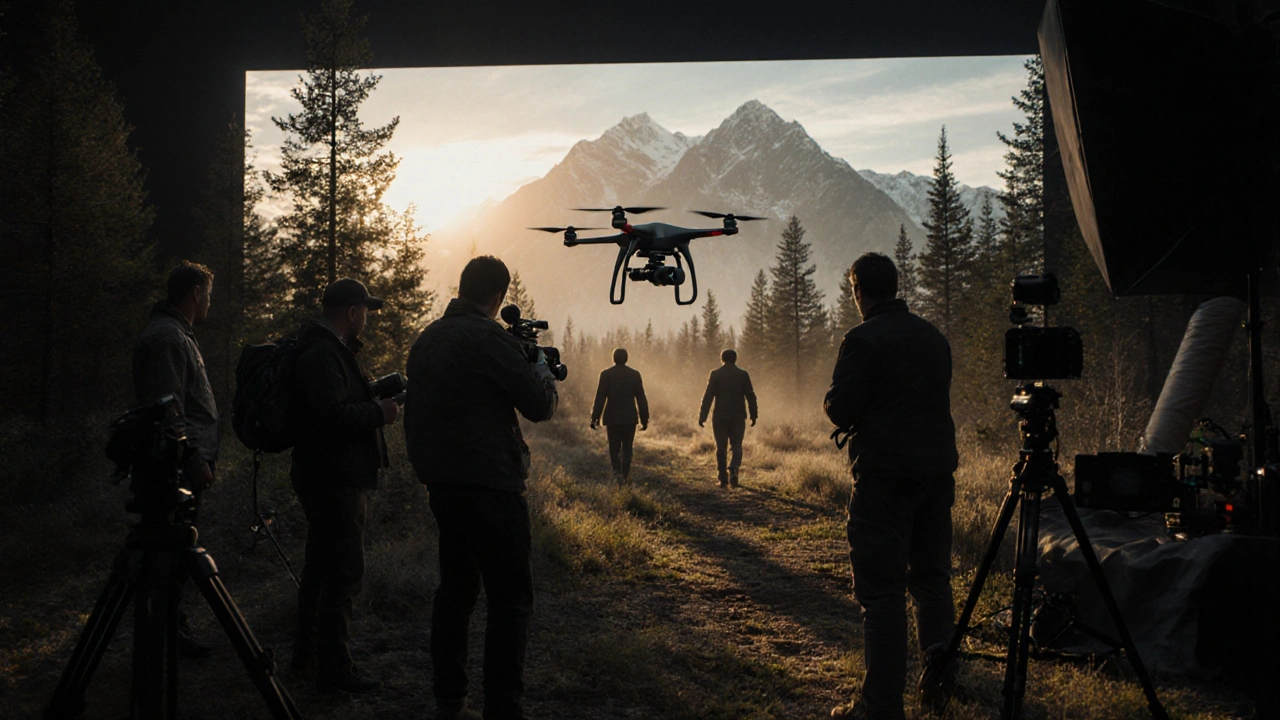
Even drones have evolved. The Freefly Alta 8, used on Stranger Things, can carry 12-pound cinema cameras and fly in tight forest canopies. That’s how you get the sweeping shots that used to require helicopters - and now cost a fraction.
Sound Design: The Secret Weapon
Most viewers don’t realize how much sound affects perception. A film with mediocre visuals can still feel cinematic if the sound is immersive. Streaming platforms now hire Dolby-certified sound engineers who work on Oscar-nominated films. They record ambient noise on location - not just dialogue. The crunch of snow in Severance, the creak of a wooden floor in Dark, the rustle of silk in The Crown - all are captured with binaural mics and layered into 7.1 or Atmos mixes.
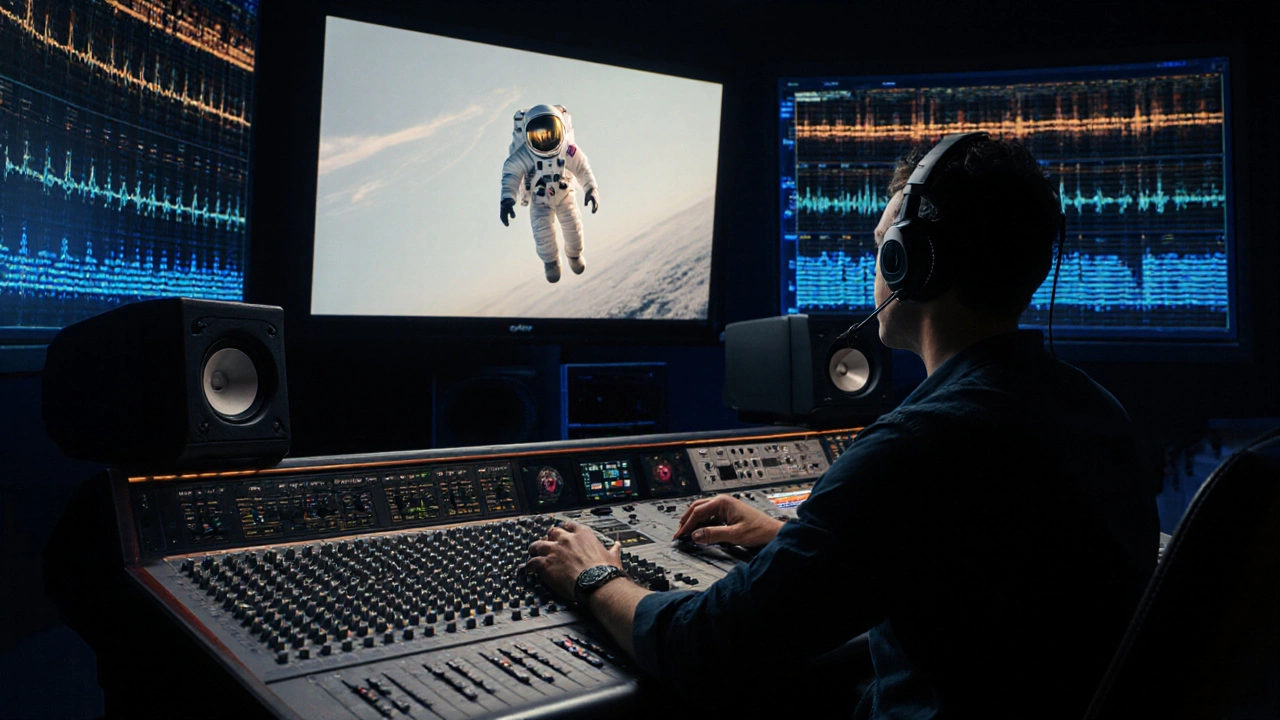
Streaming films also use re-recording mixers who’ve worked on Barbie and Oppenheimer. These mixers don’t just balance levels - they sculpt emotion. In The Midnight Sky, silence is used as a weapon. When the astronaut floats in space, there’s no sound at all. Then, a single heartbeat. That’s not luck. That’s precision.
Why This Matters for Viewers
When streaming films look and sound like movies, it changes how we watch. People don’t just binge them - they pause, rewind, and rewatch. They talk about the lighting. They notice the color grading. They argue over the score. That’s the sign of high production value: it invites attention, not just consumption.
And it’s not just about prestige. High production values mean fewer distractions. If the visuals are sharp and the sound is clean, your brain doesn’t have to work to fill in gaps. You’re pulled into the story faster. That’s why Netflix’s The Irishman - a three-and-a-half-hour film with no action scenes - kept viewers engaged for weeks. The production values didn’t shout. They whispered. And that made all the difference.
What’s Next: The New Standard
By 2025, streaming originals are no longer the underdogs. They’re the benchmark. The average budget for a streaming film has jumped 68% since 2020. Studios now treat them like theatrical releases from day one. Scripts are written for 4K HDR. Directors shoot with 120fps for slow-motion scenes. Even the extras are cast with the same rigor as a Hollywood film.
The result? A new kind of cinema - one that doesn’t need a screen the size of a wall to feel epic. It’s cinema that fits in your living room, your bedroom, your commute. And it’s better than ever.
Why This Isn’t Just a Trend - It’s the Future
Streaming platforms don’t want to be seen as TV networks. They want to be seen as studios. And they’re willing to spend billions to prove it. Apple spent $250 million on Mythic Quest’s first season. Amazon’s The Lord of the Rings cost over $1 billion for two seasons. That’s more than most studios spend on a single blockbuster.
But here’s the truth: it’s not about spending more. It’s about spending differently. Streaming films have the freedom to take risks. They don’t need opening weekend numbers. They don’t need 3D tickets. They can be slow, quiet, complex - and still succeed. That freedom lets them focus on craft, not commerce.
Theatrical films are still important. But the future of cinematic storytelling? It’s on your screen. And it’s better than ever.
What’s the difference between production value and budget?
Budget is the total amount of money spent. Production value is how effectively that money is used to create a cinematic experience - through lighting, sound, camera work, set design, and attention to detail. A high budget doesn’t guarantee high production value, but smart spending always does.
Do streaming films use the same cameras as theaters?
Yes. Streaming originals now use the same cinema-grade cameras as theatrical releases: ARRI Alexa 35, RED V-RAPTOR, and Sony Venice. These cameras capture 4K to 8K resolution with wide dynamic range, making them ideal for HDR streaming. The difference isn’t the gear - it’s how it’s used.
Why do streaming films have bigger crews than TV shows?
Streaming films are treated like movies, not TV episodes. They often shoot on location for months, require complex lighting setups, and demand high-end post-production. A crew of 200+ ensures every frame meets theatrical standards - from focus pullers to sound recordists to colorists.
Can you tell a streaming film from a theater film just by watching?
Not anymore. In 2025, the best streaming films look and sound identical to theatrical releases. The only clues are the credits - and even those are often identical. Streaming platforms hire the same directors, cinematographers, and composers as major studios. The difference is where you watch it - not what you see.
Are streaming films winning Oscars?
Yes. In 2024, Netflix’s The Power of the Dog won five Academy Awards, including Best Director. Amazon’s The Lost City was nominated for Best Cinematography. Streaming films are no longer excluded from awards consideration - they’re dominating it.


Comments(7)