Want to make a movie but don’t have millions to spend? You’re not alone. Most independent filmmakers work with tight budgets. That’s where production incentive programs come in - state and national governments offering real cash back to film crews who shoot on their turf. These aren’t vague promises or paperwork nightmares. They’re structured, competitive, and often the difference between a film getting made or shelved forever.
How Production Incentives Actually Work
Think of these programs like a rebate system. A production company spends money in a specific location - hiring local crew, renting gear, paying for hotels, buying food for the cast - and the government returns a percentage of that spending. It’s not a grant you apply for and hope for. It’s a refund based on actual, verifiable expenses.
For example, if you shoot a movie in Georgia and spend $5 million locally, you might get back 20% to 30% - that’s $1 million to $1.5 million in cash. The state doesn’t give you the money upfront. You pay your bills, keep receipts, file the paperwork after filming wraps, and then get reimbursed. Some places even let you sell your tax credit to a third party if you don’t owe enough in state taxes to use it yourself.
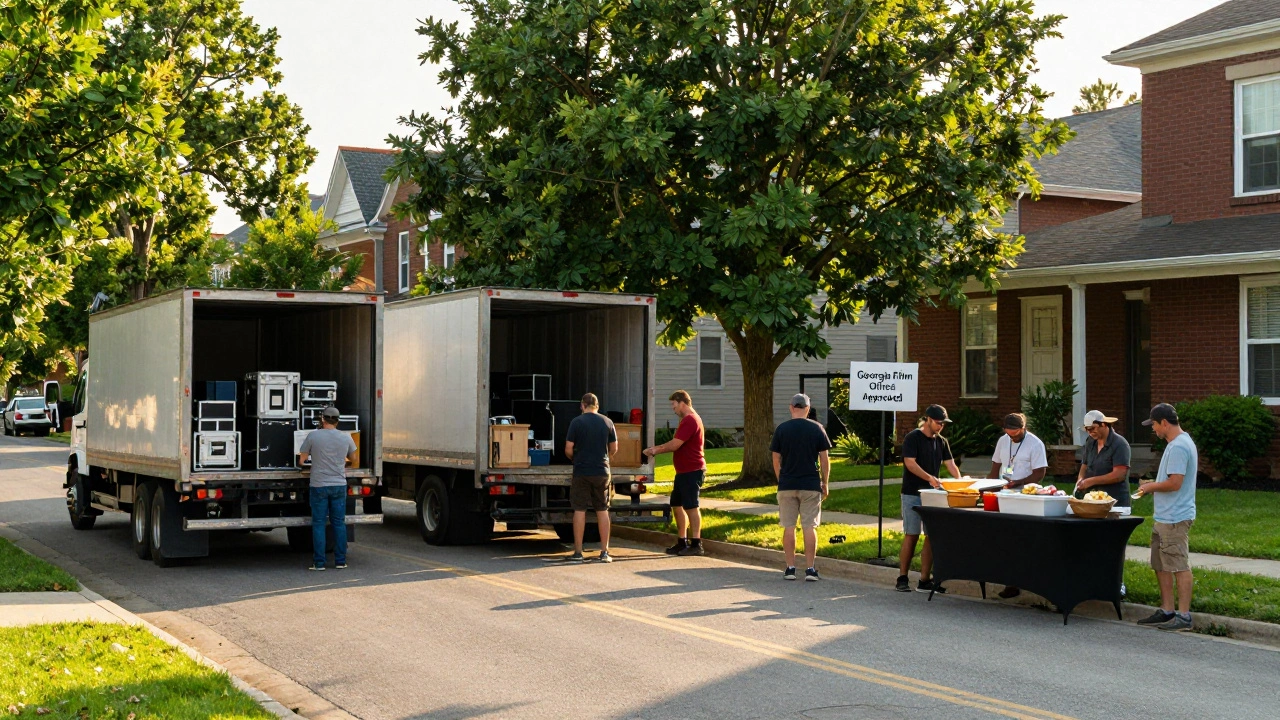
This isn’t charity. It’s economic strategy. Every dollar spent on set goes to local businesses: carpenters, caterers, drivers, costume shops, even gas stations. A single 10-week shoot can pump $20 million into a small town’s economy. That’s why places like Louisiana, New Mexico, and Ontario don’t just offer incentives - they fight for them.
Top U.S. States With the Best Incentives in 2025
Not all states play fair. Some offer 10% and call it a day. Others go all in. Here’s who’s leading the pack in 2025:
- Georgia: Up to 30% base credit, plus 10% extra if you include a Georgia logo in your credits. No cap on total spending. Over 300 films shot there last year, including Avengers: Endgame and Stranger Things.
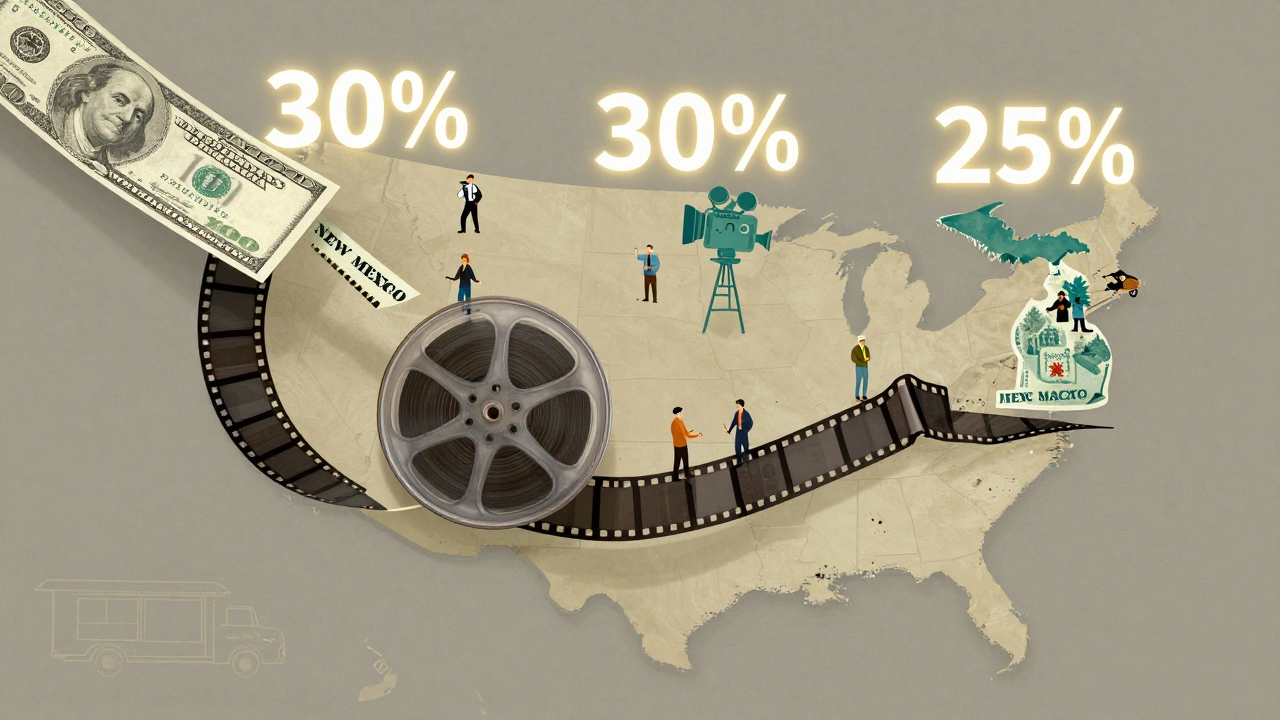
- New Mexico: 25% base credit, plus 5% for hiring local crew. They also offer a 10% bonus for shooting in rural areas. The state has a dedicated film office that responds to emails within 24 hours.
- Michigan: 30% credit on qualified expenses. They added a new rule in 2024: if you use at least 75% Michigan-based crew, you get an extra 5%. Many indie filmmakers now plan shoots around this.
- North Carolina: 25% credit with no cap. They’re especially aggressive about attracting streaming productions - Netflix and Amazon have shot entire seasons here.
- California: Still the biggest market, but their credit is capped at $100 million per year and requires a competitive application. It’s harder to get, but if you land it, you’re in the heart of the industry.
Canada isn’t far behind. Ontario offers up to 35% in combined federal and provincial credits. Quebec’s program is even more generous - up to 40% for certain types of productions - but requires a significant portion of the cast and crew to be French-speaking.
What Expenses Actually Qualify?
Not every cost counts. Governments are strict about what they’ll reimburse. Here’s what usually qualifies:
- Wages for local crew (directors, camera operators, grips, makeup artists)
- Equipment rentals from local vendors
- Location fees paid to property owners
- Accommodations for cast and crew staying in-state
- Food and catering services provided locally
- Post-production work done in-state (editing, sound mixing, color grading)
Things that usually don’t count: actor salaries (unless they’re local residents), travel to the location, insurance, legal fees, and pre-production development costs. Some states allow a limited portion of actor pay if they’re residents - but that’s rare.
One common mistake? Filmmakers think they can fly in a camera crew from L.A., pay them $10,000, and count it. Nope. The crew has to be hired locally. That’s why many productions now hold open casting calls and crew auditions in the state they’re shooting in - even if they already have a team lined up.
The Hidden Rules You Can’t Afford to Miss
These programs sound simple - until you read the fine print. Here are the traps most first-timers fall into:
- Minimum spending thresholds: Many states require you to spend at least $250,000 to qualify. If you’re making a $200,000 indie film, you’re out of luck unless you can stretch your budget.
- Deadline pressure: Applications often have cut-off dates. Some states require you to apply before principal photography starts. Others let you apply mid-shoot, but you have to prove you’re spending money on time.
- Documentation hell: You need itemized receipts, payroll records, location permits, and proof of residency for every crew member. One missing invoice can delay your payout by months.
- Competitive caps: Some states have a total budget for incentives - say, $50 million per year. Once it’s gone, you’re out until next fiscal year. In 2024, New Mexico hit its cap in March.
- Exclusivity clauses: Some programs require you to promise you won’t shoot elsewhere during the same fiscal year. If you’re planning two films, you might have to pick one.
There’s no universal rulebook. Every state has its own handbook. The Georgia Film Office publishes theirs online. New Mexico’s is a 40-page PDF. You can’t wing it. Hire a local tax consultant who’s worked with film productions before. They cost $3,000 to $5,000 - but they’ll save you 10 times that in missed credits.
Why This Matters for Indie Filmmakers
For indie filmmakers, incentives aren’t a nice-to-have - they’re survival tools. A $500,000 budget becomes $750,000 with a 30% credit. That’s enough to hire a real cinematographer instead of a friend with a DSLR. It’s enough to pay for a proper sound mixer instead of recording audio on a phone. It’s enough to get your film into festivals with professional color grading and Dolby audio.
Look at The Last of Us Season 2. It filmed in Alberta, Canada, because the provincial incentives covered nearly half the budget. Without that, HBO might have moved the entire production to the U.S. - and lost the local jobs, the local tax revenue, and the chance to showcase Canadian landscapes.
Even smaller films benefit. A documentary shot in rural West Virginia got a 25% rebate after spending $80,000 on local hires. That rebate paid for the film’s festival submissions, its digital distribution, and even a theatrical run in three small towns. Without the credit, it would’ve stayed on a hard drive.
International Incentives: Beyond the U.S.
Don’t limit yourself to American states. Many countries offer better deals than most U.S. locations:
- United Kingdom: Up to 25% tax relief for qualifying British productions. The UK also offers a 20% rebate on international co-productions.
- Germany: 20% to 25% cash rebate, with additional bonuses for shooting in eastern states like Saxony or Brandenburg.
- South Africa: 35% rebate, plus free location scouting support from the government. Popular for action films because of diverse terrain and lower labor costs.
- Australia: 30% Producer Offset for qualifying productions. They also have a separate 16.5% location incentive for international shoots.
- Japan: 20% to 40% rebate depending on the region. Kyoto and Osaka are pushing hard to attract foreign productions with cultural incentives.
Some countries require you to partner with a local production company. Others let you apply directly. The UK’s system is open to anyone. Japan’s is harder for outsiders - you need a local liaison. Always check the official government film commission site. Don’t trust third-party agents who promise “guaranteed approval.”
How to Get Started
If you’re serious about using incentives, here’s your step-by-step plan:
- Write your script - but don’t lock in locations yet. Keep it flexible.
- Research 3-5 potential locations - compare credit rates, caps, and spending requirements.
- Contact their film offices - email them your rough budget and shooting schedule. Ask: “Do we qualify?” Most respond within 48 hours.
- Apply early - even if you’re still raising money. Some states reserve slots months in advance.
- Hire a local production accountant - not your regular bookkeeper. They need to know how to track qualified expenses and file the correct forms.
- Track every dollar - use a cloud-based system like Movie Magic Budgeting or Excel with shared access for your entire crew.
- File on time - deadlines are strict. Miss one, and you lose the entire credit.
The best time to start? Now. Incentive programs change every year. Some states cut funding. Others add new bonuses. What worked in 2023 might not work in 2026. Stay updated. Subscribe to newsletters from FilmLA, Georgia Film Office, or Canada Media Fund.
Frequently Asked Questions
Do production incentives guarantee my movie will get made?
No. Incentives reduce your budget gap, but they don’t replace funding. You still need to secure financing, insurance, and distribution. Think of them as a discount, not a miracle. Many filmmakers apply for incentives while also pitching to investors or crowdfunding.
Can I use multiple state incentives for one film?
Generally, no. Most programs require you to choose one primary location. Shooting in multiple states usually means you’ll only qualify for the credit from the state where you spent the most. Some exceptions exist for co-productions, but those require legal structure and pre-approval.
Are production incentives only for big studios?
No. While big studios benefit from scale, many programs have special tracks for indie films. Georgia, New Mexico, and Michigan all have lower minimums for projects under $1 million. Some even reserve a percentage of their budget for micro-budget films under $250,000.
How long does it take to get paid after filming?
It varies. Most states take 4 to 8 months after you submit your final paperwork. Georgia’s average is 6 months. New Mexico can take up to 10 months if your documentation isn’t perfect. Some states offer accelerated processing for an extra fee - but it’s not always worth it.
What if my film goes over budget? Can I get more credit?
No. Incentives are based on actual spending up to your approved budget. If you overspend, you don’t get extra credit. That’s why careful budgeting is critical. Most filmmakers build in a 10-15% buffer to account for inflation, delays, or weather.





Comments(5)