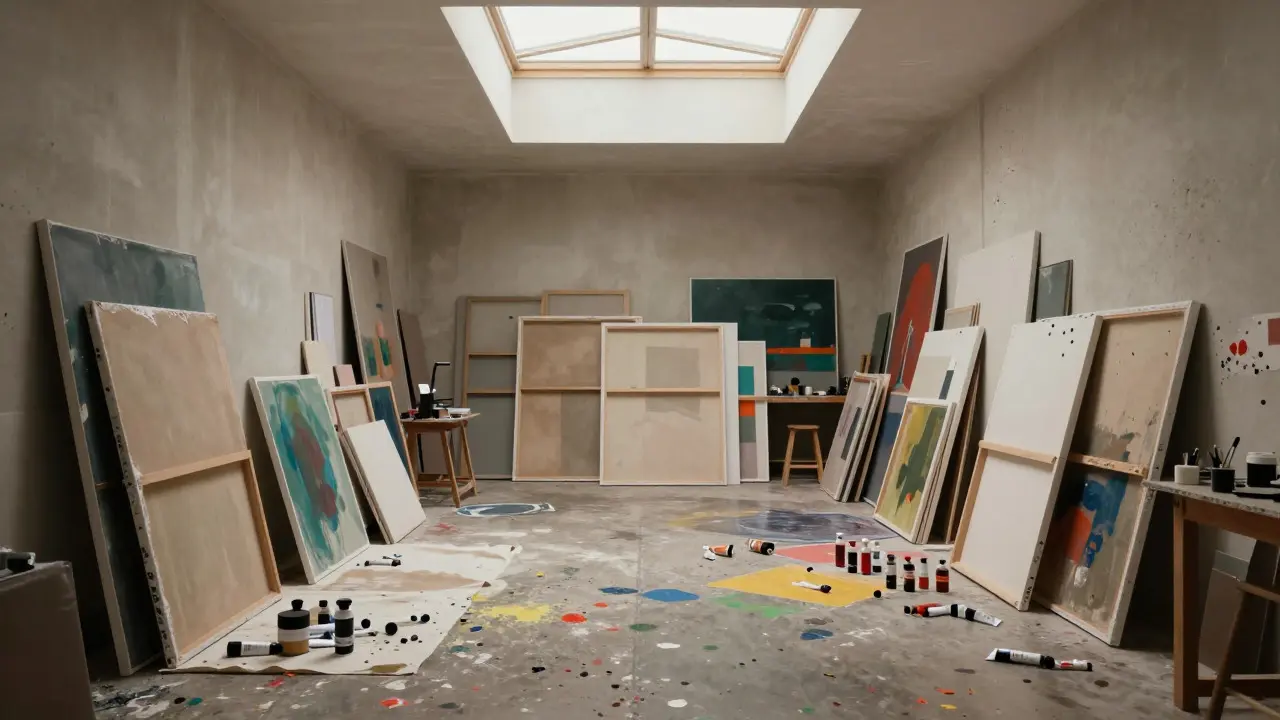
Ever watched a movie about an artist and thought, "This looks too clean?" The studio is spotless. The paint cans are perfectly arranged. The light hits the canvas at exactly the right angle. It’s beautiful, but it feels fake. Real creative spaces are messy, chaotic, and often smell like turpentine. When Production Design is the art of creating the visual environment for a film, including sets, locations, and props tackles a story about art, the stakes are higher. You aren't just building a room; you're building a worldview that mirrors the protagonist's internal state. If the visuals don't feel authentic, the audience loses trust in the character's journey.
This isn't just about aesthetics. It’s about psychology. How does a painter see the world? How does a sculptor interact with space? These questions drive the entire visual strategy. We’ll break down how top-tier designers use specific research methods to bridge the gap between reality and cinema. We’re talking about the nitty-gritty of finding the right textures, lighting conditions, and historical accuracy without turning the film into a documentary.
Why Authenticity Matters in Artist Narratives
When a film focuses on a creator, the environment becomes a character. In a standard thriller, the set is a backdrop. In an art-themed film, the set is the subject. If you get the details wrong, the error is glaring. A modern filmmaker knows that audiences have access to high-resolution images of famous studios online. They know what a real easel looks like. They know that oil paints don’t dry instantly.
The core challenge is balancing realism with narrative clarity. Too much mess, and the camera can’t find the actor. Too little mess, and the scene feels staged. The goal is "curated chaos." This concept involves arranging disorder in a way that looks accidental but serves the composition. It requires deep understanding of the specific artistic discipline being portrayed. A jazz musician’s room differs vastly from a ceramicist’s workshop, not just in objects, but in spatial dynamics and lighting needs.
Core Visual Research Methods
Research is where the magic happens. It’s not just Googling "artist studio photos." It’s a multi-layered process involving primary sources, expert consultation, and sensory immersion. Here are the key methods used by experienced production designers:
- Archival Digging: Looking at photographs, letters, and diaries from the era or specific artist. This reveals daily habits, not just final works.
- Expert Consultation: Hiring living artists as consultants. Their feedback on workflow is invaluable.
- Sensory Mapping: Documenting smells, sounds, and tactile sensations associated with the craft.
- Negative Space Analysis: Studying how artists organize their empty space, which reflects their mental state.
Each method provides a different piece of the puzzle. Archival digging gives you the timeline. Expert consultation gives you the logic. Sensory mapping gives you the atmosphere. Combining them creates a three-dimensional truth that resonates with viewers on a subconscious level.
The Role of Props and Set Decoration
Props are the fingerprints of a character. In art films, these aren't just background noise; they are plot devices. A half-finished sketch might reveal a secret. A broken brush might symbolize a creative block. The selection of props must be deliberate.
Set decoration goes beyond placing objects. It involves aging surfaces, adding wear patterns, and layering history. A new desk looks sterile. A desk with coffee rings, pencil shavings, and scuff marks tells a story of time spent. For art-themed productions, this layering is critical. The walls shouldn't just be white; they should show traces of previous projects. The floor shouldn't be bare wood; it should have dust, sawdust, or clay residue depending on the medium.
Consider the difference between a digital painting setup and a traditional one. Digital artists work in low light to protect their eyes, surrounded by screens and peripherals. Traditional painters need natural light, large canvases, and physical tools. The prop list changes entirely based on this distinction. Getting this wrong breaks immersion instantly.

Lighting Strategies for Creative Spaces
Light is the most powerful tool in any film, but it’s especially tricky in art settings. Artists rely on specific light qualities to judge their work. A painter needs consistent, diffused daylight. A photographer needs controlled, directional light. A dancer needs space and reflection.
Production designers collaborate closely with directors of photography to mimic these conditions. This often means using practical lights within the set-lamps, windows, or skylights-that match the artist’s actual working environment. Artificial lighting can flatten the texture of paint or metal, making it look plastic. Naturalistic lighting preserves depth and detail.
Timing matters too. If the character is working late at night, the light should be harsher, coming from a single source, casting long shadows. If they’re working during the day, the light should be soft and even. These shifts in lighting reflect the passage of time and the intensity of the creative process.
Case Study: Recreating a Historic Studio
Let’s look at a hypothetical scenario: recreating the studio of a mid-20th-century abstract expressionist. The designer starts with archival photos of Jackson Pollock or Willem de Kooning. They notice the floors are covered in drop cloths, not clean linoleum. The walls are stained with splatters. There’s no furniture except a few stools and a table for mixing paint.
The designer then consults with a contemporary abstract painter to understand the workflow. They learn that the artist moves around the canvas, not just standing in front of it. This informs the camera movement and the placement of props. The set is built with wide open spaces, allowing for dynamic blocking. The color palette is muted, letting the vibrant paintings pop against the neutral background.
This approach ensures that every frame supports the narrative. The environment doesn’t distract; it enhances. The viewer feels the energy of the creation process because the visuals mirror the physical exertion involved in the art form.

Common Pitfalls to Avoid
Even experienced teams make mistakes. One common error is over-styling. Adding too many decorative elements that don’t serve the story makes the set feel like a museum exhibit rather than a workspace. Another mistake is ignoring the scale. Large canvases require large rooms. Cramping a big artwork into a small set distorts perspective and feels claustrophobic.
Ignoring the sound design is another trap. Art-making is loud. Brushes scraping, clay crumbling, music playing. If the visual silence doesn’t match the auditory expectation, the scene feels hollow. Finally, failing to age the props correctly leads to a sterile look. New objects look expensive and unused. Worn objects look lived-in. Always distress your props to match the timeline of the story.
Practical Checklist for Production Teams
To ensure your art-themed film hits the mark, run through this checklist before principal photography begins:
- Verify the historical accuracy of all major props.
- Test the lighting setup with actual materials (paint, clay, fabric) to check for reflections.
- Consult with at least one practicing artist from the relevant field.
- Create a "mess map" showing where clutter accumulates naturally.
- Ensure the color palette complements, rather than competes with, the artwork featured.
This systematic approach removes guesswork. It replaces intuition with evidence-based decisions. The result is a visual experience that feels grounded, believable, and emotionally resonant.
What is the primary goal of production design in art films?
The primary goal is to create an authentic environment that reflects the artist's mindset and workflow. It aims to immerse the audience in the creative process by using realistic details, accurate lighting, and thoughtful set decoration that supports the narrative without distracting from it.
How do designers balance realism with cinematic aesthetics?
Designers use "curated chaos," where messiness is arranged to look natural while maintaining visual clarity for the camera. They prioritize key focal points and ensure that clutter adds context rather than confusion. Lighting is adjusted to highlight important elements while preserving the texture and depth of the artistic medium.
Why is expert consultation important in art-themed productions?
Living artists provide insights into workflow, tool usage, and spatial dynamics that archives might miss. They can identify subtle inaccuracies that would break immersion for knowledgeable viewers. Their feedback helps designers create environments that feel lived-in and functional, enhancing the credibility of the character's actions.
What role does lighting play in depicting creative spaces?
Lighting mimics the specific conditions artists need to judge their work, such as diffused daylight for painters or controlled light for photographers. It also reflects the time of day and emotional tone of the scene. Accurate lighting prevents artifacts from looking flat or plastic and adds depth to the visual storytelling.
How can teams avoid the pitfall of over-styling sets?
Teams should focus on functional props that serve the story and avoid adding decorative items that don't fit the artist's routine. Regular reviews with directors and consultants help identify unnecessary elements. The goal is to let the environment tell a story of use and time, not just beauty.


Comments(10)