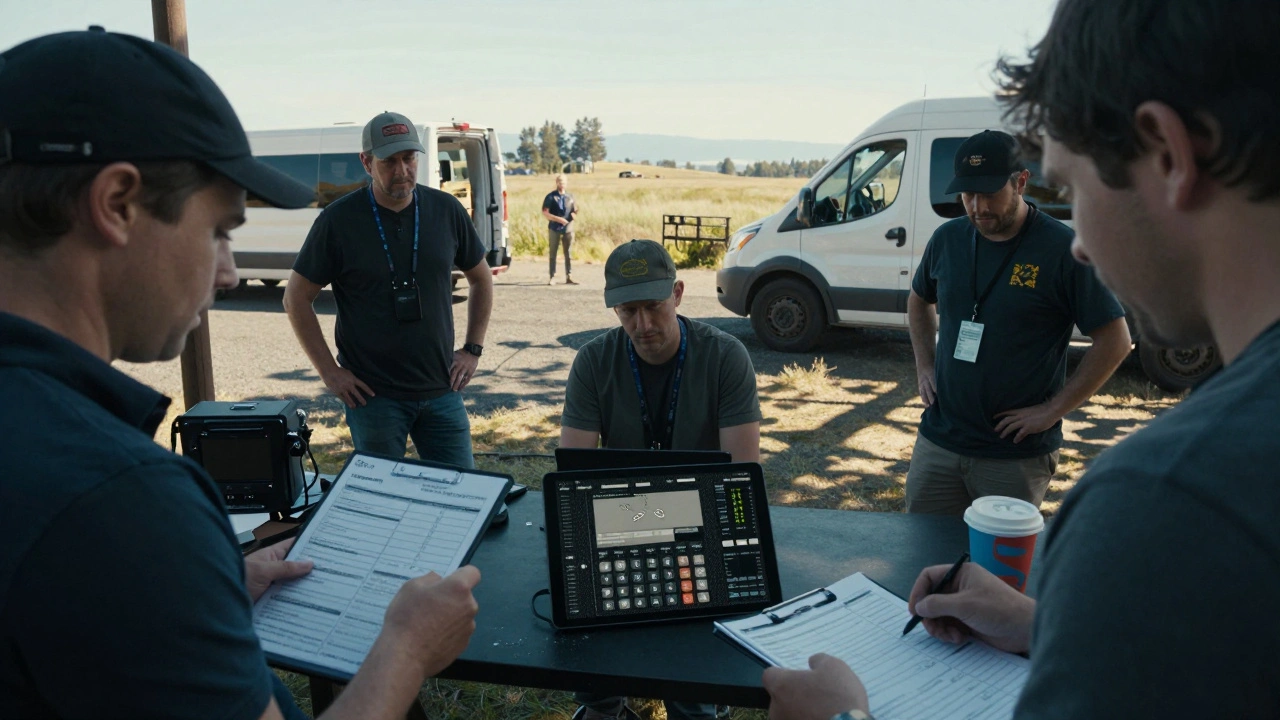
Every time a film crew rolls cameras, they’re also rolling out diesel generators, heating vans, and flights across continents. The average big-budget film releases over 1,000 metric tons of CO₂ into the atmosphere. That’s the same as 200 American households using electricity for a year. But here’s the thing: you don’t have to guess how much damage your shoot is doing. Carbon calculators for film shoots exist - and they’re changing how productions work.
What a Carbon Calculator Actually Does for Film
A carbon calculator for film isn’t just a spreadsheet. It’s a tool that tracks every energy-guzzling piece of your production. It asks: How many miles did the crew travel? How many hours did the generators run? How much electricity did the lighting rig pull? How many meals were served, and how were they transported?
These tools don’t just add up numbers. They convert everything into carbon equivalents. A 12-hour shoot with a 500kW generator? That’s roughly 3.5 tons of CO₂. A 30-person crew flying round-trip from LA to Budapest? Add another 12 tons. Suddenly, the numbers aren’t abstract - they’re concrete.
Productions like Avatar: The Way of Water and The Batman used carbon calculators to cut emissions by over 40%. They didn’t just say "we’re going green" - they measured, then changed.
How Film Productions Use Carbon Calculators
Most studios now require a carbon assessment before greenlighting a project. Here’s how it usually works:
- Pre-production planning: Input location, cast/crew size, travel plans, equipment needs.
- Real-time tracking: During filming, log fuel use, generator runtime, waste generated.
- Post-production reporting: Get a final footprint, compare it to industry benchmarks.
Tools like Carbon Trust Film Calculator a free, industry-standard tool developed by the UK-based Carbon Trust to help film and TV productions estimate emissions across all stages and Green Shoots a web-based platform designed specifically for film and TV productions to track energy, travel, and waste emissions in real time are now standard on major sets.
Smaller productions use simpler versions - Google Sheets with preset formulas, or apps like SetZero a mobile app that lets production assistants log daily emissions from transport, power, and catering with one tap. The goal isn’t perfection. It’s awareness.
What Gets Measured - And What Doesn’t
Not everything is easy to count. Here’s what most calculators include:
- Transportation: Flights, car rentals, vans, fuel for location shuttles
- Power: Generator fuel (diesel, propane), grid electricity for lighting and sound
- Accommodation: Hotel stays for cast and crew
- Catering: Food waste, packaging, distance food was shipped
- Equipment: Shipping of cameras, rigs, props across borders
What’s often left out? The carbon cost of digital streaming. When a movie goes on Netflix or Apple TV, millions of people stream it - and each stream uses data centers that burn electricity. Most calculators don’t include this because it’s outside the production’s direct control. But forward-thinking studios are starting to add it as a "post-release" impact.
Another blind spot: talent flights. A-list actors often fly private. A single private jet can emit 20 times more than a commercial flight. Some producers now ask actors to offset their own flights - or use commercial. It’s not always popular, but it’s measurable.
Real Examples: What Changed When They Measured
In 2023, the indie film Little Fires used a carbon calculator for the first time. The team planned to shoot in rural Oregon - a location they thought was "low impact." The calculator showed 78% of emissions came from crew transport. They reorganized carpools, rented electric vans, and moved lodging closer to the set. Result? A 62% drop in emissions - without spending more money.
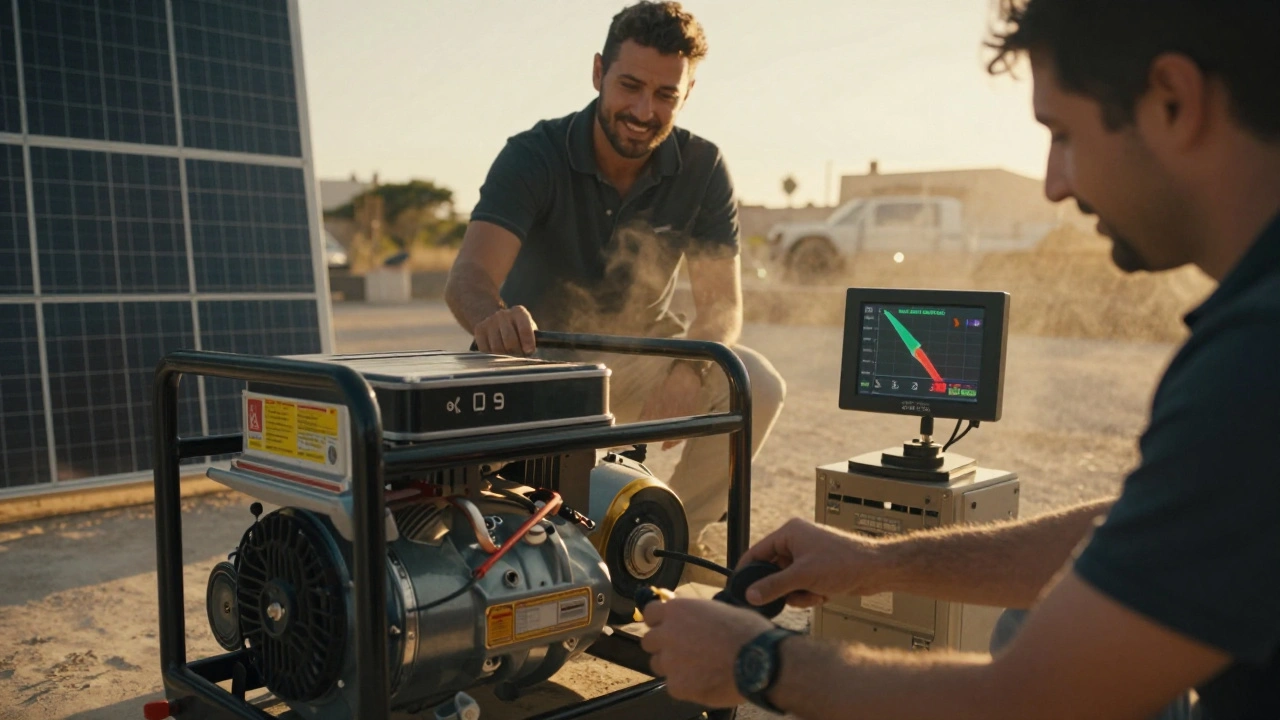
On the other side of the scale, a Netflix series in Spain slashed its footprint by switching from diesel generators to solar-powered battery packs. The crew used 400 kWh of solar energy per day. The cost? Roughly $2,000 more per week. The payoff? A 70% reduction in emissions - and a feature in the studio’s sustainability report.
Even small changes matter. One production switched from single-use plastic water bottles to refillable stainless steel ones. They saved 3,000 bottles over 12 days. That’s 420 kg of CO₂ avoided.
Why This Matters Beyond the Set
People are watching. Not just audiences - investors, distributors, governments. The EU now requires all film projects over €1 million to submit a carbon report. Canada’s tax credits for production now include sustainability points. Studios are starting to tie green performance to bonuses.
And it’s not just about rules. It’s about culture. Crews who use carbon calculators report higher morale. They feel proud. They’re not just making art - they’re protecting the places they film.
One camera operator in Scotland told me: "I used to think climate stuff was for activists. Then we ran the numbers. I realized I was part of the problem. Now I’m part of the solution."

How to Start Using a Carbon Calculator
You don’t need a big budget to start. Here’s how any production can begin:
- Choose a tool: Use Carbon Trust Film Calculator (free) or Green Shoots (subscription-based).
- Assign a role: Designate one person - even part-time - to log data daily. Call them your "Eco Liaison."
- Start small: Track just transport and power for one week. See where the numbers spike.
- Set a target: Aim to cut emissions by 20% on your next shoot. Not 50%. Not 100%. Just 20%.
- Share the results: Put the final footprint on your credits. It’s not a scar - it’s a badge.
Some crews even turn it into a competition. "Who can reduce their personal carbon footprint the most?" One AD won by biking to set every day. She got a free lunch. The crew got a cleaner set.
Common Mistakes (And How to Avoid Them)
- Mistake: Only tracking flights. Solution: Power use is often the biggest emitter. Don’t ignore generators.
- Mistake: Thinking offsetting = solving. Solution: Offsetting is a band-aid. Reduce first. Then offset what’s left.
- Mistake: Waiting until post-production to measure. Solution: Input data as you go. Late data = inaccurate numbers.
- Mistake: Assuming small crews don’t matter. Solution: Ten small shoots add up to one big one. Start where you are.
One crew thought they were eco-friendly because they used LED lights. But they kept their diesel generator running 24/7. The calculator showed the generator was emitting 8x more than all the lights combined. They switched to a hybrid system. Emissions dropped overnight.
What’s Next for Sustainable Film
The next wave isn’t just calculators. It’s integration. Tools are now linking with scheduling software. If you book a location for 3 days, the system auto-estimates emissions. If you add a helicopter shot, it flags the cost. Some studios are even building carbon budgets into their financing - like a loan limit, but for emissions.
And the public is paying attention. A 2025 survey of 10,000 moviegoers found that 68% would choose a film with a "low carbon footprint" badge over one without - even if it cost $2 more.
Carbon calculators aren’t about guilt. They’re about power. The power to change what you can control. The power to make better choices. The power to tell your story - without wrecking the planet that lets you tell it.
Do carbon calculators for film shoots actually reduce emissions?
Yes - but only if the numbers lead to action. A calculator that sits unused won’t help. But when crews see that their generator is emitting 5 tons of CO₂ over two weeks, they start asking: Can we use solar? Can we carpool? Can we shoot fewer night scenes? The tool doesn’t change behavior - awareness does.
Are carbon calculators only for big studios?
No. Tools like Carbon Trust Film Calculator and SetZero are free and designed for indie filmmakers. Even a one-person crew with a DSLR and a laptop can track their emissions. The scale doesn’t matter - the habit does.
What’s the biggest source of emissions on a film set?
It varies, but in most cases, it’s transportation - especially flights and vehicle use - followed closely by diesel generators. Lighting rigs use electricity, but generators often burn diesel to power them. One study found that transport and power combined made up over 80% of emissions on average shoots.
Can I offset emissions instead of reducing them?
Offsetting is better than doing nothing - but it’s not a substitute. Planting trees or funding wind farms doesn’t undo the pollution from burning diesel. The best approach is to first cut emissions as much as possible, then use offsets for what remains. Think of it like cleaning your house: vacuum first, then air freshener.
Is there a legal requirement to use carbon calculators?
In the EU, productions over €1 million must submit a carbon report. Canada, the UK, and some U.S. states now offer tax incentives for low-emission shoots. While not universal, the trend is clear: regulations are catching up. Waiting to act means falling behind.







Comments(10)