
Every year, millions of people watch the Oscars and wonder: how did that movie win? Was it the best film? Or was it something else? The truth is, the Oscars aren’t decided by public opinion, box office numbers, or even critical reviews. They’re decided by a small group of people-about 10,000 members of the Academy of Motion Picture Arts and Sciences-who vote behind closed doors. And their voting patterns? They’re not random. They follow patterns shaped by history, politics, relationships, and even timing.
Who Votes for the Oscars?
The Academy isn’t a jury. It’s a professional organization made up of people who’ve worked in film-actors, directors, cinematographers, editors, producers, and more. Each member belongs to one of 19 branches (like acting or documentary), and only members of a branch vote in their own category. So, actors vote for Best Actor and Best Actress, but not necessarily for Best Picture.
That’s why you sometimes see a performance win Best Actor even if the movie itself wasn’t nominated for Best Picture. The acting branch voted for it. The picture branch didn’t. This split happens more often than you think.
As of 2025, the Academy had 10,275 voting members. Roughly 25% are actors. Another 15% are directors. The rest come from technical and production branches. That means acting performances carry a lot of weight-not because they’re the most important, but because there are more actors in the room.
It’s Not About Box Office
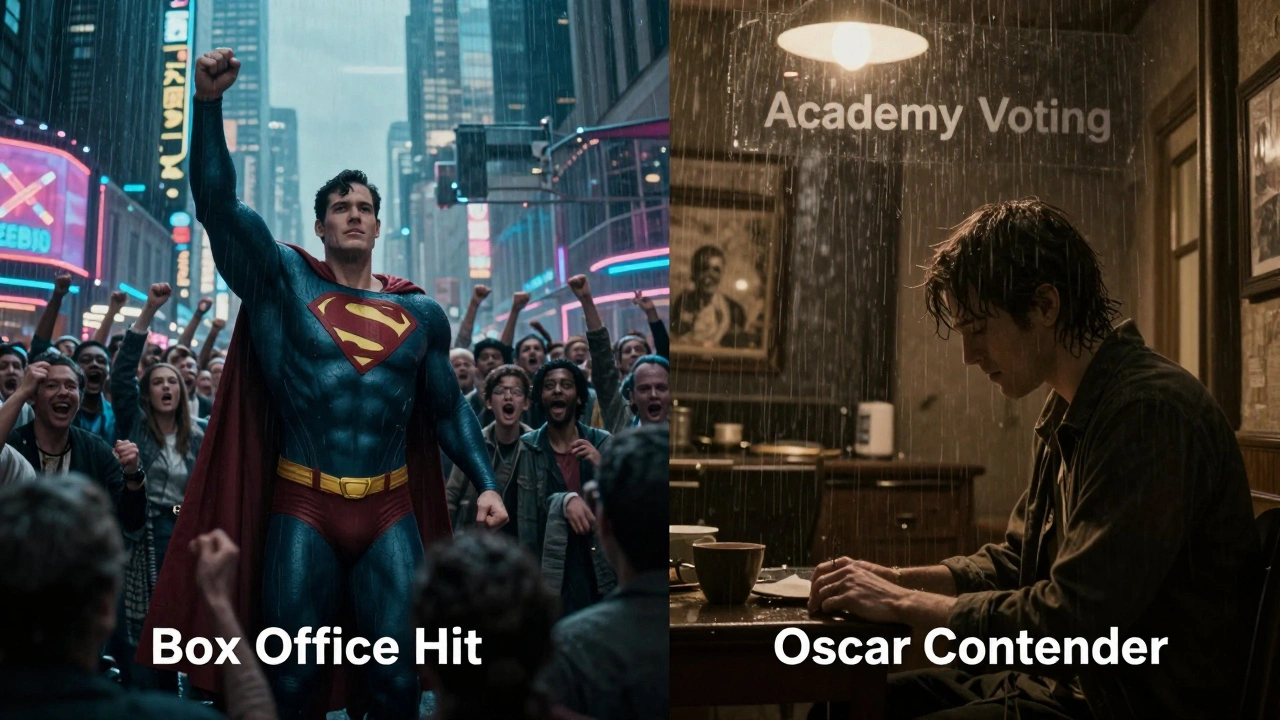
Big hits don’t always win. In 2023, Oppenheimer made over $950 million worldwide. It won Best Picture. But in 2022, Spider-Man: No Way Home made $1.9 billion. It didn’t get a single Oscar nomination. Why? Because the Academy doesn’t vote for popularity. It votes for prestige.
Think about it: when was the last time a superhero movie won Best Picture? Never. Even The Dark Knight in 2008, widely considered one of the greatest films of the 21st century, only got one nomination-for Heath Ledger’s posthumous Supporting Actor win.
The Academy rewards films that feel like "important" cinema. Historical dramas. Biopics. War stories. Movies with heavy themes. Movies that look like they were made to be studied in film school. That’s why Green Book won in 2019 despite heavy criticism. It fit the mold: a white savior story set in the 1960s, with emotional performances and a clear moral arc.
Timing Is Everything
Release dates matter more than you’d think. To qualify for the Oscars, a film must be released in Los Angeles County between January 1 and December 31 of the award year. But the real race starts in late September. That’s when studios start releasing their awards contenders-films like Marlowe or The Brutalist-so they’re fresh in voters’ minds come voting season.
There’s a reason you never see a summer blockbuster win Best Picture. By the time the Oscars roll around in March, voters have forgotten about Deadpool & Wolverine. But they remember Anatomy of a Fall, which opened in November and had months of critics’ circles, Q&A screenings, and industry buzz.
Even the timing of screenings matters. Studios host private events in Beverly Hills and Santa Monica in December. They invite Academy members. They serve wine. They show the film with a director in attendance. It’s not about the movie-it’s about the experience. The connection. The story behind it.
Groupthink and Momentum
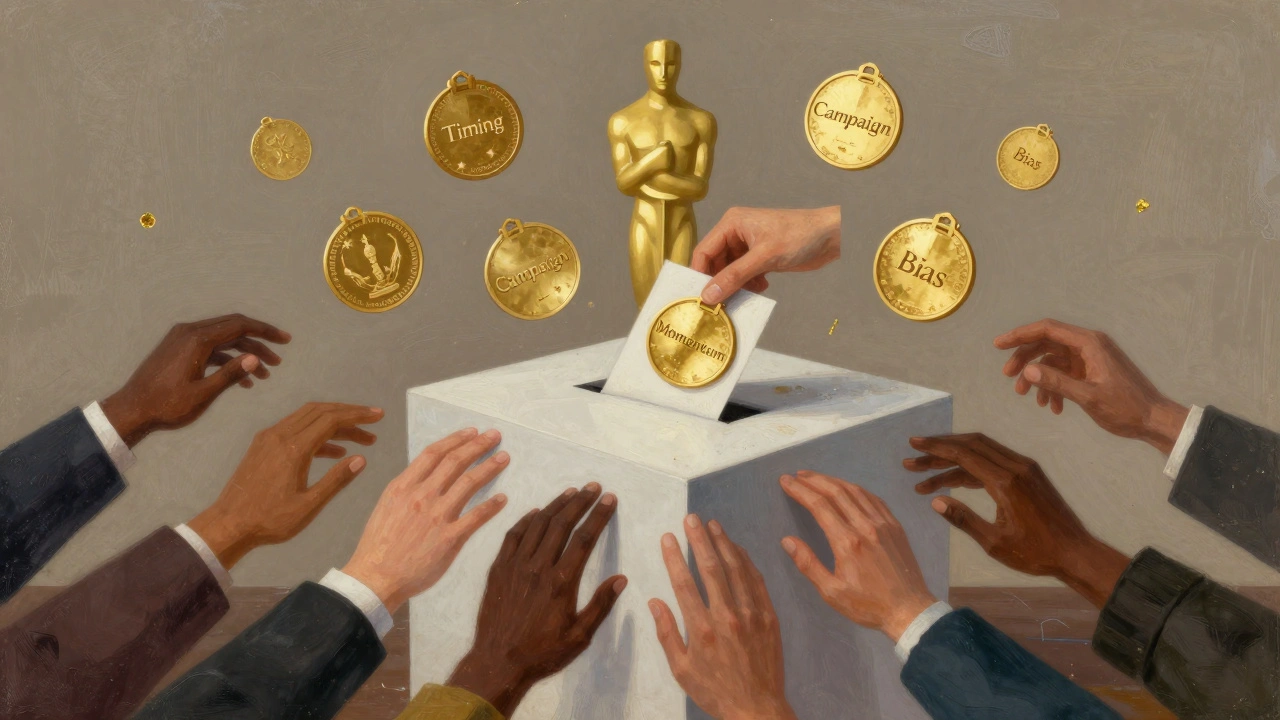
Once a film starts winning, it starts winning more. It’s called momentum. And it’s real.
In 2020, Parasite won Best Picture. Before that, no non-English language film had ever won. But once it swept the Golden Globes, the BAFTAs, and the Critics’ Choice Awards, the momentum was unstoppable. Voters didn’t vote because they loved it the most-they voted because they didn’t want to be the one holding up history.
This is why you see the same films winning year after year. Everything Everywhere All at Once won in 2023 because it had momentum. It had buzz. It had a story: a quiet indie film that exploded into a global phenomenon. Voters didn’t just vote for the film-they voted for the moment.
And then there’s groupthink. If a film is nominated for 10 Oscars, voters assume it’s the best. They vote for it because others are voting for it. That’s why Best Picture winners often have the most nominations. It’s not always about quality. It’s about perception.
The Influence of Campaigns
Behind every Oscar win is a campaign. A team of PR professionals, consultants, and former Academy members who spend months-sometimes over a million dollars-trying to get voters to notice their film.
They buy ads in trade magazines like Variety and Hollywood Reporter. They host luncheons. They send out screeners with personalized notes. They create "voter guides" that explain why the film deserves to win. They even hire actors to do interviews with film journalists.
Look at Shakespeare in Love in 1998. It beat Saving Private Ryan for Best Picture. Private Ryan had the bigger budget, the bigger director, the bigger emotional punch. But Shakespeare in Love had a better campaign. It was marketed as a love story. A romantic comedy. A film that made voters feel good. And in a room full of artists, feeling good matters.
Today, campaigns are more sophisticated. They use data. They track which voters saw which films. They target specific branches. They know who’s likely to vote for a documentary and who’s more likely to vote for a musical. They don’t just promote-they strategize.
The Hidden Bias: Who Gets Seen
The Academy has changed. It’s more diverse now than it was 10 years ago. But change doesn’t mean equality.
Women still make up less than 30% of voters. People of color are still underrepresented. And even when they are invited to join, they often don’t have the same access to screenings, events, or industry connections.
That’s why films like Minari (2021) and Everything Everywhere All at Once (2023) made history. They weren’t just good. They broke through a system that didn’t expect them.
But here’s the catch: even when marginalized voices get nominated, they’re often pushed into "ethnic" categories. A film about a Black family might get nominated for Best Picture-but the lead actor might be pushed into Best Supporting instead of Best Leading, because the voting body doesn’t see them as a "lead."
It’s not always conscious bias. It’s habit. Pattern recognition. The same old boxes people check when they vote.
What Actually Wins
So what does it take to win? Here’s what the data shows:
- Best Picture: Usually a drama with a historical or emotional weight. Must have strong performances. Often released between October and December.
- Best Actor/Actress: Often a transformation role. Losing weight. Changing accents. Playing someone real. The more painful the performance, the better.
- Best Supporting Actor: The "I’m the emotional glue" role. The quiet, heartbreaking performance that doesn’t steal the spotlight but holds the movie together.
- Best Director: Usually goes to someone who’s been overlooked before. Or someone who made a risky film that paid off.
- Best Original Screenplay: Often goes to films with unique voices. Quirky. Unconventional. Smart.
- Best International Feature: Usually goes to a film that feels universal-but has a strong cultural identity. And it’s almost always a film that’s been submitted by a country with a strong Oscar campaign.
There’s no formula. But there are patterns. And if you know them, you can predict winners before the envelope is opened.
Why the Oscars Still Matter
Some say the Oscars are outdated. That streaming platforms have killed the red carpet. That young audiences don’t care.
But here’s the truth: the Oscars still control the conversation. A win can double a film’s box office. It can launch careers. It can change how studios invest in films for years to come.
When Parasite won, suddenly every studio wanted a foreign-language film. When Everything Everywhere All at Once won, studios scrambled to greenlight weird, bold projects.
The Oscars aren’t perfect. They’re slow. They’re flawed. But they’re still the most powerful signal in film.
And until the voting system changes-until the Academy becomes truly representative of the world making films today-the patterns will stay. The timing. The campaigns. The groupthink. The bias.
So next time you watch the Oscars, don’t just ask: "Who won?" Ask: "Why?"
Do Oscar voters watch all the nominated films?
Not always. While most voters try to see all nominees, it’s nearly impossible to watch 20+ feature films, plus dozens of shorts and documentaries, in a few months. Many rely on screeners, clips, or recommendations from friends. Some voters admit they’ve only seen one or two films in a category and vote based on reputation or campaign materials.
Can a film win Best Picture without being nominated for Best Director?
Yes, but it’s rare. Since 1930, it’s happened only four times. The last was Argo in 2012. The director, Ben Affleck, was famously left off the Best Director shortlist. Voters still chose his film for Best Picture because they believed in the story, the performances, and the craft-even if they didn’t credit the director.
Why do some films win technical awards but not Best Picture?
Because different branches vote differently. A film might have stunning cinematography or editing that impresses those specific voters, but lack the emotional weight or narrative scope that the larger Best Picture voters look for. Mad Max: Fury Road won six Oscars in 2016 but lost Best Picture to Spotlight-a quieter, more "prestige" film.
Do voting blocs exist in the Academy?
Yes. There are informal groups of voters who coordinate screenings, share opinions, or even vote as a bloc. For example, the Directors Guild often influences Best Director voting. The Screen Actors Guild influences acting categories. And there are longstanding networks-like alumni from USC or NYU film schools-that move votes in predictable ways.
Has the Academy ever changed its voting system?
Yes. In 2009, they switched from a simple plurality vote to a ranked-choice system for Best Picture. That was meant to reduce the "popularity contest" effect. It worked-until 2017, when La La Land was mistakenly announced as the winner over Moonlight. That error exposed how fragile the system still is. Since then, they’ve tightened procedures but kept the same structure.






Comments(5)