New Hollywood: 1967-1980 and the Auteur Movement Explained

Joel Chanca - 17 Aug, 2026

Imagine a movie where the director has total control. No studio executives hovering over their shoulder, no rigid scripts, and no formulaic endings. This was the reality of New Hollywood, a transformative era in American cinema that ran from roughly 1967 to 1980. During this period, filmmakers like Francis Ford Coppola and Martin Scorsese took creative risks that reshaped how stories were told on screen. The core idea was simple but radical: the director is the author of the film. This concept, known as Auteur Theory, shifted power from studios to artists, creating some of the most iconic movies ever made.

The Birth of a New Era

To understand why New Hollywood happened, you have to look at what came before. In the 1950s and early 1960s, major studios operated like factories. They produced safe, predictable films designed for mass audiences. Directors were just hired hands who executed the studio's vision. But by the late 1960s, several things collided. The rise of television meant fewer people went to theaters, forcing studios to offer something TV couldn't match. Simultaneously, a generation of young filmmakers grew up watching European art houses and Japanese cinema. They wanted to make personal, gritty, and morally ambiguous films. The Graduate (1967) is often cited as the starting gun. It wasn't a blockbuster, but its cultural impact signaled a shift in audience taste toward more realistic and cynical narratives.

Auteur Theory in Practice

Auteur Theory posits that the director is the primary creative force behind a film, imprinting their unique style and themes on every project. This theory originated with French critics in the 1950s, particularly André Bazin and later the Cahiers du Cinéma group. When these ideas crossed the Atlantic, they found fertile ground in Hollywood. Studios, desperate to compete with foreign films and TV, began giving directors more freedom. This didn't mean unlimited budgets, but it did mean trust. Directors could choose their own scripts, hire their preferred crews, and edit their films without heavy-handed interference. This autonomy allowed distinct voices to emerge. You could watch a Stanley Kubrick film and know exactly who made it, just as easily as you could identify a Robert Altman production by its overlapping dialogue and ensemble casting.

Key Films That Defined the Period

Several films stand out as pillars of this movement. Each one pushed boundaries in different ways:

  • Bonnie and Clyde (1967): Directed by Arthur Penn, this film introduced violent, stylized action to mainstream audiences. It broke the mold of traditional gangster movies by making its criminals sympathetic and its violence shocking.
  • Easy Rider (1969): Dennis Hopper’s low-budget masterpiece captured the counterculture spirit. It proved that independent, youth-oriented films could be massive commercial hits.
  • Midnight Cowboy (1969): John Schlesinger’s film won the Best Picture Oscar, signaling that critical acclaim and box office success could align with artistic ambition.
  • The Godfather (1972): Francis Ford Coppola’s epic redefined the crime genre. Its slow pacing, complex characters, and moral ambiguity set a new standard for cinematic storytelling.
  • Taxi Driver (1976): Martin Scorsese’s dark portrait of urban alienation showcased the psychological depth possible under the auteur system.
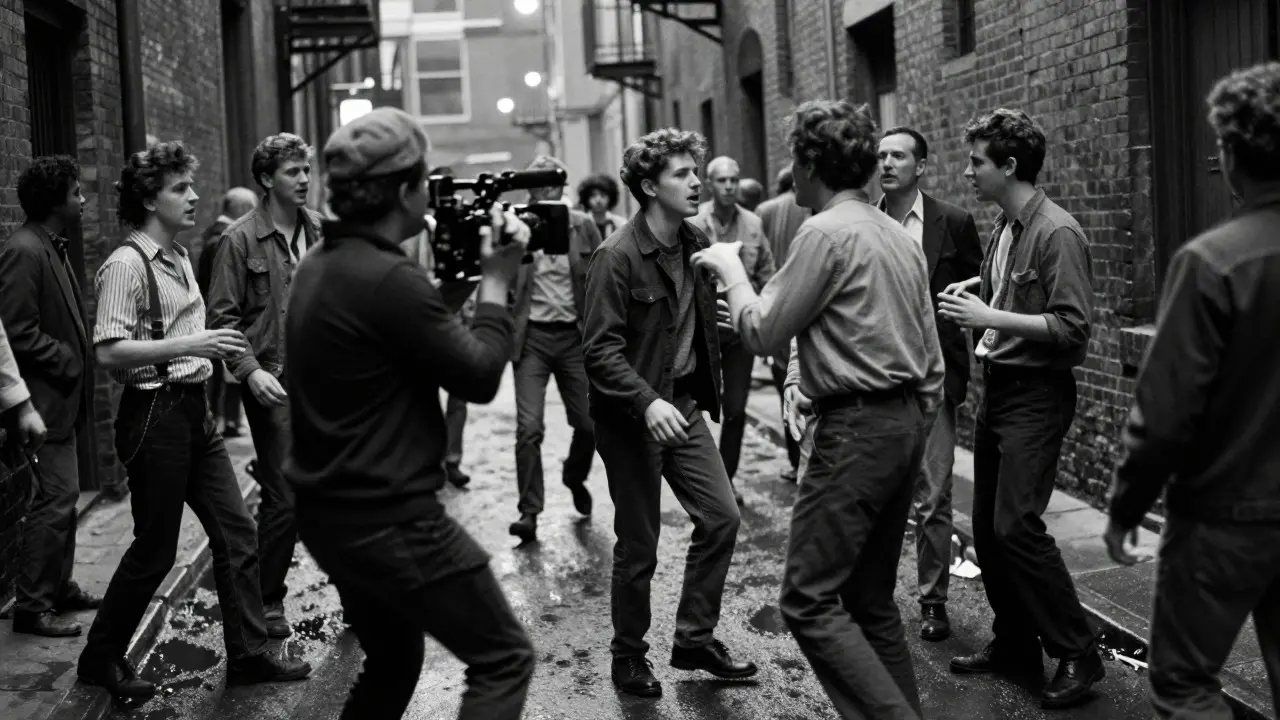
A handheld camera operator filming actors in a gritty urban alleyway

Stylistic Innovations and Techniques

New Hollywood wasn’t just about who had control; it was also about how films looked and sounded. Directors adopted techniques from documentary filmmaking, known as Cinema Vérité. This included handheld cameras, natural lighting, and location shooting instead of studio sets. The goal was realism. Dialogue became less polished, often overlapping or fragmented, mimicking real conversation. Sound design also evolved. Instead of swelling orchestral scores that told you how to feel, films used ambient noise, silence, or non-diegetic music that contrasted with the visuals. For example, the use of popular songs in Saturday Night Fever or the stark silence in parts of Chinatown created unique emotional textures that studio-era films rarely attempted.

Economic Impact and Studio Response

Initially, studios viewed these risky projects with skepticism. However, the financial success of films like Jaws (1975) changed everything. While Steven Spielberg is often associated with the end of New Hollywood due to his blockbuster approach, Jaws actually emerged during the tail end of the era. It demonstrated the power of marketing and franchise potential. Studios realized that while auteur-driven films were critically acclaimed, they needed consistent box office returns. This led to a gradual shift back toward studio control in the early 1980s. Budgets increased, but so did oversight. The pure auteur model gave way to a hybrid system where directors still had influence, but within tighter commercial constraints.
Stylized portraits of directors emerging from a dark cinematic background

Legacy and Modern Relevance

The impact of New Hollywood extends far beyond 1980. Today, when we see a director with a distinct visual style and thematic focus, we are seeing the legacy of this movement. Streaming platforms now operate similarly to the independent studios of the 70s, offering space for diverse voices. The emphasis on character-driven narratives, moral complexity, and stylistic innovation remains central to high-quality filmmaking. Moreover, the idea that a director’s personal vision can resonate with global audiences has become a cornerstone of modern cinema. Whether it’s the work of contemporary auteurs like Christopher Nolan or Greta Gerwig, the principles established during New Hollywood continue to shape how films are made and consumed.

Comparison of Studio Era vs. New Hollywood Approach
Aspect Studio Era (Pre-1967) New Hollywood (1967-1980)
Creative Control Studio Executives Directors
Narrative Style Formulaic, Clear Morality Ambiguous, Complex Characters
Visual Aesthetics Polished, Studio Sets Gritty, Location Shooting
Sound Design Orchestral Scores Ambient Noise, Popular Music
Audience Target Families, Mass Market Youth, Intellectuals

Frequently Asked Questions

Who started the New Hollywood movement?

There isn't a single founder, but key figures include Francis Ford Coppola, Martin Scorsese, Steven Spielberg, George Lucas, and Robert Altman. Their collective success in the late 1960s and 1970s defined the era.

What is the difference between New Hollywood and classic Hollywood?

Classic Hollywood focused on studio-controlled, formulaic narratives with clear moral outcomes. New Hollywood emphasized directorial authorship, moral ambiguity, realistic styles, and complex characters, often targeting adult audiences.

Did New Hollywood last until 1980?

Most historians mark the end around 1980, though some extend it to 1983. The release of blockbusters like Jaws and Star Wars signaled a return to higher budgets and stronger studio marketing strategies, diluting the pure auteur model.

How did television affect New Hollywood?

Television drew audiences away from theaters, forcing studios to differentiate their offerings. This pressure encouraged risk-taking and innovative storytelling to attract viewers who might otherwise stay home.

Is Auteur Theory still relevant today?

Yes, it remains highly relevant. Modern audiences often seek out films based on the director's reputation. Streaming services also allow for niche, director-driven content that mirrors the independence seen during the New Hollywood era.

Comments(8)

Aleen Wannamaker

Aleen Wannamaker

August 18, 2026 at 09:34

Okay, so I’ve been rewatching the classics lately and this post really ties it all together for me 🎬. It’s wild to think that before 1967, directors were basically just hired guns doing what the suits said. The shift to giving them actual creative control changed everything about how we consume stories today. I love how they mention The Graduate as the starting gun; it wasn’t even a huge hit at first but it definitely set the tone for that cynical, realistic vibe we see in modern cinema. Also, did anyone else notice how the sound design section highlights the use of popular songs? That was such a radical move back then compared to those swelling orchestral scores. It made the movies feel so much more immediate and real. Honestly, without New Hollywood, we probably wouldn’t have the kind of character-driven narratives we enjoy on streaming platforms now. It’s amazing how much influence those few years had on the entire industry structure. I’m glad this era is getting the recognition it deserves because it really laid the groundwork for contemporary auteurs like Nolan or Gerwig. The table comparing the studio era vs. New Hollywood approach was super helpful too. It makes the contrast between the polished, safe old guard and the gritty, ambiguous new wave really clear. Thanks for breaking it down so well! 👏

Hengki Samuel

Hengki Samuel

August 19, 2026 at 15:21

Let us not forget that this 'auteur' movement was largely a Western, specifically American, imposition of artistic ego upon the commercial machinery of cinema. While the West celebrated their 'creative freedom,' the rest of the world was often forced to consume these culturally specific narratives as universal truths. The reliance on European art house theory by American studios is a fascinating paradox of cultural appropriation disguised as innovation. They took the intellectual frameworks developed in France and applied them to the vast resources of Hollywood, creating a hybrid that served primarily domestic interests. This period solidified the dominance of Anglo-American storytelling conventions in global markets, a legacy that still persists in our current media landscape. One must view this era with critical eyes, recognizing that 'freedom' for the director often meant the subjugation of other voices and perspectives. The moral ambiguity praised in films like Taxi Driver was merely a reflection of a specific societal anxiety unique to the United States during that decade. To call this a universal revolution in filmmaking is to ignore the geopolitical context in which it occurred. The true cost of this auteurism was the marginalization of non-Western cinematic traditions that offered different philosophical approaches to narrative. We should be cautious about romanticizing an era that cemented Western hegemony in visual storytelling.

Peter Sehn

Peter Sehn

August 21, 2026 at 15:20

Absolutely! This was the golden age of American confidence and artistic daring. No other nation could have pulled off such a massive cultural shift while maintaining global box office dominance. The sheer scale of production and the boldness of the themes were uniquely American achievements. We gave the world the blueprint for modern cinema!

Clifton Makate

Clifton Makate

August 23, 2026 at 03:48

What a magnificent overview of a pivotal era in cinematic history! It is truly inspiring to witness how a group of visionary filmmakers managed to challenge the established status quo and redefine the boundaries of artistic expression. The transition from the rigid, factory-like production models of the early twentieth century to the personalized, director-driven approach of the late sixties represents one of the most significant paradigm shifts in the entertainment industry. By embracing the principles of Auteur Theory, these artists were able to infuse their personal philosophies and aesthetic preferences into every frame of their productions, thereby creating works that resonated deeply with audiences on a more intimate level. The economic pressures exerted by the rise of television served as a crucial catalyst for this transformation, compelling studios to take calculated risks in order to retain audience engagement. Films such as Bonnie and Clyde and Easy Rider were not merely commercial successes; they were cultural landmarks that reflected the changing social mores and political sentiments of the time. The stylistic innovations introduced during this period, including the use of handheld cameras and natural lighting, contributed significantly to the development of a more realistic and immersive viewing experience. Furthermore, the evolution of sound design, moving away from conventional orchestral scores towards ambient noise and popular music, added another layer of complexity and authenticity to the narrative structure. This era also marked a significant shift in the relationship between filmmakers and their audiences, fostering a greater appreciation for moral ambiguity and complex character development. The legacy of New Hollywood continues to influence contemporary filmmaking, as evidenced by the prominence of directorial signatures in modern cinema. It is essential to recognize the enduring impact of this movement on the global film industry and its contribution to the broader cultural dialogue surrounding art and commerce. May we continue to celebrate and study this remarkable chapter in the history of motion pictures, ensuring that its lessons are not lost to future generations of filmmakers and scholars alike.

Benjamin Spurlock

Benjamin Spurlock

August 23, 2026 at 15:36

Nice breakdown. The point about Jaws being the turning point makes sense when you look at the marketing strategies used. 🎥

Chris Martin

Chris Martin

August 25, 2026 at 03:13

It is imperative to note that the conclusion of the New Hollywood era was not solely due to the release of Jaws, but rather a confluence of factors including increased corporate consolidation within the studio system and a shifting demographic preference for spectacle over substance. While Spielberg’s work undeniably signaled a return to blockbuster economics, the underlying structural changes in financing and distribution played an equally critical role in diluting the pure auteur model. The assumption that artistic integrity was compromised entirely by commercial success is a simplistic interpretation of a complex historical transition. Many directors continued to exercise significant creative control throughout the 1980s, albeit within tighter financial constraints imposed by shareholders seeking higher returns on investment. Therefore, labeling 1980 as a definitive endpoint is somewhat arbitrary and fails to account for the gradual erosion of directorial autonomy that began earlier in the decade. A more nuanced analysis would consider the specific contracts negotiated by key figures during this transitional period, revealing a spectrum of creative freedom rather than a binary switch. Nevertheless, the foundational principles established during New Hollywood remain integral to the professional identity of contemporary filmmakers, who continue to navigate the tension between artistic vision and market viability. Understanding this dynamic requires a comprehensive examination of both the creative and economic forces at play during this transformative period in American cinema history.

Michelle Jiménez

Michelle Jiménez

August 26, 2026 at 18:09

i totally agree with the part about streaming services being like the indie studios of the 70s. its crazy how similar the dynamics are. people want their favorite directors to make whatever they want, even if its risky. i think thats why we still see so many strong female and male auteurs pushing boundaries today. its all thanks to those guys in the 60s and 70s taking a chance. also, the overlapping dialogue thing in altman films was so ahead of its time. feels very modern now.

Tess Lazaro

Tess Lazaro

August 27, 2026 at 15:44

One must correct the slight misconception regarding the timeline; while 1980 is commonly cited, the true end of the auteurist ethos can arguably be traced to the mid-1970s with the increasing intervention of producers in the editing room. The article’s assertion that Jaws emerged during the tail end is technically accurate but overlooks the fact that the franchise mentality was already gaining traction with the success of Star Wars’ predecessor projects and the growing influence of test screenings. Furthermore, the claim that television forced studios to differentiate is an oversimplification; television actually provided a steady income stream that allowed studios to take bigger risks on theatrical releases, a nuance often missed in generalist accounts. The stylistic innovations mentioned, particularly Cinema Vérité, were not exclusively adopted by New Hollywood directors but were heavily influenced by documentary pioneers whose work predates the era significantly. It is also worth noting that the moral ambiguity celebrated in this period was frequently criticized by conservative critics as a decline in cultural standards, a perspective that adds depth to the sociological analysis of the time. The comparison table, while useful, lacks a column for international reception, which was crucial in validating the global appeal of these American experiments. Without the enthusiastic response from European and Asian audiences, the financial sustainability of these riskier projects might have been questionable. Thus, the legacy of New Hollywood is not merely an American phenomenon but a transnational exchange of cinematic language that reshaped global expectations for narrative complexity and visual realism. To fully appreciate this era, one must acknowledge the interplay between domestic policy, international taste, and technological advancement that collectively enabled this brief but impactful window of creative liberty.

Write a comment