
For decades, the path from screen to script was a one-way street. You acted, you waited for an agent to call, and you hoped the material was good enough. But that era is fading fast. Today, the most successful names in Hollywood aren't just waiting for roles; they are building them. This shift toward becoming multihyphenates isn't just a trend-it's a survival strategy in an industry where gatekeepers are tightening their grip.
Why are so many A-list actors picking up pens and buying cameras? It’s simple: ownership. When you write your own story, you control the narrative. When you produce your own film, you control the budget, the cast, and the final cut. The result is a new wave of cinema that feels more personal, raw, and commercially viable than ever before.
The Rise of the Actor-Writer-Producer
Multihyphenate is a term used in the entertainment industry to describe individuals who hold multiple professional titles or skills, such as acting, writing, directing, and producing. While the concept isn't new-think of legends like Orson Welles or Charlie Chaplin-the scale has changed dramatically in the last decade.
In 2026, the barrier to entry for production has lowered significantly. High-quality digital cameras cost a fraction of what they did ten years ago, and streaming platforms are hungry for original content that doesn't require massive studio backing. This environment allows actors with strong personal brands to bypass traditional studios entirely.
- Creative Autonomy: No network notes, no studio interference, just the artist's vision.
- Financial Leverage: Owning backend points means higher profit margins if the film succeeds.
- Brand Extension: Moving from being a 'face' to being a 'voice' deepens audience loyalty.
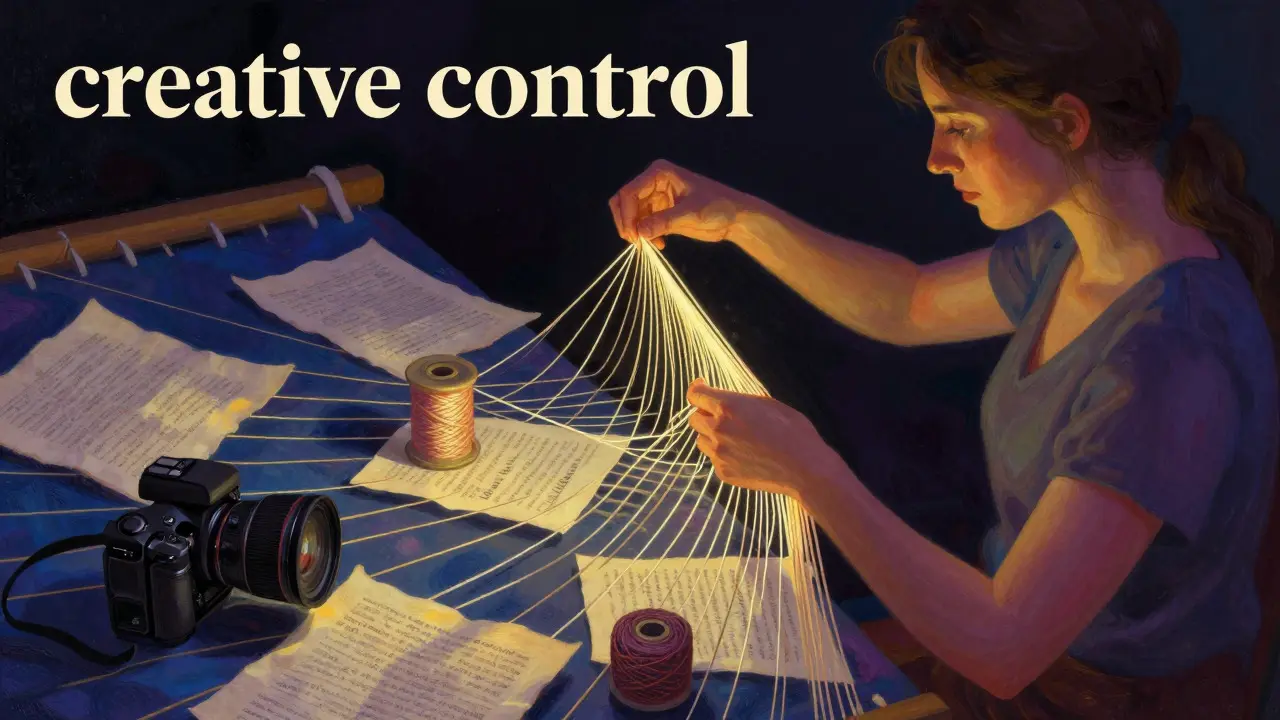
Why Creative Control Matters More Than Ever
Let’s be honest: getting a great role is luck. Getting a great role *and* keeping it intact through post-production is rare. For multihyphenates, the producer credit is the shield that protects the performance.
Consider the case of recent indie hits that started as passion projects. Without a producer hat on, these films might have been shelved by risk-averse executives. By taking on the producer role, actors can secure financing from independent funds rather than relying on major studio slates. This shifts the power dynamic. Instead of begging for a greenlight, they bring the project to the table fully formed.
This approach also solves the 'typecasting' problem. If an actor wants to play a villain but only gets offered romantic leads, writing their own script ensures the character exists exactly how they envisioned it. It’s a direct line from imagination to screen.
Key Players Redefining the Industry
Several stars have made this transition seamlessly, proving that acting chops don't guarantee storytelling ability, but dedication does.
| Name | Primary Role | Recent Project | Key Achievement |
|---|---|---|---|
| Denzel Washington | Actor/Director | Training Day (Legacy) | Oscar-winning directorial debut |
| Tom Hanks | Actor/Producer | Here Comes Tony Reed (2025) | High-budget indie success via Playtone |
| Zendaya | Actor/Producer | Euphoria (TV/Film Crossover) | Building a production company focused on diverse voices |
| Joaquin Phoenix | Actor/Writer | Personal Script Development | Co-writing niche dramatic features |
Notice the pattern? These aren't just celebrities dabbling in art. They are building empires. Companies like Playtone (Hanks) and Jumanji Productions (Washington) act as vehicles for their creative output, ensuring a steady stream of high-quality content that aligns with their personal values.
The Economics of Self-Production
You might think producing your own film is a money pit. Sometimes it is, but the math works differently for established talent. An actor earning $10 million per movie might take a pay cut to $3 million to retain 20% of the backend profits. If the film grosses $50 million, that 20% slice is worth far more than the upfront salary difference.
Moreover, tax incentives in states like Georgia, Louisiana, and New Mexico make low-to-mid-budget productions highly profitable. Multihyphenates often choose these locations not just for the scenery, but for the financial efficiency. It’s a strategic move that maximizes return on investment while maintaining artistic integrity.
Challenges and Pitfalls
It’s not all glamour and awards. Being a writer-director-producer is exhausting. You wear every hat, which means you make every mistake. If the script is weak, it’s on you. If the lighting is bad, it’s on you. There’s no one to blame but yourself.
Common pitfalls include:
- Scope Creep: Trying to do too much in one film. Stick to manageable budgets and casts.
- Ego Clashes: Balancing your desire to perform with your duty to direct others. Hire a trusted co-producer to keep things objective.
- Burnout: The workload is double or triple that of a standard actor. Schedule breaks between projects.
How to Start Your Journey as a Multihyphenate
If you’re an actor looking to cross over, you don’t need to buy a camera today. Start small. Write short scripts. Collaborate with other emerging filmmakers. Build a reputation as someone who understands the craft behind the curtain.
Focus on relationships. Producers, directors, and writers are a tight-knit community. Attend festivals, join guilds, and engage with peers online. The next big opportunity often comes from a conversation at a coffee shop, not a formal pitch meeting.
Remember, the goal isn't just to be famous; it's to be indispensable. In a market flooded with content, the people who create their own opportunities will always have the upper hand.
What is the main benefit of actors producing their own films?
The primary benefit is creative control. By holding the producer title, actors can influence the script, casting, and editing process, ensuring the final product matches their vision without studio interference.
Do multihyphenates earn more money than regular actors?
Often, yes. While they may take lower upfront salaries, they retain backend points (profit sharing). If a film becomes a hit, the long-term earnings from royalties and box office shares can significantly exceed standard acting fees.
Is it hard to learn writing and producing after becoming an actor?
It requires significant effort and learning. Most successful multihyphenates hire mentors, attend workshops, or collaborate with experienced professionals initially. However, the practical experience gained from working on set helps bridge the gap between theory and execution.
Which industries support the rise of multihyphenates the most?
The streaming and independent film sectors are the biggest drivers. These platforms offer flexible funding models and global distribution networks, making it easier for individual creators to reach audiences without major studio backing.
Can any actor become a successful multihyphenate?
While talent helps, success depends on business acumen and resilience. Not every actor has the drive to manage budgets or negotiate contracts. Those who succeed usually possess a strong entrepreneurial mindset alongside their artistic skills.




Comments(9)