Have you ever watched a movie where a CGI character felt genuinely human? That uncanny sense of connection usually comes from motion capture. It is the technology that records an actor's physical movements and facial expressions, then maps them onto a digital model. Without it, animating complex characters would take months of manual keyframing. With it, a performance can be captured in days and refined in weeks.
Motion capture has evolved far beyond the white suits seen in early 2000s films. Today, it ranges from full-body optical systems used in blockbuster productions to lightweight inertial sensors worn by actors on location. The goal remains the same: preserve the nuance of human performance while translating it into pixels. Whether it’s Gollum’s twitchy eyes or a superhero’s precise punch, the tech behind the magic is both artistic and technical.
How Motion Capture Actually Works
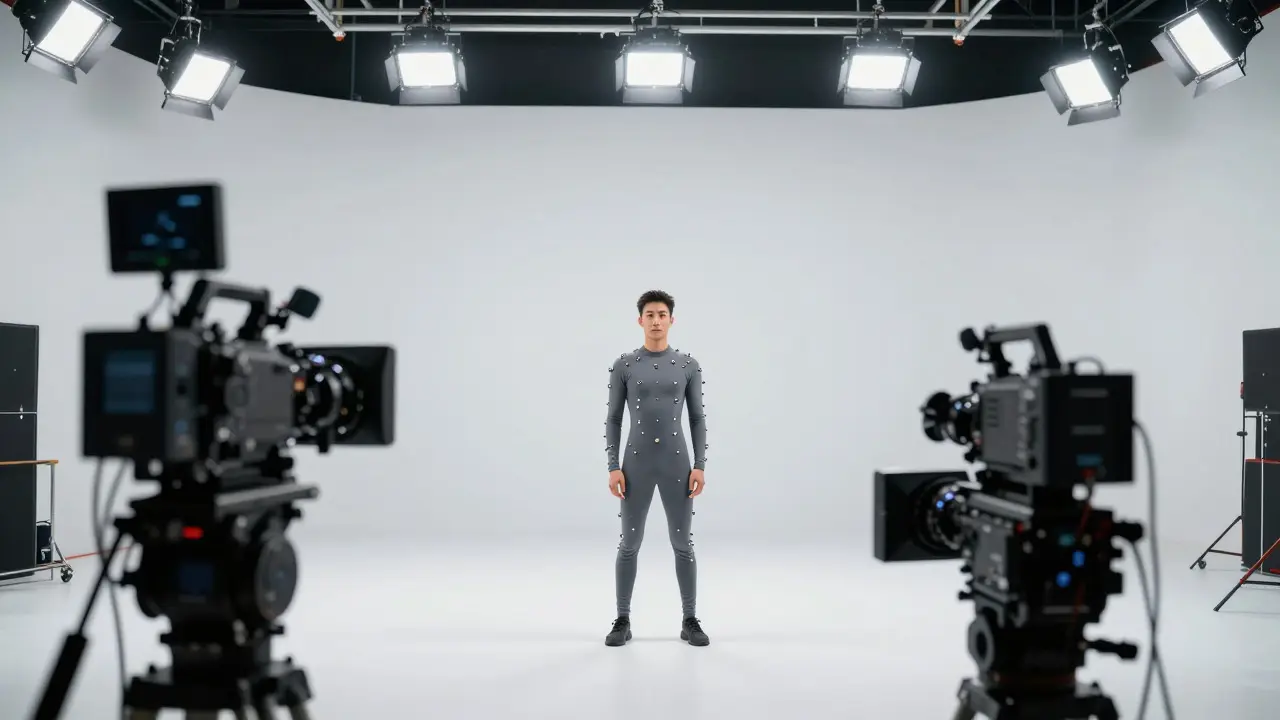
At its core, motion capture tracks movement data. There are two primary methods: optical and inertial. Optical systems use high-speed cameras to track reflective markers placed on an actor’s body. These markers reflect infrared light, allowing software to calculate 3D positions with millimeter precision. Inertial systems, on the other hand, use small sensors with gyroscopes and accelerometers. They don’t need external cameras, making them ideal for outdoor shoots or tight spaces.
Once the data is captured, it goes through a cleaning process. Artists remove noise, fix occlusions (when markers are hidden), and retarget the movement to the digital character’s rig. This step is crucial because a human skeleton doesn’t match a digital one exactly. A gorilla’s arms are longer; a robot’s joints move differently. Retargeting ensures the digital character moves naturally without breaking physics.
| Technology Type | Precision Level | Setup Complexity | Best Use Case |
|---|---|---|---|
| Optical Marker-Based | Sub-millimeter | High (requires volume/studio) | High-budget VFX, facial detail |
| Inertial Sensor Systems | Centimeter-level | Low (portable) | Location shooting, real-time preview |
| LIDAR Scanning | Millimeter | Medium | Capturing static assets, costumes |
| Markerless AI Tracking | Variable | Very Low | Quick previews, indie projects |
The Role of Facial Capture in Performance
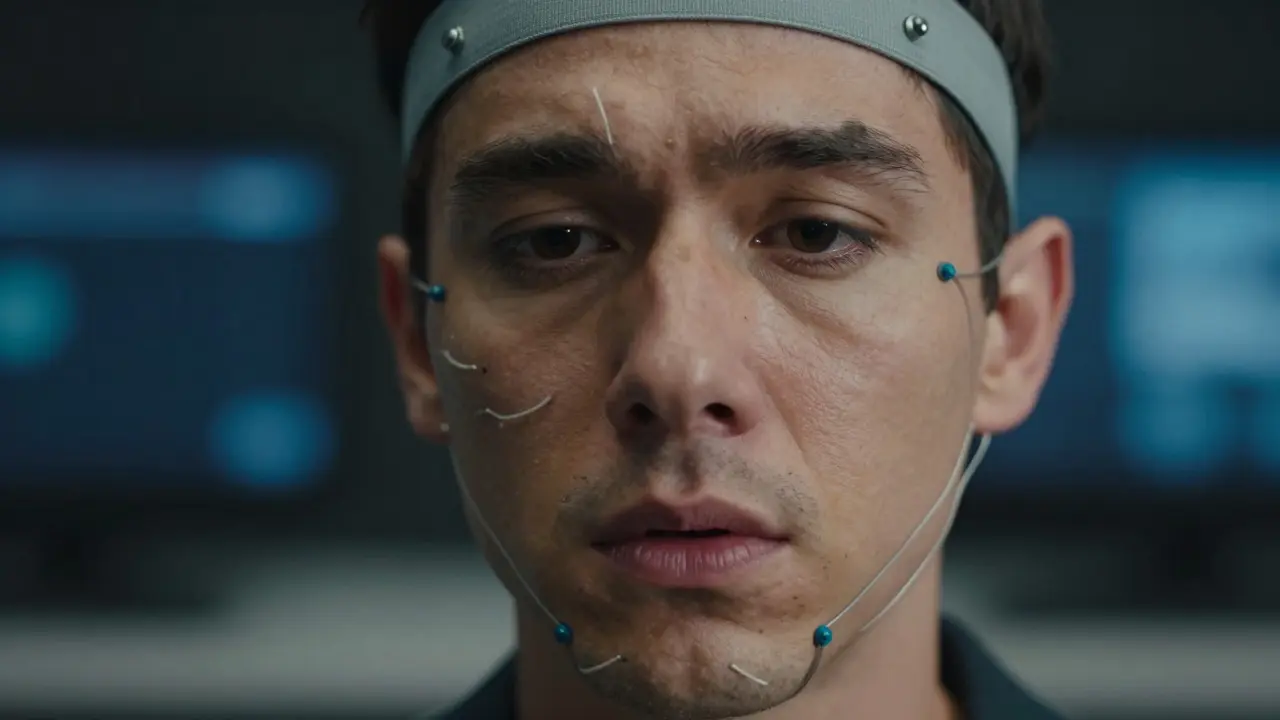
Body movement gets you most of the way there, but facial expression is where emotion lives. Facial motion capture uses specialized head-mounted rigs or high-resolution cameras to track subtle muscle movements. Think about how a slight furrow of the brow changes the meaning of a line. Capturing that requires dozens of tracking points just around the eyes and mouth.
In recent years, camera-based facial tracking has reduced the need for bulky helmets. Directors can now watch an actor perform in real-time on a monitor, seeing their digital double react instantly. This feedback loop helps directors shape performances more effectively. Instead of guessing how a gesture will look after post-production, they can adjust the acting on the spot. It turns the VFX pipeline into a collaborative creative tool rather than a black box.
From Raw Data to Final Render
Capturing the movement is only half the battle. The other half is making it look believable. Once the motion data is cleaned, it drives a digital rig. This rig is essentially a puppet inside the character model. Animators tweak specific frames if the translation feels off. For example, if an actor jumps, the digital character might need extra weight added to the landing to match the physics of a heavier creature.
Lighting and texture mapping also play a huge role. A digital character looks flat if the lighting doesn’t match the scene. Modern engines like Unreal Engine allow artists to simulate realistic skin subsurface scattering, hair dynamics, and fabric simulation in real-time. This means that when you see a digital elf sweating in a forest, that sweat is calculated based on environmental temperature and activity level, not just painted on.
Real-World Applications Beyond Blockbusters
You might think motion capture is reserved for massive Hollywood budgets, but its reach is expanding. Video game developers use it extensively to create lifelike NPCs (non-player characters). Sports teams use it for biomechanical analysis to prevent injuries. Even medical researchers use it to study gait patterns in patients with mobility issues.
In the film industry, independent creators are finding new ways to leverage the tech. Affordable markerless systems powered by AI can now track basic body movements using standard video footage. While not as precise as studio-grade setups, this technology lowers the barrier to entry. It allows smaller teams to prototype animations quickly before committing to expensive full captures.
Challenges and Limitations
Despite its power, motion capture isn’t perfect. One major issue is the "uncanny valley." If the digital character moves almost perfectly but has a tiny timing error, it can feel disturbingly wrong. Audiences are sensitive to these mismatches. Another challenge is the cost. Setting up an optical stage requires significant space and equipment. Not every production can afford a dedicated volume, so many rely on hybrid approaches where some shots are captured optically and others use inertial or markerless methods.
Data storage is also a growing concern. High-fidelity motion capture generates terabytes of data per day. Managing, backing up, and processing this data requires robust infrastructure. As resolutions increase and frame rates climb, the computational load continues to grow, pushing studios to invest in cloud-based rendering solutions.
The Future of Virtual Production
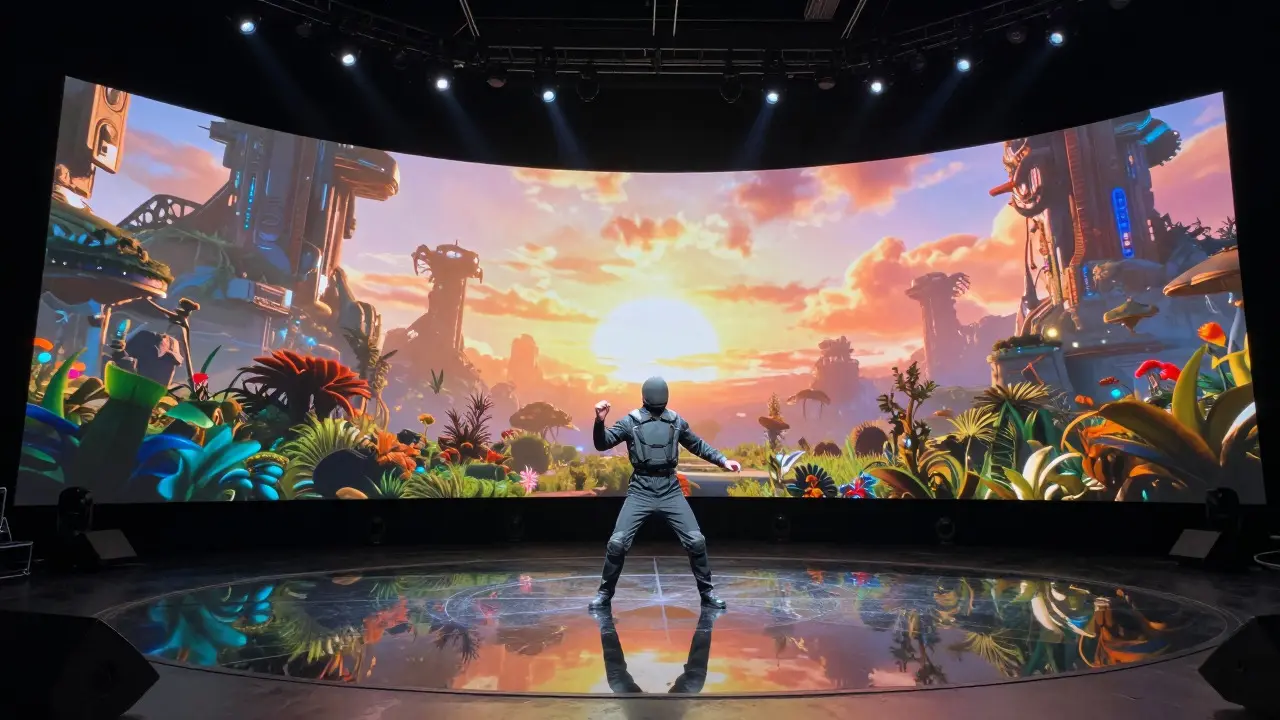
The next frontier is virtual production. Imagine an actor performing in front of a giant LED wall displaying a digital environment. Their motion capture data updates the background in real-time. This setup, popularized by shows like *The Mandalorian*, reduces the need for green screen compositing later. It allows cinematographers to shoot with actual depth of field and reflections, making the final image look more natural.
As hardware becomes cheaper and AI algorithms improve, we expect to see even more seamless integration between live-action and digital worlds. The line between what is filmed and what is generated will continue to blur. For audiences, this means richer storytelling possibilities. For creators, it means new tools to bring impossible ideas to life.
What is the difference between motion capture and animation?
Animation involves manually creating movement frame by frame. Motion capture records existing human movement and applies it to a digital model. While traditional animation gives artists total control over style, motion capture preserves the subtleties of a live performance.
Do actors need special training for motion capture?
Not necessarily, but they do need to adapt. Since cameras track every micro-movement, actors must be aware that there is no hiding behind dialogue. Physical clarity is paramount. Many directors coach actors to exaggerate certain gestures slightly to ensure the digital translation reads clearly on screen.
Can motion capture work outdoors?
Yes, but with limitations. Optical systems struggle with sunlight interference, so indoor volumes are preferred for high-end work. However, inertial sensor systems work perfectly fine outdoors. They are portable and unaffected by ambient light, making them suitable for location shoots.
How much does motion capture cost?
Costs vary widely. A basic inertial suit can cost a few thousand dollars to rent. Full-scale optical stages require significant investment in equipment, space, and personnel. For a feature film, the budget for VFX and motion capture can range from millions to tens of millions, depending on the number of characters and scenes involved.
Is markerless motion capture accurate enough for professional films?
It depends on the project needs. For wide shots or background characters, markerless AI tracking is often sufficient. For close-ups requiring detailed facial expressions or complex interactions, marker-based systems still provide superior accuracy. Many productions use a mix of both to balance quality and budget.