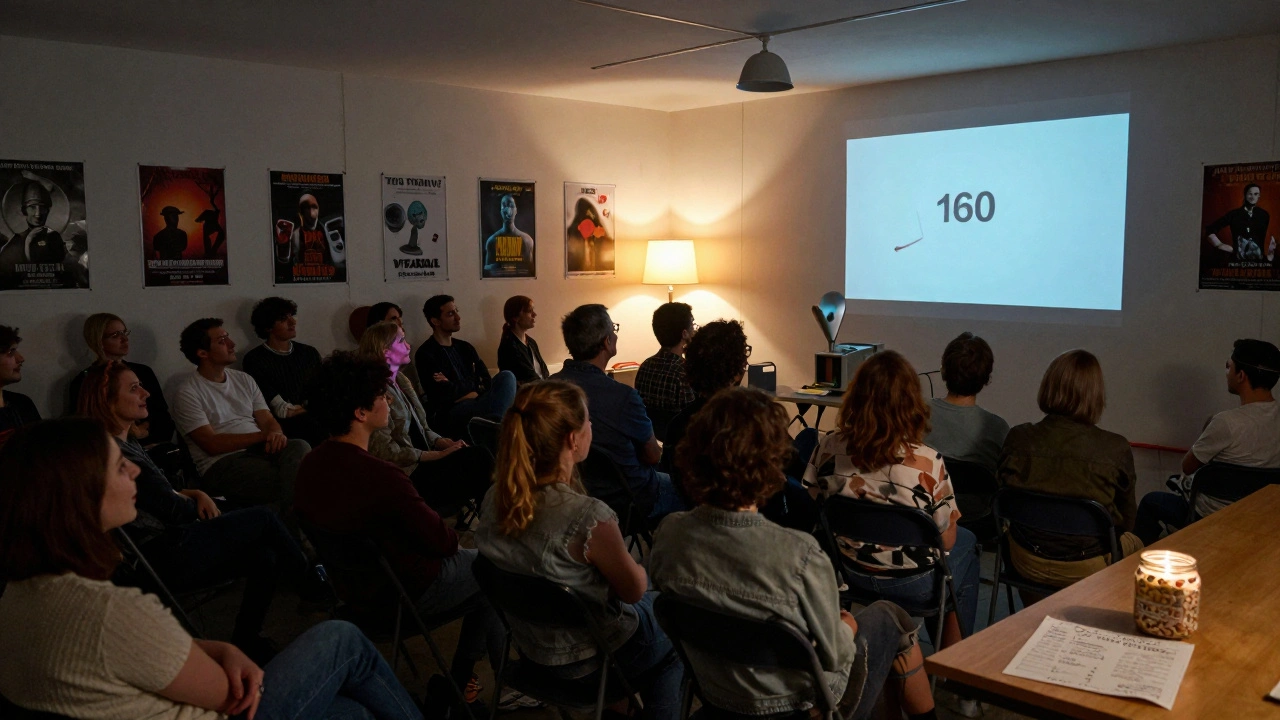
Most people think movie theaters are dying. Big chains close down, streaming dominates, and popcorn prices keep rising. But in basements, bookstores, and converted laundromats across the country, something quieter and more powerful is growing: microcinemas. These aren’t just tiny screens. They’re lifelines for communities that don’t see themselves reflected in mainstream cinema. And they’re not just surviving-they’re thriving because they do what no algorithm can: connect people through shared, unfiltered film experiences.
What Exactly Is a Microcinema?
A microcinema isn’t defined by its size-it’s defined by its purpose. It’s a space, often with fewer than 50 seats, that screens films outside the commercial system. These aren’t indie releases playing on a third screen at a multiplex. These are obscure documentaries, experimental shorts, silent films with live piano scores, regional cinema from places you’ve never heard of, and films that no distributor wants to touch.
The first true microcinema opened in San Francisco in 1998, but the model exploded after 2010. Today, there are over 300 active microcinemas in the U.S. alone. Many run on donations. Some charge $5 a ticket. A few don’t charge at all. What they all share is a refusal to treat film as a product to be sold, and instead treat it as a shared ritual.
At the Microcinema is a small, community-run venue that screens non-commercial, experimental, or culturally significant films outside the mainstream distribution system. Also known as alternative cinema space, it often operates in repurposed buildings and relies on volunteers, grants, and audience support. in Asheville, they show one film a week. No trailers. No ads. Just a projector, a folding chair audience, and a host who talks about the film’s history before the lights go down. That’s it. No streaming service can replicate that.
Why Do These Places Still Exist?
Because audiences are hungry for something real. People don’t just want to watch a film-they want to talk about it, argue about it, feel it with others. In 2023, a study by the Film Society of Lincoln Center found that 68% of microcinema attendees said they went because they felt isolated from mainstream film culture. Another 52% said they went to meet people who thought like them.
These venues aren’t trying to compete with Netflix. They’re filling a gap that streaming can’t touch: the physical, emotional, and intellectual connection between viewer and film, and between viewer and viewer.
In Detroit, the Film Farm is a microcinema located in a former auto repair shop that screens African diaspora films and hosts post-screening discussions with local artists. They don’t have a website. You find them through flyers on community boards. Their most popular night? A monthly screening of 1970s Black exploitation films, followed by a potluck and open mic. No one records it. No one shares it online. It just happens.
How Do They Stay Open?
They don’t rely on ticket sales. They rely on people.
Most microcinemas operate on a shoestring budget. Rent is often paid in barter-a local café gives coffee in exchange for screening their short films. A printer donates posters. A retired projectionist fixes the machine for free. In Portland, the Cinema of the Everyday is a volunteer-run microcinema that screens films about domestic life, labor, and urban decay, funded entirely by monthly Patreon donors and local art grants. Their entire annual budget? $12,000. That’s less than what a single first-run Hollywood movie spends on one Instagram ad.
They get funding from arts councils, small foundations, and sometimes even city grants aimed at cultural equity. But the real engine? The audience. Monthly memberships. Donation jars. Film swaps. People bring their own 16mm reels to share. One woman in Minneapolis has donated over 200 rare feminist films from her late father’s collection-just because she wanted them to be seen.
There’s no box office system. No loyalty app. No push notifications. Just a handwritten schedule taped to the door, and a Facebook group where people post: “Who’s coming to the Soviet horror night?”
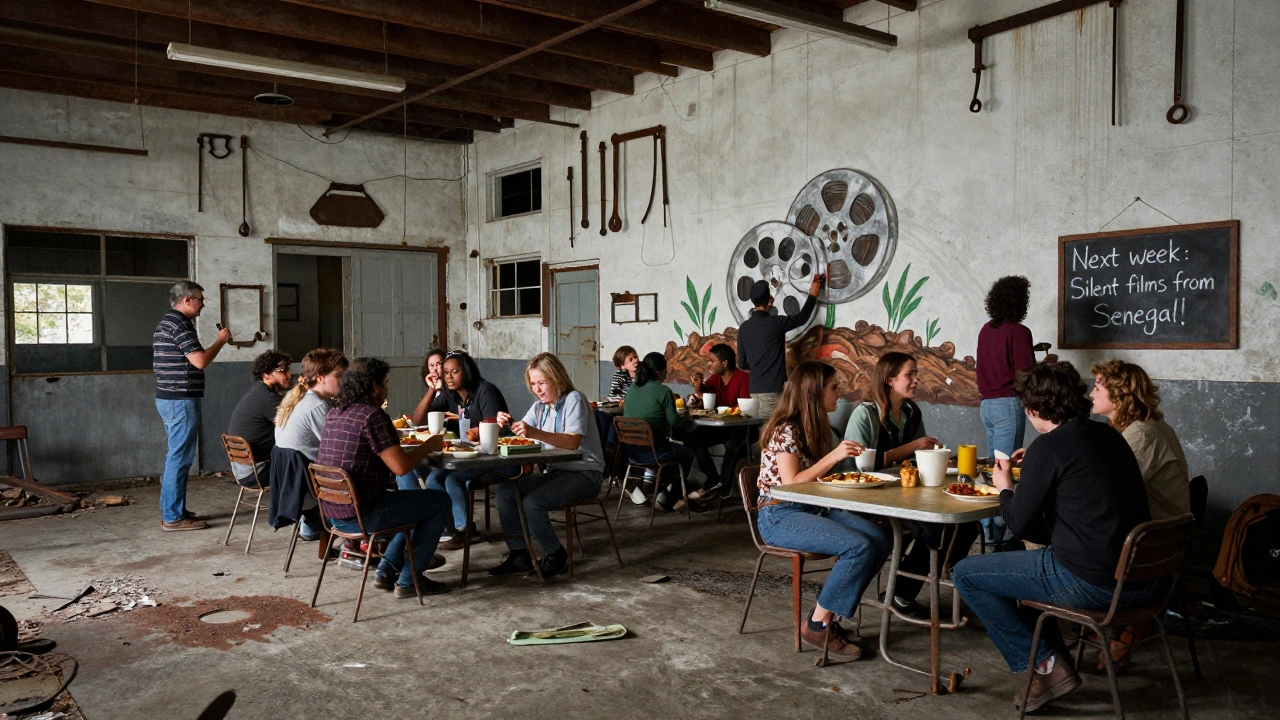
The Films They Show
Forget Marvel. Microcinemas show what no studio would touch.
- 1960s Japanese avant-garde shorts that were banned for decades
- Local filmmakers’ first features, shot on iPhones in their kitchens
- Archival footage of civil rights marches, restored by college students
- Experimental animations made with crayons and stop-motion clay
- Documentaries about rural libraries, prison choirs, or migrant farmers
At the Theater of the Absurd is a microcinema in New Orleans that specializes in surrealist and absurdist cinema from Eastern Europe and Latin America, often paired with live music or poetry readings., they once screened a 22-minute silent film from 1927 about a man who tries to mail his shadow. Afterward, the audience sat in silence for three minutes before someone whispered, “I’ve never felt so seen.”
These aren’t niche because they’re obscure. They’re niche because they’re specific. And that specificity is what makes them powerful. You don’t watch a film at a microcinema-you enter a world that only exists for that one night.
Who Goes There?
It’s not just film students. It’s not just hipsters. It’s nurses, teachers, retirees, immigrants, teenagers who hate TikTok, and people who’ve never set foot in a theater since high school.
In Baltimore, the Projector Room is a microcinema housed in a church basement that screens films by incarcerated filmmakers and hosts monthly panels with formerly incarcerated artists. Their audience is 40% formerly incarcerated people. The rest? Volunteers, activists, and curious locals. One man, released after 28 years, said: “I didn’t know movies could be about people like me. I didn’t know they could be made by people like me.”
These spaces are intentionally inclusive. No dress code. No judgment. No pressure to “get it.” You can walk in late. You can leave early. You can cry. You can laugh. You can sit in the back and just breathe.

The Bigger Picture
Microcinemas are more than theaters. They’re cultural anchors.
When a town loses its library, its post office, its hardware store-something essential dies. Microcinemas are becoming the new community centers for people who crave meaning, not just entertainment. They’re where history is preserved, where voices are amplified, where art isn’t a product but a conversation.
They’re also training grounds. Many filmmakers who now screen at Sundance started with a 10-minute film shown on a wall in a Brooklyn basement. One director from rural Alabama told me: “I made my first film because I saw a screening of a 1972 documentary about coal miners. I didn’t know you could make movies about places like mine. I thought I had to move to LA.”
Without microcinemas, entire genres of cinema would vanish. Not because they’re bad-but because they’re too small, too strange, too local for the machine to care about.
How You Can Help
You don’t need to start a theater. You don’t need money. You just need to show up.
- Go to one. Even once. Bring a friend.
- Donate $10. Or $5. Or a bag of popcorn.
- Volunteer to run the projector, even if you’ve never done it.
- Share your old VHS tapes or 16mm reels.
- Ask your local library to partner with a microcinema.
- Write a letter to your city council asking for small arts grants.
There’s a microcinema in your city. You just haven’t found it yet. Check your local arts council website. Search “microcinema near me.” Ask at independent bookstores. Walk into a place that looks like it hasn’t been cleaned since 1998. Knock on the door. Ask: “Do you show films here?”
Someone will say yes. And you’ll walk out with more than a movie. You’ll walk out with a community.
Why This Matters Now
Streaming gives you endless choice. But it also isolates you. Algorithms don’t care if you feel seen. They care if you click. Microcinemas care if you cry.
They’re not nostalgic. They’re necessary. In a world that’s becoming more digital, more fragmented, more lonely-they’re one of the last places where film still lives as a shared human experience.
They’re not the future of cinema. They’re the heartbeat of it.
What is the difference between a microcinema and an indie theater?
An indie theater still operates like a business-it shows newer, non-Hollywood films, often with the same ticket prices and seating as a multiplex. A microcinema is non-commercial, volunteer-run, and often shows rare, experimental, or archival films that no distributor will touch. Indie theaters may show a new foreign film. Microcinemas show a 1968 Polish experimental film that’s never been digitized.
Can I start a microcinema with no money?
Yes. Many started in living rooms. All you need is a projector, a blank wall, and a few friends. The first microcinema in Austin ran for two years out of a garage, using a borrowed projector and a TV as a screen. Funding came from potluck donations and a single grant from a local arts nonprofit. It’s not about money-it’s about commitment.
Do microcinemas show new films?
Some do, but not the kind you’d find on Netflix. They show new experimental shorts, student films, or local documentaries that haven’t been picked up by festivals. One microcinema in Seattle screens a new 5-minute film every Tuesday from a different local artist. It’s not about being new-it’s about being unseen.
Are microcinemas only in big cities?
No. There are active microcinemas in towns with populations under 5,000. In rural Iowa, a microcinema runs out of a former post office. In northern Maine, a group shows films in a library basement once a month. They use a laptop and a bedsheet. Attendance is small-but every person who comes says it changed how they see film.
How do I find a microcinema near me?
Search for “microcinema” + your city on Google. Check local arts council websites. Visit independent bookstores and ask the staff. Look for flyers on community bulletin boards. Join local Facebook groups for artists or filmmakers. If you can’t find one, you might be the first person to start one.



Comments(5)