You’ve seen the headlines. An actor spends weeks living in a boxcar to play a hobo. Another loses thirty pounds and stops speaking English for six months. We often treat Method Acting as this mystical, painful ritual reserved for Hollywood elites who want an Oscar. But what if I told you that most of what people call "the Method" is actually a misunderstanding? It’s not about suffering for your art; it’s about truth. If you’re trying to understand how actors get into character-or if you’re an aspiring performer wondering why your scenes feel flat-you need to look past the myths and into the actual mechanics of a technique derived from Konstantin Stanislavski’s work, adapted by Lee Strasberg to prioritize emotional recall and psychological realism.
The Real Origin Story (It’s Not Just Hollywood)
Let’s clear up the biggest misconception right away: Stanislavski did not invent "The Method." He invented a System. In the early 20th century, acting was largely declamatory. Actors projected emotions at the audience like they were reading a speech. Stanislavski, working at the Moscow Art Theatre, wanted something else. He wanted life on stage. His system wasn’t about digging into your deepest traumas every single night. It was about logic, objectives, and actions. He asked actors to determine what their character wanted (the objective) and what they were doing to get it (the action). If you wanted water, you didn’t just pretend to be thirsty; you performed the physical act of reaching, grasping, and drinking with genuine intent.
So where did the "Method" come from? Enter Lee Strasberg, an American director who brought Stanislavski’s ideas to New York in the 1930s and ’40s. Strasberg focused heavily on one specific aspect of Stanislavski’s work: Emotional Memory. He believed that to portray grief or joy authentically, an actor should recall a similar emotion from their own life. This shift created a distinct lineage. While Stanislavski looked outward at the situation, Strasberg looked inward at the psyche. When people say "I’m using the Method," they are usually referring to Strasberg’s interpretation, not Stanislavski’s original text. Understanding this distinction saves you from thinking you have to cry over a dead pet every time you play a sad scene.
Core Pillars: How It Actually Works
If you strip away the celebrity gossip, method acting relies on three concrete tools. You don’t need a guru to use them; you just need discipline.
- Affective Memory: This is the heart of Strasberg’s approach. Instead of mimicking an emotion, you trigger it. If your character is terrified, you don’t just widen your eyes. You recall a moment when you felt genuine fear-maybe being lost in a foreign city or hearing a crash outside your window. You focus on the sensory details of that memory until the physical reaction (shaking hands, quickened breath) returns naturally.
- Sense Memory: This isn’t about feelings; it’s about physical sensations. Can you remember exactly how cold ice feels against your skin? The taste of burnt toast? By recreating these physical sensations internally, you ground yourself in the reality of the scene. It prevents the "acting" face that looks fake on camera because your body reacts before your brain decides how to pose.
- Substitution: Sometimes, the script requires you to love someone you find annoying. Substitution allows you to replace the fictional partner with a real person you actually care about. You keep the dialogue and the blocking, but the emotional connection is real. This keeps interactions spontaneous rather than rehearsed.
Method vs. Classical: Which Approach Fits Your Project?
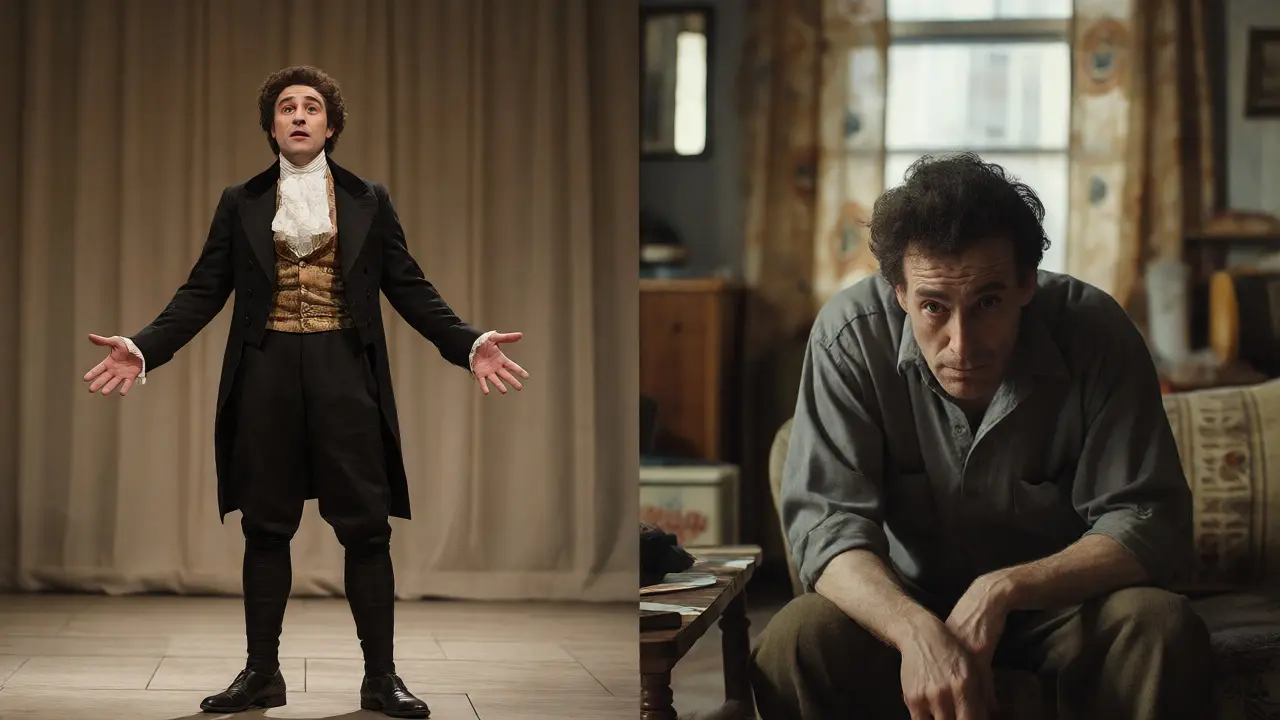
Not every film needs method acting. In fact, some directors hate it because it can slow down production. If you’re comparing approaches, you need to know where each fits. Classical training, often associated with Stella Adler or Michael Chekhov, focuses more on imagination and external choices. You might decide, "My character walks with a limp," and then stick to that choice regardless of how you feel that day. Method acting is more fluid and internal.
| Feature | Method Acting (Strasberg) | Classical/System (Adler/Chekhov) |
|---|---|---|
| Primary Focus | Internal emotional truth via personal memory. | External behavior, imagination, and script analysis. |
| Preparation Time | Often longer; may involve lifestyle changes. | Focused on line memorization and blocking. |
| Risk Factor | High risk of burnout or emotional exhaustion. | Lower risk; easier to repeat consistently. |
| Best For | Dramatic films, intense psychological roles. | Comedy, period pieces, fast-paced TV shoots. |
Think about Daniel Day-Lewis. He is famous for staying in character off-camera, learning to build boats for Gangs of New York, and even refusing to break his Southern accent between takes. That’s extreme method. Now think about Meryl Streep. She is known for her technical precision and ability to mimic accents and mannerisms without necessarily living the trauma of the character. Both are brilliant, but they use different engines to get there. If you’re shooting a sitcom, do you really want your lead spending three days crying in a corner to prep for a joke? Probably not. Classical techniques allow for repeatability, which is crucial for episodic television.
The Dark Side: Why Directors Are Wary
Here’s the part nobody puts in the promotional interviews: method acting can be messy. Because it relies on personal vulnerability, it can lead to instability. There are documented cases of actors becoming unable to distinguish their character from themselves after long shoots. This isn’t just drama; it’s a occupational hazard.
From a production standpoint, method acting introduces variables. If an actor is using affective memory, their performance might change day-to-day based on their mental state. One day they might be deeply connected to the grief; the next, they might be emotionally drained and give a flatter take. Directors who prefer consistency-like those shooting complex visual effects scenes where timing must be exact-often prefer actors who can hit the same mark technically every time. They don’t want you to "find" the emotion in the moment; they want you to deliver it on cue so the editor has usable footage.
Also, consider the cost. Living in character often means isolating yourself from the crew. If you won’t speak to the gaffer because your character wouldn’t talk to servants, you create friction. On a tight budget, that friction translates to money. Crew members are less likely to go the extra mile for someone who treats them like props rather than colleagues.
How to Use These Techniques Without Losing Your Mind
You don’t have to sell your soul or move into a dumpster to benefit from method principles. Most modern actors use an eclectic mix. Here is a practical workflow for applying these concepts without burning out.
- Analyze the Objective First: Before you dig into emotions, figure out what your character wants in the scene. Is it approval? Safety? Revenge? Write this down. This anchors you. Even if you use emotional memory, it serves the objective, not the other way around.
- Use Sense Memory for Physicality: Instead of forcing an emotion, start with the body. If your character is exhausted, recall the feeling of heavy limbs after a marathon. Let that physical sensation inform your posture. Emotions often follow physical states. This is safer than jumping straight into traumatic memories.
- Set Boundaries: Decide when you are "on" and when you are "off." Many successful method-lite actors stay in character during rehearsal and filming but return to their normal selves immediately after "cut." This protects your mental health and keeps set dynamics healthy.
- Collaborate, Don’t Isolate: Tell your director what you’re trying to achieve. If you’re using substitution, let them know. Transparency builds trust. If you’re struggling with a scene, ask for a different angle or a retake rather than disappearing into your dressing room for hours.
Remember, the goal is believability, not authenticity at any cost. If the audience believes you, the technique worked. If you’re miserable but the scene looks great, the technique also worked. The key is finding the balance between deep immersion and professional reliability.
Frequently Asked Questions
Is method acting still used today?
Yes, but rarely in its pure, extreme form. Most contemporary actors use a hybrid approach. They might use elements of sense memory or substitution while maintaining professional boundaries. Pure Strasberg-style method is less common now due to the high emotional toll and the rise of faster production schedules in streaming and television.
What is the difference between method acting and classical acting?
Classical acting (based on Stanislavski’s later work or Adler’s teachings) focuses on imagination, script analysis, and external choices. Method acting (Strasberg’s interpretation) prioritizes internal emotional recall and personal experience. Classical actors might imagine a scenario to evoke emotion; method actors recall a real personal event to trigger it.
Do all actors use method acting?
No. Many highly respected actors, such as Ian McKellen or Anthony Hopkins, explicitly reject method acting. They prefer technical precision, relying on voice control, movement, and script interpretation rather than deep psychological immersion. Each actor develops their own toolkit based on what works best for their personality and the demands of the role.
Can method acting cause mental health issues?
It can. Constantly accessing traumatic memories or maintaining a dissociated state (staying in character 24/7) can lead to anxiety, depression, or identity confusion. Modern acting coaches emphasize the importance of "de-roling" rituals and mental hygiene to prevent these negative side effects.
Who invented method acting?
Konstantin Stanislavski developed the foundational system in Russia. However, the term "Method" specifically refers to the adaptation by Lee Strasberg at the Group Theatre and later the Actors Studio in New York. Other teachers like Stella Adler and Sanford Meisner also taught variations of Stanislavski’s system, leading to different schools of thought.