
When you start a film project with partners from three different countries, you’re not just making a movie-you’re building a legal maze. Every country has its own rules on funding, taxes, copyright, labor, and distribution. One misstep can freeze your budget, delay your shoot, or even kill the whole project. International co-productions are more common than ever, but the legal risks are still underestimated by most filmmakers.
Co-Production Treaties Aren’t Just Paperwork
Most international film projects rely on bilateral or multilateral co-production treaties. These are government-signed agreements that let films qualify for tax breaks, grants, and local funding in each participating country. But not every treaty is equal. For example, the Canada-EU co-production treaty allows for shared funding and crew credits, while the U.S.-Australia treaty requires at least 30% of the total production cost to come from each country.
Many filmmakers assume signing the treaty is enough. It’s not. You need to prove substantial creative and financial involvement from each partner. That means: real crew hired locally, real locations shot on-site, and real money transferred into each country’s production account. If you try to fake it-say, by hiring a local actor for one day just to meet the quota-you risk losing all incentives and facing penalties.
The European Film Commission tracks over 200 active co-production treaties. But only 43% of projects that apply for treaty status actually qualify on the first try. The rest get rejected because they didn’t document their contributions properly.
Who Owns the Copyright? (Spoiler: It’s Complicated)
Copyright law doesn’t cross borders the way you think. If you shoot in Germany, edit in South Korea, and distribute in Brazil, you’re dealing with three different copyright systems. In the U.S., copyright is automatic upon creation. In France, moral rights (like the right to be credited or to object to edits) are legally protected for life-even after you sell the film. In China, foreign copyright holders must register their work with the National Copyright Administration to enforce rights.
Without a clear ownership agreement, you could end up with:
- A producer in Spain claiming exclusive distribution rights in Latin America
- A financier in Japan demanding 50% of streaming revenue because their contract says so
- A director in Canada legally blocking the release of the final cut because they weren’t consulted
The solution? A co-production agreement that specifies:
- Who owns the master copy
- How revenue is split (by territory, platform, or medium)
- Who controls edits, marketing, and dubbing
- What happens if one partner pulls out
This isn’t optional. A 2024 survey of 150 international films found that 68% of legal disputes came from unclear copyright ownership, not budget overruns.
Tax Incentives Are a Double-Edged Sword
Canada offers up to 30% cash back on eligible labor. The UK gives 25% on qualifying production spend. South Korea refunds 20% for international shoots. These sound like free money. But each incentive has strict rules.
For example, the UK’s tax credit requires that:
- At least 10% of the total production cost is spent on UK-based crew and services
- The film must be certified as "culturally British" by the BFI
- You can’t claim the credit if you’re using a UK company just as a pass-through for foreign money
And here’s the trap: if you get tax incentives from multiple countries, you might be double-dipping. The OECD and EU have started cracking down on "incentive stacking"-where producers claim benefits from two or more countries for the same expense. In 2023, Germany clawed back €12 million from a co-production that claimed labor costs in both Germany and France for the same editor.
Always run your budget through a tax specialist who understands each country’s incentive rules. Don’t trust a producer who says, "We’ll figure it out later." That’s how you get audited.
Work Permits and Labor Laws Are Not Optional
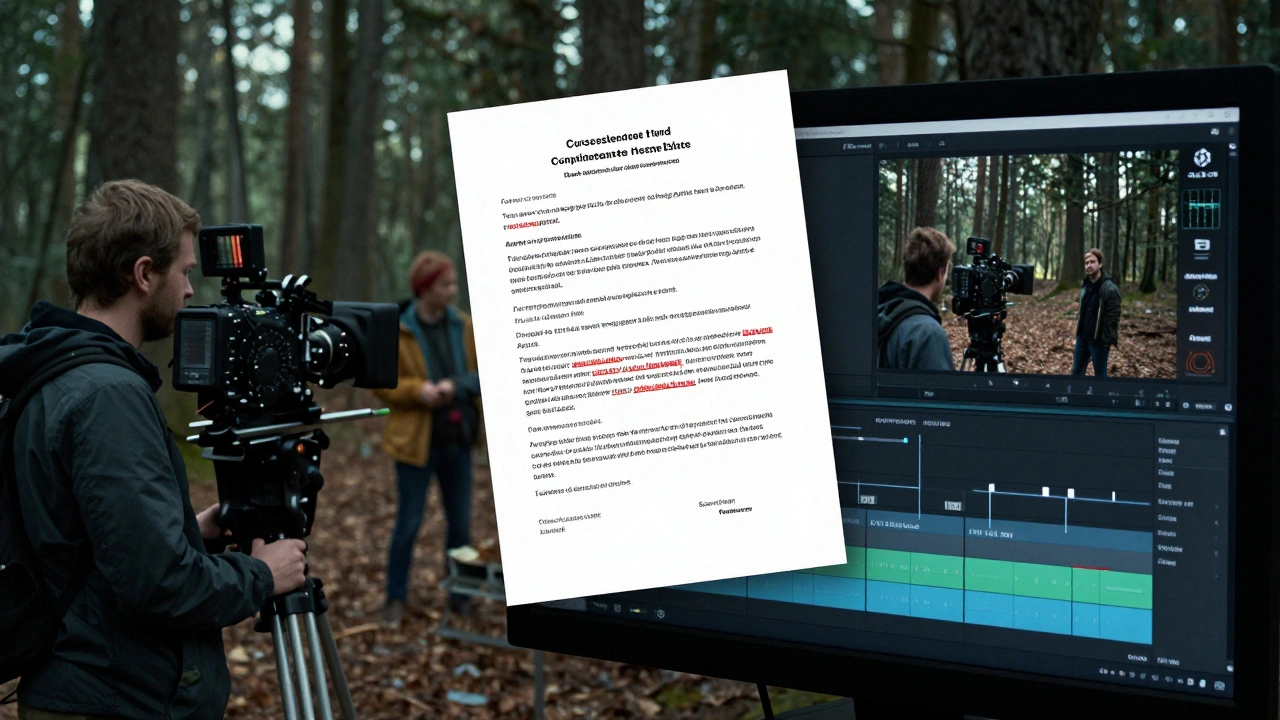
You can’t just fly your U.S. cinematographer to Poland and start shooting. Poland requires a work permit for any foreign crew member who works more than 30 days. The EU has strict rules on minimum wage, overtime, and rest periods-even for short-term hires. In Japan, foreign crew must be registered with the Japan Film Commission and are subject to local labor inspections.
Some countries even require you to hire local assistants. For example, in Mexico, every foreign camera operator must have a Mexican assistant on set. In India, foreign directors must apply for a special visa and provide proof of prior production experience.
Violating these rules can mean:
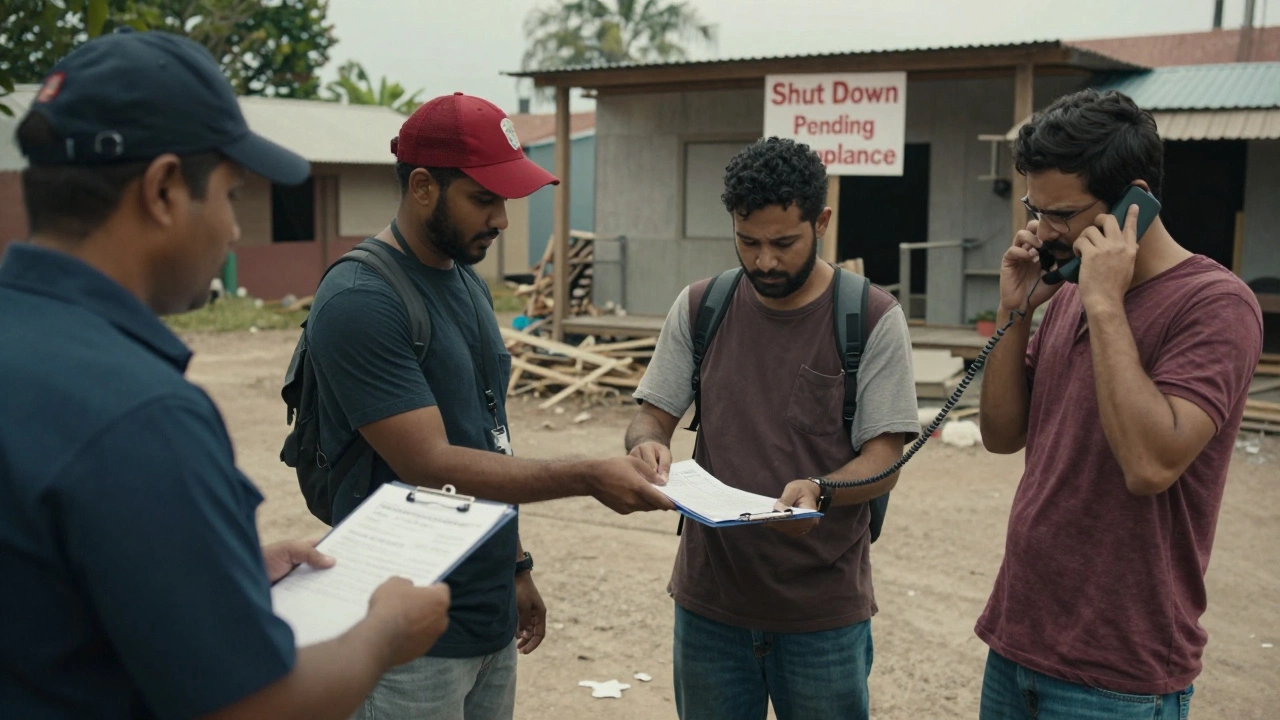
- Immediate shutdown of your shoot
- Fines up to 5x the daily wage of the worker
- Blacklisting from future productions in that country
Always hire a local production service company. They know the paperwork. They handle permits. They know who to pay and when. Skipping this step to save $5,000 could cost you $200,000 in delays and penalties.
Insurance That Actually Covers You
Standard film insurance from the U.S. won’t cover you in Brazil. Or Turkey. Or South Africa. Each country has different liability laws, mandatory coverage requirements, and claims procedures.
For example:
- In France, you need third-party liability insurance of at least €1 million per incident
- In Australia, you must have workers’ compensation for every crew member, even if they’re freelance
- In South Korea, you need a local insurer to issue the policy-foreign policies are not recognized
Many producers buy global policies from brokers like AIG or Chubb. But even those have gaps. A 2025 report from the International Film Insurance Association found that 41% of international claims were denied because the policy didn’t meet local legal requirements.
Work with a broker who specializes in international film. Don’t assume your U.S. policy covers you abroad. Ask for:
- Local policy endorsements for each country
- Proof of compliance with local insurance laws
- Clear language on what’s covered if you’re sued in a foreign court
What Happens When Things Go Wrong?
Disputes are inevitable. Someone quits. Money dries up. A partner changes their mind. The question isn’t whether it’ll happen-it’s how you’ll handle it.
Most co-productions include a dispute resolution clause. But too many just say, "We’ll work it out." That’s not enough.
Strong agreements specify:
- Which country’s courts have jurisdiction
- Whether arbitration is required (and which organization: ICC, SIAC, or LCIA)
- How language barriers are handled (translation costs, certified translators)
- What happens if one party goes bankrupt
There’s no universal rule. A dispute in Spain might go to mediation. In China, it might go straight to state arbitration. In the U.S., it could end up in federal court. Know the rules before you sign.
Real Example: The Film That Almost Didn’t Get Made
In 2024, a U.S.-German-Indian co-production called Desert Echoes was halfway through shooting when the Indian partner pulled out. Why? They hadn’t filed the required cultural certification with India’s Ministry of Information and Broadcasting. The film lost its 20% tax rebate, and the Indian crew was barred from continuing work.
The producers had to:
- Re-edit the script to remove all Indian locations
- Recast three Indian actors with German stand-ins
- Reshoot 14 days of footage in Morocco
- Pay €85,000 in late penalties
The film eventually released, but it lost $1.2 million and two years of momentum. All because the legal checklist was ignored.
Final Checklist: 7 Things You Must Do Before Shooting
- Confirm all countries have a valid co-production treaty with each other
- Sign a detailed co-production agreement with clear ownership, revenue, and creative control terms
- Verify that every crew member has the correct visa and work permit
- Get insurance policies that meet the legal minimums in each country
- Document every dollar spent in each country with receipts and bank transfers
- Apply for tax incentives before filming starts-not after
- Hire a local production service company in each country to handle logistics
If you skip even one of these, you’re gambling with your budget, your timeline, and your reputation. International co-productions can be brilliant-but only if you treat the legal side like a core part of the production, not an afterthought.






Comments(10)