You’ve shot the footage. The color grading looks stunning. The festival circuit is lined up. Then, a distributor calls with bad news: you don’t own the music in scene four, or that actor’s contract lacks a crucial indemnity clause. Your movie is legally stuck. This nightmare scenario happens to more independent filmmakers than you’d think, often because they treat paperwork as an afterthought rather than a core part of production.
Legal essentials for independent films are the contractual frameworks and intellectual property clearances required to produce, distribute, and monetize low-budget motion pictures without legal liability. Unlike major studio productions where legal departments handle every detail, indie creators must navigate this minefield themselves. Getting it right protects your creative vision and ensures you can actually sell your work.
The Foundation: Chain of Title and Copyright Ownership
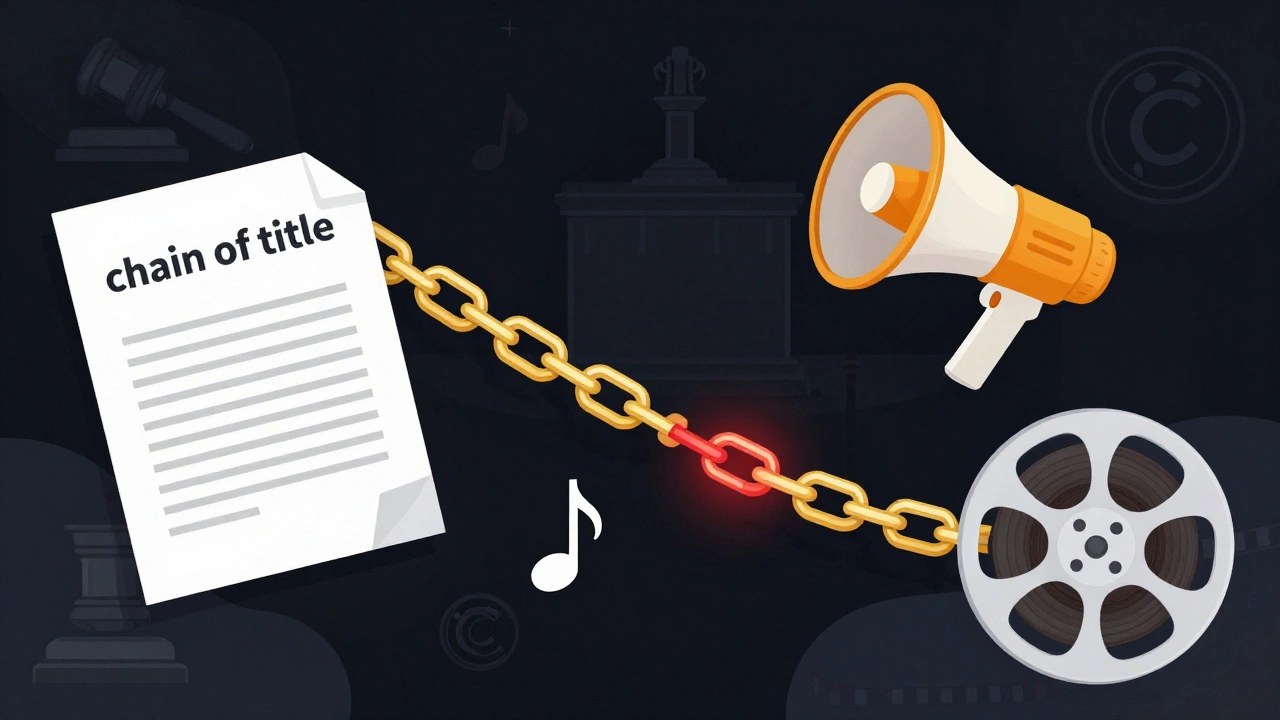
Before you worry about specific contracts, you need to understand ownership. In the eyes of the law, a film is not just a collection of images; it is a complex bundle of copyrights. The concept of chain of title is a documented history of ownership transfers showing that the producer has acquired all necessary rights from original creators to distribute the final film. If this chain has even one missing link, distributors will walk away.
Start with the script. Did you write it? Great. But did you hire a ghostwriter or pay for rewrites? If so, you need a written assignment agreement transferring those copyrights to you. Next, consider the underlying source material. Are you adapting a short story or a play? You cannot simply buy the "screening rights"; you need the option to purchase and then the full acquisition of adaptation rights. Without this, the original author retains copyright, and you have no legal right to make the film.
For original works, ensure every contributor signs a Work-for-Hire agreement. Under US copyright law, if someone creates content as an employee, the employer owns it. However, most crew members on indie sets are independent contractors. To avoid ambiguity, their contracts must explicitly state that their contributions are "works made for hire" and that they assign all rights to the production company. This prevents a cinematographer from claiming ownership of the visual composition years later when the film becomes profitable.
Talent Agreements: More Than Just Paychecks
Actors bring characters to life, but their contracts do more than set daily rates. A standard talent agreement is a legal contract between a production entity and a performer detailing compensation, working conditions, credit requirements, and rights exploitation terms. For indie films, these documents balance budget constraints with professional standards.
Key clauses to include involve compensation structure and usage rights. Will the actor be paid a flat fee, or is there deferred payment tied to box office receipts? Be explicit about what "net profits" means, as vague definitions lead to lawsuits. Equally important is the grant of rights. Does the actor allow their likeness to be used in promotional materials indefinitely? Do they retain approval over how their performance is edited? Typically, producers require broad rights for marketing and distribution across all media in perpetuity. Limiting these rights can cripple your ability to license the film to streaming platforms like Netflix or Hulu.
Don't overlook union considerations. If you cast actors who are members of SAG-AFTRA (Screen Actors Guild-American Federation of Television and Radio Artists), you must adhere to their collective bargaining agreements. Even for non-union projects, using SAG-AFTRA templates for key provisions helps ensure fairness and avoids accidental violations that could trigger fines or shutdowns.
Crew Contracts and Key Personnel
Your director, producer, and department heads shape the film's aesthetic and logistical success. Their contracts differ significantly from talent agreements because they focus on creative control and deliverables. A director’s agreement is a contract outlining the director’s creative responsibilities, post-production oversight, compensation milestones, and credit placement within the film credits.
Define the scope of work clearly. Does the director get final cut privilege? In most indie productions, the producer retains final cut to protect the investment. Specify the timeline for principal photography and post-production. Include clauses for termination for cause, such as failure to meet shooting schedules or misconduct. Compensation should be structured in installments: signing bonus, start of principal photography, delivery of rough cut, and final delivery. This aligns the director’s incentives with the project’s completion.
For other key crew, such as the line producer or production designer, focus on exclusivity and availability. Ensure they are not committed to conflicting projects during your shoot dates. Include confidentiality clauses to protect unreleased footage and plot details. These agreements form the backbone of your operational stability, ensuring that the people responsible for executing your vision remain focused and legally bound to their duties.
Musical Rights: Sync Licenses and Master Use
Music is perhaps the most dangerous area for independent filmmakers. Using a popular song without permission can result in the entire film being pulled from distribution. There are two distinct rights to clear: the synchronization license and the master use license. A synchronization license is permission granted by the music publisher to synchronize a musical composition with visual media, covering the underlying lyrics and melody.
The sync license comes from the publisher, who represents the songwriter. The master use license comes from the record label, which owns the specific recording. You need both. If you want to use a classic rock track, you might negotiate with three different publishers and one legacy record label. Fees vary wildly based on the song’s popularity, the duration of its use, and the territory of distribution. Budget $500 to $10,000 per track for well-known songs, though many indie filmmakers opt for royalty-free libraries or original scores to avoid these costs entirely.
If you compose original music, ensure your composer signs an agreement assigning all rights to the production. Specify whether the composer receives backend royalties if the film earns significant revenue. For stock music, verify the license type. Some licenses restrict use in commercial broadcasts or limit the number of viewers. Read the fine print to ensure the license covers your intended distribution channels, including international streaming and television syndication.
Location Permits and Property Releases
Filming in public spaces or private properties requires explicit permission. A location release is a legal document granting a production the right to film at a specific site, often including terms for insurance, damage liability, and noise restrictions. Filming without one can lead to police intervention, fines, and costly reshoots.
For private properties, the owner signs the release. Specify the dates, times, and areas of filming. Address potential damages: who pays if a floorboard breaks? Usually, the production provides proof of insurance naming the location owner as an additional insured. For public spaces, check local regulations. Cities like New York and Los Angeles require permits for any camera equipment visible to the public, even if you’re just shooting B-roll. Permit fees can range from $50 to thousands of dollars daily, depending on the scale of the operation.
Don’t forget incidental appearances. If strangers appear in the background, you generally need a appearance release is a waiver signed by non-professional individuals appearing in the film, granting the producer the right to use their likeness and voice without compensation. Keep a stack of simple releases on set for extras and bystanders. While rare, lawsuits from identifiable bystanders claiming invasion of privacy have occurred. A quick signature prevents future headaches.

Distribution Agreements and Territory Rights
Once the film is complete, you need to sell it. Distribution agreements define how your film reaches audiences. A distribution agreement is a contract between the rights holder and a distributor outlining territorial rights, term length, revenue sharing percentages, and marketing obligations. This is where you monetize your work.
Decide between exclusive and non-exclusive deals. Exclusive agreements give one distributor sole rights to a territory (e.g., North America) for a set period (e.g., five years). They invest more in marketing but take a larger cut, often 30-50% of gross receipts. Non-exclusive deals allow you to sell rights to multiple platforms simultaneously, retaining more control but requiring you to handle marketing yourself. For indie films, hybrid models are common: exclusive theatrical rights to a specialty distributor, while self-distributing digital rights through aggregators like FilmHub or Quiver.
Pay close attention to accounting clauses. How often does the distributor report earnings? What audits rights do you have? Standard industry practice allows annual statements and audits once per year if discrepancies exceed a certain threshold. Ensure the contract specifies net vs. gross revenue splits. Gross deals are rarer and more favorable for producers, while net deals deduct distribution costs before splitting profits. Understand these distinctions to maximize your return.
| Contract Type | Primary Purpose | Key Risk if Missing | Typical Cost Range |
|---|---|---|---|
| Talent Agreement | Secure actor performance and likeness rights | Inability to use actor’s image in marketing | $0 - $5,000/day |
| Sync License | Clear musical composition for visual sync | Copyright infringement lawsuit | $500 - $10,000/song |
| Location Release | Permission to film on specific property | Shut down by police or property owner | $0 - $500/day |
| Distribution Deal | Sell exhibition rights to platforms | No revenue stream from audience | Revenue share only |
Common Pitfalls and Pro Tips
Many indie filmmakers fall into the trap of verbal agreements. "We shook hands, so we’re good." Not in court. Always put everything in writing. Another mistake is ignoring errors and omissions (E&O) insurance. Distributors require this policy to protect against claims of copyright infringement or defamation. It costs less than you think-often under $1,000 for a small film-and is non-negotiable for serious distribution.
Use standardized templates from reputable sources like the Independent Filmmaker Project or guild guidelines, but customize them. Never copy-paste a Hollywood studio contract without understanding its implications. Finally, consult an entertainment lawyer for high-stakes deals. A few hundred dollars in legal review can save tens of thousands in litigation or lost revenue. Treat your legal framework with the same respect as your screenplay; it’s the foundation upon which your artistic achievement stands.
Do I need a lawyer for every indie film contract?
Not necessarily. For standard crew and talent agreements, using vetted templates from industry organizations like SAG-AFTRA or the Independent Filmmaker Project is often sufficient. However, for distribution deals, option agreements for source material, or any contract involving significant financial commitments, hiring an entertainment attorney is highly recommended to protect your long-term interests.
What is the difference between a sync license and a master use license?
A sync license grants permission to use the underlying musical composition (lyrics and melody) owned by the publisher or songwriter. A master use license grants permission to use the specific recorded version of that song, owned by the record label or artist. You need both to legally include a pre-existing recording in your film.
How much does E&O insurance cost for an independent film?
Errors and Omissions (E&O) insurance typically costs between $800 and $2,500 for low-budget independent films, depending on the film’s budget, runtime, and distribution strategy. Premiums increase if the film contains controversial content, uses celebrity likenesses, or adapts existing literary works.
Can I film in public parks without a permit?
It depends on local laws and the scale of your production. Many cities allow handheld cameras and small crews to film without a permit in public parks. However, if you use tripods, lighting rigs, drones, or large crews, you likely need a permit. Always check with the local film office or parks department to avoid fines or shutdowns.
What happens if I don’t get a location release?
Without a location release, the property owner can demand you stop filming immediately. If you proceed, they may sue for trespassing or nuisance. Additionally, distributors will refuse to pick up your film because they cannot verify you have the legal right to show the location, making the film unsellable.