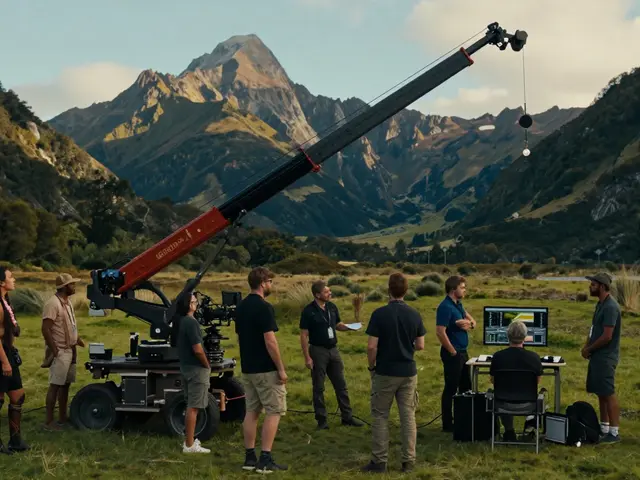
You’ve heard the horror stories. A brilliant screenplay sits in a drawer for five years. A director attaches to a project, then vanishes. Financing falls through at the eleventh hour, leaving producers scrambling. This isn’t just bad luck; it’s Independent Film Development the pre-production phase where scripts are refined, talent is attached, and financing is secured before cameras roll. When this process stalls indefinitely, we call it "development hell." It’s a purgatory that claims more projects than any other stage of filmmaking.
Why does this happen? Is it bad writing? Bad business? Or simply bad timing? The truth is usually a toxic cocktail of all three. If you’re an aspiring producer or filmmaker, understanding the mechanics of these delays can save your career from becoming a cautionary tale. Let’s break down why independent films get stuck and how to keep them moving.
The Anatomy of Development Hell
Development hell isn’t a single event. It’s a series of small failures that compound over time. Unlike studio films, which have rigid timelines and massive infrastructure, Indie Films low-budget movies produced outside major Hollywood studios rely on fragile networks of freelancers, investors, and passion. One broken link collapses the chain.
The core issue is often misalignment between creative vision and commercial viability. A writer might spend two years perfecting a dialogue-heavy drama that no distributor wants to buy. Meanwhile, the market shifts. What was trendy in 2024 is obsolete by 2026. Producers often fail to validate their concept early enough, pouring energy into a project that lacks a clear audience hook.
Another culprit is the "passion trap." Because indie films are labor-of-love projects, stakeholders often refuse to make hard cuts. They wait for the perfect actor, the perfect location, or the perfect investor. This perfectionism freezes progress. In reality, speed often beats perfection in the indie world. A flawed film that gets made is infinitely better than a perfect film that never exists.
Common Obstacles That Kill Momentum
If you look at failed projects, certain patterns emerge. Recognizing these red flags early can help you pivot before you lose years of effort.
- Script Instability: Constant rewrites without a clear goal suggest the story doesn’t work. If you’re on draft twelve and still unsure about the third act, the foundation is weak.
- Financing Gaps: Relying on a single wealthy backer is risky. If they change their mind, the project dies. Diversifying funding sources-grants, tax credits, private equity-is essential.
- Talent Turnover: Attaching a name actor creates buzz, but if their schedule conflicts with yours, the deal evaporates. Over-reliance on unconfirmed attachments delays casting decisions for everyone else.
- Budget Mismanagement: Many indie producers underestimate post-production costs. You might raise money for shooting, but forget color grading, sound design, or festival submission fees. Running out of cash mid-edit is a common death sentence.
Consider the case of a recent sci-fi thriller that spent four years in development. The script was strong, but the producer insisted on shooting in New Mexico during peak tourist season. Costs doubled. Investors pulled out. By the time they found new funding, the lead actor had aged out of the role. The project restarted from zero. This wasn’t bad art; it was bad logistics.
The Role of Market Trends and Timing
Film is a fashion industry. Trends cycle quickly. Horror is always popular, but specific sub-genres rise and fall. Psychological horror might be hot one year, while supernatural jump-scares dominate the next. Independent filmmakers often ignore this because they want to make "art," not product. But distributors buy products.
In 2025 and 2026, the appetite for niche genres has grown due to streaming platforms seeking distinct content. However, this also means saturation. If ten similar micro-budget horrors hit the same platform simultaneously, they cannibalize each other’s viewership. Developing a unique angle is crucial. Don’t just ask "What do I want to say?" Ask "Who is watching this, and why now?"
Timing also affects festival strategy. Submitting to Sundance or Tribeca requires months of preparation. If your edit isn’t ready when deadlines hit, you miss the window. Missing one festival cycle can delay distribution deals by six to twelve months. For an indie film with a tight budget, that delay can mean bankruptcy.

Strategies to Escape the Stall
So, how do you avoid joining the graveyard of unfinished dreams? You need to treat development like a business, not just a hobby. Here are practical steps to keep momentum alive.
- Set Hard Deadlines: Give yourself a six-month window to lock the script. If it’s not done, cut your losses or hire a consultant. Indefinite timelines kill urgency.
- Validate Early: Before spending money on visuals, test the script with readers outside your circle. Use platforms like Coverfly or Stage 32 to get unbiased feedback. If strangers don’t understand the plot, your friends won’t either.
- Build a Proof of Concept: Shoot a short scene or create a sizzle reel. Visuals sell better than words. A $500 proof of concept can secure $50,000 in seed funding far faster than a PDF script.
- Diversify Funding: Don’t bet everything on one investor. Combine soft money (tax credits) with hard money (private loans). Understand local incentives. Georgia, Louisiana, and New York offer significant rebates, but paperwork takes time. Start that process early.
Also, learn to kill your darlings. If a character serves no narrative purpose, cut them. If a location is too expensive, rewrite the scene to take place elsewhere. Flexibility is survival.
Financial Realities and Risk Mitigation
Money is the oxygen of independent film. Without it, you suffocate. But raising money is only half the battle. Managing it is the other half. Most development hell scenarios involve running out of cash before principal photography begins.
| Category | Common Mistake | Better Approach |
|---|---|---|
| Development | Overspending on polish | Cap dev budget at 10% of total |
| Casting | Paying upfront for options | Negotiate deferred payments |
| Legal | Ignoring chain of title | Secure rights before fundraising |
| Contingency | No buffer for errors | Reserve 10-15% for surprises |
Note the legal line item. Many first-time producers skip securing rights properly. If you don’t own the underlying IP cleanly, investors walk away. Chain of title issues can stall a project for years during litigation. Spend the money on good lawyers early. It’s cheaper than fixing mistakes later.
When to Walk Away
Sometimes, the best move is to quit. Not every project deserves to be made. If you’ve spent two years in development with no tangible progress, ask yourself: Am I in love with the idea, or am I afraid to let go?
Signs you should walk away include:
- The script needs a complete rewrite, not tweaks.
- Key investors have lost interest and won’t commit new funds.
- The genre is oversaturated in the current market.
- Your personal finances are draining without return.
Walking away isn’t failure. It’s strategic reallocation. Take the lessons learned and apply them to the next project. Often, the second or third film succeeds because the first one taught you what not to do.
Related Concepts in Film Production
To fully grasp development hell, it helps to understand related concepts. Greenlighting the formal approval to proceed with production after development is complete is the milestone you’re aiming for. Until then, you’re in limbo. Another key term is Pre-Production the planning phase involving casting, scouting, and scheduling. Confusing development with pre-production causes delays. Development is about selling the idea; pre-production is about executing it. Keep them separate.
Also consider Co-Productions films financed by multiple companies across different countries. These can alleviate financial pressure but add complexity. If you’re struggling alone, partnering with a foreign producer might open doors to grants and markets you couldn’t access solo.
How long should independent film development take?
There is no fixed rule, but most successful indie films spend 12 to 24 months in development. If it exceeds three years, evaluate whether the project is viable or if you’re stuck in a loop of indecision.
Can I recover money spent on a stalled project?
Generally, no. Development costs are sunk costs. Unless you sell the script outright, money spent on rewrites, meetings, and travel is gone. Treat it as tuition for learning what works.
Do actors really cause development delays?
Yes. Actors often attach themselves to projects hoping for career boosts but drop out when better offers arise. Their schedules are unpredictable, causing ripple effects in casting and financing commitments.
Is it better to self-fund or seek investors?
Self-funding gives you control but limits scale. Investor funding brings resources but demands accountability. For low-budget indies, self-funding avoids external pressure, but ensure you can afford the risk.
What is the biggest mistake in indie development?
Ignoring market validation. Filmmakers often write for themselves and assume audiences will follow. Testing concepts with neutral readers early prevents wasting time on unmarketable stories.