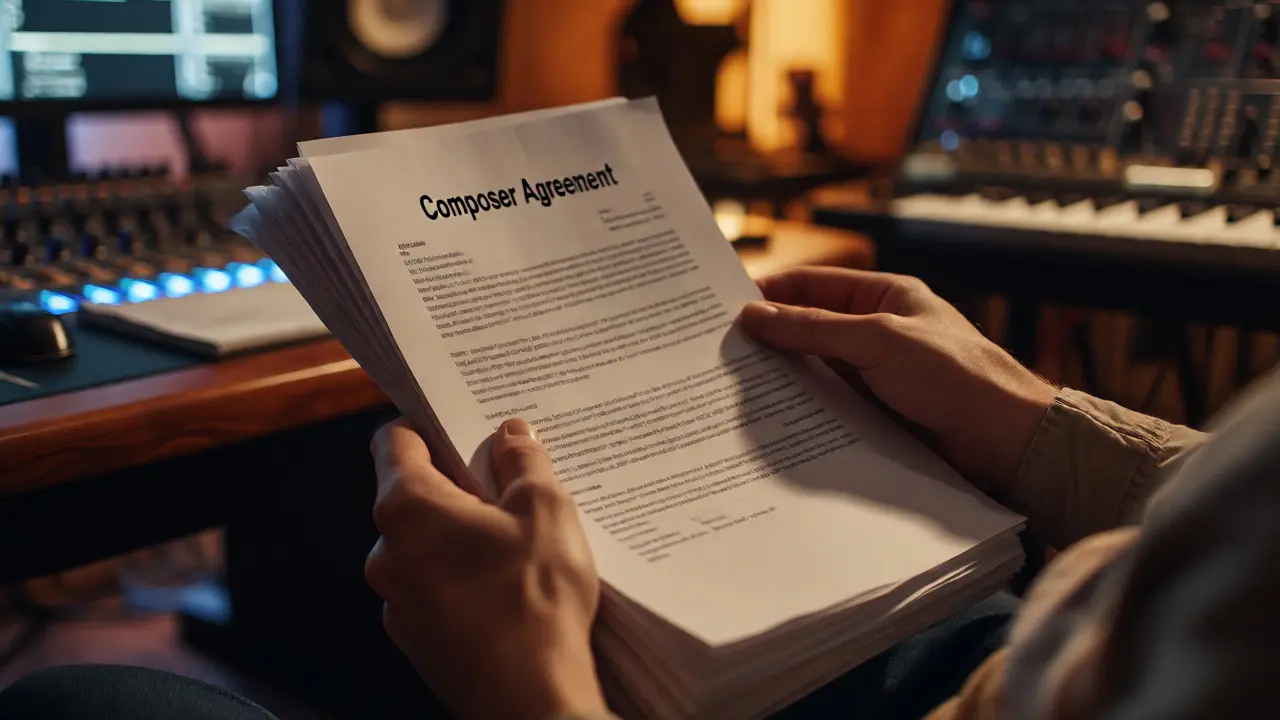
You just got the call. A director loves your demo reel. They want you to score their indie feature. You’re excited, maybe a little nervous about the money, but mostly you’re thinking about the music. Then the producer sends over a PDF titled "Composer Agreement." You open it, and suddenly you’re reading legal jargon that feels more like a trap than a handshake. Who owns the music? What exactly do you have to hand over by Friday? And why does this clause say "work for hire"?
Most composers get burned not because they write bad music, but because they sign bad contracts. The difference between a paycheck and a pension often lies in two specific sections of that agreement: Deliverables and Rights. If you don’t understand these, you might end up delivering a full orchestral score for $500 and losing all future royalties. Let’s break down what actually needs to be in your contract so you can protect your work and your wallet.
Defining the Scope of Work: What Are Deliverables?
Before you talk about who owns the copyright, you need to define what you are actually selling. In the film industry, this is called the "Scope of Work" or "Deliverables." It sounds simple, but vague language here causes 90% of post-production headaches. If your contract just says "Score for 90-minute film," you are setting yourself up for failure. Does that mean 90 minutes of continuous music? No. Does it mean 15 cues totaling 45 minutes? Maybe. You need to be precise.
A solid deliverables section should list every single asset you are handing over. This isn't just the final mixed audio files. It includes MIDI sequences, Pro Tools sessions, stems (separated tracks for dialogue, music, effects), and even the sheet music if the director wants live players later. Think of it as a shopping list. If it’s not on the list, you don’t owe it. If it is on the list, you better make sure you have time to create it before the deadline.
| Deliverable Type | Description | Why It Matters |
|---|---|---|
| Final Mixes | Stereo and 5.1 surround sound WAV/AIFF files at 48kHz/24bit. | The editor drops these directly into the timeline. Wrong format means re-rendering. |
| Stems | Grouped tracks (e.g., Strings, Percussion, Synths) without FX. | Allows mixers to adjust music levels without asking you to remix everything. |
| MIDI Files | Standard MIDI files (.mid) of all cues. | Critical for low-budget films that may replace sampled instruments with live recordings later. |
| Cue Sheets | Spreadsheet listing start/end times, duration, and composer/publisher info. | This document generates your performance royalties from ASCAP/BMI. Missing it means missing money. |
Notice the Cue Sheet. Many new composers forget this. It’s boring paperwork, but it’s the only thing telling the TV networks and streaming platforms that you wrote the song playing during the opening credits. Without an accurate cue sheet filed with your Performing Rights Organization (PRO), you might never see a dime from broadcast airings, no matter how many people watched the movie.
The Big Question: Who Owns the Music?
This is where the battle is won or lost. There are two main models in film scoring: "Work for Hire" and "License." Understanding the difference is non-negotiable.
In a Work for Hire arrangement, you are essentially an employee. Once you deliver the music and get paid, the production company owns the copyright completely. You cannot sell this music elsewhere. You cannot put it on Spotify as part of a solo album without permission. You keep no ownership stake. This is standard for major studio blockbusters where the IP value is massive. But for indie films? It’s often a bad deal unless the fee is huge.
The alternative is a License Agreement. Here, you retain the copyright to your compositions. You grant the filmmaker the right to use the music in their film for a specific period or perpetually, usually in exchange for a flat fee plus backend points. This allows you to reuse the themes in other projects, release soundtrack albums, and collect performance royalties. For most independent filmmakers, this is the fairer path. It keeps the budget lower upfront while giving the composer long-term upside.
Sync vs. Master Use Rights
Even if you license your music, you need to specify which rights you are granting. Two terms will pop up constantly: Sync Rights and Master Use Rights.
- Sync Rights: This grants permission to synchronize your composition (the melody and harmony) with visual media. If you wrote the song, you own the composition. The filmmaker needs this right to legally pair your tune with their video.
- Master Use Rights: This grants permission to use the specific recording (the "master") of that song. If you recorded the track in your home studio, you likely own the master too. If a label funded the recording, they might own the master.
Always try to negotiate retaining both. If you give away the Master Use Rights forever, you can’t ever license that specific recording to another project. Keep the rights limited to the film itself. If the producers want to release a soundtrack CD or vinyl, that’s a separate negotiation with its own royalty split.

Payment Structures: Flat Fee vs. Backend Points
How you get paid dictates your risk. Most contracts offer a flat fee. This is safe. You know exactly what you’ll earn when the check clears. But it caps your potential earnings. If your score becomes iconic-think John Williams’ theme for Jaws-a flat fee doesn’t reflect the cultural impact or the millions generated by merchandise and trailers.
Consider adding "backend points." This usually means a percentage of the net profits or a fixed amount per viewing on streaming platforms. However, beware of "net profit" clauses. Hollywood accounting is notorious for making profitable films look unprofitable on paper. Instead of vague percentages, ask for a fixed bonus upon certain milestones. For example, $1,000 extra if the film premieres at Sundance, or $500 for every million views on YouTube. These triggers are easier to verify and harder to manipulate.
Also, watch out for "buyout" fees. Sometimes producers offer a higher flat fee in exchange for all rights, including merchandising and sequels. Run the numbers. If the buyout is only 20% higher than the standard license fee, but you lose all future income, it might not be worth it. Calculate your hourly rate. If you spent 200 hours writing and mixing, and the fee is $2,000, you’re making $10 an hour. Is that sustainable?
Pitfalls to Avoid in Your Contract
Beyond the big picture of rights and money, there are sneaky clauses that trip up composers. Read the fine print for these three red flags:
- The "Kill Fee": What happens if the director hates your first draft and cancels the project halfway through? A good contract includes a kill fee, typically 25-50% of the total budget, payable upon delivery of sketches or demos. Without this, you could work for weeks and walk away with nothing.
- Revisions Limit: Specify how many rounds of revisions are included. Unlimited revisions can turn a two-week job into a six-month nightmare. Standard practice is two or three rounds of minor tweaks. Anything beyond that should incur an hourly rate or additional flat fee.
- Credit Requirements: Ensure the contract guarantees prominent screen credit. Not just a tiny logo in the corner, but "Music by [Your Name]" in the main titles. Credit drives your career. If they bury your name in the crawl, you lose marketing value.
Another common issue is sample clearance. If you use pre-recorded samples or loops in your score, who is responsible for clearing them? Usually, it’s the composer’s responsibility to ensure they have the right to use those sounds. Make sure your library licenses allow commercial synchronization. Some cheap sample packs prohibit film use. Don’t let a $50 loop pack ruin a $50,000 production.
Negotiating Tips for Independent Composers
You don’t need a lawyer for every small gig, but you do need to read carefully. When negotiating, focus on leverage. If the film has already secured distribution or festival slots, your leverage goes up. If it’s a passion project with no funding, be flexible but firm on ownership.
Try proposing a tiered deal. Offer a lower upfront fee in exchange for retaining publishing rights and collecting performance royalties. Explain to the producer that this costs them nothing today but protects their budget. If the film makes money, you both win. If it doesn’t, you still have the music to use in your portfolio.
Finally, get everything in writing. Verbal agreements mean nothing when deadlines shift and egos clash. Even a simple email confirmation of terms is better than a handshake. Save all drafts, notes, and emails. If a dispute arises, your paper trail is your best defense.
What is a cue sheet and why do I need it?
A cue sheet is a detailed log of all music used in a film or TV show. It lists each piece of music, its composer, publisher, duration, and usage type (background, featured, etc.). Your Performing Rights Organization (like ASCAP or BMI) uses this document to distribute performance royalties when the film airs on TV or streams online. Without an accurate cue sheet, you miss out on recurring income.
Should I always accept a Work for Hire contract?
Not necessarily. Work for Hire is standard for big studios but often unfavorable for independents. It transfers all copyright ownership to the producer immediately. Only accept it if the upfront fee is significantly higher to compensate for the loss of future royalties and control. For most indie films, a licensing agreement where you retain copyright is preferable.
Who pays for sample clearances?
Typically, the composer is responsible for ensuring any samples or loops used in the score are cleared for commercial synchronization. However, some contracts state that the producer covers clearance costs for high-profile samples. Always clarify this in the contract to avoid unexpected bills after delivery.
What happens if the film gets picked up by Netflix?
If you signed a broad license agreement, Netflix may require additional permissions or pay further fees depending on the original terms. Ideally, your contract should include a clause stating that the license extends to all media now known or hereafter devised, including streaming services, without additional cost to the producer, provided you retain your performance royalties.
Can I use my film score in my own portfolio?
Yes, but check your contract. Most agreements grant you the right to use excerpts of the score for promotional purposes, such as your website, social media, or awards submissions. Ensure there is no embargo period that prevents you from showcasing the work until after the film's official release.