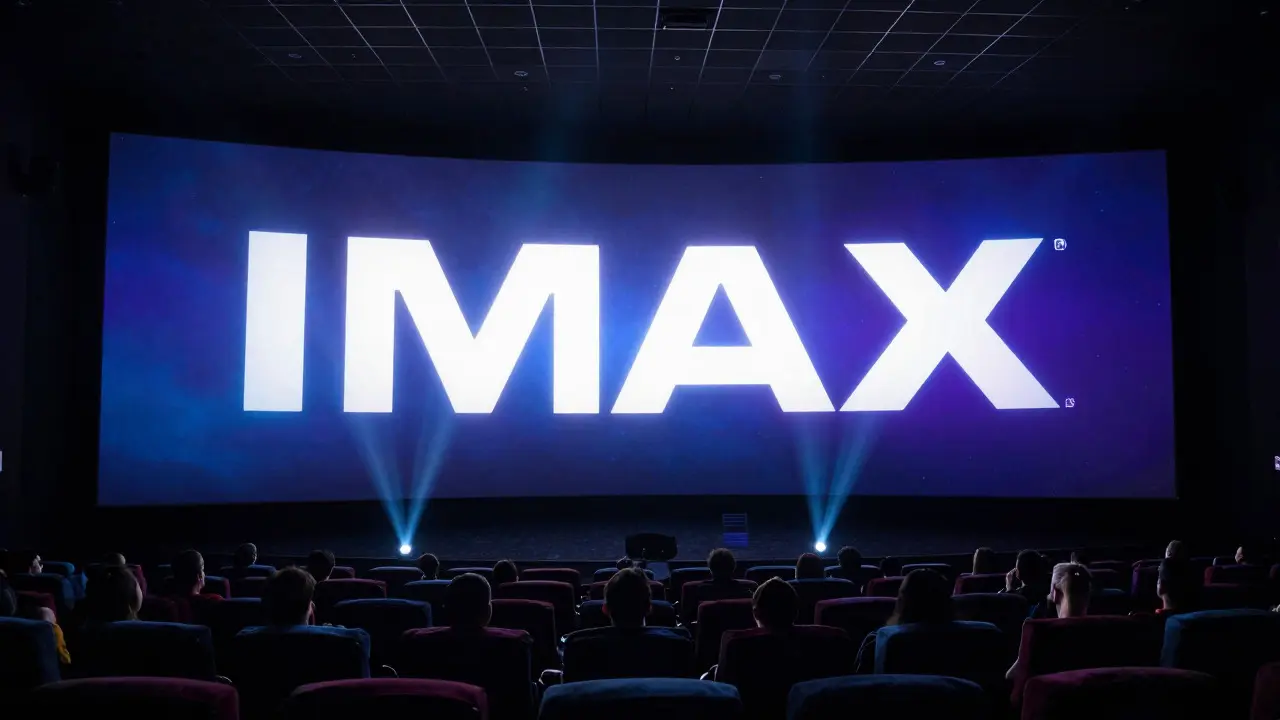
Walk into a standard multiplex screen on a Tuesday night in July, and you might see a crowd of twelve. Now walk into an IMAX auditorium for the same film, and you’ll likely find it packed to capacity with tickets priced at double the rate. This isn’t just about bigger screens; it’s a calculated economic strategy that studios and exhibitors use to squeeze more revenue out of every square foot of theater space. The gap between standard digital projection and premium large formats (PLF) has widened significantly over the last five years, turning these specialized screens into high-margin engines for theatrical distribution.
The Economics of the Big Screen
To understand why PLFs are so profitable, you have to look at the math behind ticket pricing. A standard movie ticket in the United States averages around $10.50 in 2026. An IMAX ticket, however, often sits between $18 and $24 depending on the location and time of day. That is nearly a 100% markup. But the cost structure doesn't rise by 100%. The primary costs for showing a film-the licensing fee paid to the studio-are usually fixed per screen or based on a percentage of gross revenue, not the number of seats filled at a specific price point.
This creates a leverage effect. If a standard screen sells 100 tickets at $10, it generates $1,000. An IMAX screen selling only 60 tickets at $20 generates $1,200. Even with lower occupancy, the revenue is higher. When you factor in the fact that PLF audiences tend to stay for the entire runtime without leaving early-a behavior driven by the immersive nature of the experience-the effective "seat utilization" is higher than raw ticket sales suggest. Exhibitors know this. They invest heavily in these rooms because the return on investment per seat is dramatically higher than in standard auditoriums.
IMAX vs. Dolby Cinema vs. 4DX: The Contenders
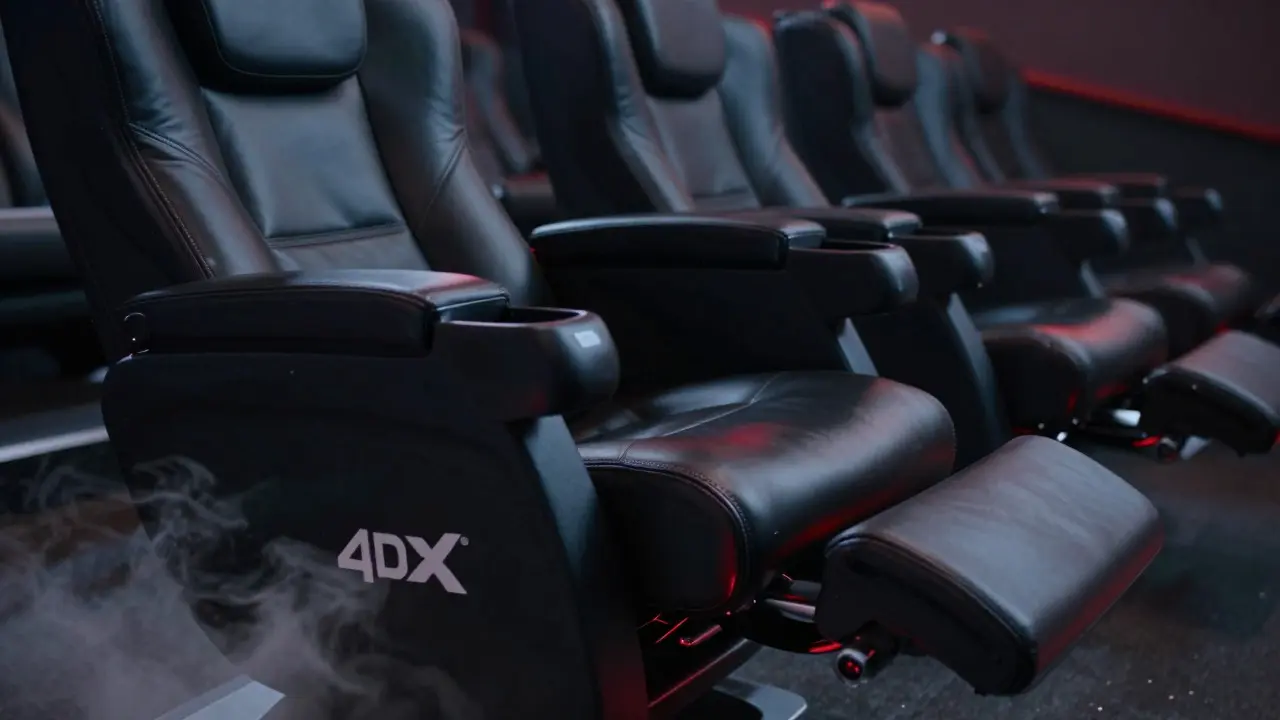
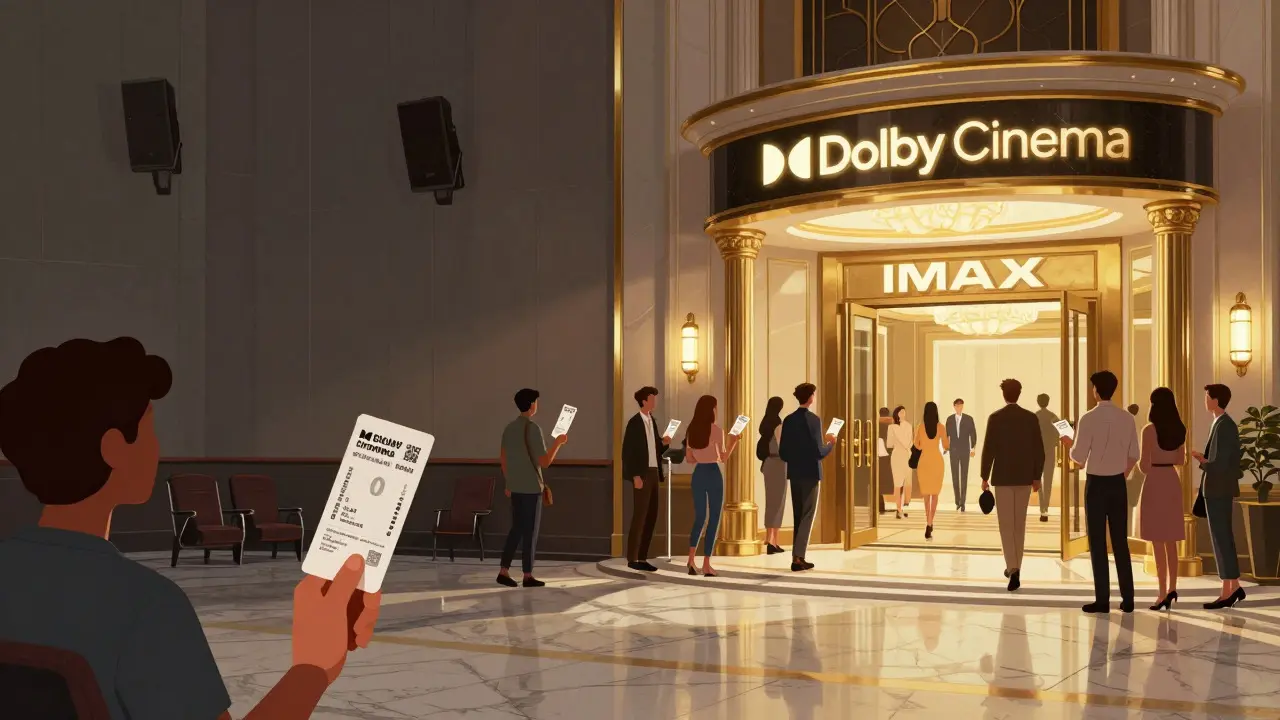
While IMAX is the most recognizable brand, it isn’t the only player in the premium space. Dolby Cinema focuses heavily on audio-visual fidelity, utilizing laser projection and Atmos sound systems that create a darker, more contrast-rich image. 4DX, developed by CJ 4DPLEX, takes a different approach by adding physical motion seats, wind, mist, and scent effects. Each format appeals to a slightly different psychological trigger, but all three share the goal of justifying a higher price tag through enhanced immersion.
| Feature | IMAX | Dolby Cinema | 4DX |
|---|---|---|---|
| Primary Focus | Screen Size & Aspect Ratio | Audio-Visual Fidelity | Physical Sensory Experience |
| Avg. Ticket Premium (USD) | $8 - $12 over standard | $7 - $10 over standard | $10 - $15 over standard |
| Key Hardware | Laser Projectors, Curved Screens | Laser Projectors, Dolby Atmos | Motion Seats, Environmental Effects |
| Best For | Action Franchises, Sci-Fi | Drama, Visual Spectacles | Ride-like Experiences, Horror |
IMAX remains the market leader in terms of global reach, with over 1,300 screens worldwide as of mid-2026. Its advantage lies in its proprietary aspect ratios, which allow filmmakers to shoot specifically for the format, creating a version of the movie that looks noticeably different from the standard release. Dolby Cinema, owned by Dolby Laboratories, has gained significant traction in urban markets where consumers prioritize sound quality. 4DX, while smaller in scale, commands the highest average ticket price due to the novelty factor and the tangible physical engagement it offers.
How PLFs Drive Per-Screen Averages
The concept of "per-screen average" (PSA) is a key metric for analysts tracking box office health. It measures the total gross revenue divided by the number of screens showing the film. A film with a high PSA indicates strong demand relative to its availability. PLFs artificially boost this metric in two ways: first, by charging higher prices, and second, by limiting supply. Because there are far fewer IMAX or Dolby screens than standard ones, the revenue generated by those few screens can skew the overall average upward if the film performs well in those specific venues.
Consider a blockbuster like Avatar: The Sequel or recent Marvel entries. Studios often release exclusive extended cuts or special visual mixes for IMAX theaters. This exclusivity drives fans to seek out these specific locations, creating a localized scarcity that drives up demand. When a movie earns $5 million in its opening weekend across 100 screens, that’s a $50,000 PSA. If 10 of those screens are IMAX and earn $2 million combined, while the other 90 standard screens earn $3 million, the weighted average reflects the premium nature of the top-tier venues. This dynamic allows studios to report stronger opening numbers, which in turn influences marketing budgets for subsequent weeks.
The Consumer Psychology Behind the Premium
Why do people pay extra? It’s not just about the technology; it’s about the event status. Going to a standard movie is often viewed as a casual activity, something you do when you’re bored. Going to an IMAX or 4DX screening feels like an event. You plan for it. You might even buy merchandise or dinner before the show. This shift in consumer mindset changes the value proposition. The ticket isn’t just payment for viewing rights; it’s entry into an experience. Studies on consumer behavior in entertainment indicate that perceived exclusivity increases willingness to pay by up to 30%. PLFs tap directly into this psychological lever.
Furthermore, the social proof aspect plays a role. Seeing a sold-out IMAX theater signals quality. If the best seats are taken, the remaining audience assumes the film is worth the hype. This creates a feedback loop where high occupancy in premium screens validates the high price point, encouraging more viewers to join the trend rather than wait for the standard release or streaming debut.
Challenges and Limitations
Despite the financial upside, PLFs face hurdles. The capital expenditure required to install these systems is substantial. A single IMAX retrofit can cost anywhere from $1 million to $3 million, depending on whether new construction or renovation is needed. Not every theater chain can afford to convert multiple screens. As a result, PLFs remain concentrated in major metropolitan areas and airport terminals, limiting their geographic reach. This concentration means that rural audiences rarely have access to these premium experiences, potentially capping the total addressable market for certain demographics.
Additionally, content dependency is a risk. If a franchise fails to deliver a visually stunning spectacle, the premium may feel unjustified. Audiences are savvy; they won’t pay $20 for a talky drama unless it has a specific artistic merit that aligns with the format’s strengths. Therefore, the success of PLFs is tightly coupled to the release calendar of high-budget blockbusters. In slower box office seasons, the per-screen averages for these formats can dip as audiences retreat to cheaper, more convenient options.
Future Trends in Premium Exhibition
Looking ahead, the line between premium and standard is blurring. Laser projection is becoming standard in many mid-range theaters, reducing the technological gap. However, the experiential elements-like the motion seats in 4DX or the immersive audio in Dolby Atmos-are harder to replicate cheaply. We are seeing a trend toward "hybrid" premium experiences, where theaters offer optional add-ons like heated seats or enhanced sound zones without requiring a full PLF conversion. These micro-premiums could eventually erode the distinct pricing tier of traditional PLFs, forcing exhibitors to innovate further to maintain their margin advantage.
For now, though, the economics remain clear. Premium large formats are not just a niche luxury; they are a critical component of the modern box office strategy. By maximizing revenue per seat and enhancing the perceived value of the theatrical outing, IMAX, Dolby Cinema, and 4DX continue to drive up per-screen averages and keep the cinema experience relevant in an age of home streaming.
What is the average ticket price difference between IMAX and standard screenings?
In 2026, IMAX tickets typically cost between $8 and $12 more than standard digital screenings. In major cities, the premium can be higher, reaching up to $15, while in suburban locations, it may be closer to $7. This price gap allows exhibitors to generate significantly higher revenue per seat compared to standard formats.
Do premium large formats actually increase total box office revenue?
Yes, but primarily through increased margins rather than massive volume growth. While PLFs account for a smaller percentage of total tickets sold, they contribute disproportionately to total gross revenue. For example, a film might sell 10% of its tickets in IMAX screens but generate 25% of its total revenue from those screens due to the higher price point.
Which films perform best in premium large formats?
Films with high visual complexity, such as sci-fi, action, and fantasy franchises, perform best in PLFs. Movies like Interstellar, Top Gun: Maverick, and recent Avatar entries have seen significant boosts in per-screen averages when released in IMAX or Dolby Cinema. Conversely, dialogue-heavy dramas or comedies tend to see less uplift from premium formats.
Is 4DX worth the extra cost compared to IMAX?
It depends on personal preference. 4DX offers a more physically engaging experience with motion seats and environmental effects, which some viewers find distracting or uncomfortable. IMAX provides a larger, clearer image and superior sound without physical movement. For pure cinematic immersion, IMAX is generally preferred; for a ride-like experience, 4DX is the better choice.
How do premium formats affect long-term box office performance?
Premium formats can extend a film's theatrical run by maintaining higher per-screen averages in later weeks. As standard screens drop the film, PLFs often keep it running longer due to consistent demand from dedicated fans. This helps stabilize weekly declines and can improve the final domestic gross for major releases.



Comments(8)