There is a moment in Artist Films that feels off. The camera pans across a studio filled with half-finished canvases, the music swells, and suddenly we are watching a character who didn't exist until the director decided to invent him. This is the strange, beautiful space of cinematic works that merge factual recording with scripted storytelling. It’s not just a documentary about a painter; it’s a story *about* the act of painting, told through both real life and imagined scenes.
This blend isn’t a new trick. Filmmakers have been wrestling with how to capture the inner world of an artist for decades. But today, these hybrid biopics are more popular than ever. Why? Because pure documentaries often miss the emotional core, while pure fiction lacks the grounding truth that makes an artist's struggle feel real. By mixing the two, directors create a richer portrait that satisfies both the mind and the heart.
Why Pure Genres Fall Short
Traditional Documentary Film relies on interviews, archival footage, and observational camera work. It’s honest, but it can be dry. If you’ve ever watched a three-hour interview with a sculptor discussing their technique, you know what I mean. You respect the craft, but do you *feel* the frustration of chipping away at marble for ten years? Probably not. The emotion stays on the surface.
On the other hand, standard Narrative Feature films allow actors to embody the pain, joy, and chaos of creation. But when the story is too fictionalized, audiences start questioning the facts. Did Picasso really argue with his muse like that? Was Van Gogh’s final day as dramatic as the movie showed? When the line blurs, trust erodes.
The hybrid approach solves this by acknowledging that memory itself is subjective. An artist’s recollection of their career is already a narrative. By blending factual evidence with dramatized reenactments, filmmakers honor the complexity of human experience. They show us what happened and how it felt, without forcing us to choose between truth and drama.
Anatomy of a Hybrid Structure
How do you actually build a film that switches between reality and invention? It’s not random. Successful hybrid artist films usually follow a few structural patterns:
- The Frame Story: A present-day documentary segment introduces a past event, which then transitions into a fully acted scene. Once the scene ends, we cut back to the present. This creates a clear boundary between fact and fiction.
- The Parallel Track: Two timelines run simultaneously. One shows the real-life process (studio visits, interviews), while the other shows a fictionalized version of the same events. The audience compares them side-by-side.
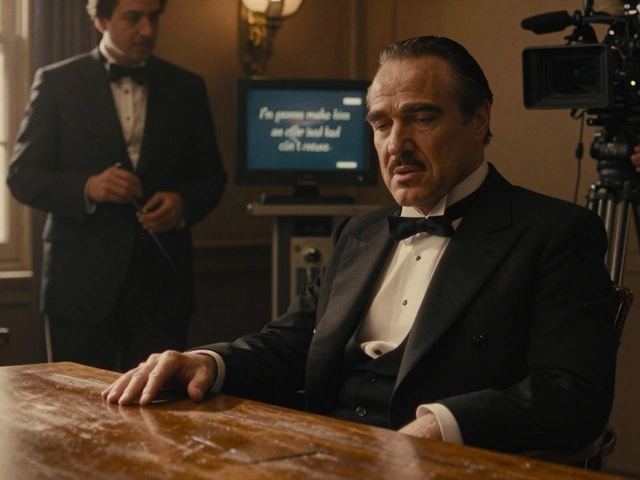
- The Meta-Layer: The artist appears on screen commenting on the filming process itself. They might watch a clip of an actor playing themselves and offer feedback. This breaks the fourth wall and highlights the construction of the story.
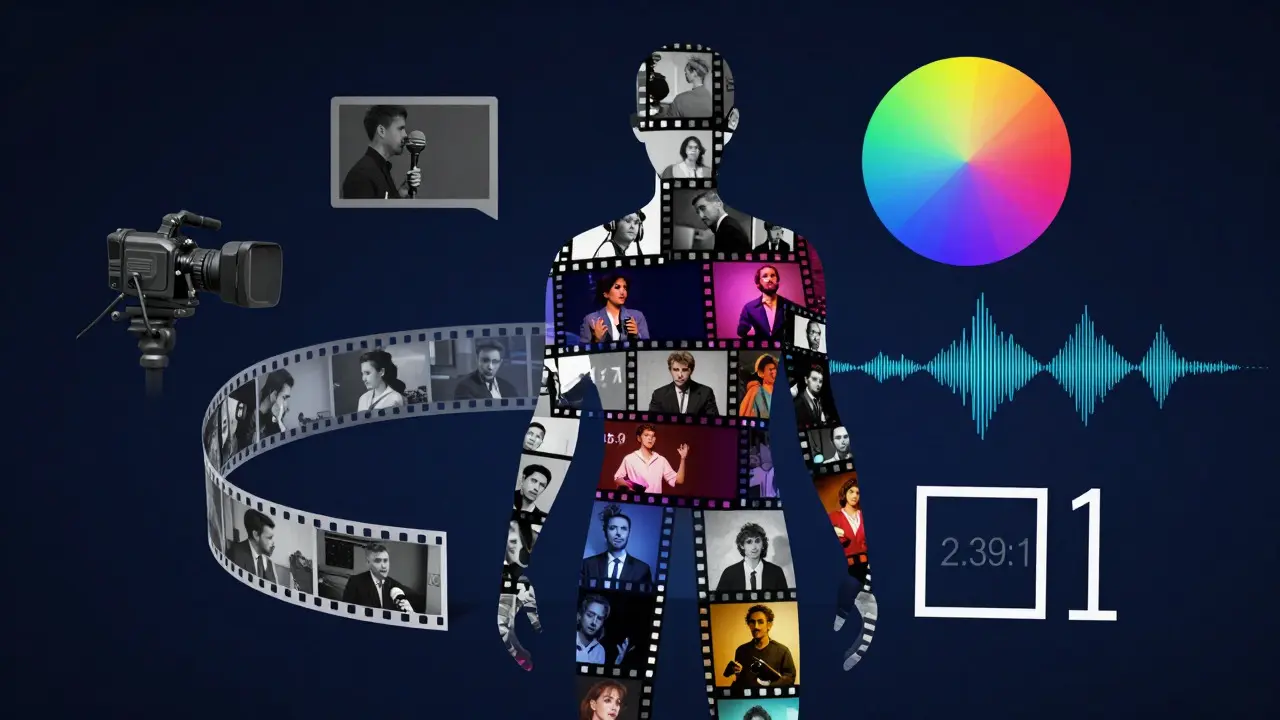
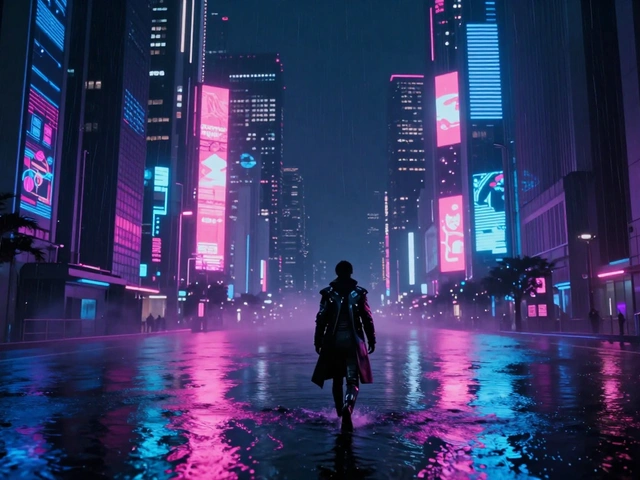
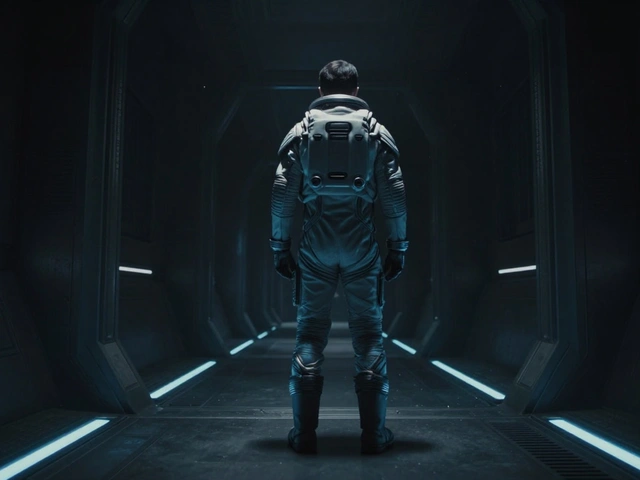
- The Visual Shift: Changes in color grading, aspect ratio, or sound design signal the shift from documentary to narrative. For example, the documentary parts might be shot in natural light and handheld, while the narrative parts use controlled lighting and steady cameras.
Each method serves a different purpose. The frame story is good for chronological biographies. The parallel track works well for exploring themes like identity or legacy. The meta-layer is powerful when the artist is still alive and willing to engage with their own mythos.
Key Elements That Make It Work
It’s easy to make a messy hybrid film. Without careful execution, the audience gets confused about what is real and what is made up. Here are the critical elements that separate great hybrid artist films from forgettable ones:
| Element | Pure Documentary | Pure Narrative | Hybrid Approach |
|---|---|---|---|
| Fidelity to Facts | High | Low | Moderate to High (with clear signals) |
| Emotional Depth | Moderate | High | Very High |
| Audience Trust | High (if sources are cited) | Variable (depends on casting) | High (when transparency is maintained) |
| Production Cost | Lower | Higher | Moderate to High |
| Risk of Confusion | Low | Low | High (requires strong direction) |
First, transparency is non-negotiable. If you switch to a fictional scene, tell the audience. Use title cards, voiceovers, or visual cues. Don’t let them guess. Second, consistency in tone matters. If the documentary part is gritty and raw, the narrative part shouldn’t suddenly become polished and glossy unless that contrast is intentional. Third, casting is crucial. The actor playing the artist doesn’t need to look exactly like them, but they must capture the energy. A bad performance ruins the illusion, even if the rest of the film is solid.
Finally, consider the sound design. Sound bridges the gap between worlds better than visuals sometimes do. A piece of music that starts in the documentary section and continues into the narrative scene creates a seamless transition. Conversely, abrupt silence can mark a hard cut between fact and fiction.
Case Studies in Blurring Lines
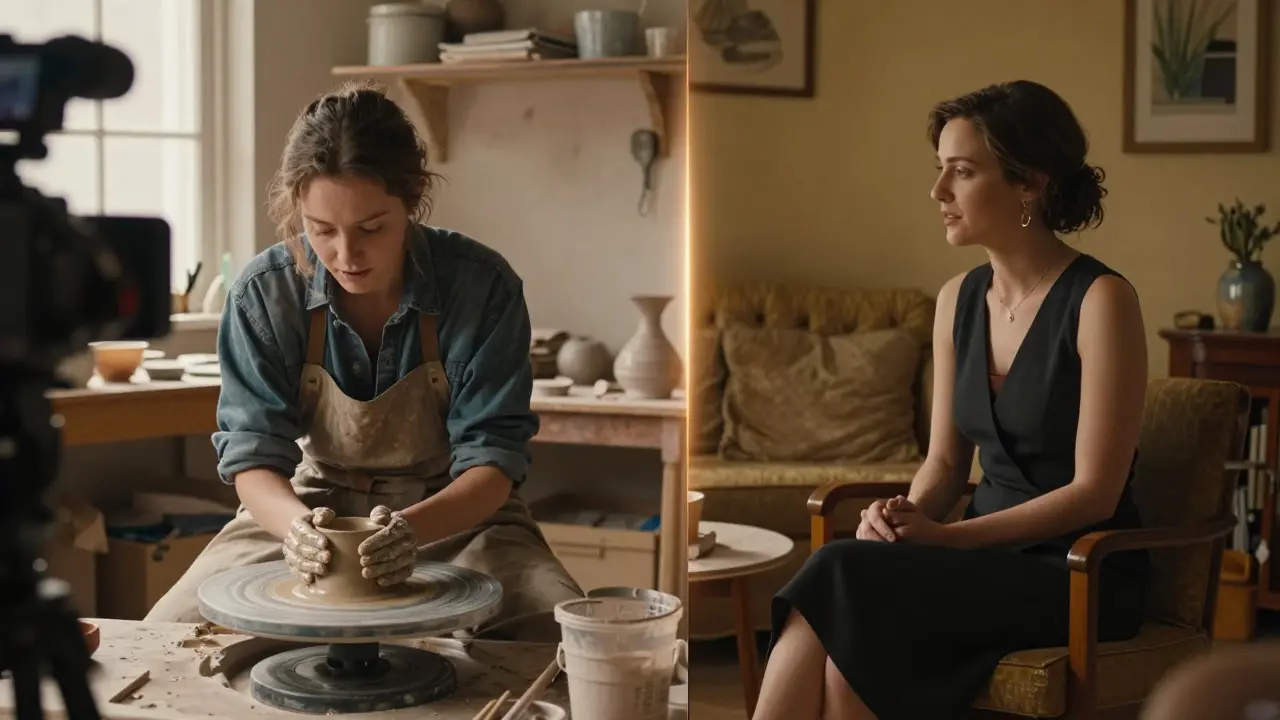
Let’s look at how this plays out in practice. Consider a film about a contemporary ceramicist. The documentary segments show her throwing clay on a wheel, her hands covered in mud, her face focused. We see the physical labor. Then, the film cuts to a narrative scene where she is in a relationship with a critic. The dialogue is scripted, the lighting is warm, and the actor playing her moves with a grace that contrasts with the sweaty, intense reality of the studio shots. The audience understands: this is her inner life, projected onto a fictional partner. The clay remains real; the love story is invented to explain why the clay matters to her.
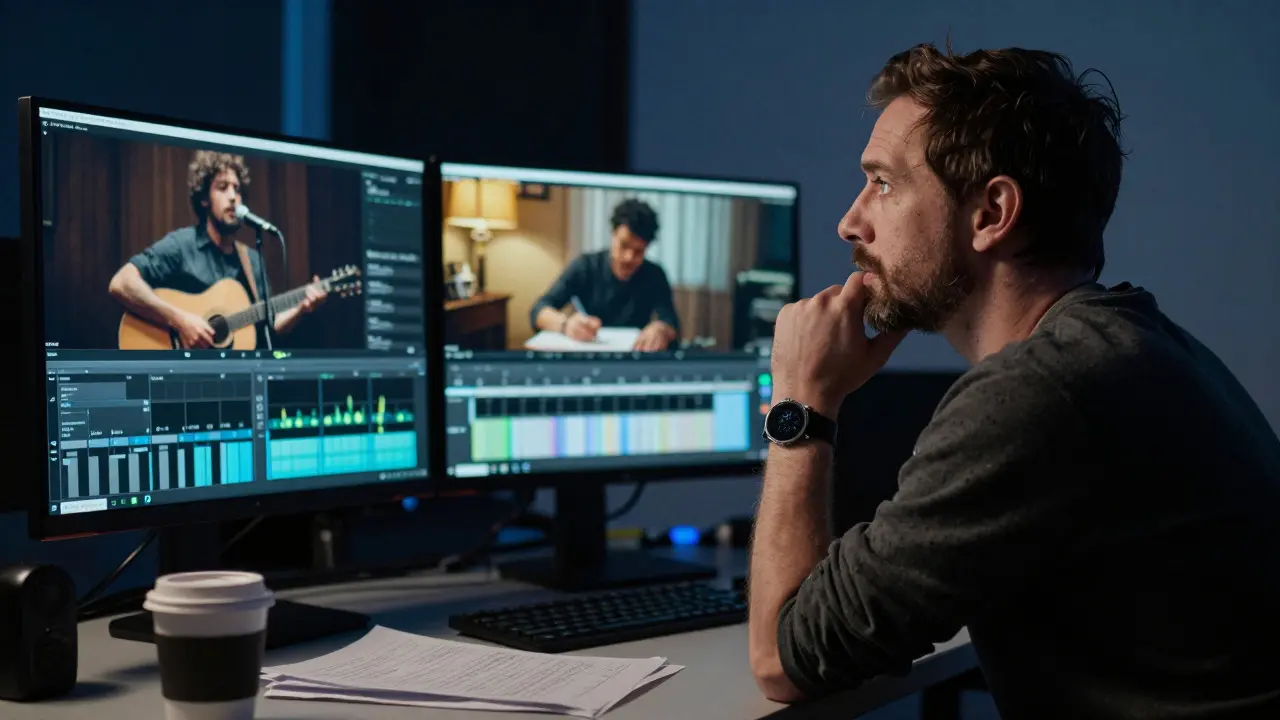
Another example involves a musician. The film uses live concert footage (documentary) intercut with scenes of the musician writing lyrics in a quiet room (narrative). The lyrics are real, but the setting and the interactions with family members are dramatized based on interviews. This helps viewers understand the inspiration behind the songs without requiring the musician to perform every single moment of their life on camera.
In both cases, the hybrid structure allows the filmmaker to explore the psychological and emotional dimensions of artistic creation that pure observation cannot reach. It gives access to the "why" behind the "what."
Challenges and Pitfalls
Don’t get me wrong. This format is risky. If the balance tips too far toward fiction, critics will call it a hagiography-a saint’s life with no flaws. If it tips too far toward documentary, audiences may find it tedious. The sweet spot is difficult to hit.
One common pitfall is inconsistent pacing. Documentary segments often move slower, allowing for reflection. Narrative segments usually have faster cuts to maintain momentum. If you don’t manage the rhythm carefully, the film feels disjointed. Another issue is ethical consent. When you dramatize someone’s life, you are interpreting their choices. Some artists are comfortable with this; others feel exposed. Getting buy-in from the subject is essential, especially if they appear in both modes.
There’s also the risk of audience fatigue. Switching modes too frequently can be exhausting. Limit your transitions. Maybe three or four major shifts per hour is enough. Let each mode breathe before moving to the next.
Practical Tips for Creators
If you’re planning a hybrid artist film, here are some actionable steps:
- Define Your Core Question: What is the one thing you want the audience to understand about this artist? Is it their discipline? Their relationships? Their mental state? Let that question guide your structure.
- Map the Facts First: Before writing any script, gather all available documentary material. Interviews, photos, videos. Know exactly what you have. Then identify the gaps-where does the story need imagination to fill in?
- Choose Your Transition Method: Decide early how you’ll signal the shift between fact and fiction. Will you use text overlays? Color changes? Music? Stick to one primary method to avoid confusion.
- Cast for Energy, Not Just Likeness: Look for actors who can inhabit the artist’s mindset. Hold auditions where they read both documentary-style monologues and scripted dramatic scenes. See who handles both tones naturally.
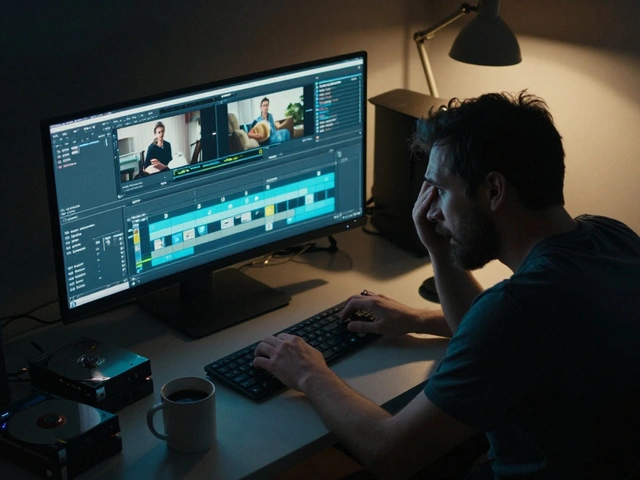
- Edit for Rhythm: In post-production, watch the flow of information. If a sequence feels slow, check if you’re lingering too long in documentary mode. If it feels chaotic, you might be cutting too fast in narrative mode. Balance is key.
Remember, the goal isn’t to trick the audience. It’s to deepen their understanding. When done right, a hybrid film feels like a conversation with the artist, rather than just a lecture or a play.
Frequently Asked Questions
What is the main difference between a biopic and a hybrid artist film?
A traditional biopic is almost entirely fictionalized, using actors to portray real people in scripted scenes. A hybrid artist film explicitly blends factual documentary footage (like interviews and archival clips) with these dramatized scenes, often signaling the shift to the audience. The hybrid approach aims to ground the fiction in verifiable reality.
Do hybrid films require the artist’s permission?
If the artist is alive and featured prominently, yes, you generally need their consent, especially for the documentary portions. For the narrative portions, legal requirements vary by jurisdiction, but ethical best practice suggests discussing the dramatization with the subject to avoid disputes over portrayal accuracy.
How much of a hybrid film should be fictional?
There is no fixed rule, but a common heuristic is to keep the factual backbone strong. Aim for at least 40-50% documentary content to anchor the story. The remaining portion can be used for dramatization to explore internal states or missing historical details. Too much fiction turns it into a standard biopic; too little loses the emotional depth.
What technical tools help distinguish documentary from narrative sections?
Common techniques include changing the aspect ratio (e.g., 16:9 for documentary, 2.39:1 for narrative), adjusting color grading (naturalistic vs. stylized), altering camera movement (handheld vs. stabilized), and using distinct sound design or musical scores for each mode. Title cards or voiceovers can also explicitly label the sections.
Are hybrid artist films commercially viable?
They can be, particularly if the artist has a dedicated following or if the film appeals to both art-house and mainstream audiences. Festivals like Sundance and Cannes often showcase these films, providing a path to distribution. However, they typically have smaller budgets than big-budget biopics, making them easier to produce but potentially harder to market broadly.


Comments(9)