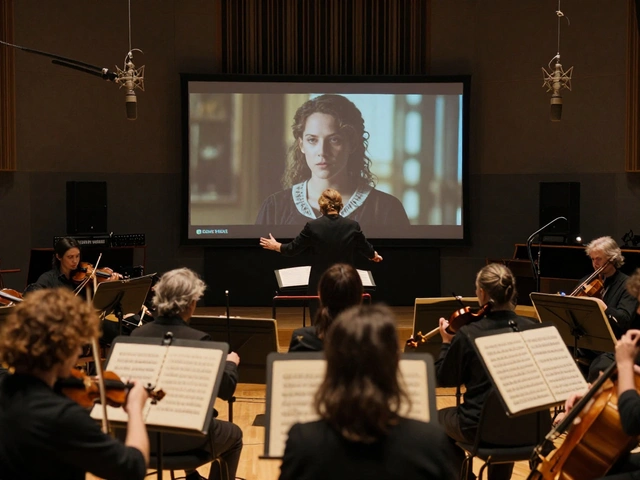
You’ve seen the dragon breathe fire on a cliff edge. You’ve watched a hero punch through a concrete wall without breaking a sweat. You’ve floated in space while Earth spins below your feet. None of it was real. Or at least, not entirely.
When you watch a blockbuster, you’re looking at a digital collage built by hundreds of artists over months or years. It’s not just about adding explosions. It’s about convincing your brain that light bounces off surfaces that don’t exist, that gravity works differently for a character made of pixels, and that two actors filmed six months apart are actually standing next to each other.
The Blueprint: Previs and Concept Art
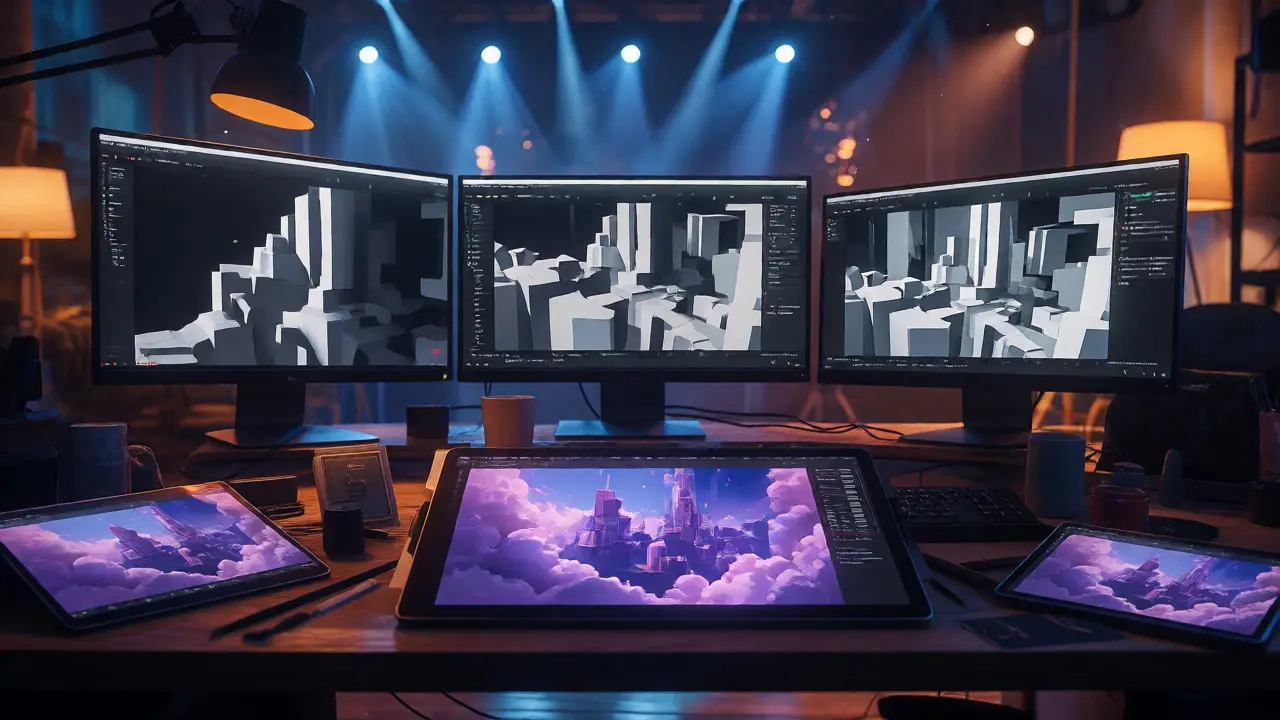
Before a single pixel is rendered, the impossible has to be planned. This starts with Previsualization (Previs), which is a low-resolution 3D animation used to plan camera angles, timing, and blocking before filming begins. Think of it as a rough draft of the movie shot. Directors use previs to figure out if a scene actually works visually before spending millions on cameras and crew.
Artists create Concept Art, detailed paintings that define the look of creatures, environments, and lighting. If the script calls for a city made of glass floating in clouds, concept artists paint what that light looks like when it hits the glass. They decide if the shadows should be blue or purple. These images become the bible for every department that follows. Without this visual roadmap, the VFX team would be guessing, and guesswork costs money.
Capturing Reality: On-Set Data Collection
You can’t fake physics perfectly if you don’t know what the real world looks like first. That’s why VFX supervisors bring specific tools to the set. They aren’t there to direct; they’re there to collect data.
First, they shoot HDRI (High Dynamic Range Imaging). These are panoramic photos that capture all the light information in a scene. When a computer artist later places a CGI monster into that shot, the HDRI tells the software exactly how bright the sun was, where the reflections came from, and what color the ambient light was. If you skip this step, the monster will look pasted on because its lighting won’t match the live-action background.
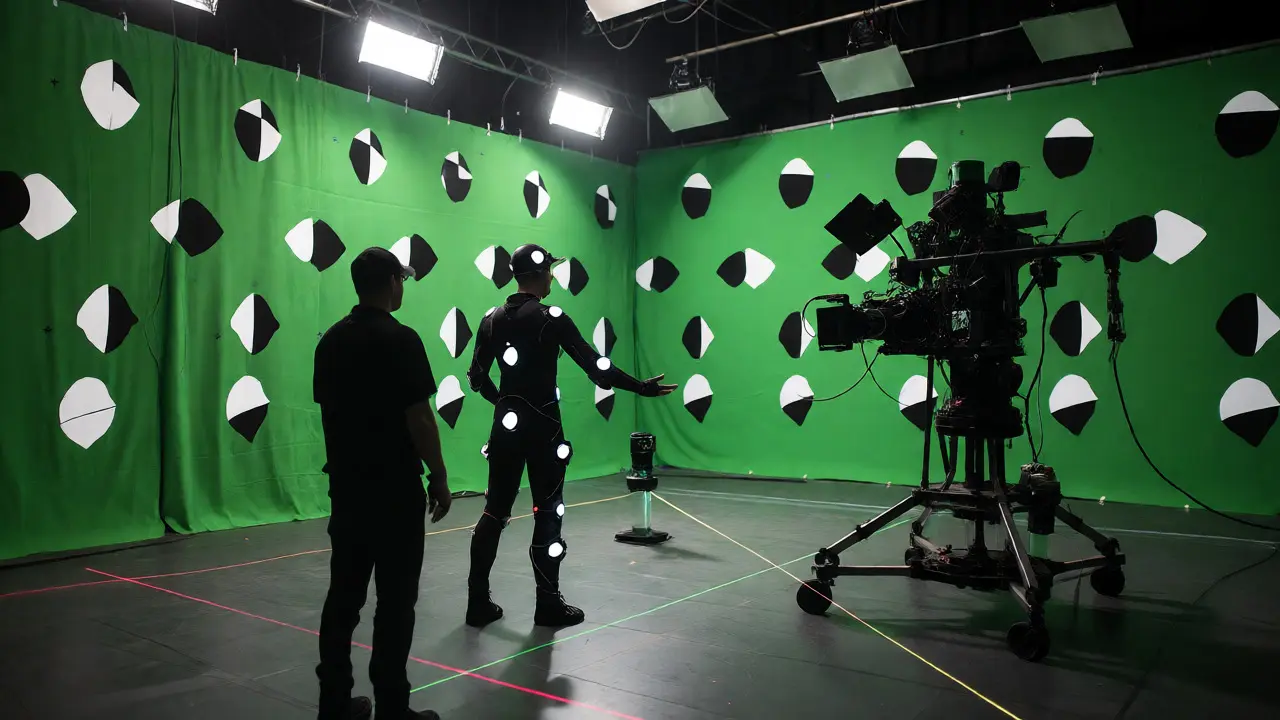
They also place Tracking Markers on walls, floors, and even actors’ faces. These are high-contrast dots-often black and white-that help software calculate the exact position of the camera in 3D space. Sometimes, they use LiDAR Scanning to create a precise 3D model of the set. This ensures that when a virtual car drives down a street, it stays exactly on the pavement and doesn’t float an inch above the ground.
| Method | Purpose | Why It Matters |
|---|---|---|
| HDRI | Capture lighting environment | Ensures CGI matches real-world reflections |
| Tracking Markers | Camera position calculation | Keeps CG objects locked to the real set |
| Reference Plates | Clean background shots | Provides a base layer for painting out rigs |
| Motion Capture | Record actor movement | Transfers human nuance to digital characters |
Digital Asset Creation: Modeling and Texturing
Once the data is home, the heavy lifting begins. Artists build 3D Models. For a creature, this isn’t just sculpting a shape. It’s building anatomy. A digital muscle needs to stretch and compress realistically when the character moves. If the model is static, it looks like a toy.
Then comes Texturing. This is where the magic happens. Artists paint onto the 3D model to add skin pores, scratches on metal, or moss on stone. But modern texturing goes deeper. They use Subsurface Scattering techniques to simulate how light penetrates semi-translucent materials like skin or wax. This is why a digital face glows red when backlit by the sun, just like a real hand held up to a flashlight.
Rigging and Animation: Bringing Objects to Life
A model is just a statue until it’s rigged. Rigging is the process of creating a digital skeleton and control system inside the model. Riggers build thousands of joints and controllers so animators can move the character naturally. If a tail moves, the hips need to counterbalance. If the head turns, the neck muscles need to stretch. Good rigging hides the technical complexity, letting animators focus on performance.
For human-like characters, studios often use Motion Capture (MoCap). Actors wear suits with sensors that record their movements. The data is then mapped onto the digital character. But MoCap alone isn’t enough. Animators spend weeks refining the footage, fixing foot-sliding (where feet slide across the floor instead of planting) and adjusting facial expressions to match the voice acting. This blend of raw data and artistic refinement creates performances that feel human, even if the character is a seven-foot-tall alien.
Simulation: Physics and Destruction
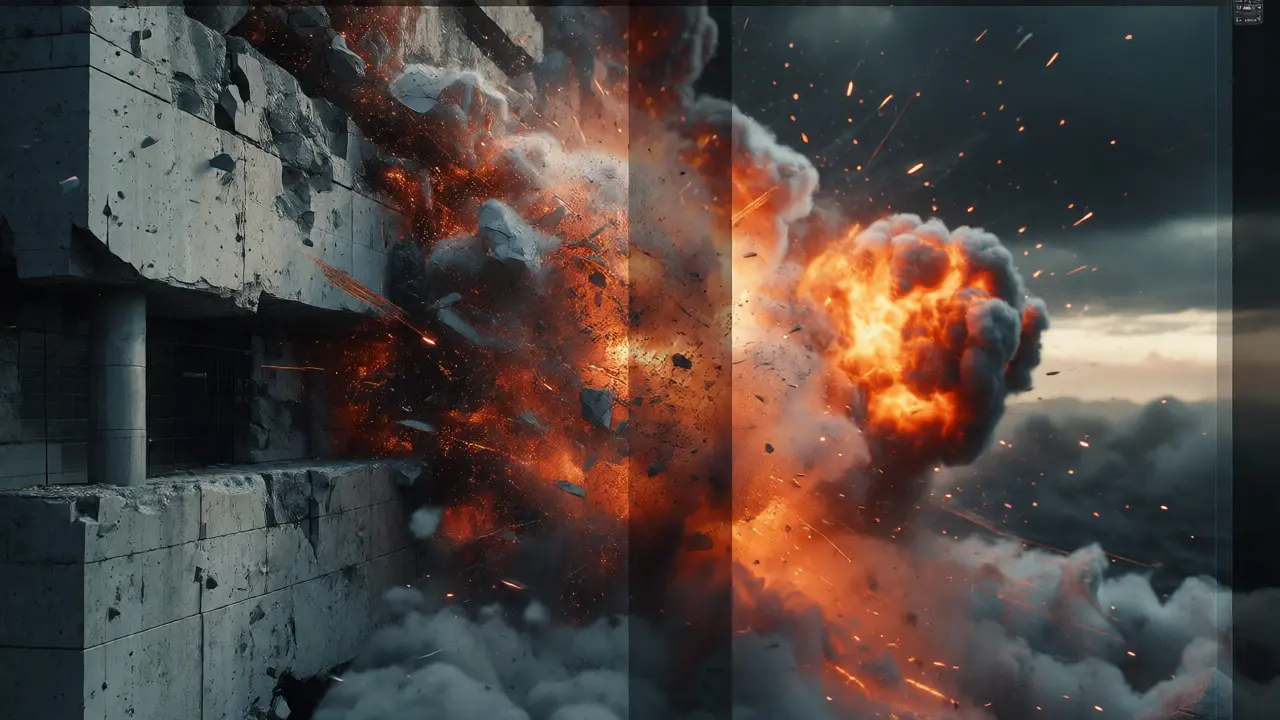
Not everything can be animated by hand. Water, fire, smoke, and debris require Physics Simulations. These are complex calculations that mimic natural laws. To make a building collapse, artists break the geometry into millions of small pieces. Then, simulation software calculates how each piece falls based on gravity, wind, and collision.
This is computationally expensive. Rendering a single frame of a massive explosion can take hours on powerful server farms. Studios use render farms-clusters of computers-to crunch these numbers overnight. If the water looks too stiff or the smoke too cartoonish, the simulation parameters are tweaked, and the process repeats. Getting the physics right is crucial because our brains are wired to detect bad physics instantly. If water splashes upward against gravity, we notice immediately.
Compositing: The Final Glue
All these elements-the live-action plate, the CGI models, the simulations-are separate layers. Compositing is the art of blending them into one seamless image. Compositors work in software like Nuke or After Effects. They adjust color, contrast, and grain to ensure the CGI matches the film stock of the live action.
They also handle Matte Painting extensions. If a scene requires a mountain range that wasn’t there, matte painters create a digital backdrop and blend it into the horizon. They add atmospheric haze to push distant mountains back visually. They add lens flares and dirt on the virtual lens to match the camera operator’s habits. The goal is invisibility. If you notice the effect, the compositor failed.
Quality Control and Iteration
VFX is rarely a straight line. It’s a loop of feedback. The director watches the shot, says it’s “too green,” and sends it back. The colorist adjusts the hue. The director says the monster looks “too smooth,” and the texture artist adds more noise. This iteration can happen dozens of times per shot.
Studios use review platforms like CineSync to share frames with directors remotely. Notes are timestamped and assigned to specific artists. This tight feedback loop ensures that the final product matches the director’s vision, no matter how impossible that vision seems.
Key Takeaways
- Planning is critical: Previs and concept art prevent costly mistakes during production.
- Data collection matters: HDRIs and tracking markers ensure CGI integrates seamlessly with real-world lighting and geometry.
- Realism requires physics: Simulations for water, fire, and destruction rely on accurate mathematical models.
- Compositing sells the illusion: Color grading, grain matching, and atmospheric effects hide the seams between real and digital.
Do VFX studios replace actors entirely?
Rarely. Most "digital doubles" are created using scans of the actual actor's face and body. Motion capture or manual animation is then applied to these scans. This preserves the actor's unique mannerisms and likeness, ensuring the audience still connects with the performance.
Why do some CGI movies look cheap?
Usually due to poor integration rather than bad modeling. If the lighting on the CGI object doesn't match the environment, or if the shadows fall in the wrong direction, the brain rejects the image. Budget constraints often force studios to cut corners on simulation time or compositing detail, leading to a flat, artificial look.
What is the difference between VFX and SFX?
SFX (Special Effects) are practical effects done on set, like pyrotechnics, rain machines, or mechanical props. VFX (Visual Effects) are added in post-production using computers. Many films combine both; for example, an actor might stand near a real explosion (SFX) while a digital shockwave expands outward (VFX).
How long does it take to finish one VFX shot?
It varies wildly. A simple background cleanup might take a few hours. A complex shot with multiple CGI characters, fluid simulations, and intricate compositing can take several months. Large blockbusters may have thousands of such shots, requiring teams of hundreds working simultaneously.
Can AI generate entire scenes now?
AI tools assist significantly with tasks like rotoscoping, denoising, and upscaling resolution. However, generating coherent, controllable cinematic scenes with consistent character design and physics is still primarily a human-led creative process. AI is becoming a powerful assistant, not yet a replacement for the VFX pipeline.