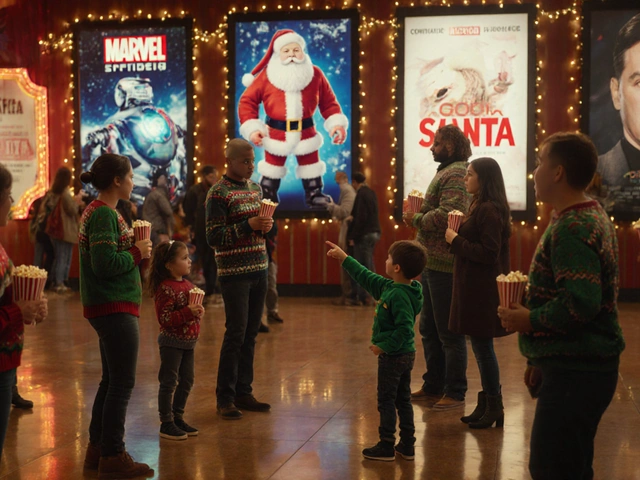
You walk into your local multiplex. The marquee lists the same five blockbusters you’ve seen on every billboard for months. You want something different-something with subtitles, a different rhythm, maybe a story that doesn’t follow the three-act Hollywood structure. But where do you actually find International Cinema films produced outside the United States, often featuring non-English dialogue and distinct cultural storytelling traditions without driving an hour to a major city?
It’s not about luck. It’s about knowing who books the screens and when they book them. Most people think international films are locked away in obscure art houses or streaming services. That used to be true. Today, thanks to shifts in distribution models and the rise of regional programming networks, you can find high-quality foreign films at theaters ten minutes from your house. You just need to change how you look.
The Shift in Distribution: Why Foreign Films Are Closer Than You Think
A decade ago, if you wanted to see a Korean thriller or a French drama, you had to live near a university town or a major metro area. The economics didn’t work. A single theater couldn’t guarantee enough seats sold to justify renting a print or paying the digital delivery fees for a niche title. That landscape has changed. Independent distributors like MUBI a global streaming service and distributor known for curating classic and contemporary world cinema, Janus Films an independent film distribution company specializing in art-house and classic cinema, and Neon an American independent film production and distribution company founded by Tom Quinn have created wider release patterns. They don’t just target New York and LA anymore; they push titles into secondary markets.
This means your local theater chain-whether it’s a large circuit like AMC or Regal, or a smaller independent group-is more likely to pick up these titles. They’re looking for content that fills seats during off-peak hours (Tuesday nights, Wednesday afternoons) without competing directly with Marvel movies. For you, this creates an opportunity. If you know which distributors are active, you can predict what will show up on your screen before it even hits the box office website.
Identifying the Right Venues: Beyond the Multiplex
Not all theaters treat international cinema the same way. Some treat it as an afterthought, squeezing a subtitled film into one screen at 9 PM on a Thursday. Others make it their brand identity. To discover international cinema effectively, you need to categorize your local options.
- Dedicated Art-House Cinemas: These are your best bet. Places like the Siff Center in Seattle or the Music Box in Chicago are famous, but every mid-sized city has a version. Look for venues that list "repertory" screenings alongside new releases. Repertory means they show older classics, which is often where you’ll find restored versions of Akira Kurosawa or Agnès Varda films.
- University-Affiliated Theaters: Colleges often run film societies that rent out local auditoriums or campus cinemas. These screenings are frequently cheaper ($5-$8 tickets) and feature deep cuts that commercial theaters skip. Check the arts department calendar of any nearby university.
- Cultural Centers: Goethe-Instituts, Alliance Françaises, and Japan Societies exist in many US cities. They host monthly film nights featuring recent productions from their respective countries. This is the most authentic way to see films that might never get a wide commercial release.
- Festival Circuit Pop-ups: Many local theaters participate in traveling festival packages. Events like Human Rights Watch Film Festival a touring documentary and narrative film festival focusing on human rights issues or Annecy International Animation Film Festival the largest animation festival in the world, held annually in Annecy, France often send curated selections to partner theaters nationwide.
Decoding the Programming Schedule: When to Look
Timing matters more than location. Blockbusters dominate weekends. International cinema thrives on weekdays. If you only check the movie times on Saturday morning, you’ll miss 80% of the foreign films available. Distributors schedule limited releases to avoid direct competition. A German drama might open on Friday but only play in your town through Wednesday. By Thursday, it’s gone.
Here is a typical weekly flow for international releases in secondary markets:
| Day | Likelihood of Foreign Film | Best Strategy |
|---|---|---|
| Friday | Medium | Check opening night listings; good for new releases. |
| Saturday/Sunday | Low | Blockbusters take over; expect limited showtimes. |
| Tuesday/Wednesday | High | Discount days; theaters keep foreign films alive here. |
| Thursday | Medium-High | Pre-opening previews; great for catching buzz-worthy titles. |
Pro tip: Set alerts for Tuesday and Wednesday. That’s when theaters try to fill empty seats with lower-risk, high-culture content. You’ll often find double features-one classic, one contemporary-that cost less than a single ticket for a mainstream movie.

Leveraging Digital Tools for Physical Discovery
You don’t need to drive around guessing. Specific digital tools track physical theatrical runs better than general search engines. Fandango a subsidiary of Comcast that sells movie tickets online and via mobile apps is okay for blockbusters, but it’s terrible for finding a specific Portuguese documentary playing in a 150-seat theater. Instead, use these:
- Rotten Tomatoes Theater Finder: Filter by "Art House" or "Independent." It aggregates data from smaller chains that Fandango ignores.
- Letterboxd: While primarily a social network for critics, its "In Theaters Near You" feature is surprisingly accurate for indie releases because users tag specific small venues.
- Local Arts Weeklies: Every city has one (e.g., Willamette Week in Portland, Chicago Reader). Their film section is written by humans who watch everything. Subscribe to their email newsletters. They will tell you, "This Iranian comedy is only showing at the [Name] Theater this weekend," weeks before algorithms catch up.
- IMDb Pro: If you’re serious, the free tier lets you see upcoming release dates by country. If a film won at Cannes in May, it usually hits US arthouse theaters by September or October.
Building Relationships with Programmers
This sounds old-school, but it works. Small theater programmers are individuals, not algorithms. They curate based on passion and audience feedback. If you go to a screening of a Senegalese film and stay for the Q&A (or just buy a coffee afterward), introduce yourself to the manager. Tell them you liked it. Ask what they’re bringing next month.
Why does this matter? Because booking decisions for niche films are often made 4-6 weeks in advance. If a programmer knows there’s a core group of five people who will definitely come out for Scandinavian noir, they’re more likely to negotiate a longer run or bring in a similar title. You become part of the demand signal. In Asheville, for example, regulars at the local independent cinema have successfully lobbied for extended runs of Brazilian New Wave films simply by showing up consistently.

Overcoming the Subtitle Barrier
Some people avoid international cinema because reading subtitles feels like homework. It shouldn’t. Modern subtitle standards are cleaner, and many films now include optional audio description tracks. But if you’re hesitant, start with genres you already love. Don’t jump straight into a three-hour slow-burn Italian neorealist drama. Try a South Korean horror film or a Japanese anime feature first. The visual language carries the story, so you can relax while your brain adjusts to reading.
Also, consider the "Festival Package" approach. Many theaters offer season passes for international film series. These passes often bundle 5-10 films for a flat fee. Since you’ve already paid, you’re more likely to give a challenging film a chance rather than skipping it because you didn’t want to spend $15 on a gamble. This low-risk environment is perfect for expanding your taste.
Conclusion: Your Next Step
Discovering international cinema isn’t about finding a hidden gem by accident. It’s about aligning your habits with the distribution rhythms of independent film. Check the local arts paper on Thursdays. Look for Tuesday discounts. Follow the distributors, not just the studios. Once you attend two or three screenings, the algorithm starts working for you. Your local theater will begin to feel like a club where you know what’s coming next, and that anticipation is half the fun.
Are international films always subtitled?
Most are, especially if they are in languages other than English. However, some European co-productions may have English dubbing options, though purists strongly recommend watching with subtitles to preserve the original performance nuances. Always check the listing for "Subtitled" or "Dubbed."
How much do tickets for international cinema cost compared to blockbusters?
They vary widely. Large chains charge the same standard price ($15-$20). However, independent art houses often have discount nights (Tuesdays/Wednesdays) where tickets drop to $7-$10. University film societies and cultural centers are even cheaper, often ranging from $5 to $8.
What if my nearest theater doesn't show foreign films?
Look for "limited release" announcements online. Sometimes a film opens in a nearby larger city (within 50 miles) for one week. Also, check if your local library hosts film screenings-they often acquire rights to educational and international documentaries. Finally, consider virtual cinema options offered by many independent theaters, which allow you to stream new indie releases from home while supporting the venue.
Do I need to know the director's name to enjoy the film?
No, but it helps. Recognizing names like Wong Kar-wai, Pedro Almodóvar, or Bong Joon-ho gives you a style preview. However, many viewers discover directors through the film itself. Start with the story; let the director's reputation guide your next choice.
How long do international films stay in theaters?
Usually shorter than blockbusters. A successful foreign film might run for 4-6 weeks in a major market, but only 1-2 weeks in smaller towns. If you see a listing you like, go within the first week. Waiting until the second weekend risks it being pulled for a new release.