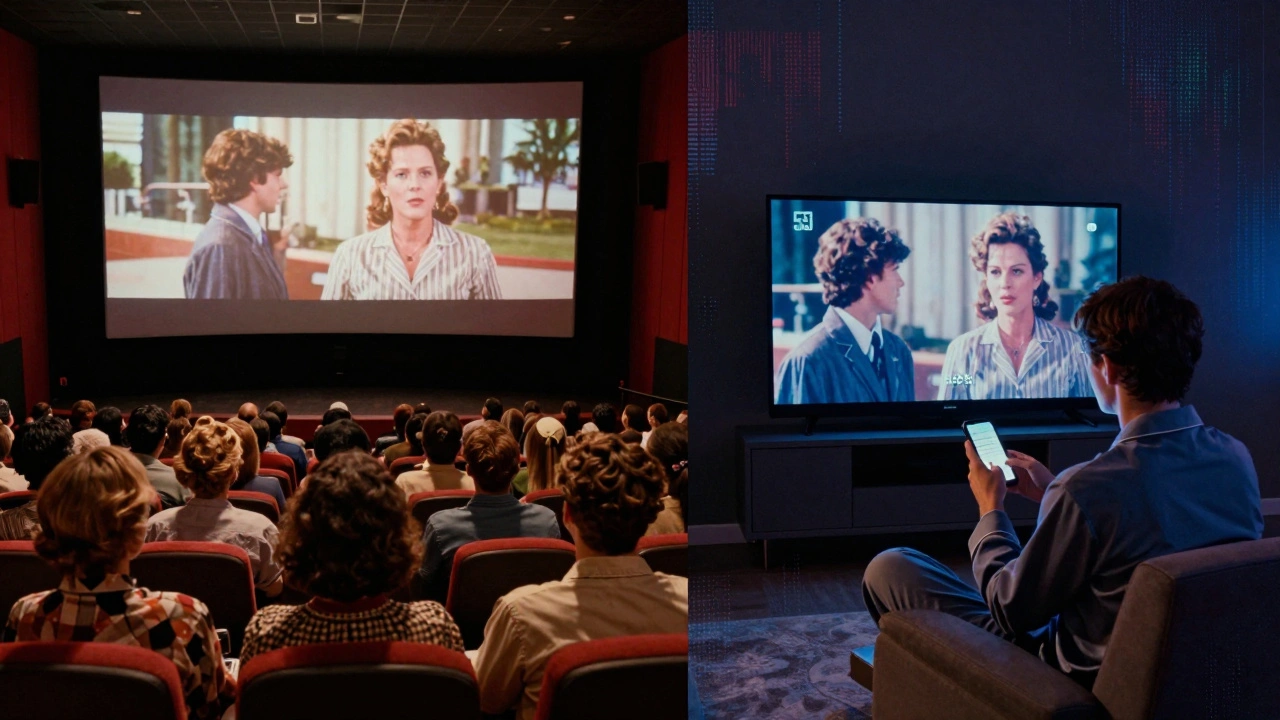
Just ten years ago, if you wanted to watch a new movie, you had to wait for it to hit theaters, then hope it came to your local cinema. If you missed it, you waited months - sometimes over a year - for it to show up on DVD or cable TV. Today, that movie drops on your phone the same night it premieres in theaters. Or sometimes, it never hits theaters at all.
The Old System Was Built on Control
For most of the 20th century, film distribution was a tightly controlled pipeline. Studios made movies. Distributors bought the rights. Theaters rented screens. It was a three-layer cake, and each layer had power. A movie needed a theatrical release to be considered legitimate. Without it, it was seen as a B-movie or a TV project. Theaters held all the leverage. They decided which films got prime slots, how long they ran, and how much of the ticket revenue went back to the studio. Studios couldn’t afford to skip theaters - not if they wanted awards, buzz, or box office credibility.Then came the internet. And then came Netflix.
Netflix Didn’t Just Change Viewing - It Changed Value
Netflix started as a DVD-by-mail service. By 2013, it was spending $1 billion a year on original content. By 2020, it was spending $17 billion. That wasn’t just content spending - it was a direct challenge to the entire economic model of film distribution.Traditional studios relied on box office returns to recoup costs. A $100 million movie needed $200 million in tickets just to break even. Streaming services didn’t care. They didn’t need box office numbers. They cared about subscriber retention. A single hit show like Stranger Things or The Crown could keep millions of people paying $15 a month. That’s a better business model than hoping 5 million people buy tickets to a movie that costs $80 million to make.
By 2025, Netflix, Disney+, Amazon Prime Video, and Apple TV+ had spent over $120 billion on original content since 2015. That’s more than the total global box office revenue from 2010 to 2019. They didn’t wait for theaters to say yes. They just made the movies - and released them directly to their 1.2 billion combined subscribers.
Theaters Are Losing Their Gatekeeper Role
In 2019, 85% of major studio releases opened in theaters first. By 2025, that number dropped to 42%. Warner Bros. started releasing all its 2021 films on HBO Max the same day as theaters. Disney put Black Widow on Premier Access for $30. Universal struck deals with AMC to shorten the theatrical window from 90 days to 17. These weren’t temporary moves - they were permanent shifts.Movie theaters used to be the only place you could see a new film in a big screen, immersive experience. Now, most people watch new releases on 55-inch TVs or even phones. Theaters are left with two kinds of movies: blockbusters that still need the spectacle (like Oppenheimer or Mad Max: Fury Road) and niche films that can’t get streaming attention.
Smaller studios and indie filmmakers are the ones getting squeezed. Without a theatrical release, they lose eligibility for Oscars and major awards. But without a streaming deal, they can’t afford to make the movie in the first place. The middle is disappearing.
How Distribution Is Now Decided - Algorithms, Not Executives
In the old system, a studio executive decided which movies got greenlit based on pitch meetings, star power, and genre trends. Now, streaming platforms use data. They look at what people watch, when they watch it, what they skip, and how long they stay. A show about a 60-year-old detective in rural Scotland? That’s a risky idea in Hollywood. But Netflix saw 14 million people in 30 countries watched the first episode of Slow Horses in its first week. So they ordered a second season.That’s how The Bear got made. No studio would have funded a show about a chef in Chicago with no action, no romance, and no celebrity leads. But Hulu saw the data: viewers aged 18-34 were bingeing cooking shows and trauma dramas at the same time. So they made it. It won Emmys. It became a cultural moment. And it never played in a theater.
Streaming services don’t need to guess what people want. They know. And they’re using that knowledge to bypass the old gatekeepers entirely.
The Rise of the Direct-to-Consumer Model
Disney+ didn’t just launch a streaming service. It launched a new distribution arm. It cut out the middlemen - cable companies, rental stores, even theaters - and sold its content straight to you. Same with Paramount+, Peacock, and Max. These aren’t just apps. They’re vertical ecosystems. Disney owns the studio, the platform, the marketing, and the merch. They don’t need anyone else to get their movie to you.That’s why you now see movies like The Little Mermaid or Wish skip theaters in Europe and Asia. Why? Because Disney knows its streaming audience there is bigger than its theater audience. It’s not about global reach anymore - it’s about targeted reach. They don’t need to play in every country. They just need to play in the ones where their subscribers are.
What Happens to Filmmakers Now?
For directors and writers, this is a mixed bag. On one hand, there’s more opportunity. More platforms mean more greenlights. More stories get told. A low-budget horror film can find an audience on Shudder. A documentary about a local artist can go viral on Criterion Channel.On the other hand, pay structures have collapsed. In 2010, a writer on a studio film could earn $150,000 for a script. Today, the same writer might get $75,000 - and no backend. Streaming deals often pay a flat fee. No residuals. No profit participation. No second window. If your movie becomes a hit on Netflix, you don’t get a cut of the billions it makes. You get your flat fee - and a thank-you note.
Union contracts haven’t caught up. The Writers Guild of America and SAG-AFTRA fought hard in 2023 for streaming residuals. They won some gains - but nothing close to what they had in the DVD era. The power has shifted. The money has shifted. And the rules haven’t.
The Future Is Fragmented - But Not Dead
Theater attendance is down 60% since 2019. But it’s not gone. People still go to theaters for events. For spectacle. For the shared experience. The problem isn’t that theaters are dying - it’s that they’re becoming luxury experiences, not the default way to watch a movie.Meanwhile, streaming services are starting to feel the pressure too. Subscriber growth is slowing. Churn is rising. People are tired of paying $15 for six services. Some are cutting back. Others are turning to ad-supported tiers. That’s forcing platforms to chase clicks again - not just subscribers. The algorithm is now pushing content that gets watched fast, not content that lasts.
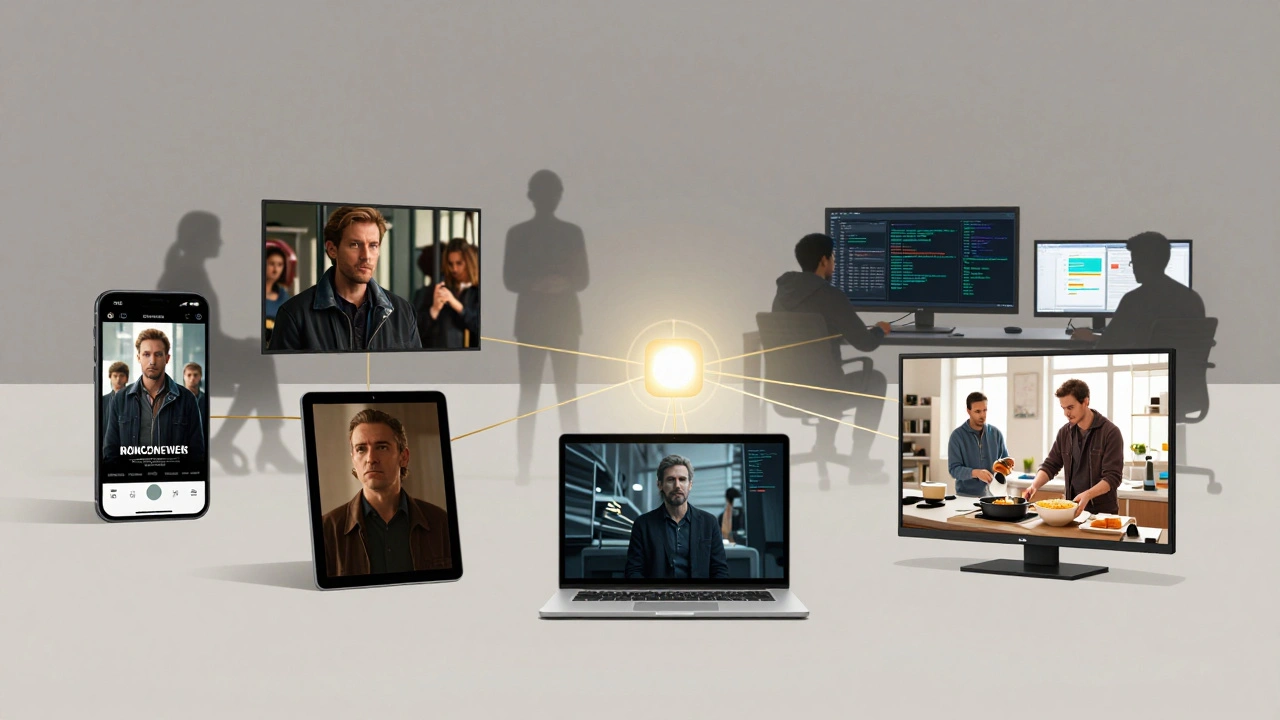
What’s emerging isn’t a single replacement for traditional distribution. It’s a patchwork. A movie might premiere on a streaming platform, then get a limited theater run for awards. Then land on a niche service like MUBI. Then drop on YouTube for free with ads. One film, six paths. One audience, dozens of touchpoints.
Traditional film distribution didn’t collapse. It evolved. Theaters still matter. But they’re no longer the center. The new center is the screen in your hand, your living room, your bedroom. And the people who control that screen - the streaming platforms - now hold the keys to what gets made, who sees it, and how it earns money.
What This Means for Moviegoers
You have more choice than ever. But you also have more complexity. You need to track which movie is where. You need to decide whether to pay for a streaming service just for one film. You might wait weeks for a movie to appear on a cheaper tier. Or you might pay extra for early access.And the quality? It’s mixed. Some of the best films of the last five years - Parasite, Minari, Everything Everywhere All at Once - found audiences through streaming. But so did hundreds of forgettable films that vanished after a week. The gatekeepers are gone. That means more voices. But also more noise.
The movie business isn’t broken. It’s just different. The old rules don’t apply anymore. And if you’re waiting for things to go back to how they were, you’ll be waiting a long time.
Are movie theaters dying because of streaming?
No, but they’re changing. Big-budget films with visual spectacle still draw crowds. But smaller films and mid-range releases are skipping theaters entirely. Theaters are becoming event spaces - not everyday destinations. Attendance is down, but the people who still go are willing to pay more for premium experiences like IMAX, Dolby Cinema, or dine-in seating.
Why do streaming services spend so much on original content?
Because they need to keep subscribers. Unlike theaters, which make money per ticket, streaming services make money per subscription. If you cancel because you’re tired of the same old shows, they lose money. So they spend billions on exclusive content to make sure you stay. A hit show like Stranger Things isn’t just entertainment - it’s a retention tool.
Do filmmakers make less money now?
Often, yes. In the past, writers and directors could earn residuals from DVD sales, TV reruns, and international licensing. Streaming deals usually pay a flat fee with no backend. Even if a film becomes a global hit, the creators rarely see extra money. Union negotiations in 2023 won some improvements, but the pay gap between traditional and streaming work is still wide.
Can indie films still succeed without theaters?
Absolutely. Films like Minari and CODA found massive audiences through streaming and won Oscars. Platforms like Sundance Now, MUBI, and Criterion Channel specialize in indie and foreign films. The key is finding the right platform and audience - not the right theater.
Why do some movies still get theatrical releases?
For awards. The Oscars, Golden Globes, and BAFTAs still require a theatrical run to qualify. Studios release films in theaters for a few weeks - sometimes just seven days - to meet eligibility rules. Then they move them to streaming. It’s a strategic move, not a commitment to theaters.