Most people think of Hollywood as the engine room for horror movie trends. But if you look at box office numbers in Bangkok or Jakarta over the last five years, a different story emerges. Southeast Asian horror is a regional film movement that blends local folklore with modern psychological tension to create unique narrative structures. It’s not just copying Western ghosts; it’s building something entirely new from the ground up.
This shift isn’t accidental. It’s driven by audiences who are tired of jump scares and want stories rooted in their own cultural realities. When a film like The Wailing (Korean, but influential in the region) or Thailand’s Pee Mak hits theaters, it proves that local myths can compete with global franchises. The core innovation here is the rejection of the "monster" in favor of the "system." In these films, the horror rarely comes from a creature in a closet; it comes from social hierarchy, religious duty, or ancestral debt.
The Shift from Ghosts to Social Commentary
Traditional Western horror often isolates the victim. You’re alone in a house, the power goes out, and the killer arrives. In Southeast Asia, isolation is rare. Society is tight-knit, and secrets don’t stay buried for long. This changes how directors approach fear. Instead of hiding the monster, they hide the truth about the community.
Take the concept of the Kuntilanak, a spirit common in Malay and Indonesian folklore. For decades, this entity was treated as a simple slasher villain-a woman with long hair who chases victims. But recent films have recontextualized her. She isn’t just a killer; she’s a symbol of patriarchal oppression. Her rage stems from being wronged by men in positions of power. By making the ghost a metaphor for social injustice, filmmakers add a layer of depth that keeps audiences engaged beyond the initial scare. You aren’t just afraid of dying; you’re afraid of the systemic rot that created the ghost in the first place.
Cultural Roots: Javanese Mysticism and Thai Buddhism
To understand the innovation, you have to understand the source material. Two major cultural pillars drive these narratives: Javanese mysticism and Thai Theravada Buddhism. They offer completely different toolkits for creating dread.
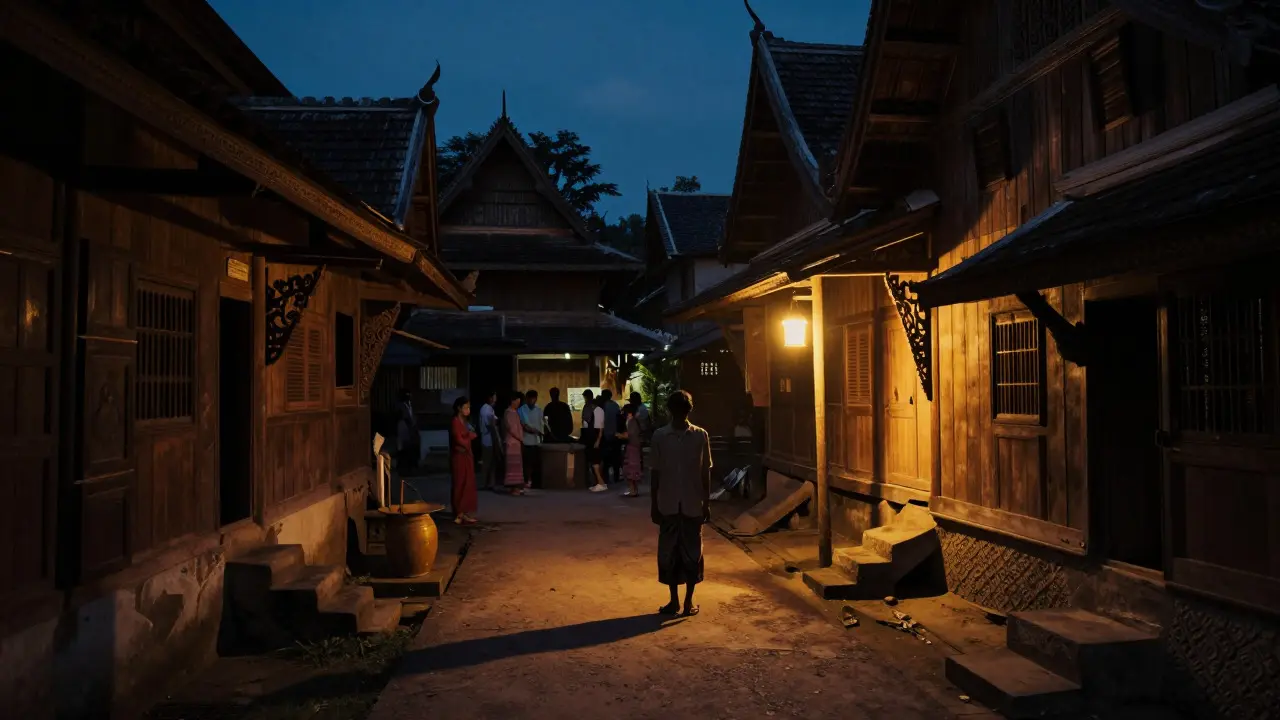
In Indonesia, particularly Java, the belief in kejawen (Javanese mysticism) suggests that the physical world is thin. Spirits, ancestors, and gods coexist with humans. This leads to a type of horror that feels intimate. The scary thing might be your own grandfather, or a neighbor who practices forbidden magic. The fear is personal and relational. Directors use this to explore themes of family obligation and hidden sins. If you break a taboo, the consequence isn’t just death; it’s spiritual contamination that affects your entire lineage.
In Thailand, the influence of Buddhism introduces a different kind of tension. Karma is central. Actions have consequences, and those consequences can span lifetimes. This allows for complex narratives where the "villain" might actually be a victim of past actions. A character might suffer terrible things not because they are evil, but because they owe a debt from a previous life. This creates a moral ambiguity that is rare in standard slasher films. You root for characters even when they are doing bad things, because you know their suffering has a cosmic reason behind it.

Technical Innovations in Sound and Visuals
It’s not just the scripts that are changing; the technical execution is evolving too. Southeast Asian filmmakers are using sound design to create unease without relying on loud jumps. They utilize ambient sounds specific to the region-the hum of temple bells, the rustle of tropical leaves, or the distant chanting of monks. These sounds trigger a primal response in local audiences who associate them with sacred or liminal spaces.
Visually, there’s a move away from dark, grainy aesthetics toward high-contrast color palettes. Think bright, saturated greens and reds that feel almost surreal. This visual style makes the supernatural elements pop against the mundane reality. It creates a dreamlike quality that blurs the line between what is real and what is imagined. This technique has influenced global cinematographers, who now recognize that brightness can be more unsettling than darkness.
| Feature | Western Mainstream Horror | Southeast Asian Innovation |
|---|---|---|
| Primary Fear Source | Isolation, physical threat | Social pressure, ancestral debt |
| Villain Motivation | Malice, insanity, revenge | Karma, cultural taboo, systemic failure |
| Resolution | Killing the monster | Restoring balance, accepting fate |
| Aesthetic Style | Dark, gritty, realistic | Bright, surreal, symbolic |
| Sound Design | Stingers, silence, heartbeat | Ambient cultural sounds, chanting |
Case Studies: Films That Changed the Game
You can’t talk about this movement without mentioning specific titles that paved the way. Pee Mak (2013) is a prime example. On the surface, it’s a comedy-horror about a soldier returning home to find his wife missing. But underneath, it’s a sharp critique of village gossip and gender roles. The ghost isn’t scary because she’s violent; she’s scary because she’s trapped by expectations. The film made millions in Thailand and proved that horror could be funny, smart, and culturally relevant simultaneously.
Then there’s I See Dead People (2018), a Thai film that deals with a school student who sees ghosts. What makes it innovative is its handling of trauma. The ghosts represent unresolved grief and bullying. The film uses the supernatural to process very real, very human pain. It shows that horror can be a vehicle for emotional healing, not just entertainment.
In Indonesia, KKN di Desa Penari (2012) took a documentary-style approach to horror. It followed university students doing community service in a remote village. The horror came from the clash between modern education and traditional beliefs. It blurred the lines between fiction and reality, making the audience question what was real. This meta-narrative technique has since been adopted by other regional filmmakers who want to challenge viewer perception.

The Economic Impact and Global Reach
These innovations aren’t just artistic experiments; they’re business models. Local studios are investing more heavily in mid-budget horror films because they offer higher returns than big-action blockbusters. The production costs are lower, the shooting schedules are shorter, and the domestic audience is hungry for content that reflects their lives.
Furthermore, streaming platforms have opened doors for these films to reach international audiences. When a Netflix original from Thailand or Indonesia goes viral, it brings attention to the entire regional industry. This creates a feedback loop: global success funds local talent, which produces better films, which attracts more global viewers. It’s a sustainable ecosystem that doesn’t rely on Hollywood approval.
However, there are challenges. Language barriers still exist, and subtitles can sometimes dampen the emotional impact for non-native speakers. Additionally, some critics argue that the reliance on folklore limits the genre’s ability to innovate further. But so far, the evidence suggests otherwise. Filmmakers are constantly finding new ways to twist old stories, ensuring that the genre remains fresh and unpredictable.
What This Means for Future Horror
The rise of Southeast Asian horror signals a broader trend in global cinema: the decentralization of storytelling. Audiences no longer need to look west for compelling narratives. They can look around them, dig into their own histories, and find horror in the places they already know. This democratization of the genre is empowering creators everywhere.
For fans, this means a wider variety of experiences. You can explore the eerie temples of Thailand, the misty jungles of Malaysia, or the bustling streets of Jakarta, all while feeling a genuine sense of dread. For filmmakers, it’s an invitation to trust their culture. The most effective horror isn’t imported; it’s indigenous. And right now, Southeast Asia is leading the charge in proving that point.
Why are Southeast Asian horror films gaining popularity globally?
They offer unique cultural perspectives and narrative structures that differ from mainstream Western horror. Audiences are drawn to the blend of local folklore with modern social commentary, providing fresh and relatable experiences.
What is the difference between Javanese and Thai horror styles?
Javanese horror often focuses on intimate, familial fears and mystical concepts like kejawen, while Thai horror frequently explores karmic consequences and Buddhist themes, creating a more moralistic and cyclical narrative structure.
Do these films require knowledge of local culture to enjoy?
While understanding local folklore enhances the experience, most films provide enough context through dialogue and visuals to make the story accessible to international audiences. The emotional core of the stories is universal.
How does sound design contribute to the horror in these films?
Filmmakers use ambient sounds specific to the region, such as temple bells or nature sounds, to create a subconscious sense of unease. This approach relies on atmosphere rather than loud stingers, making the fear more pervasive.
Are these films only available in their home countries?
No, many are available on major streaming platforms like Netflix and Amazon Prime Video. International distribution has expanded significantly, allowing global audiences to discover these films easily.