You know that feeling when the strings swell in a sad scene and you suddenly feel like crying? Or when the bass drops in an action sequence and your heart rate spikes before you even see the explosion? That’s not magic. It’s biology meeting artistry. Film music is one of the most powerful tools directors have to manipulate how we feel while watching a movie. It bypasses our logical brain and hits us right in the gut.
We often think of movies as visual experiences, but the audio layer does half the heavy lifting emotionally. Without it, scenes can feel flat, confusing, or even unintentionally funny. Think about *Jaws* without that two-note cello motif. You’d just be looking at some water. With it? You’re terrified. This article breaks down exactly how composers and sound designers hack your emotions using pitch, tempo, rhythm, and silence. We’ll look at real examples from classic and modern cinema to show you why you react the way you do.
The Brain on Sound: Why Audio Hits Harder Than Visuals
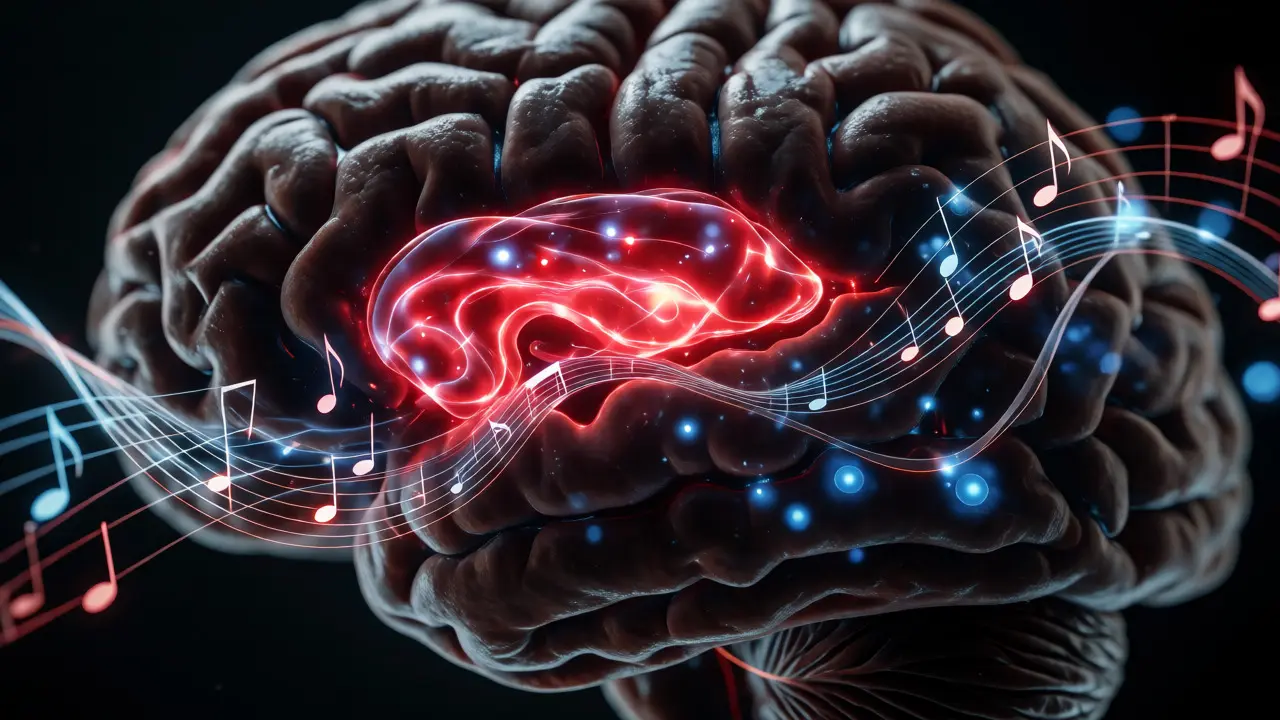
Your ears are always open. Even if you close your eyes, you still hear. Your eyes, however, need light and focus to work. Because of this evolutionary trait, sound triggers faster emotional responses than images. When a loud noise happens, your amygdala-the part of the brain responsible for fear and emotion-reacts before your conscious mind processes what the sound actually is.
This is why jump scares work so well. The visual might show a cat jumping out, but the dissonant screech of the violin is what makes you flinch. Neuroscientists have found that music activates the limbic system, which governs memory and emotion. This means the soundtrack doesn’t just accompany the story; it physically changes your brain chemistry. Dopamine releases during musical climaxes, creating feelings of pleasure or tension relief. Cortisol spikes during minor-key, fast-tempo passages, inducing stress or anxiety.
It’s not just about volume. It’s about frequency. Low frequencies (bass) tend to create a sense of dread or power because they mimic natural threats like thunder or growling animals. High frequencies can signal alertness or pain. Composers use these biological hardwired responses to guide your mood without you realizing it.
Tempo and Rhythm: Controlling Your Heartbeat
One of the simplest ways film scores manipulate emotion is through tempo. There is a direct correlation between musical tempo and human heart rate. Fast tempos increase arousal; slow tempos calm you down. But it’s more nuanced than that.
In action sequences, editors often cut the visuals to match the beat of the music. This synchronization creates a sense of inevitability and momentum. If the drums hit every time a character punches someone, the violence feels rhythmic and satisfying rather than chaotic. Conversely, in romantic scenes, slower, flowing melodies allow the audience to linger on facial expressions and dialogue. The lack of rhythmic urgency gives space for intimacy to develop.
Rhythm also dictates predictability. A steady 4/4 beat feels stable and safe. An irregular meter, like 5/4 or 7/8, creates unease. Think of the theme from *Mission: Impossible*. That iconic 5/4 time signature feels slightly off-kilter, keeping you on edge even though the melody is catchy. It prevents relaxation. If you want to make a viewer anxious, break the rhythm. If you want them to relax, establish a strong, predictable pulse.
Melody and Harmony: The Language of Emotion
If tempo controls energy, harmony controls sentiment. Major keys generally sound happy or triumphant. Minor keys sound sad, mysterious, or tense. But composers don’t just stick to one key. They modulate-shift keys-to shift emotions mid-scene.
Consider the use of dissonance. Dissonant chords clash and create tension that demands resolution. In horror films, unresolved dissonance keeps the audience in a state of perpetual discomfort. The music never "lands," so neither does the viewer. On the flip side, consonant harmonies provide comfort and closure.
Leitmotifs are another critical tool. A leitmotif is a short musical phrase associated with a specific character, place, or idea. Richard Wagner popularized this in opera, but John Williams perfected it for film. When you hear the Imperial March in *Star Wars*, you instantly associate it with Darth Vader and the Empire. Later in the series, when the theme plays softly or in a different instrument, it signals a change in Vader’s status or influence. This allows the composer to communicate narrative information without a single word of dialogue.

Silence: The Loudest Sound in Film
We talk a lot about what is played, but what isn’t played matters just as much. Silence is a weapon. When a director cuts all ambient noise and music during a high-tension moment, the sudden absence of sound shocks the nervous system. It forces the audience to lean in, literally and figuratively.
In *No Country for Old Men*, the Coen Brothers used almost no traditional score. Instead, they relied on diegetic sounds-the crunch of footsteps, the click of a lighter, the wind. This created a raw, realistic terror. The lack of musical guidance meant viewers couldn’t rely on cues to tell them how to feel. They had to figure it out themselves, which made the experience more personal and unsettling.
Silence also provides contrast. If a movie is loud and bombastic for twenty minutes, a quiet five-second pause feels deafening. This dynamic range keeps the audience engaged. Constant noise leads to auditory fatigue, where the brain starts ignoring the input. By pulling back, filmmakers reset your attention span.
Case Studies: Iconic Scores That Changed Everything
Let’s look at three specific examples that demonstrate these principles in action.
| Film | Composer | Musical Technique | Emotional Effect |
|---|---|---|---|
| Jaws (1975) | John Williams | Repetitive two-note ostinato, increasing tempo | Creates primal fear and anticipation of imminent danger |
| Psycho (1960) | Bernard Herrmann | Dissonant string shrieks, staccato rhythms | Induces shock, panic, and visceral violence |
| Interstellar (2014) | Hans Zimmer | Organ drones, slow crescendo, low frequencies | Elicits awe, existential dread, and grandeur |
In *Jaws*, Williams didn’t need to show the shark to scare you. The music did the job. The two notes E and F repeated faster and louder simulate a heartbeat racing toward panic. It’s simple, effective, and biologically manipulative.
Bernard Herrmann’s score for *Psycho* was revolutionary because he used only strings. No brass, no woodwinds. The screeching violins mimic the act of stabbing. It’s harsh, jagged, and unpleasant, perfectly matching the visual chaos of the shower scene. Before this, horror movies often used orchestral sweeps to suggest mystery. Herrmann went for pure aggression.
Hans Zimmer’s work on *Interstellar* uses the pipe organ, an instrument rarely heard in modern blockbusters. The organ’s sustained tones fill the room with vibration, creating a sense of vastness and religious reverence. Combined with the ticking clock motif, it reminds the audience of time running out, adding layers of urgency to the cosmic scale.
Diegetic vs. Non-Diegetic Sound
To understand film music fully, you need to know the difference between diegetic and non-diegetic sound. Diegetic sound comes from within the world of the film. Characters can hear it. Examples include a radio playing in a car, a band performing in a club, or characters singing. Non-diegetic sound exists only for the audience. The characters cannot hear it. This includes the background score, voiceovers, and sound effects added for dramatic effect.
Blending these two can create surreal moments. In *Baby Driver*, the protagonist wears headphones, so the audience hears the same music he does. The editing syncs to his playlist. This puts us inside his head. We experience the world through his auditory filter. When the music stops abruptly due to a plot event, the sudden return to reality is jarring for both him and us.
Conversely, using non-diegetic music to comment on the action can add irony. If a violent fight scene is set to upbeat jazz, the contrast creates dark humor. The disconnect between the audio tone and visual content forces the viewer to interpret the scene differently than they would with serious orchestration.
How Directors Use Music to Manipulate Time
Music stretches and compresses perceived time. A montage sequence set to a driving pop song can make hours of activity feel like seconds. This is called a "training montage" trope, seen in everything from *Rocky* to *The Social Network*. The music bridges gaps in logic and continuity, allowing the editor to skip boring details.
On the other hand, slow, melancholic music can make a brief moment feel eternal. In romance dramas, lingering piano notes extend the duration of a kiss or a goodbye. The audience dwells in the emotion longer than the physical action takes. This manipulation of temporal perception is crucial for pacing. Without it, films would either drag endlessly or feel rushed.
Pitfalls: When Music Hurts the Movie
Not all musical choices work. Over-scoring is a common mistake. If the music tells you exactly how to feel at every second, you stop trusting the actors. Subtle performances get drowned out by sweeping violins. Good sound design knows when to step back.
Cliché usage is another issue. Using generic "sad piano" tracks for every tearful moment cheapens the experience. Audiences are savvy now. They recognize stock emotional cues. Originality matters. When a composer finds a unique sonic palette-like using synthesizers in *Stranger Things* or industrial noises in *Mad Max: Fury Road*-it creates a distinct identity for the film.
Also, mismatched tonality can ruin immersion. If a period piece features modern electronic beats without narrative justification, it pulls viewers out of the story. Consistency between the era, genre, and musical style helps maintain believability.
Practical Tips for Filmmakers and Viewers
If you’re making a short film or analyzing one, keep these rules of thumb in mind:
- Less is more. Try removing the music from a scene. Does it still work? If yes, maybe you don’t need it. If no, ensure the music adds something the visuals alone cannot.
- Contrast creates interest. Don’t play sad music during sad scenes all the time. Sometimes, happy music during tragedy is heartbreaking (see *A Clockwork Orange*).
- Respect silence. Let the ambient noise breathe. Room tone, breath, and movement are powerful storytelling tools.
- Sync carefully. Cutting exactly on the beat can feel mechanical. Slightly offsetting the edit can create a more organic flow.
For viewers, paying attention to the soundtrack enhances enjoyment. Next time you watch a thriller, mute the TV for a minute. Notice how much less scary it is. Then unmute and listen to how the low-end frequencies tighten your chest. You’ll appreciate the craft behind the curtain.
Why does minor key music sound sad?
Minor keys have intervals that create inherent tension and instability compared to major keys. Culturally, we associate these sounds with mourning and introspection, but there is also a physiological component. The flattened third interval in a minor chord mimics the prosody of a sad human voice, triggering empathy centers in the brain.
Can film music change the meaning of a scene?
Absolutely. A famous experiment showed the same neutral facial expression paired with different music. With ominous strings, viewers saw anger or fear. With light flute music, they saw happiness. The audio context frames the visual interpretation, proving that sound directs emotional reading.
What is a leitmotif in film scoring?
A leitmotif is a recurring musical theme associated with a specific character, object, or idea. Unlike general background music, leitmotifs evolve throughout the film to reflect narrative changes. For example, a hero's theme might start triumphant but become distorted or fragmented when they face defeat.
Why do horror movies use dissonant sounds?
Dissonance creates acoustic roughness that the human ear finds unpleasant and alarming. It mimics natural warning calls of animals and infants. In horror, unresolved dissonance keeps the listener in a state of heightened alertness, preventing relaxation and sustaining anxiety.
Does loud music always mean excitement?
Not necessarily. Loudness increases arousal, but the emotional valence depends on other factors like pitch and harmony. Loud, high-pitched dissonance causes distress. Loud, consonant, mid-range music can cause joy or triumph. Context determines whether the arousal is positive or negative.