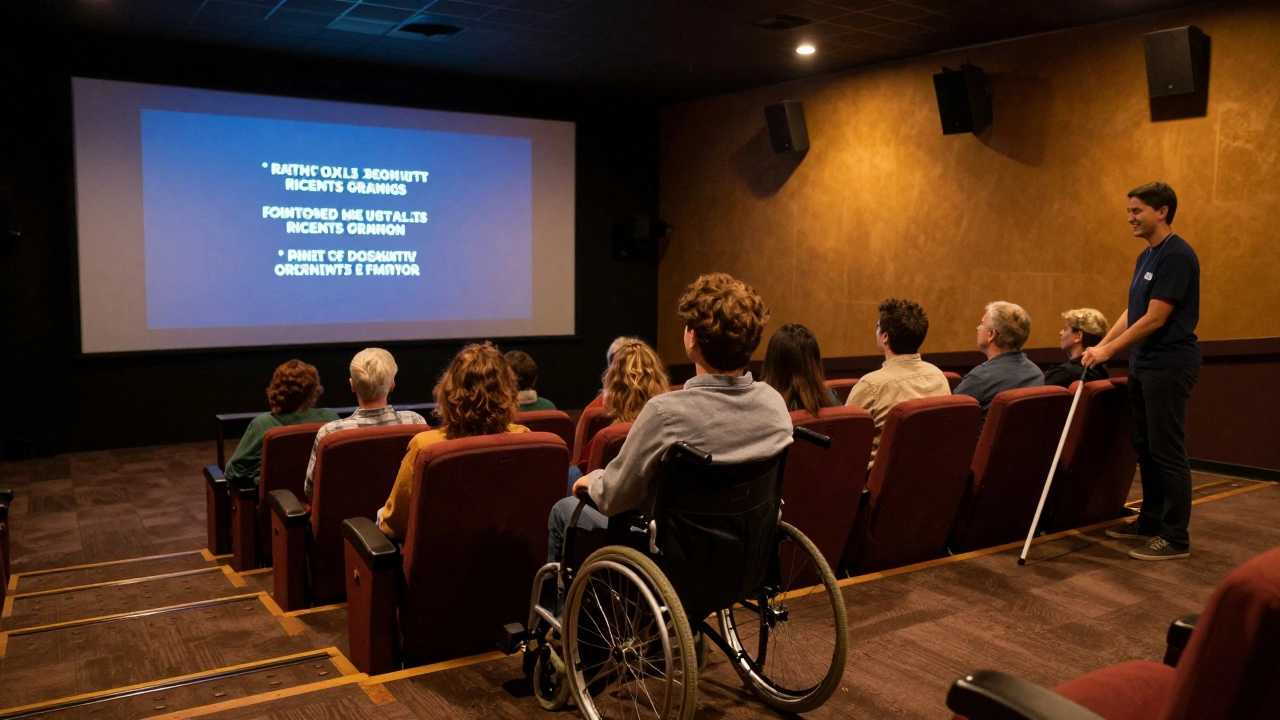
Walk into a typical multiplex on a Friday night, and you’ll hear the roar of explosions, see flashing strobe lights, and feel the floor shake. For many people, this isn’t just exciting-it’s physically painful or mentally overwhelming. Now, walk into an independent art-house theater in Asheville, Portland, or Brooklyn. The lights are dimmed differently. The sound is calibrated for clarity, not just volume. There are quiet rooms, captioning devices that actually work, and staff who know how to help someone with a disability navigate the space without drawing attention.
This shift isn’t accidental. Art-house cinemas are independent movie theaters that specialize in showing classic, foreign, documentary, and independent films, often prioritizing community engagement and accessibility over blockbuster profits. Unlike big chains, these venues have fewer seats, tighter budgets, and closer ties to their local communities. That makes them perfectly positioned to lead the charge in making cinema truly inclusive.
Why Art-Houses Are Better Suited for Accessibility
Big multiplexes operate on volume. They show the same six movies in twenty screens, change showtimes hourly, and rely on standardized equipment that rarely gets updated. Art-houses, by contrast, run fewer screenings, curate their selections carefully, and build relationships with regular patrons. This model allows them to invest in accessibility features that make a real difference.
Consider closed captioning. In a multiplex, captions might be available on one screen, but they’re often small, poorly synced, or hidden behind complex menus. At an art-house, captioning is treated as essential. Many use open captioning, where subtitles appear directly on the screen for everyone. This helps not only deaf and hard-of-hearing viewers but also non-native speakers, neurodivergent audiences, and older adults whose hearing has declined.
Then there’s audio description. This service narrates visual elements-like character expressions, setting changes, and action sequences-for blind and low-vision viewers. Multiplexes often offer it via headsets that break down after a few uses. Art-houses tend to integrate it more seamlessly, sometimes offering live narration or pre-recorded tracks that match the pacing of the film.
| Feature | Typical Multiplex | Art-House Cinema |
|---|---|---|
| Captioning Quality | Inconsistent, often small text | Open captions, large font, high contrast |
| Audio Description | Headset-based, frequently broken | Integrated tracks, sometimes live narration |
| Sensory-Friendly Screenings | Rare, if offered at all | Regular events with adjusted lighting/sound |
| Staff Training | Minimal, turnover-heavy | Comprehensive, community-focused |
| Physical Accessibility | Basic ADA compliance | Wheelchair-accessible seating, tactile paths |
Sensory-Friendly Screenings: A Game Changer
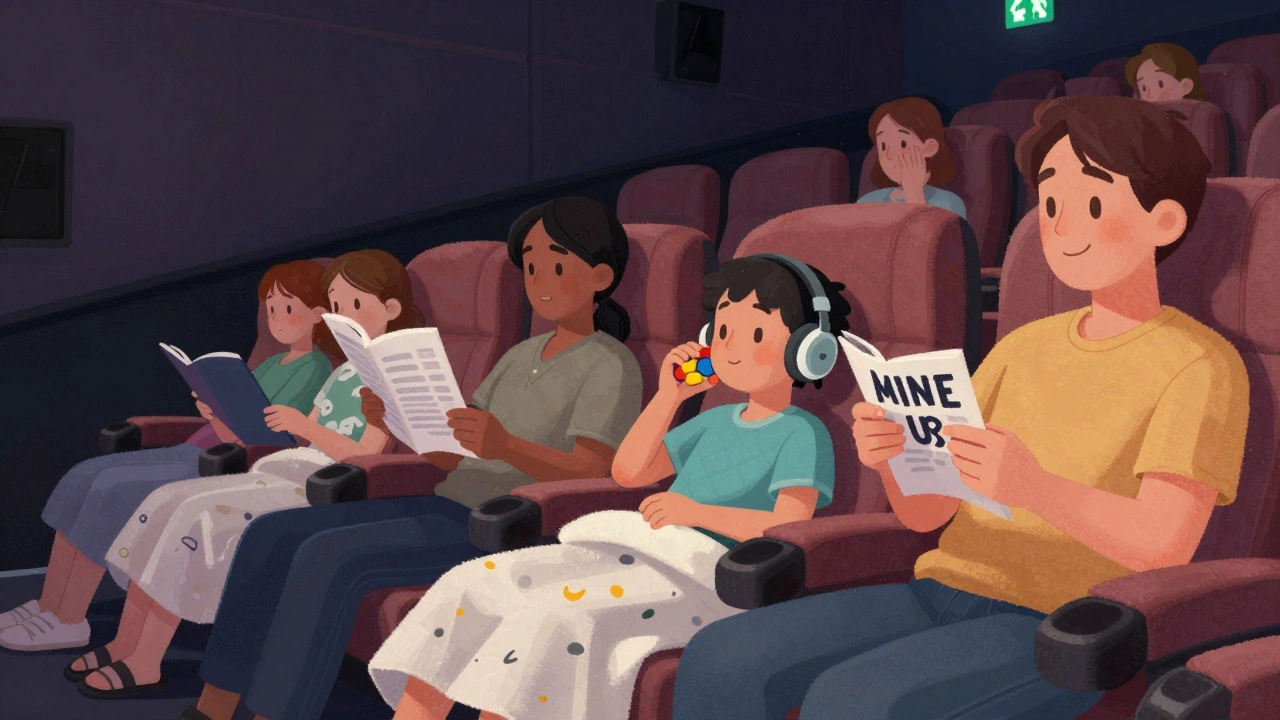
One of the most impactful innovations coming from art-houses is the sensory-friendly screening. These are special showings designed for people with autism, sensory processing disorders, anxiety, or other conditions that make traditional movie environments difficult to tolerate.
During these screenings, the lights stay slightly brighter so people can find exits easily. The volume is lowered to prevent auditory overload. Patrons are free to move around, leave the room, or use fidget tools without judgment. Some theaters even provide noise-canceling headphones or weighted blankets upon request.
In Asheville, for example, the Cinema Bar hosts monthly sensory-friendly nights. They partner with local autism advocacy groups to promote the events and train staff on de-escalation techniques. The result? Families who once stayed home now attend regularly. Children who previously had meltdowns in public spaces feel safe and included.
These screenings aren’t just about accommodation-they’re about dignity. When a child with autism can enjoy a film without fear, or when an adult with PTSD doesn’t have to brace for sudden loud noises, cinema becomes what it was always meant to be: a shared human experience.
Designing Spaces That Welcome Everyone
Accessibility isn’t just about technology-it’s about design. Art-houses often occupy older buildings, which presents challenges but also opportunities. Rather than retrofitting massive auditoriums, many choose smaller, flexible spaces that can be modified incrementally.
Take tactile paving, for instance. These textured ground surfaces guide visually impaired visitors through lobbies, ticket counters, and restrooms. While expensive to install, they’re relatively easy to add in compact layouts. Similarly, wheelchair-accessible seating isn’t just about having a few spots in the back row. It’s about integrating those seats into the main viewing area, ensuring companions sit together, and providing companion cards for service animals.
Some art-houses go further. They install loop induction systems, which transmit audio directly to hearing aids. Others create quiet rooms adjacent to the auditorium, where overwhelmed guests can step out temporarily without missing the entire film.
The key insight here is that accessibility improves the experience for everyone. Brighter exit signs help parents navigating with strollers. Clear signage benefits tourists. Lower volumes reduce ear fatigue for anyone sitting too close to the speakers. Inclusive design isn’t a niche concern-it’s smart business.
Community Partnerships Drive Real Change
Art-houses don’t operate in isolation. Their success in accessibility comes largely from partnerships with local organizations. Disability advocacy groups, schools, healthcare providers, and cultural institutions collaborate to identify needs, co-create solutions, and spread awareness.
In Portland, the Bagdad Theater works with the Oregon Council of the Blind to test new captioning technologies before rolling them out citywide. In Chicago, the Gene Siskel Film Center partners with autism support networks to develop training materials for staff across multiple venues.
These collaborations do more than improve individual screenings. They create feedback loops. When a theater learns that certain fonts are harder to read for dyslexic viewers, they adjust their menu designs. When they discover that some wheelchair users struggle with steep ramps, they redesign entryways. This iterative process ensures that accessibility evolves alongside community needs.
Moreover, these partnerships build trust. People with disabilities are more likely to patronize venues that actively listen to their concerns. Word-of-mouth spreads quickly within tight-knit communities. A single positive experience can turn a skeptic into a loyal customer.

Funding and Sustainability Challenges
Despite their progress, art-houses face significant hurdles. Accessibility upgrades cost money-sometimes thousands per feature. Small theaters operating on thin margins must balance these investments against rent, staffing, and programming expenses.
Grants help, but they’re competitive and time-limited. Federal programs like the Americans with Disabilities Act (ADA) provide baseline requirements, but enforcement varies widely. State-level incentives exist in some regions, but nowhere near enough to cover nationwide gaps.
To survive, many art-houses adopt hybrid models. They host fundraisers tied to accessibility campaigns, sell merchandise featuring inclusive themes, and apply for arts council grants specifically earmarked for diversity initiatives. Some partner with universities to bring in student volunteers who assist with research, implementation, and evaluation.
Still, sustainability remains a challenge. Without consistent funding, even well-intentioned efforts risk fading away. The solution lies in scaling best practices-not reinventing the wheel every season.
What You Can Do to Support Inclusive Cinemas
If you care about making film experiences better for everyone, start locally. Find your nearest art-house theater and ask whether they offer sensory-friendly screenings, open captioning, or audio description. If they don’t, suggest it politely. Share your thoughts online. Tag them on social media. Let them know there’s demand.
Attend inclusive events. Buy tickets for sensory-friendly nights. Invite friends who might benefit from quieter environments. Normalize conversations around accessibility. When more people show up, theaters justify expanding services.
Volunteer your skills. Maybe you’re good at graphic design and can help create clearer signage. Perhaps you speak another language and can translate promotional materials. Or maybe you simply want to sit in on planning meetings to represent underrepresented voices.
Finally, advocate for policy changes. Contact local representatives. Push for tax credits that reward accessible renovations. Demand transparency in how public funds support cultural institutions. Change happens when pressure builds from both inside and outside the industry.
What is a sensory-friendly screening?
A sensory-friendly screening is a specially adapted movie showing designed for individuals with autism, sensory processing disorders, anxiety, or similar conditions. Lights remain partially on, sound levels are reduced, and attendees are encouraged to move freely, use calming tools, or take breaks without disruption.
Why are art-house cinemas better at accessibility than multiplexes?
Art-house cinemas typically have smaller audiences, stronger community ties, and greater flexibility in operations. This allows them to invest in personalized accessibility features like open captioning, integrated audio description, and trained staff-all tailored to specific local needs rather than generic corporate standards.
How can I find sensory-friendly screenings near me?
Check websites of local independent theaters, especially those affiliated with national networks like the Independent Theater Owners Association (ITOA). Search terms like “sensory-friendly,” “autism-inclusive,” or “accessible screenings” plus your city name. Many theaters also post schedules on Facebook or Instagram.
Do art-house cinemas really accommodate wheelchairs?
Most modern art-houses comply with ADA guidelines, meaning they offer wheelchair-accessible entrances, restrooms, and designated seating areas. However, availability varies by location. Always call ahead or check the venue’s website for detailed accessibility information before visiting.
Can I request accommodations if my local theater doesn’t list them?
Yes. Most independent theaters welcome direct requests. Email or call ahead explaining your needs-whether it’s larger-print programs, early arrival assistance, or temporary modifications during special events. Many will accommodate reasonable asks, especially if framed collaboratively rather than confrontationally.



Comments(5)