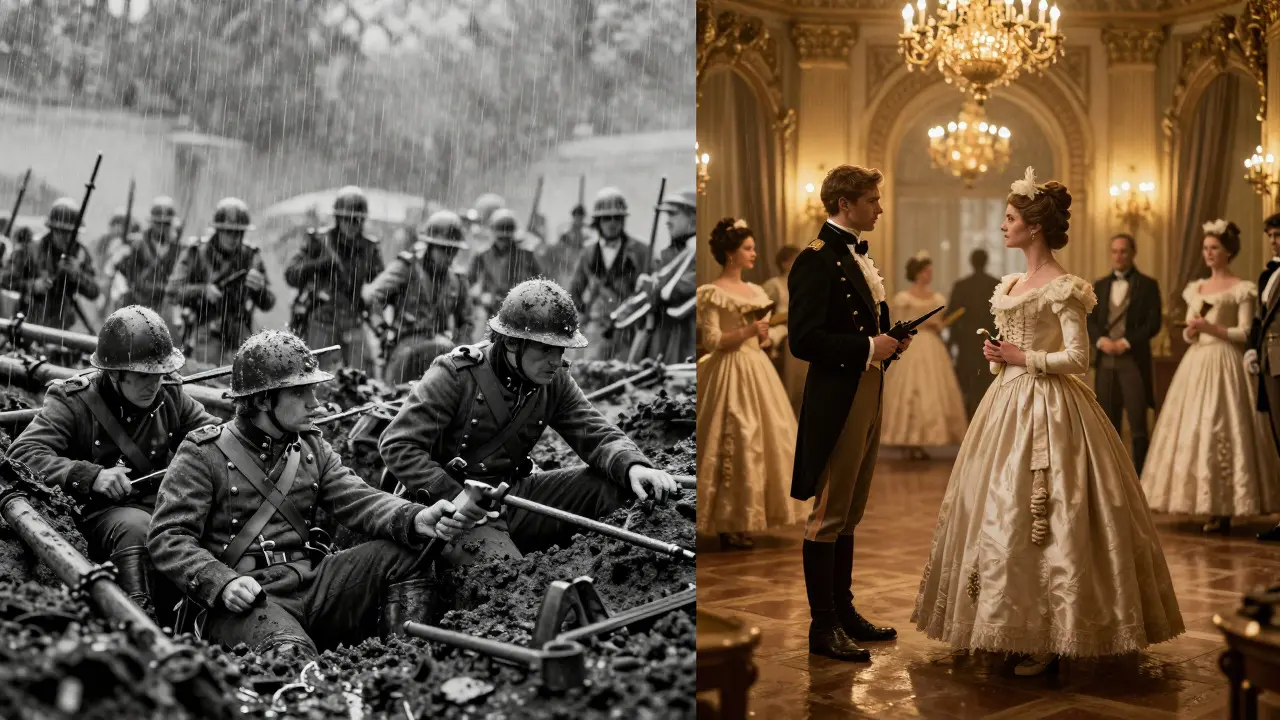
Ever watched a movie about World War II or the French Revolution and thought, "Wait, is that even real?" You are not alone. The line between historical dramas and pure invention can be blurry, frustrating, and sometimes fascinating. When filmmakers take liberties with facts, they risk alienating history buffs but often gain broader audience appeal. So, where do we draw the line? Is it better to have a boringly accurate documentary-style film or an engaging story that bends the truth for dramatic effect?
Let's start with the basics. A historical drama is a narrative film set in a past era, usually focusing on specific events, figures, or social conditions. Unlike documentaries, these films prioritize character arcs and emotional resonance over strict factual precision. This genre includes everything from epic war films like Schindler's List to intimate period pieces like The Grand Budapest Hotel. The core tension lies in how much reality serves the story versus how much the story serves reality.
Why Filmmakers Take Liberties
Creative license isn't just lazy writing; it's a necessary tool for storytelling. History is messy, non-linear, and often lacks clear protagonists. Movies need structure: a beginning, middle, and end. They need conflict that resolves within two hours. To achieve this, directors often compress timelines, merge characters, or invent dialogue. For example, in Dunkirk, Christopher Nolan used a three-act structure spanning different timeframes to create suspense, rather than following the chronological order of the evacuation. It wasn't "accurate" in a timeline sense, but it was emotionally true to the experience of fear and survival.
Another reason for deviation is accessibility. Audiences generally struggle with complex political contexts if not explained clearly. Filmmakers simplify backgrounds to keep the focus on human relationships. If you've ever felt confused by a dense historical lecture, imagine trying to make that into a two-hour entertainment product. Simplification is key to engagement.
When Accuracy Matters Most
Not all details are created equal. Some inaccuracies change the meaning of the event entirely, while others are minor cosmetic issues. Let's look at a comparison of common types of deviations:
| Deviation Type | Impact on Story | Example | Acceptability Level |
|---|---|---|---|
| Character Merging | Reduces cast size, clarifies roles | Merging multiple advisors into one character in Lincoln | High |
| Timeline Compression | Increases pacing, creates urgency | Shortening weeks of negotiations into days in JFK | Medium-High |
| Factual Error | Misleads audience about cause/effect | Incorrect weapon usage in battle scenes | Low (if critical to plot) |
| Cultural Stereotype | Reinforces bias, distorts culture | Misrepresenting indigenous languages or customs | Very Low |
Notice how cultural stereotypes sit at the bottom of the acceptability scale. While merging characters is a standard narrative technique, misrepresenting a culture can erase voices that were already marginalized in history. This is why modern productions invest heavily in consultants and community feedback. Accuracy in representation is no longer optional; it's a baseline expectation for credibility.
The Role of Research and Consultants
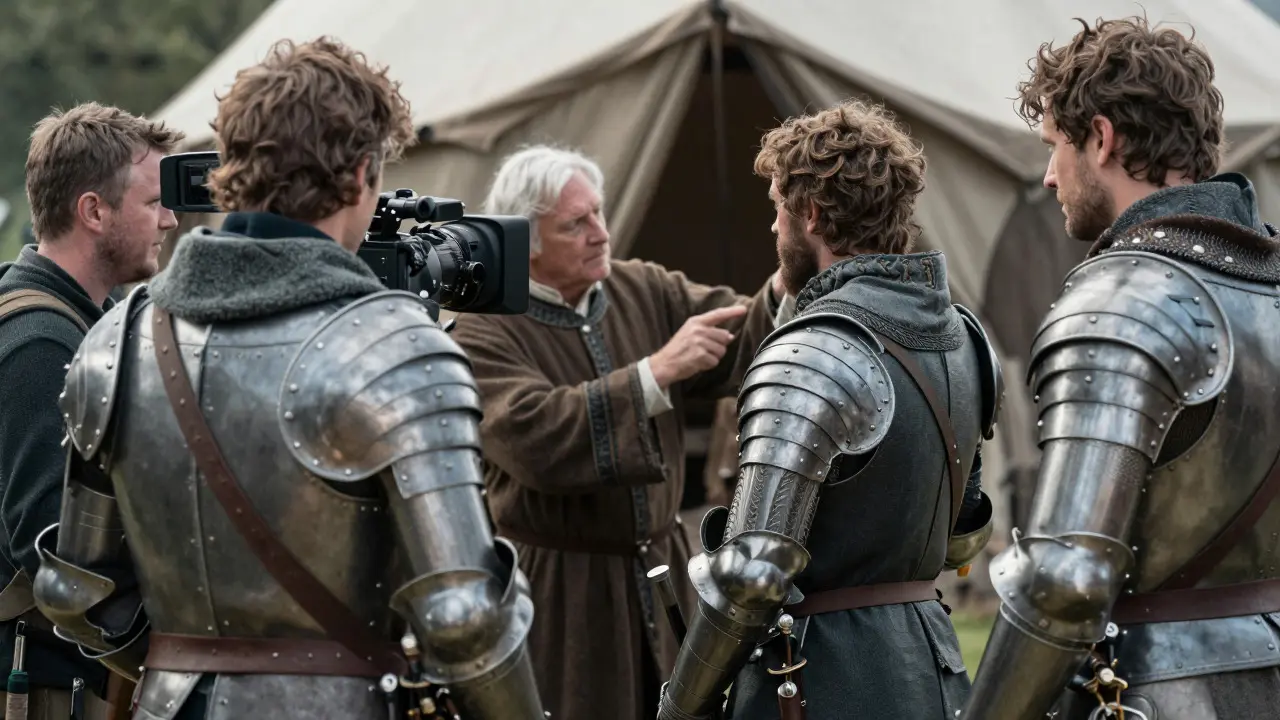
Behind every serious period piece is a team of researchers. Historians, linguists, and costume designers work together to build a world that feels authentic. However, their role is often misunderstood. They don't just provide facts; they provide context. A historian might tell a director that a certain phrase wouldn't have been used until ten years later. That small detail adds texture without changing the plot.
Take the production of Spartacus (1960) versus modern retellings. The older film relied on broad strokes of Roman history, which were acceptable for its time. Today, audiences expect more nuance. Productions now hire dialect coaches to ensure actors speak in period-appropriate accents, even if it slows down filming. This level of detail signals respect for the source material, even when the plot diverges.
Audience Expectations vs. Reality
Here is the tricky part: most viewers don't know the history well enough to spot errors immediately. But once they do, the betrayal can feel personal. If you love history, a wrong sword type in a medieval scene can ruin the immersion. If you just want a good story, those details might not matter at all.
This divide creates a marketing challenge. Studios often market historical dramas as "based on a true story," which implies a higher degree of accuracy than exists. In reality, "inspired by" would be more honest. Understanding this distinction helps you watch with the right expectations. Ask yourself: am I here to learn, or am I here to be entertained? Both are valid, but they require different levels of tolerance for error.
Case Study: The Crown and Netflix's Approach
Television offers a different dynamic than film. With longer runtimes, shows like The Crown can explore nuances that movies cannot. Yet, even long-form content takes liberties. The show altered timelines, changed endings of relationships, and invented dialogues to highlight themes of duty versus desire. Despite this, it became a global phenomenon because it captured the *feeling* of the era-the weight of monarchy, the shift in public opinion-more than the exact dates of events.
This suggests that "accuracy" in historical dramas is often about emotional truth rather than factual precision. If the audience believes the characters' motivations, they forgive the historical gaps. This is a powerful insight for creators: get the emotions right, and the facts become secondary.
How to Watch Historical Dramas Critically
If you want to enjoy these films while staying informed, here are a few practical tips:
- Check the credits: Look for "Historical Consultant" or "Based on the book by..." This tells you how much research went into the project.
- Separate fact from fiction: Keep a mental note of what seems exaggerated. Ask if it serves the theme or just the plot.
- Read the author's notes: Many authors and directors publish essays explaining their choices. These are goldmines for understanding intent.
- Compare sources: If a film claims to depict a specific battle, read a primary account or a reputable history book afterward. The contrast is often educational.
By doing this, you turn passive viewing into active learning. You aren't just consuming content; you're analyzing how history is packaged for mass consumption.
The Future of Historical Storytelling
As streaming platforms expand, we are seeing more diverse perspectives in historical dramas. Stories from non-Western viewpoints are gaining traction, bringing new standards of accuracy to the forefront. This is a positive shift. It challenges the old Hollywood default of centering European narratives and forces creators to do deeper research on varied cultures.
Technology also plays a role. High-definition visuals allow us to see costumes and sets in greater detail, making errors more obvious. This pressure pushes production design teams to be more rigorous. The result is a genre that is evolving toward a hybrid model: stories that are dramatically compelling yet rigorously researched.
So, does creative license ruin historical dramas? Not necessarily. It enhances them, provided it is done with respect and intention. The best historical films use the past as a lens to examine the present. They remind us that history isn't just a list of dates; it's a collection of human experiences that still resonate today. Whether you prefer strict accuracy or bold interpretation, the goal remains the same: to understand who we were, so we can better understand who we are.
What is the difference between a historical drama and a biopic?
A biopic focuses specifically on the life of a single real person, often covering a significant portion of their lifespan. A historical drama may feature fictional characters, real people, or a mix of both, and is centered on a specific event, era, or theme rather than just one individual's biography.
Are historical dramas worth watching if they aren't accurate?
Yes, if you approach them as entertainment first. Many historical dramas capture the emotional essence of an era even if the details are loose. Just be aware that they are interpretations, not textbooks. Pairing them with reliable historical sources can enhance your understanding.
How do filmmakers decide what to change?
Filmmakers typically change elements that hinder narrative flow, such as confusing subplots or overly complex political structures. They prioritize character development and thematic clarity. Changes are often discussed with historians during pre-production to ensure the core message remains intact.
Do historical dramas influence public perception of history?
Absolutely. For many people, film is their primary source of historical knowledge. This means inaccuracies can become entrenched in popular memory. This is why educational institutions increasingly use films as discussion starters rather than sole sources of information.
What should I look for in a high-quality historical drama?
Look for strong production design, consistent period language, and credited historical consultants. Also, check if the film acknowledges its fictionalizations in the opening or closing credits. Transparency is a good sign of respect for the audience's intelligence.