One loose bullet can end a career faster than a bad review. When you bring firearms onto a movie set, the margin for error is zero. You aren't just dealing with physics; you're navigating a web of federal laws, state statutes, union rules, and insurance clauses that change depending on where you shoot and what kind of gun you use. Getting this wrong doesn't just cost money-it stops production cold.
This guide breaks down exactly how to keep weapons legal and safe on set in 2026. We’ll look at who is legally responsible, what documents insurers demand, and the specific pitfalls that cause productions to lose coverage or face lawsuits. Whether you’re shooting a gritty thriller in Los Angeles or an indie drama in rural Georgia, these rules apply to every frame.
Who Actually Controls the Guns?
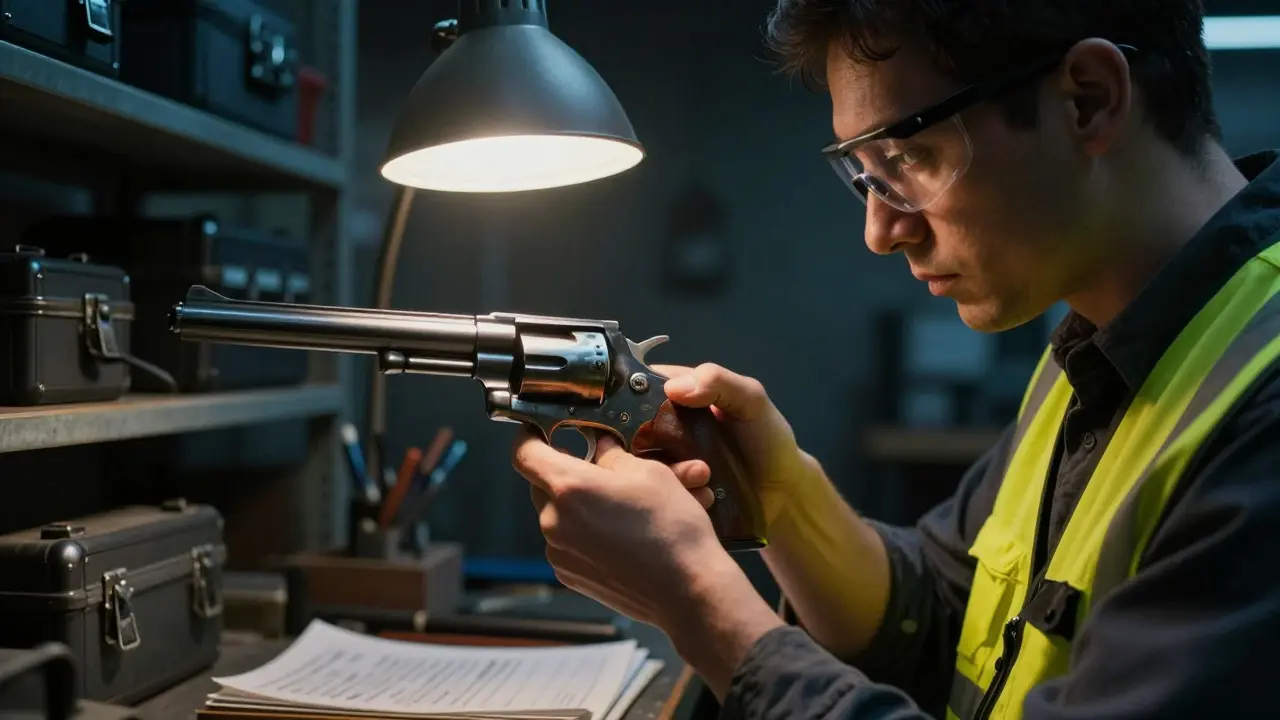
In the film industry, the person holding the gun is rarely the one legally accountable for it. That responsibility sits with the Armorer, a specialized role defined by both law and labor agreements. An armorer is not just a handler; they are the custodian of every firearm on set. If a prop gun malfunctions or goes off, the first question from lawyers and insurers is always: "Where was the certified armorer?"
For most major productions, hiring a union-certified armorer is mandatory. The International Brotherhood of Teamsters (IBT) represents armorers in many jurisdictions, particularly in California and New York. Their certification ensures the professional has passed rigorous background checks and safety exams. However, even non-union shoots should hire someone with verifiable credentials. Why? Because if something goes wrong, "I hired a guy I met online" is not a defense in court.
The armorer’s job includes three critical tasks:
- Inventory Control: Logging every round loaded and unloaded. This creates a paper trail that proves accountability.
- Safety Checks: Inspecting each weapon before and after every take. A single hairline crack in a barrel can be fatal under pressure.
- Clearing the Set: Ensuring no live rounds remain in the case when the scene ends. This is known as "clearing the set," and it must be witnessed by the director or unit manager.
Federal vs. State Laws: Where Do They Conflict?
Firearms are regulated at both the federal and state levels, which creates a confusing patchwork for filmmakers. At the federal level, the Bureau of Alcohol, Tobacco, Firearms and Explosives (ATF) oversees the transfer of firearms between states. If you shoot in one state but store props in another, you might need a temporary interstate transport permit. Most local shoots don’t hit this hurdle, but location changes do.
State laws are where most headaches arise. Take California, for example. It has some of the strictest gun laws in the country. Prop guns often require specific markings to distinguish them from real firearms. In contrast, states like Texas or Florida have looser regulations on possession but stricter rules on public display during filming. Always check with your local film office. They maintain up-to-date lists of prohibited weapons and required permits for active productions.
A common trap involves "blank firing devices." Many directors think blank guns are safe because they don’t fire real bullets. But blanks still generate significant pressure. If a blank gun is fired into a closed space or near a hard surface without proper baffling, it can rupture the chamber. More dangerously, if a live round gets accidentally loaded into a blank gun, the result is catastrophic. Federal law requires that all prop guns used for blanks be inspected regularly to ensure the firing pin is properly recessed.
Insurance: The Paper Shield
Your producer’s liability insurance policy is your first line of defense, but only if it covers what you’re doing. Standard general liability policies often exclude "professional activities" involving high-risk equipment unless specifically endorsed. You need a rider that explicitly covers Prop Gun Liability. Without this endorsement, a lawsuit from an injured extra could exceed your policy limit, leaving the production company personally liable.
Insurers typically require three things before binding coverage for a shoot with firearms:
- Certificate of Insurance (COI): Must name the production company, the studio, and any property owners as additional insureds.
- Armorer Resume: Proof of certification and experience. Some insurers require the armorer to be listed by name on the COI.
- Safety Plan: A written document detailing how guns will be stored, transported, and handled. This plan must be approved by the insurer’s risk manager.
Don’t skip the safety plan. It sounds bureaucratic, but it’s the document that saves you when claims adjusters dig through files after an incident. It shows due diligence. If you didn’t write a plan, you likely didn’t think about the risks, which looks bad in arbitration.
On-Set Protocols That Prevent Disasters
Laws and insurance cover the backend, but daily habits prevent the frontend problems. Here are the non-negotiable protocols that experienced producers enforce:
The Two-Person Rule
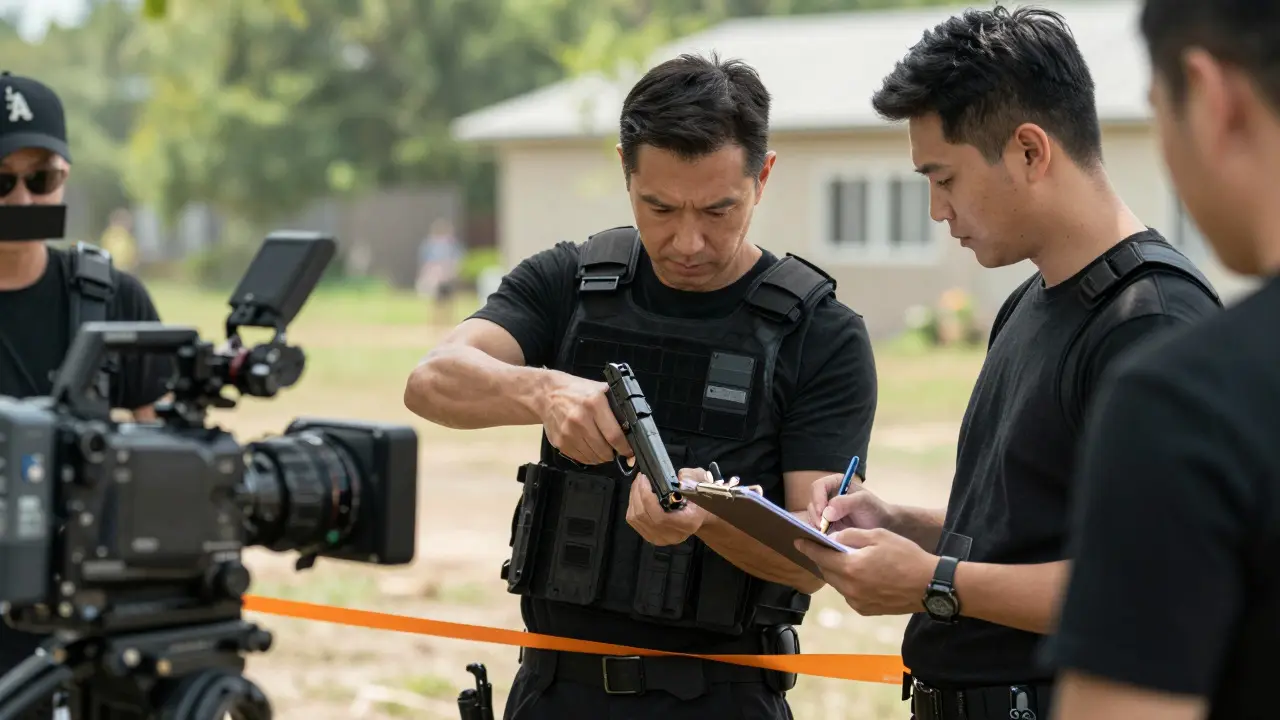
No one loads or unloads a prop gun alone. The armorer performs the action while a second person (usually the assistant armorer or a trusted key grip) watches and verifies. Both sign the logbook. This redundancy catches human error. If the armorer forgets to remove a live round, the witness sees it.
Color-Coding and Marking
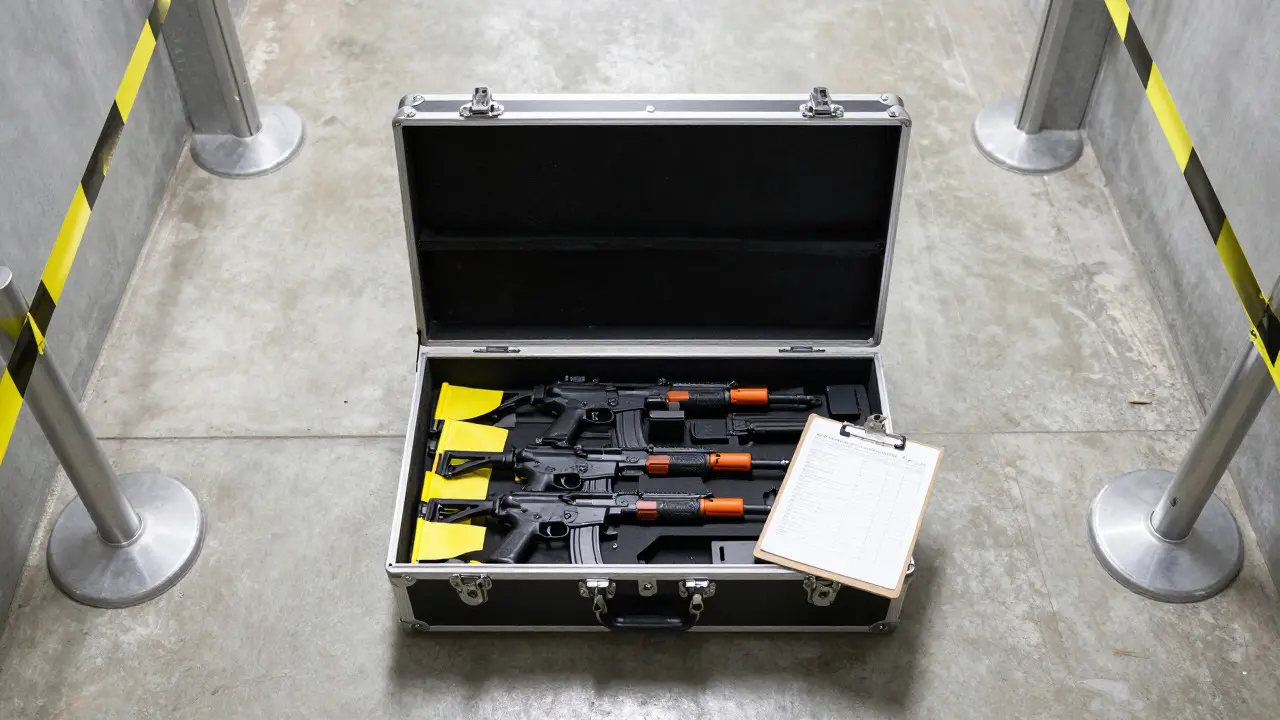
Every prop gun on set must be visually distinct from a real firearm. Common methods include painting the muzzle orange or attaching a bright tape flag. While not always legally required, it’s an industry standard. If a police officer arrives on set and sees a black pistol with no markings, they assume it’s real until proven otherwise. That delay can ruin a scene or lead to unnecessary arrests.
Storage Security
Weapons must be stored in a locked case when not in use. The case should be kept in a secure location, ideally guarded by security personnel. Never leave guns in the craft services area or the makeup trailer. These high-traffic zones increase the risk of accidental access by cast or crew members who aren’t trained in handling.
Comparison: Real Bullets vs. Blanks vs. Props
Understanding the differences between ammunition types helps you choose the right tool for the job and manage risk accordingly.
| Type | Risk Level | Legal Requirement | Best For |
|---|---|---|---|
| Live Rounds | High | Strict ATF oversight, rare approval | Military stunts, extreme close-ups |
| Blanks | Medium | Recessed firing pin inspection, distance rules | Standard action scenes, sound effects |
| Props (Unfired) | Low | Visual marking, inventory log | Dialogue scenes, static shots |
Live rounds are rarely used today due to cost and risk. Blanks are the workhorse of modern filmmaking, but they require careful management. Unfired props are the safest option and should be used whenever possible. If the audience can’t see the mechanism, why take the risk?
Common Pitfalls and How to Avoid Them
Even seasoned productions make mistakes. Here are the top three errors we see in post-mortem reports:
1. Assuming Local Police Know Film Protocols. Many local officers haven’t seen a film set. If they respond to a noise complaint, they might treat a prop gun as a crime weapon. Always file a notice of intent to shoot with local authorities. Provide them with the armorer’s contact info and a photo of the marked prop guns. This proactive step prevents misunderstandings.
2. Ignoring Cast Training. Actors are not trained to handle heavy machinery. Yet, they hold guns for hours. Every actor holding a prop gun must receive a brief safety briefing from the armorer. This includes how to point the muzzle safely, how to signal when ready, and what to do if the gun feels "stuck." Document this training in the call sheet notes.
3. Skipping the Final Sweep. At the end of the day, the set must be swept for stray rounds. A single bullet left in a jacket pocket or a car seat can become a hazard later. The armorer conducts a final sweep, documented with photos. This closes the loop on daily liability.
Next Steps for Your Production
Before your next shoot, take these concrete actions:
- Verify Your Insurance: Call your broker and confirm your policy includes a prop gun liability rider. Get it in writing.
- Hire a Certified Armorer: Don’t cut corners here. Check their references and certification status with the relevant union or state board.
- Create a Safety Plan: Write down storage locations, loading procedures, and emergency contacts. Have the director sign off on it.
- Mark Your Props: Ensure every gun has a visible marker. Keep a spare set of markers in the kit in case they wear off.
- Brief the Crew: Hold a ten-minute meeting with the key department heads to review the protocol. Make sure everyone knows who to call if something goes wrong.
Compliance isn’t about red tape. It’s about protecting your cast, your crew, and your budget. When you get it right, the cameras roll, and the story tells itself. When you get it wrong, the story becomes a lawsuit. Choose wisely.
Do I need a special license to shoot a movie with guns?
You usually don't need a personal license, but the production needs a filming permit from the local municipality. Additionally, if you move guns across state lines, you may need an ATF Form 5300.11. Always consult with your local film commission for specific regional requirements.
Who is legally responsible if a prop gun injures someone?
The production company is primarily liable, but the armorer can be held personally negligent if they failed to follow safety protocols. Insurance will cover the initial costs, but if negligence is proven, the individual armorer may face additional legal scrutiny.
Are blank guns safer than live rounds?
Generally, yes, but they are not risk-free. Blanks can still cause injury if fired too close to a target or if a live round is accidentally loaded. They require regular maintenance to ensure the firing pin is correctly recessed to prevent chamber blowouts.
How much does it cost to hire an armorer?
Rates vary by location and union status. In major hubs like Los Angeles, a union armorer might charge $800 to $1,200 per day plus benefits. Non-union rates can be lower, but verify their insurance and experience carefully.
What happens if we forget to mark a prop gun?
If police find an unmarked gun on set, they may confiscate it and detain the handler. This can halt production for hours while paperwork is sorted. While not always a criminal offense, it creates significant logistical delays and potential fines.