Imagine a world where the rules of filmmaking didn't exist. No polished lighting, no strict three-act structures, and no fear of breaking the fourth wall. That was the reality in Paris during the late 1950s. A group of young critics from the Cahiers du Cinéma is a French film magazine that championed the auteur theory and supported new directors like Godard and Truffaut. Founded in 1951 by André Bazin, it became the intellectual home for the movement. decided to stop writing about films and start making them. They called themselves the French New Wave is a film movement that emerged in France in the late 1950s, characterized by innovative editing, naturalistic acting, and low-budget production., or *Nouvelle Vague*. Their work didn't just change how movies looked; it changed what a movie could be.
The Birth of a Rebellion
To understand why this happened, you have to look at who these people were. They weren't studio executives with millions of dollars. They were film students and critics who felt that traditional Hollywood and even mainstream French cinema had become stale. The dominant style at the time was Trente Glorieuses is the period of rapid economic growth in France after World War II, which influenced cultural and industrial changes. cinema-polished, expensive, and focused on historical epics or literary adaptations. The young rebels wanted something raw and immediate. They believed that the director should be the true author of the film, controlling every aspect from script to final cut. This idea is known as the Auteur Theory is a critical perspective that emphasizes the director's creative vision as the primary source of a film's meaning and style..
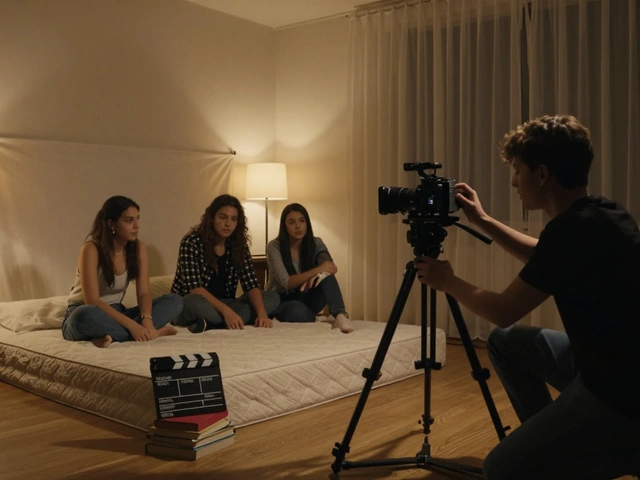
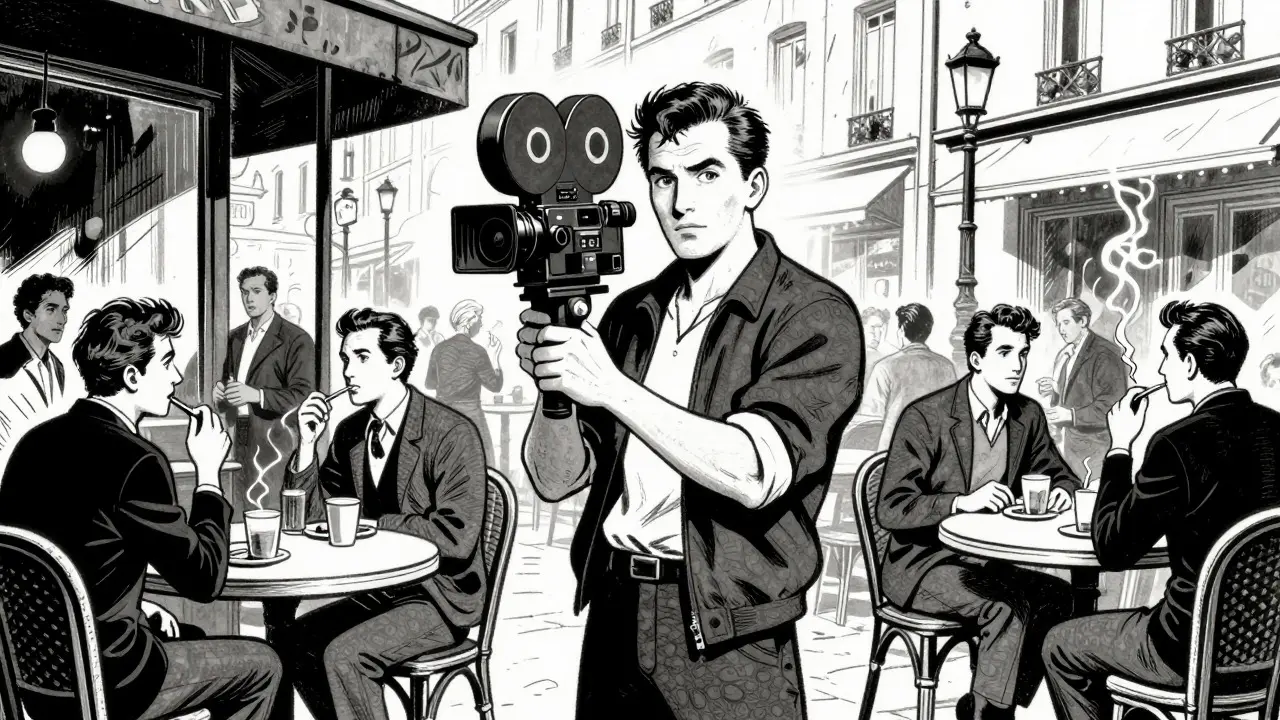
The movement started not with a manifesto, but with a few key films released between 1959 and 1963. These movies were shot on location, often using available light instead of expensive studio setups. They used portable cameras, which allowed for handheld shots that felt shaky and real. This technical shift was crucial because it moved cinema away from the static, tripod-bound look of the past. Suddenly, the camera could follow an actor through a crowded street or pan quickly across a room, creating a sense of urgency and spontaneity.
Key Directors and Their Signature Styles
You can't talk about the French New Wave without mentioning the two giants: Jean-Luc Godard is a French filmmaker and critic, one of the most influential figures of the French New Wave, known for experimental narratives and political themes. and François Truffaut is a French film director and critic, known for his personal storytelling and emotional depth, particularly in 'The 400 Blows'.. While they shared the same roots, their styles diverged significantly. Truffaut’s debut, *The 400 Blows* (1959), is a semi-autobiographical story about a boy named Antoine Doinel. It’s intimate, sad, and deeply human. The famous final shot, where Antoine turns to face the camera and walks into the ocean, broke the barrier between viewer and character. It felt like a confession rather than a performance.
Godard, on the other hand, was more experimental. His film *Breathless* (1960) starred Jean-Paul Belmondo is a French actor known for his energetic performances in French New Wave films such as 'Breathless' and 'Cléo from 5 to 7'. as a small-time thief on the run. The film uses jump cuts-abrupt edits that skip moments in time-which were considered taboo at the time. Critics said it made viewers dizzy. Audiences loved it. Godard also experimented with color, sound, and direct address to the camera, treating the audience as participants in the narrative rather than passive observers.
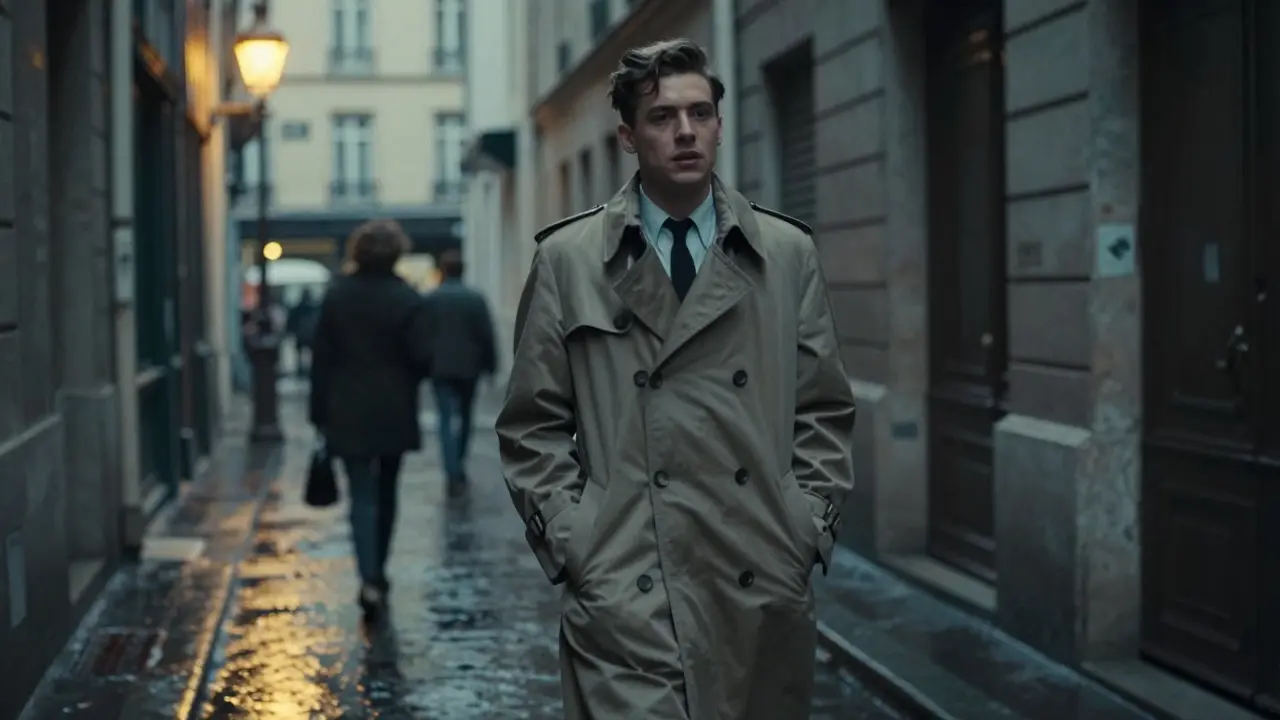
Then there was Agnès Varda is a pioneering French filmmaker and artist, often credited as the first woman to direct a feature film within the French New Wave., the only major female director of the core movement. Her film *Cléo from 5 to 7* (1962) follows a singer over two hours in real-time as she waits for news about her health. The film blends fiction with documentary elements, showing us the streets of Paris as if we are walking alongside her. Varda’s work introduced a softer, more observational tone to the movement, proving that innovation didn’t always have to be aggressive or male-dominated.
Techniques That Broke the Rules
The visual language of the French New Wave was defined by several specific techniques that are now standard in modern filmmaking. Before this movement, editing was meant to be invisible. If you noticed a cut, it was considered bad craftsmanship. The New Wave directors flipped this logic. They used Jump Cuts is an editing technique where successive frames are close in time, creating a jarring effect that emphasizes discontinuity. to compress time and create energy. In *Breathless*, when Belmondo is talking to his girlfriend, the camera jumps forward slightly with each sentence. It makes the conversation feel faster and more chaotic, mirroring the characters' anxiety.
- Handheld Camera Work: Instead of smooth, gliding dolly shots, cameras were held by operators, creating a shaky, documentary-like feel. This added realism and immediacy.
- Natural Lighting: Directors used sunlight and practical lights (like lamps or streetlights) instead of elaborate studio rigs. This saved money and gave scenes a gritty, authentic look.
- Location Shooting: Films were shot in actual Parisian streets, apartments, and cafés. This grounded the stories in a recognizable reality, unlike the painted backdrops of older films.
- Direct Address: Characters would look directly into the lens and speak to the audience. This broke the "fourth wall" and created a unique connection with the viewer.
Sound design also played a huge role. Often, dialogue wasn't recorded perfectly. You might hear traffic noise, footsteps, or background chatter bleeding into the scene. This imperfection was intentional. It reminded the audience that they were watching a slice of life, not a staged play. The combination of these techniques created a fresh aesthetic that felt alive and unpredictable.
Impact on Global Cinema
The influence of the French New Wave didn't stay in France. It spread rapidly to the United States and other parts of the world. American directors like Stanley Kubrick is a British-American filmmaker known for his precise direction and innovative use of technology, who cited French New Wave influences in his early works. and later the New Hollywood is a period in American cinema from the late 1960s to the mid-1970s characterized by artistic freedom and adult themes, inspired by European art cinema. directors drew heavy inspiration from these techniques. Films like *Bonnie and Clyde* (1967) and *Easy Rider* (1969) used jump cuts, non-linear narratives, and anti-hero protagonists, all hallmarks of the French style.
In Europe, the movement inspired the British New Wave is a parallel film movement in the UK during the late 1950s and early 1960s, focusing on social realism and youth culture. and the German New German Cinema is a post-war film movement led by directors like Fassbinder and Herzog, which sought to break from traditional German storytelling.. Even today, independent filmmakers rely on the low-budget, high-concept approach pioneered by the Nouvelle Vague. The idea that you don't need a massive budget to make a profound film is a direct legacy of this era. It democratized filmmaking, allowing voices outside the studio system to tell their stories.
Why It Still Matters Today
More than sixty years later, the principles of the French New Wave are still visible in popular media. When you watch a thriller that uses shaky cam footage to build tension, you’re seeing the echo of *Breathless*. When a drama features a character speaking directly to the camera, you’re experiencing the legacy of Godard and Varda. The movement proved that constraints can breed creativity. By limiting their resources, the New Wave directors found new ways to express emotion and narrative complexity.
It also shifted the focus from spectacle to substance. While blockbusters today still dominate box offices, the critical acclaim often goes to films that prioritize character development and stylistic innovation over special effects. The French New Wave taught audiences to appreciate the craft of editing, cinematography, and direction as distinct artistic choices. It turned filmmaking from a trade into an art form where the director’s signature is as important as the plot.
| Aspect | Traditional Cinema (Pre-1959) | French New Wave (1959-1965) |
|---|---|---|
| Budget | High, studio-funded | Low, independent funding |
| Camera Movement | Static, tripod-based | Handheld, mobile |
| Lighting | Artificial, studio-controlled | Natural, available light |
| Editing | Smooth, invisible cuts | Jump cuts, visible transitions |
| Setting | Stages and sets | Real locations (streets, cafes) |
| Narrative Style | Linear, structured | Non-linear, episodic |
Frequently Asked Questions
Who started the French New Wave?
The movement was started by a group of young critics and directors associated with Cahiers du Cinéma, including Jean-Luc Godard, François Truffaut, Eric Rohmer, and Agnès Varda. They began releasing their own films in the late 1950s.
What is the most famous film of the French New Wave?
Jean-Luc Godard's Breathless (1960) is widely considered the most iconic film of the movement due to its revolutionary use of jump cuts and its cultural impact on global cinema.
How did the French New Wave affect American cinema?
It heavily influenced the New Hollywood era of the late 1960s and 1970s. Directors adopted techniques like handheld cameras, non-linear storytelling, and anti-hero characters, moving away from the rigid studio system.
Why were jump cuts controversial at the time?
Traditional editing rules dictated that cuts should be seamless to maintain continuity. Jump cuts disrupted this flow, making the audience aware of the editing process itself, which many critics viewed as amateurish or disorienting.
Did any women lead the French New Wave?
Yes, Agnès Varda is recognized as the first woman to direct a feature film within the movement. Her work brought a unique perspective and helped broaden the scope of the Nouvelle Vague.