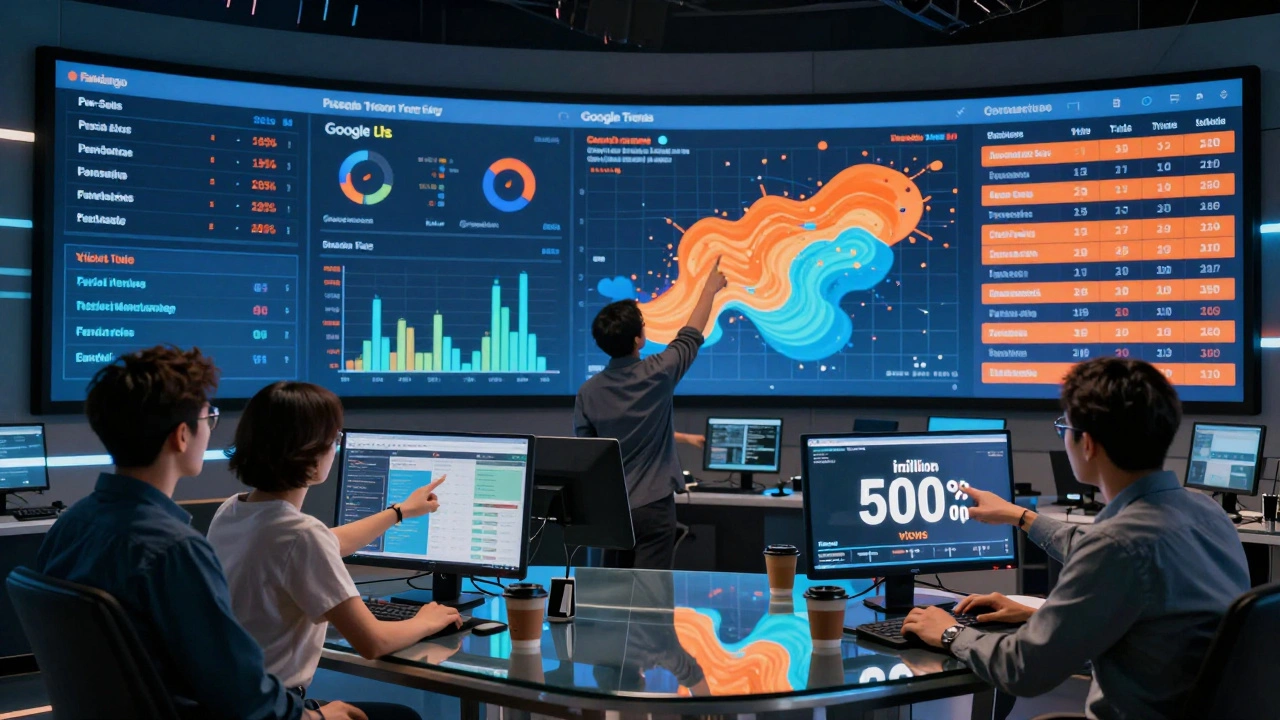
Every year, studios spend hundreds of millions on marketing a single movie-only to watch it flop or surprise everyone by becoming a hit. The difference between a blockbuster and a bomb isn’t just luck. It’s data. Behind every wide release, a team of analysts runs dozens of forecasting models, tracking dozens of variables to guess how much money a film will make in its first few weeks. These aren’t guesswork or gut feelings. They’re complex systems built on years of history, audience behavior, and real-time signals.
What Drives Box Office Success? It’s Not Just the Trailer
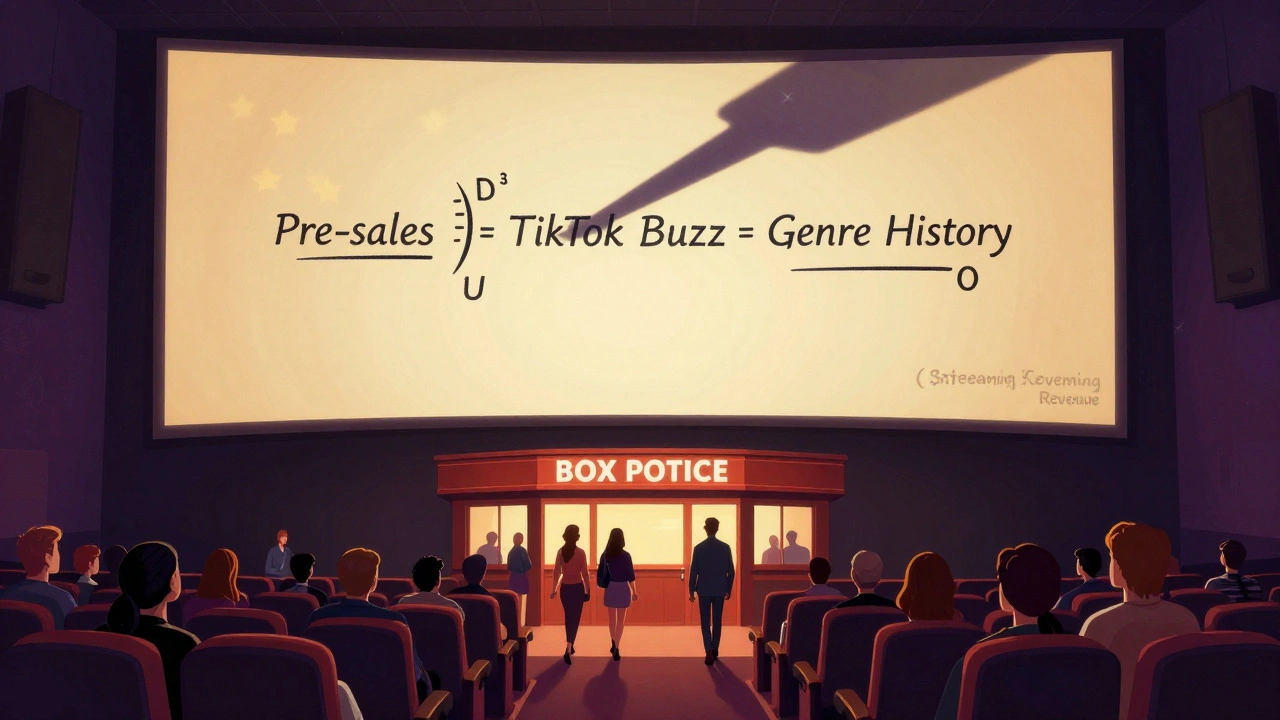
Most people think a big trailer, a star name, or a flashy premiere determines success. But studios know better. A movie with a $50 million marketing budget can still tank if the underlying forecast says it’s unlikely to connect. The real drivers are hidden in the numbers: how many people searched for the movie online two weeks before release, how strong the pre-sales are on ticketing platforms, what similar films did in the same genre, and even the weather forecast for opening weekend.Take Box Office Mojo and Comscore data from 2023: films with pre-sales above 70% of their genre’s historical average for similar marketing spend had a 92% chance of opening over $20 million. But if those pre-sales were below 40%, even a Marvel-level cast couldn’t save it. That’s not magic. That’s pattern recognition.
The Core Variables Studios Actually Track
Studios don’t rely on one model. They run five to seven in parallel, each with different inputs. Here are the variables they track most closely:- Pre-sale ticket volume: How many tickets were sold online before opening day, especially through Fandango, AMC, and Apple Tickets. This is the single strongest predictor.
- Search interest trends: Google Trends and social media spikes. If searches for the movie’s title or lead actor jump 300% in the week before release, it’s a red flag for strong demand.
- Genre performance history: A horror film with a $15 million budget needs to open at $12 million to be profitable. A family animation needs $30 million. Studios compare each film to 10-15 similar releases from the last five years.
- Competitive landscape: Is another big movie opening the same weekend? If so, the forecast drops by 20-40% depending on audience overlap.
- Demographic alignment: Does the film appeal to the 18-34 age group? That’s the core moviegoing demographic. If the marketing isn’t reaching them-measured by TikTok engagement or YouTube ad views-the forecast gets lowered.
- Review velocity: Early critic scores on Rotten Tomatoes and Metacritic matter, but only if they come in the first 48 hours. A 90% RT score on opening Friday is meaningless if it drops to 60% by Sunday.
- International momentum: Even for domestic forecasts, studios check how the film is doing in the UK, Australia, and South Korea. Strong early numbers overseas often mean stronger domestic legs.
One studio executive told me in 2024: "We don’t care if the movie is good. We care if it’s going to move the needle on the spreadsheet." That’s the reality.
How Forecasting Models Work Behind the Scenes
The models aren’t just simple formulas. They’re machine learning systems trained on over 10,000 past releases. Each model weighs variables differently based on genre, budget, and release timing.For example, a model for superhero films might assign 35% weight to pre-sales, 25% to social buzz, and 20% to franchise history. A romantic comedy? Maybe 40% to pre-sales, 30% to lead actor’s past performance, and 20% to release date (Valentine’s Week vs. mid-January). The rest is noise.
These models update in real time. If a viral TikTok clip of a scene hits 50 million views on Thursday, the forecast gets adjusted by noon Friday. If a major influencer says they’re not going to see it, the model lowers the projection by 8-12%.
Studios also use something called "the multiplier effect." That’s how much a movie earns after opening weekend. A horror film might multiply its opening by 2.5x over three weeks. A drama might multiply by 5x. The model uses this to predict total gross, not just opening weekend.
When Forecasting Gets It Wrong
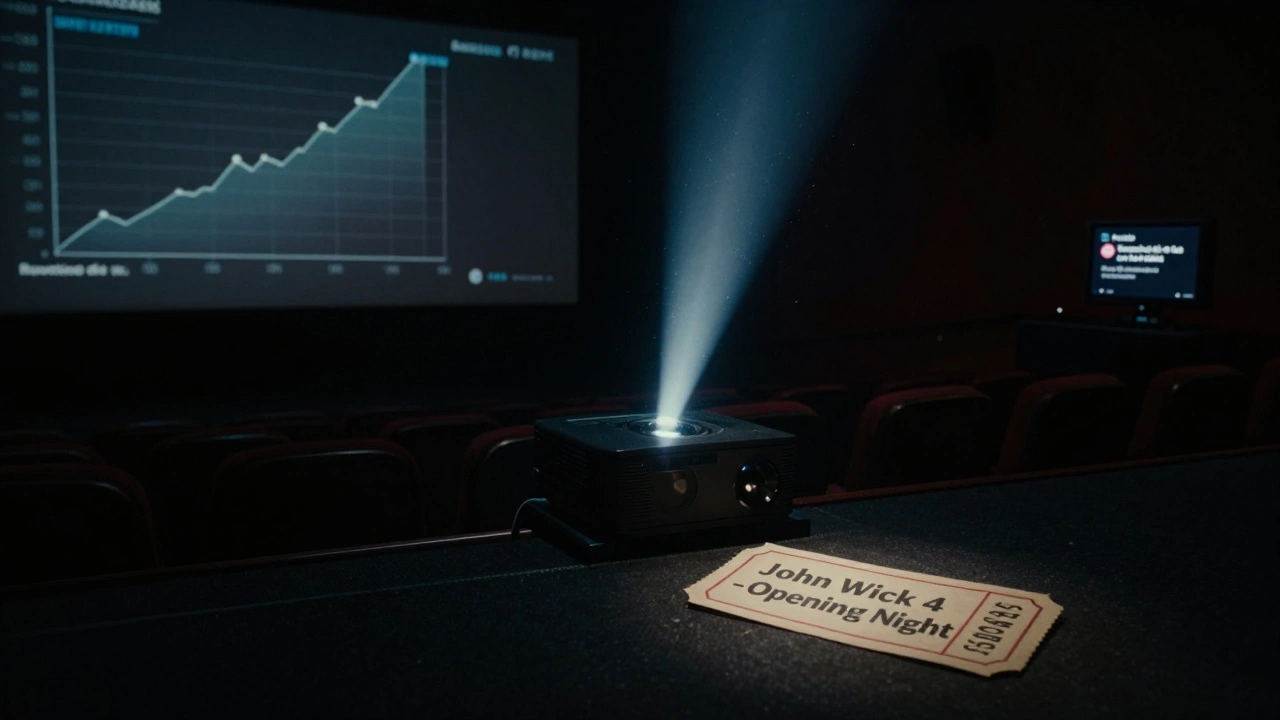
Even the best models fail. In 2023, John Wick: Chapter 4 was forecasted to open at $38 million. It opened at $52 million. Why? The model didn’t account for the fact that fans had been rewatching the entire franchise on streaming for six months. That built a groundswell no one had seen before.On the flip side, Indiana Jones and the Dial of Destiny was projected to open at $50 million. It opened at $24 million. The model didn’t fully factor in how much the audience had aged out of theaters. The marketing targeted Gen Z, but the core fans were 55+. The model saw the star power and franchise history-but not the generational shift.
That’s why studios now track "audience age decay"-how the core fanbase is changing over time. It’s a new variable that didn’t exist a decade ago.
How Streaming Changed the Game
Before 2020, studios could assume a movie’s box office was its main revenue stream. Now, they’re calculating something called "total entertainment value." That’s the sum of box office, digital rentals, and eventual streaming rights.For example, a film that opens at $15 million might seem like a disappointment. But if it sells 2 million digital rentals in the first month and lands on Paramount+ with a $100 million licensing deal, the studio still profits. So the forecasting model now includes streaming conversion rates. A film with high social buzz and strong early digital sales might be flagged as a "hidden win," even if the box office is soft.
Studios now use a "hybrid revenue model" that combines box office, digital, and streaming projections into one number. If the total hits $200 million, they greenlight the sequel-even if the theatrical run was underwhelming.
What You Can Learn From How Studios Forecast
You don’t need to work for Warner Bros. to use these insights. If you’re trying to predict whether a movie will be worth seeing in theaters, look at three things:- Check Fandango or AMC’s pre-sales page. If tickets are already sold out for opening night, it’s a good sign.
- Search the movie’s title on Google Trends. If it’s trending higher than the same time last year for similar films, it’s gaining traction.
- Look at the release date. Is it competing with another big movie? If yes, and it’s not a franchise, it’s likely to underperform.
Studios have the data. You have access to the same public signals. You just need to know where to look.
What’s Next for Box Office Forecasting?
The next frontier is AI-driven sentiment analysis from social media. Companies like Reelgood and EntTelligence are now analyzing millions of comments on Reddit, X (Twitter), and TikTok to predict audience mood before release. If 70% of comments say "I’m not paying $20 for this," the model adjusts downward.Some studios are testing predictive models that use theater seat availability data. If a theater in Chicago reports 80% of seats are booked for the first three showings two weeks out, the forecast gets a boost. It’s like weather forecasting-but for movie demand.
One thing won’t change: the box office will always be a mix of art and math. But the math is getting smarter. And the studios that ignore it? They’re the ones getting left behind.
What’s the most important variable in box office forecasting?
Pre-sale ticket volume is the single strongest predictor. If a movie sells more than 70% of the tickets its genre typically sells before opening, it has a 90%+ chance of hitting a profitable opening weekend. This data comes from ticketing platforms like Fandango and AMC Theatres and is updated in real time.
Do star power and big budgets guarantee success?
No. While big names and budgets help with marketing, they don’t override audience signals. In 2023, three films with A-list stars and $100M+ budgets opened below $20 million because pre-sales and search trends were weak. Conversely, low-budget horror films with no stars have opened at $40 million when social buzz was high. Studios now prioritize audience behavior over star power.
How do streaming services affect box office forecasts?
Streaming has changed the entire financial model. Studios now calculate "total entertainment value," which includes box office, digital rentals, and streaming licensing deals. A movie that opens at $15 million might still be profitable if it sells 2 million digital copies and lands a $100 million streaming deal. Forecasting models now weigh these streams equally with theatrical revenue.
Can social media really predict box office numbers?
Yes, increasingly so. Platforms like TikTok and Reddit are now used to measure audience sentiment in real time. If a movie’s hashtag hits 100 million views and 70% of comments are positive, the forecast is adjusted upward. Conversely, if there’s a wave of negative buzz before release, studios lower projections-even if the trailer looks great.
Why do some movies open strong but disappear quickly?
That’s called a "popcorn movie"-one that draws crowds on opening weekend but lacks word-of-mouth momentum. Forecasting models look at the "multiplier effect": how much the film earns after opening. A horror film might multiply by 2.5x over three weeks. If the multiplier is below 1.8x, the model flags it as a short-term hit with no legs. Studios use this to decide whether to extend the run or pull the film early.
Are box office forecasts more accurate now than in the past?
Yes. In the early 2000s, forecasts were often off by 30-50%. Today, top studios are accurate within 10-15% for wide releases. That’s because of real-time data from ticketing platforms, social media, and AI sentiment tools. The biggest improvement came after 2020, when studios started combining streaming data with box office metrics.





Comments(9)