Ever wonder why a blockbuster sounds so expensive while an indie film relies on a laptop and a few strings? The answer lies in the invisible machinery of film music budgets. It’s not just about hiring a famous composer; it’s a complex web of labor, technology, and rights that can make or break a production’s financial health. Whether you’re a producer trying to stretch every dollar or a composer looking to understand your market value, knowing where the money actually goes is crucial.
The misconception that music is a minor line item compared to VFX or star salaries often leads to painful surprises later. In reality, scoring can consume anywhere from 1% to 5% of a total production budget, depending on the scale. For a $200 million action epic, that’s up to $10 million for the score alone. For a $5 million indie thriller, it might be just $50,000. But within those numbers, the allocation shifts dramatically based on genre, timeline, and creative vision.
The Core Components of a Score Budget
To understand the flow of funds, we need to break down the three main pillars: composition, performance, and post-production. Each has distinct cost drivers that vary by project size.
- Composer Fees: This is the upfront payment to the writer. For major studio films, this can range from $250,000 to over $1 million for top-tier names like Hans Zimmer or John Williams. However, many composers work on a hybrid model: a lower flat fee plus backend points (typically 0.5% to 1% of net profits). This aligns their income with the film’s success but means they take on more risk.
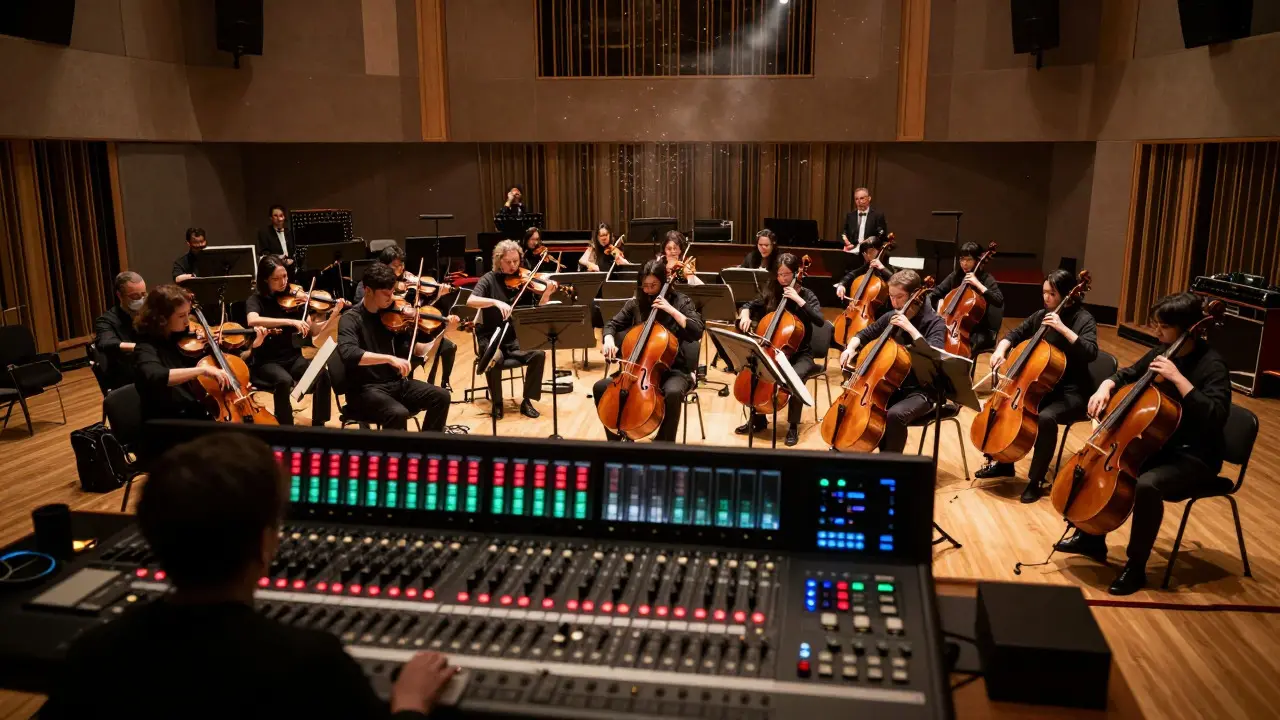
- Orchestra and Musicians: If you want real instruments, you pay for them. A full Hollywood orchestra session in Los Angeles can cost between $3,000 and $6,000 per hour, including union rates, hall rental, and engineers. A single day of recording might yield only 15 to 20 minutes of finished music. For a two-hour film requiring 45 minutes of original score, you might need three to five days of studio time just for the orchestra.
- Production and Post-Production: This covers the mixing, mastering, and final delivery. High-end mixers charge $1,500 to $3,000 per day. You also need to account for stem creation (separating dialogue, effects, and music) for international dubbing and surround sound formats.
Indie productions often skip the live orchestra entirely, opting for hybrid scoring. Here, a composer records a small chamber group or uses high-quality samples. This reduces costs significantly but requires careful direction to avoid a generic "video game" sound.
Live Orchestra vs. Sample Libraries: The Cost Trade-Off
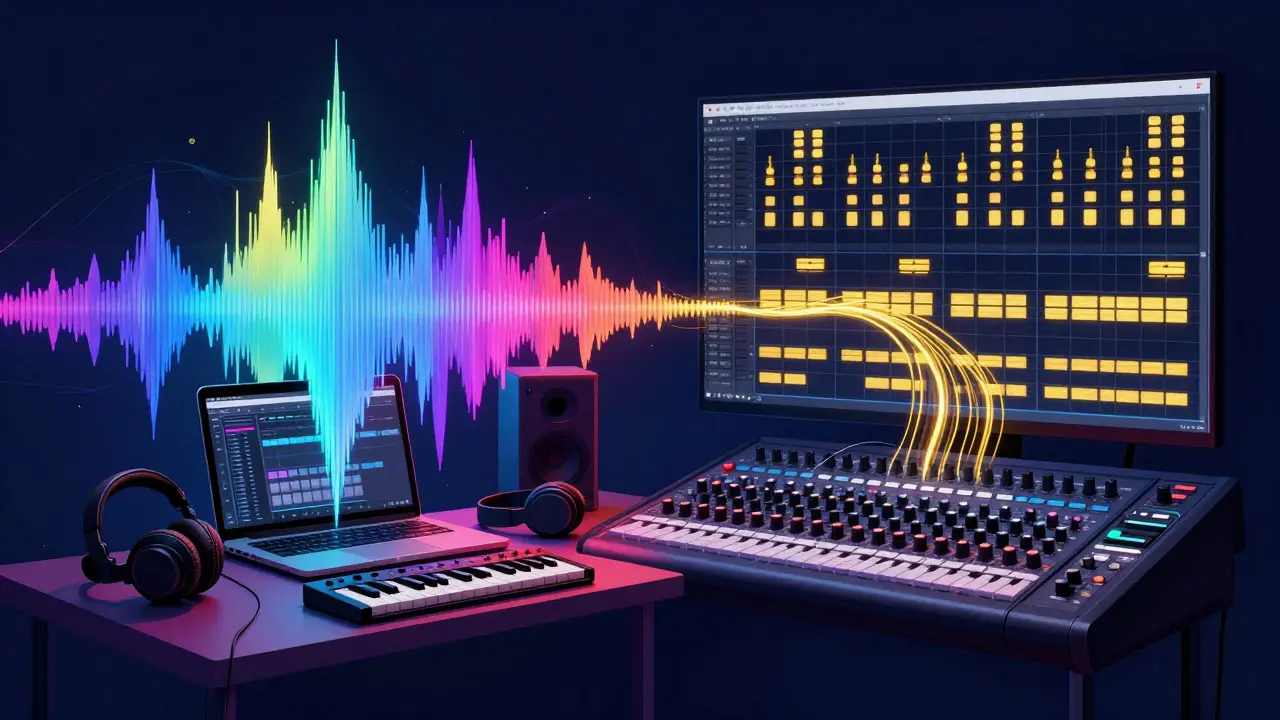
The biggest decision point in modern scoring is whether to hire players or use digital audio workstations (DAWs) with sample libraries. This choice impacts both the budget and the emotional texture of the film.
| Component | Live Orchestra (Hollywood Standard) | Sample-Based / Hybrid (Indie/Streaming) |
|---|---|---|
| Hourly Studio Cost | $3,000 - $6,000 | $0 (Home Studio) - $500 (Small Room) |
| Musician Union Rates | High (SAG-AFTRA/MUSC) | Low or None |
| Typical Total Score Budget | $500,000 - $2,000,000+ | $20,000 - $100,000 |
| Flexibility for Changes | Low (Expensive re-recording) | High (Easy editing) |
| Emotional Authenticity | High (Human nuance) | Variable (Depends on programming) |
Why do big studios still pay for live orchestras? Because the micro-dynamics of human performance-breaths, slight timing variations, bowing techniques-create an organic feel that samples struggle to replicate perfectly. However, for genres like horror, sci-fi, or electronic-heavy thrillers, samples are often indistinguishable from live recordings to the average audience. This allows producers to save hundreds of thousands of dollars without sacrificing quality.
Licensing and Rights: The Hidden Costs
One area that trips up many first-time producers is the difference between original score and source music (songs heard on radios, in bars, or played by characters).
If you use an existing song, you need two licenses:
- Synchronization License: Permission from the publisher to use the lyrics/melody in the picture.
- Mechanical License: Permission from the copyright holder to reproduce the sound recording.
Timeline Pressure and Overtime Fees
Budgets don’t just cover talent; they cover time. Film scoring is notoriously compressed. A composer might have only four to six weeks to write, record, and deliver a complete score for a feature film. When deadlines slip, overtime kicks in. Union musicians charge premium rates after eight hours a day or ten hours a week. If a director changes their mind at the last minute and wants a different key change or tempo, the entire section may need to be re-recorded. This "creative churn" is one of the largest unbudgeted expenses in scoring. Smart producers build a 15-20% contingency into the music budget specifically for these revisions.
How Streaming Platforms Are Changing the Game
The rise of Netflix, Amazon Prime, and Apple TV+ has altered the economics of film music. These platforms produce content at a pace traditional studios can’t match, leading to standardized workflows. Hybrid Scoring is a technique combining live instrumentation with digital sampling to reduce costs while maintaining quality. It has become the industry standard for mid-budget streamer films. By recording core themes with a small ensemble (e.g., 10-15 players) and layering in high-resolution samples for the rest, composers can achieve a cinematic sound for a fraction of the cost of a full 80-piece orchestra. This method balances the authenticity of live performance with the efficiency of digital tools. Additionally, streaming services often prefer exclusive deals. They want the music to be associated with their brand. This means composers are increasingly signing contracts that grant the platform broad usage rights for marketing, trailers, and even other productions within the service’s catalog, reducing the need for individual sync negotiations later.
Practical Tips for Managing Music Budgets
Whether you’re producing a short film or a feature, here are actionable strategies to keep your music costs under control:
- Define the Style Early: Knowing if you need a full orchestra or a piano-and-cello duo should happen during pre-production, not after the shoot. This determines the scope of the contract.
- Negotiate Flat Fees for Revisions: Instead of paying hourly for every tweak, agree on a set number of revision rounds included in the base fee. This prevents endless back-and-forth.
- Use Stems Wisely: Ask your composer to deliver stems (separated tracks) early. This allows your sound editor to adjust levels without needing the composer present, saving studio time.
- Consider Library Music for B-Roll: Not every scene needs a unique cue. Using licensed library tracks for transitional scenes or background ambiance can save significant composition time.
- Plan for International Dubbing: If your film will be dubbed, ensure your score has enough dynamic range and isn’t too dense. Dense mixes are harder to adapt for foreign language versions, potentially requiring extra mixing sessions.
What percentage of a film's budget typically goes to music?
For major studio blockbusters, music usually accounts for 1% to 5% of the total production budget. For independent films, the percentage can be higher relative to the total, but the absolute dollar amount is much lower, often ranging from $20,000 to $100,000 for the entire score.
Is it cheaper to use samples or hire a live orchestra?
Samples are significantly cheaper, costing almost nothing beyond software licenses and hardware. However, live orchestras provide unique human nuances that are difficult to replicate. Most mid-budget films now use a hybrid approach, recording a small live group and supplementing with samples to balance cost and quality.
What are sync licenses and why are they important?
A synchronization license grants permission to use a copyrighted musical composition in visual media. It is separate from the mechanical license for the sound recording. Without both, you risk legal issues when distributing your film. Costs vary wildly based on the popularity of the song and the territory of distribution.
How long does it take to score a movie?
The timeline varies, but a typical feature film score takes 4 to 8 weeks from spotting (determining where music goes) to final delivery. This includes writing, arranging, recording, mixing, and mastering. Delays in picture editing can compress this window, leading to overtime costs.
Do composers get paid royalties for film scores?
Unlike songwriters, film composers rarely receive direct public performance royalties from organizations like ASCAP or BMI for theatrical releases. Their income is primarily from the upfront fee and potential backend profit participation. However, if the score is released as an album or used in television broadcasts, royalties may apply.


Comments(9)