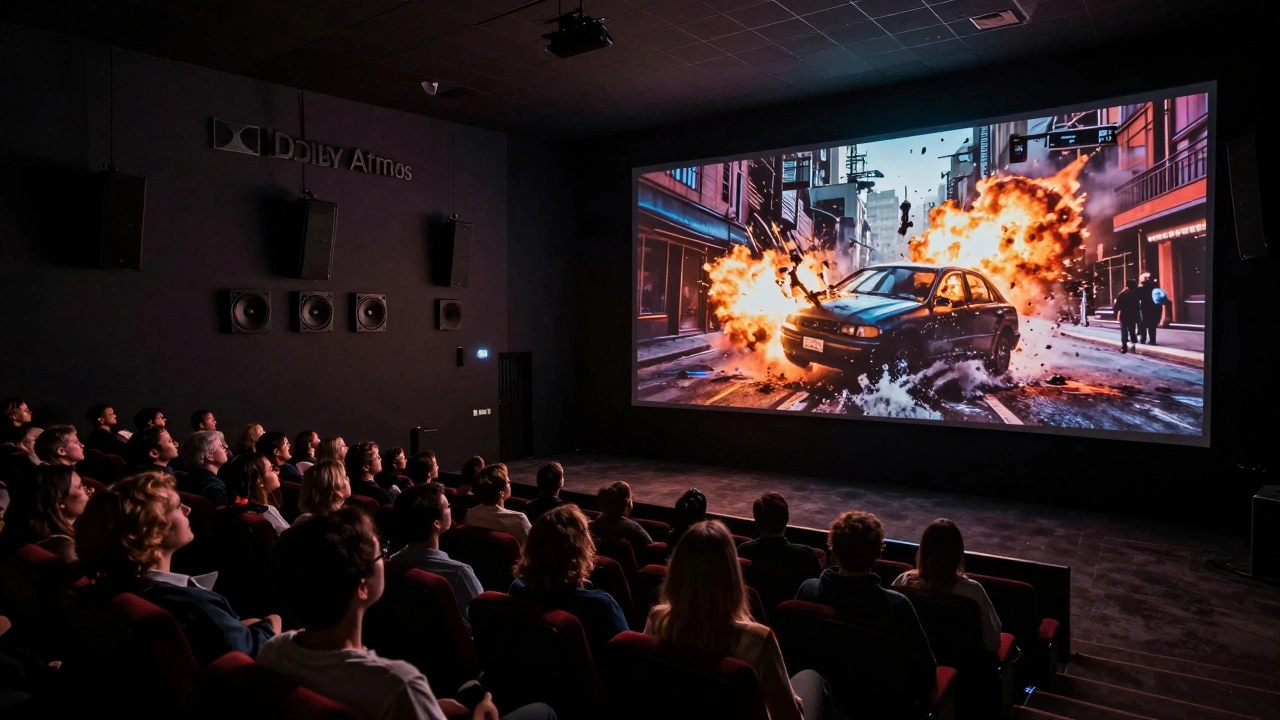
Ever wonder why a film sounds amazing at Sundance but flat when it hits your living room TV? It’s not a glitch. It’s not bad equipment. It’s the difference between a festival mix and a final mix-two entirely different stages of sound design, each built for a completely different space and audience.
What Is a Festival Mix?
A festival mix is made for one thing: impact. It’s the version of your film’s sound that gets played in a packed theater at Cannes, TIFF, or SXSW. These venues have high-end surround systems, calibrated subwoofers, and acoustics designed to amplify emotion. The goal? To make the audience feel the rumble of a car crash, the whisper of a secret, or the swell of a score like it’s wrapping around them.
Here’s how it’s built:
- Dynamic range is wide open-quiet moments drop to near silence, loud hits punch through at 105 dB or higher.
- Bass is extended and deep, often pushed to the limits of what the theater system can handle.
- Dialogue sits just above the music, but not always upfront. Sometimes it’s buried under ambient noise to match the scene’s realism.
- Effects are hyper-detailed: footsteps on gravel, glass shattering, wind through trees-all spatially placed with precision.
Festival mixes are often done in 7.1 or even 12.1 formats. They’re not meant for home systems. They’re meant to wow. And they do.
What Is a Final Mix?
The final mix is what your audience actually sees. It’s the version that goes to Netflix, Hulu, Apple TV, and broadcast TV. It’s also what plays in most theaters outside of film festivals-especially smaller ones, multiplexes, and international markets.
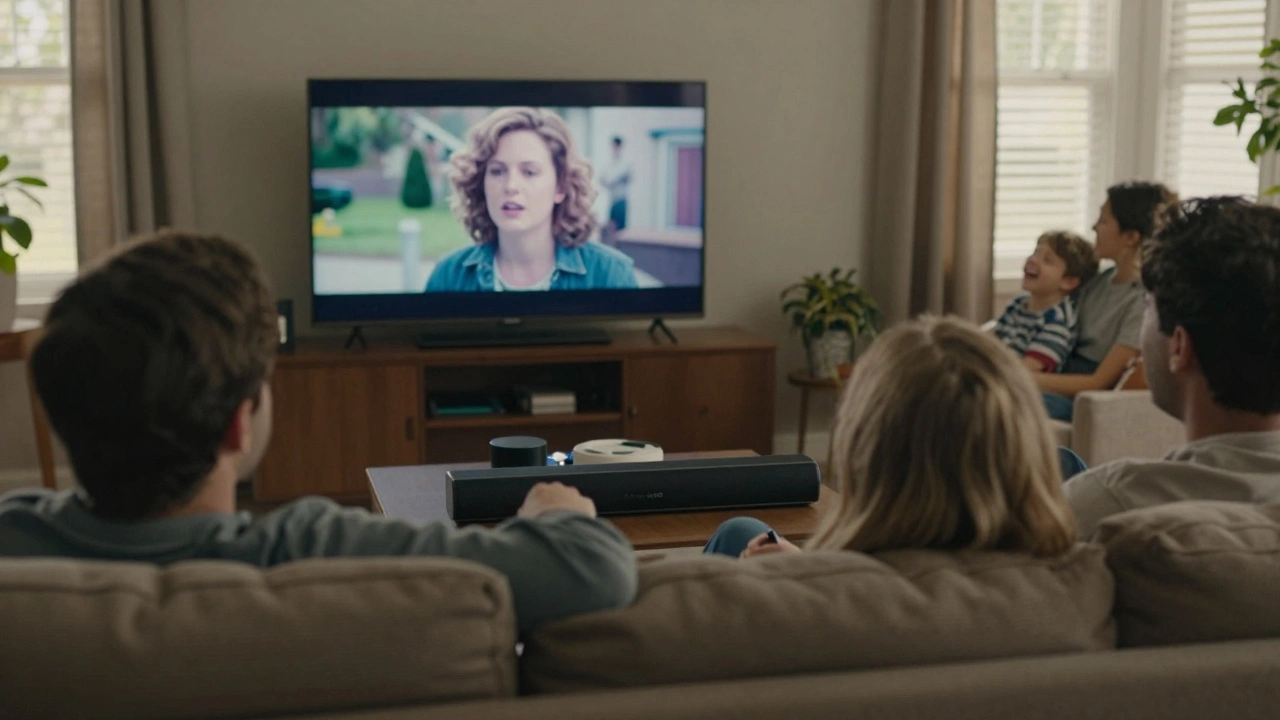
This mix has to survive on terrible speakers, low-quality headphones, and rooms with echo, carpet, and kids yelling in the background. So here’s how it’s different:
- Dynamic range is compressed. Quiet scenes can’t drop below 70 dB or viewers will turn up the volume and miss the next line.
- Bass is tamed. Too much low end on a smartphone or TV soundbar turns to mush. Final mixes roll off below 30 Hz.
- Dialogue is king. It’s often boosted by 3-5 dB compared to the festival mix and placed dead center in the stereo field.
- Effects are simplified. Reverb tails are shortened. Transients are rounded. No one wants a 5-second echo of a door slamming on a laptop.
Final mixes are usually delivered in stereo or 5.1. They follow strict loudness standards like EBU R128 (for Europe) and ATSC A/85 (for the U.S.). If your mix hits -24 LUFS, you’re golden. Go above -20, and streaming platforms will automatically turn it down.
Why You Can’t Just Use the Festival Mix Everywhere
Here’s the truth: a festival mix sounds incredible in a 200-seat theater with Dolby Atmos. But play it on a budget TV, and you’ll hear this:
- Dialogue vanishes during action scenes.
- Bass rattles the TV stand instead of enhancing the scene.
- Background ambience becomes a muddy roar.
- Viewers turn the volume up to 80%, then complain about distortion.
It’s not the viewer’s fault. It’s the mix.
A filmmaker once told me about a short film that won best sound at a regional festival. The director proudly sent the same mix to a streaming platform. Within 48 hours, they got 37 complaints about "muffled dialogue" and "exploding bass." The film was pulled from the platform until a new final mix was delivered.
You don’t need to be a sound engineer to know this: what works in a cathedral doesn’t work in a closet.
How to Bridge the Gap Between Festival and Final Mix
You don’t have to start from scratch. But you do need a plan.
Step 1: Start with the Festival Mix
Always build your first mix for the best-case scenario. That’s your reference. It’s your artistic vision. Don’t compromise early.
Step 2: Create a Reference List of Playback Systems
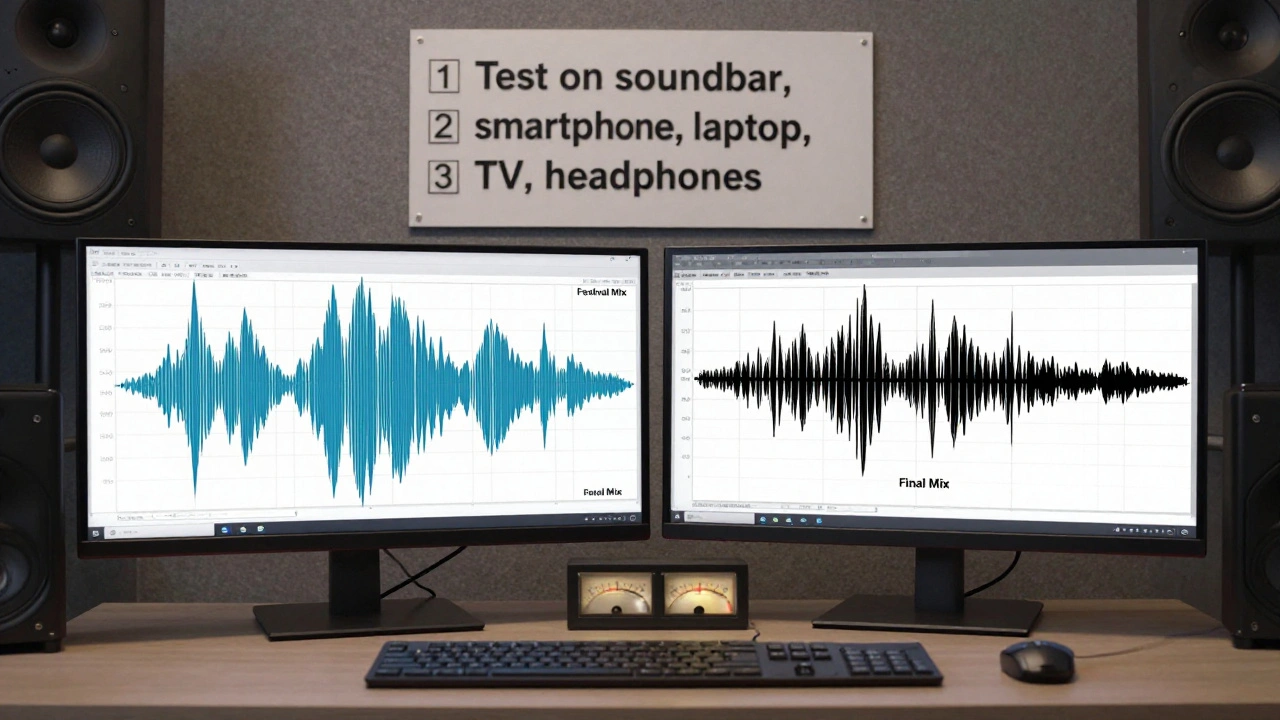
Test your mix on at least five real-world systems:
- A $200 soundbar
- A smartphone speaker
- A 5.1 home theater system
- A laptop with built-in speakers
- A TV in a brightly lit living room (with windows, pets, and background noise)
Play your festival mix on each. Note where dialogue disappears, where bass overloads, where high frequencies get lost.
Step 3: Build a Final Mix with Targeted Adjustments
Use your festival mix as a base. Then make these changes:
- Reduce overall dynamic range by 6-8 dB using a limiter or compressor with slow attack.
- Boost center channel dialogue by 2-4 dB. Use a de-esser if voices sound sibilant.
- Roll off sub-bass below 35 Hz. Most consumer systems can’t reproduce it cleanly.
- Simplify stereo imaging. Avoid extreme left/right panning. Keep critical elements centered.
- Check loudness with a LUFS meter. Target -24 LUFS for streaming. -23 for broadcast.
Step 4: Test Again-Then Test One More Time
After you make changes, go back to your five systems. Play both mixes side by side. Ask yourself: "Does the final mix still feel powerful? Or does it feel flat?"
Good final mixes don’t sacrifice emotion. They preserve it, even in imperfect conditions.
The Real Cost of Skipping the Final Mix
Many indie filmmakers skip the final mix because they think it’s "just for streaming." That’s a mistake.
Streaming platforms don’t just turn down loud audio-they also apply their own loudness normalization. If your festival mix hits -18 LUFS, it gets turned down 6 dB. Suddenly, your carefully crafted quiet moments become inaudible.
And it’s not just streaming. Many theaters, especially outside major cities, use outdated equipment. A film that won awards at Sundance might lose half its impact in a rural theater because the sound system can’t handle the dynamics.
One editor I worked with saved $2,000 by skipping the final mix. The film got picked up by a distributor-but when they screened it in 80 theaters across the Midwest, 42 of them returned it with complaints. The distributor lost $15,000 in refunds and re-mixing fees.
Pro Tips for Sound Mixers
- Always deliver two versions: Festival Mix (24-bit, 96 kHz) and Final Mix (16-bit, 48 kHz).
- Label them clearly. Never send "final" files labeled "festival_v1."
- Include a loudness meter screenshot in your delivery package. It proves you followed standards.
- Don’t trust your studio monitors. Add a pair of cheap headphones to your monitoring chain.
- Test in the dark. If you can’t hear dialogue without visuals, your mix is broken.
What Happens When You Get It Right?
The best films don’t just sound good-they sound consistent. A scene that makes you hold your breath in the theater should make you hold your breath on your couch.
Take Sound of Metal. Its festival mix had bone-rattling metal drums and silence so deep you could hear a pin drop. The final mix? It kept that emotional contrast, but made sure every whisper and heartbeat came through on a phone speaker. That’s mastery.
When your film sounds powerful everywhere, you’re not just delivering audio. You’re delivering experience.
Can I just use one mix for both festival and streaming?
Technically, yes-but you’ll sacrifice quality in one place. A single mix rarely works well for both a 12.1 theater and a $100 soundbar. Most professionals create two versions: a high-dynamic festival mix and a compressed, dialogue-focused final mix. Trying to do both with one file usually means your quiet moments vanish on TV, and your loud moments distort on home systems.
What loudness level should my final mix target?
For streaming platforms like Netflix, Hulu, or Apple TV, target -24 LUFS with a true peak of -1 dB. For broadcast TV in the U.S., aim for -23 LUFS under ATSC A/85. These standards ensure your audio won’t be automatically turned down and will play consistently across devices.
Do I need to re-mix everything for the final version?
Not necessarily. You can start with your festival mix and make targeted adjustments: compress dynamics, boost dialogue, reduce sub-bass, and simplify stereo imaging. This is called a "derived mix" and is common practice. But don’t just export the same file and call it final. The changes matter.
Why does dialogue sound different in festival vs. final mixes?
In festival mixes, dialogue often blends with the environment for realism-like characters talking over background noise in a crowded street. In final mixes, dialogue is prioritized. It’s boosted, isolated, and centered so it’s always audible, even on low-end speakers. This isn’t "fake"-it’s practical. Viewers at home can’t afford to miss a key line.
Is a final mix only for streaming?
No. Final mixes are for every playback environment outside a high-end theater: TVs, laptops, smartphones, public libraries, rental houses, and smaller theaters. Even if your film gets a theatrical release, most screenings won’t happen in Dolby Atmos-equipped rooms. A final mix ensures your film sounds good everywhere, not just where the budget was high.



Comments(7)