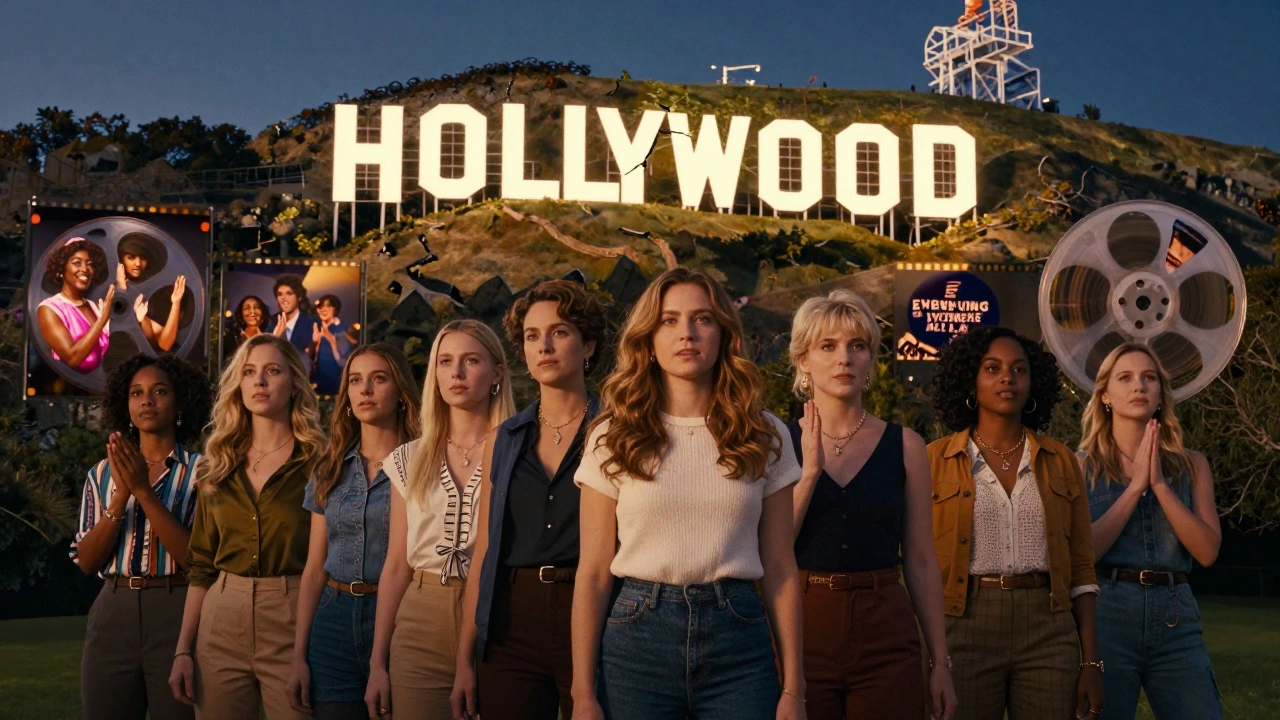
For decades, Hollywood has told stories about women-yet rarely let women tell them. In 2025, women directed just 18% of the top 100 box office films. That’s not a glitch. It’s a system. And it’s not getting better fast enough.
The Numbers Don’t Lie
In 2024, only 15 out of 100 top-grossing films had a female director. That’s the same percentage as in 2014. Ten years. No real progress. Meanwhile, men directed 82% of those same films. The rest? Unspecified or co-directed by men. This isn’t about talent. It’s about access.
Look at the data from the Center for the Study of Women in Television and Film at San Diego State University. They’ve tracked this for 25 years. In 2023, women made up 27% of all directors across all film types-including indie and streaming. But in the studio system? That number drops to 16%. The bigger the budget, the less likely a woman is to get the job.
Why? Because studios still believe audiences won’t show up for films directed by women. But the data contradicts that. Female-directed films like Barbie (2023) and Everything Everywhere All at Once (2022) made over $1.4 billion and $140 million respectively. Both were critically acclaimed. Both turned profits. Both were directed by women. Yet, the same studios that greenlit those films still hesitate to hire women for their next big project.
It Starts With Who Gets the First Chance
Most directors don’t start with a $100 million budget. They start with short films, indie features, or TV episodes. But women are rarely given those stepping stones. In 2023, only 13% of TV episodes directed in the U.S. were helmed by women. For cable and streaming, it’s slightly higher-21%. But for network TV? Just 10%.
Why? Because casting directors, producers, and studio executives still hire from the same small circle. They pick people they’ve worked with before. And that circle is overwhelmingly male. A 2022 study from UCLA found that 84% of directors hired for studio films had previously worked with the same producer or studio executive. That’s not meritocracy. That’s nepotism with a suit.
Take Ava DuVernay. She didn’t get her first studio film until she was 35. Before that, she made documentaries and indie dramas on shoestring budgets. She had to prove herself over and over. Now she’s one of the most respected voices in film. But how many others never got that shot because they didn’t have the right connections-or the right gender?
Where the System Fails Women of Color
The gender gap isn’t the same for everyone. For Black, Latina, Indigenous, and Asian women, the numbers are even worse. In 2023, only 3% of top-grossing films were directed by women of color. That’s one out of every 33 films.
Chloé Zhao made history with Nomadland-but she’s the exception, not the rule. When she won the Oscar for Best Director in 2021, she was only the second woman ever to do so. And the first woman of color. Yet, since then, no other woman of color has won. Not one.
It’s not that there aren’t talented women of color out there. It’s that the system doesn’t give them the same opportunities. A 2024 report from the Annenberg Inclusion Initiative found that women of color are 60% less likely to be hired for a second film than white women. That’s not a coincidence. It’s structural.
What’s Changing? Slowly.
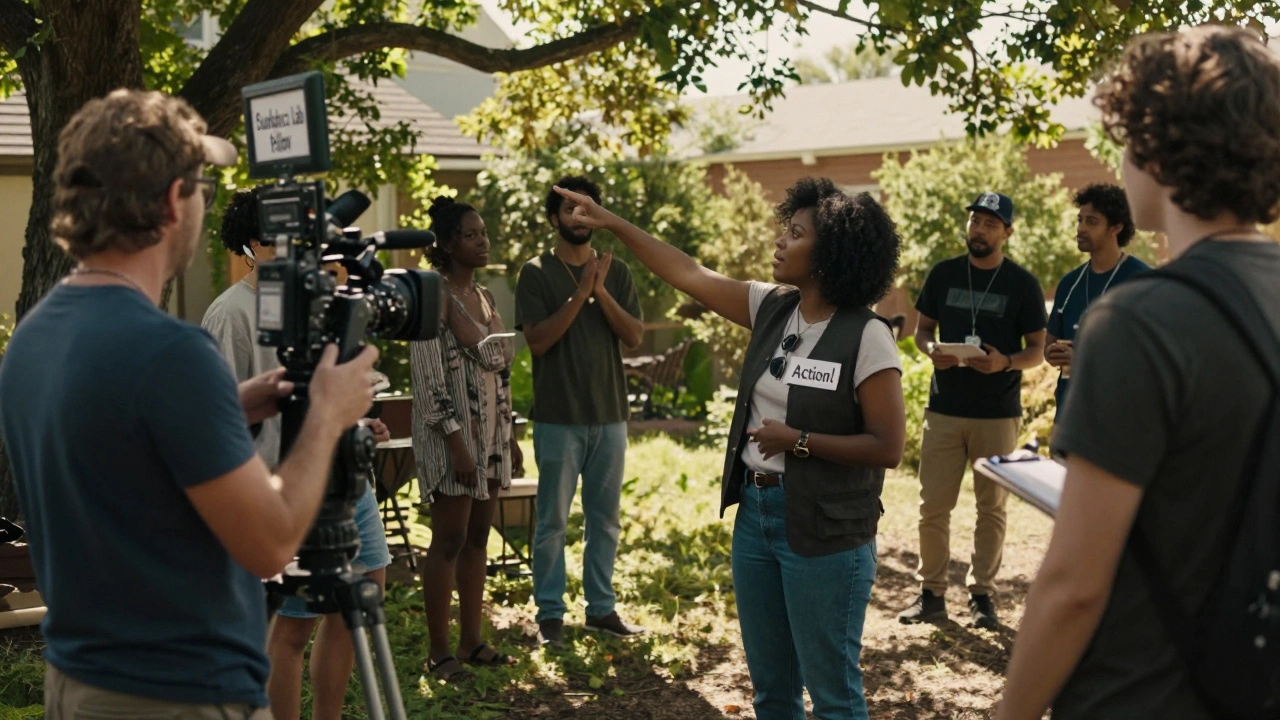
Change is happening-but it’s not coming from the top. It’s coming from grassroots movements, independent producers, and audiences demanding better.
Organizations like Women in Film, the Geena Davis Institute on Gender in Media, and the Sundance Institute’s Labs have created pipelines for women directors. Sundance’s 2023 cohort included 51% women directors. That’s not accidental. It’s intentional.
Streaming platforms are also shifting. Netflix, Amazon, and Apple TV+ have quietly hired more women directors for original series and films. In 2024, 34% of Netflix’s original films were directed by women. That’s nearly double the studio average. Why? Because streaming doesn’t need to rely on box office projections. They can take risks. And they’re learning that audiences respond.
Some studios are trying. Warner Bros. launched the Women’s Initiative in 2022 to mentor female directors. Disney’s Directing Fellowship has placed 23 women in assistant director roles since 2021. But these programs are small. They help a few. They don’t fix the system.
What Needs to Change
Real change requires three things: accountability, funding, and power.
First, studios need to release hiring data publicly. If they won’t track it, they won’t fix it. Transparency is the first step. Some companies like A24 and Neon have started doing this. Others should follow.
Second, funding needs to be redirected. Grants, tax incentives, and development funds should prioritize women directors. The British Film Institute gives 50% of its development funding to female-led projects. That’s a model the U.S. should copy.
Third, women need to be in the room when decisions are made. That means more female producers, studio heads, and executives. Right now, only 12% of studio heads are women. And only 8% of studio board members are women. You can’t hire directors you don’t trust. And you don’t trust people who don’t look like you.
The Power of Audiences
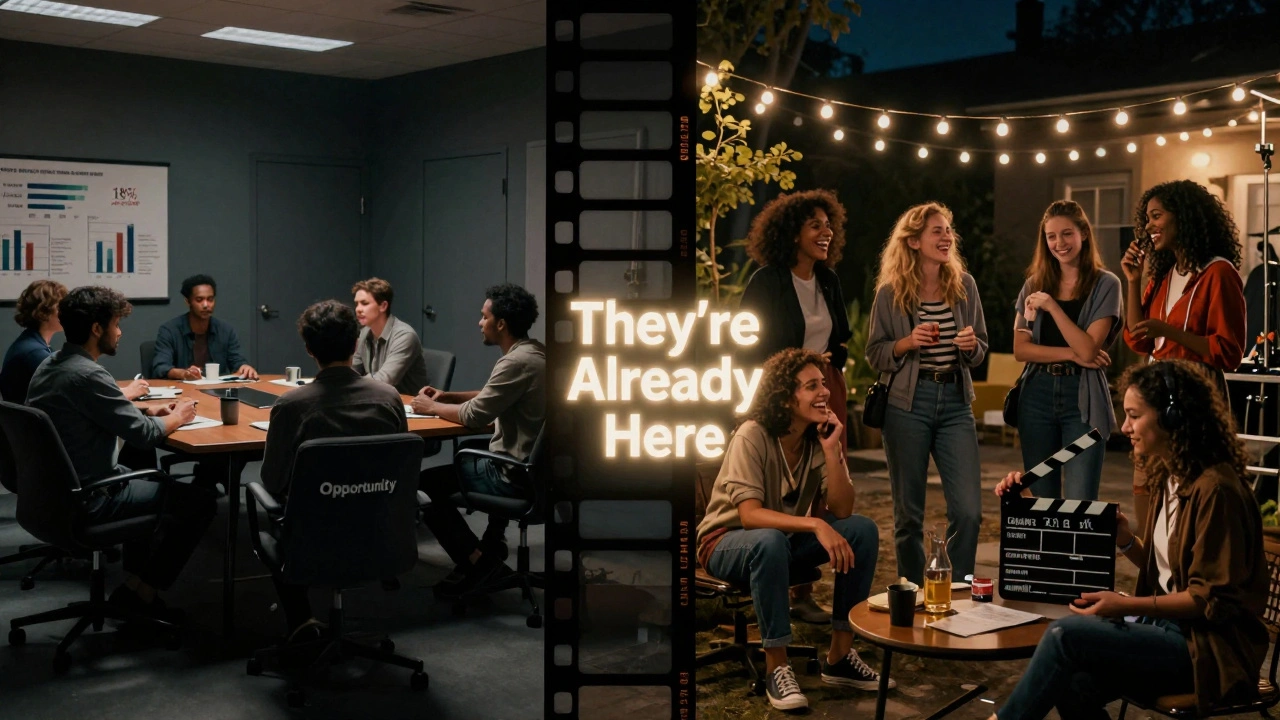
Here’s the truth: audiences are ready. They’ve been ready for years. When Wonder Woman came out in 2017, it broke box office records. When Little Women (2019) hit theaters, it made $218 million worldwide. When The Woman King opened in 2022, it became the highest-grossing historical epic directed by a woman.
People don’t care who’s behind the camera as long as the story moves them. But studios keep acting like audiences are still stuck in the 1990s. They’re not. They’re watching. They’re voting with their tickets. And they’re calling out the ones who keep ignoring women.
Supporting female-directed films isn’t activism. It’s smart business. Films directed by women consistently outperform their budgets on streaming platforms. They get higher viewer retention. They attract younger, more diverse audiences. And they win awards.
What You Can Do
You don’t need to be a studio executive to make a difference. Here’s what you can do right now:
- Watch films directed by women. Don’t wait for them to be marketed heavily. Seek them out.
- Leave reviews on Rotten Tomatoes, IMDb, and Letterboxd. Positive reviews help these films get noticed.
- Follow female directors on social media. Share their work. Tag studios when you see a film you love.
- If you’re in the industry, hire women. Offer internships. Mentor someone. Don’t wait for a program to do it for you.
Change doesn’t come from speeches. It comes from action. From tickets sold. From streams watched. From voices raised.
Who’s Leading the Way?
Here are a few female directors making waves right now:
- Greta Gerwig - Barbie, Little Women. Proved that a female-led blockbuster can be both artistic and wildly profitable.
- Emerald Fennell - Promising Young Woman, The Crown. Uses dark humor to expose systemic sexism.
- Rebecca Thomas - Euphoria (season 2). One of the few women directing major HBO series.
- Isabel Sandoval - Lingua Franca. Transgender Filipina director breaking barriers in indie cinema.
- Julia Ducournau - Titane. First woman since 1993 to win the Palme d’Or at Cannes.
These women aren’t outliers. They’re proof that talent exists. The question is: will Hollywood keep pretending it doesn’t see them?
Why are there so few female directors in Hollywood?
It’s not about talent-it’s about access. Hollywood has long operated through networks that favor men. Studios hire directors they’ve worked with before, and those networks are mostly male. Women, especially women of color, are rarely given early opportunities like assistant director roles or indie film funding. Without those stepping stones, they rarely get hired for big studio projects.
Do films directed by women make money?
Yes-often more than films directed by men. Barbie made over $1.4 billion. Everything Everywhere All at Once earned $140 million on a $25 million budget. Studies show female-directed films have higher streaming retention and attract younger, more diverse audiences. The myth that audiences won’t watch them is just that-a myth.
Are there programs helping female directors?
Yes. Sundance Institute, Women in Film, and the Annenberg Inclusion Initiative offer mentorship, grants, and labs. Netflix and Amazon have increased hiring of women directors for original content. But these programs are small compared to the scale of the problem. They help individuals, not the system.
Why do women of color face even bigger barriers?
They face a double barrier: gender and race. In 2023, only 3% of top-grossing films were directed by women of color. They’re less likely to be hired for a second film than white women-even when their work is equally successful. Studios often assume they won’t appeal to mainstream audiences, which is a false assumption based on outdated stereotypes.
What can I do to support female directors?
Watch their films. Leave positive reviews. Share their work on social media. Support indie films and streaming projects directed by women. If you work in film, hire them. Offer internships. Don’t wait for someone else to fix it-be the change.
For every Ava DuVernay, Chloé Zhao, or Greta Gerwig who breaks through, there are ten more with the same talent waiting for their chance. Hollywood doesn’t need more women to prove they can direct. It needs to stop pretending they don’t already exist.


Comments(8)