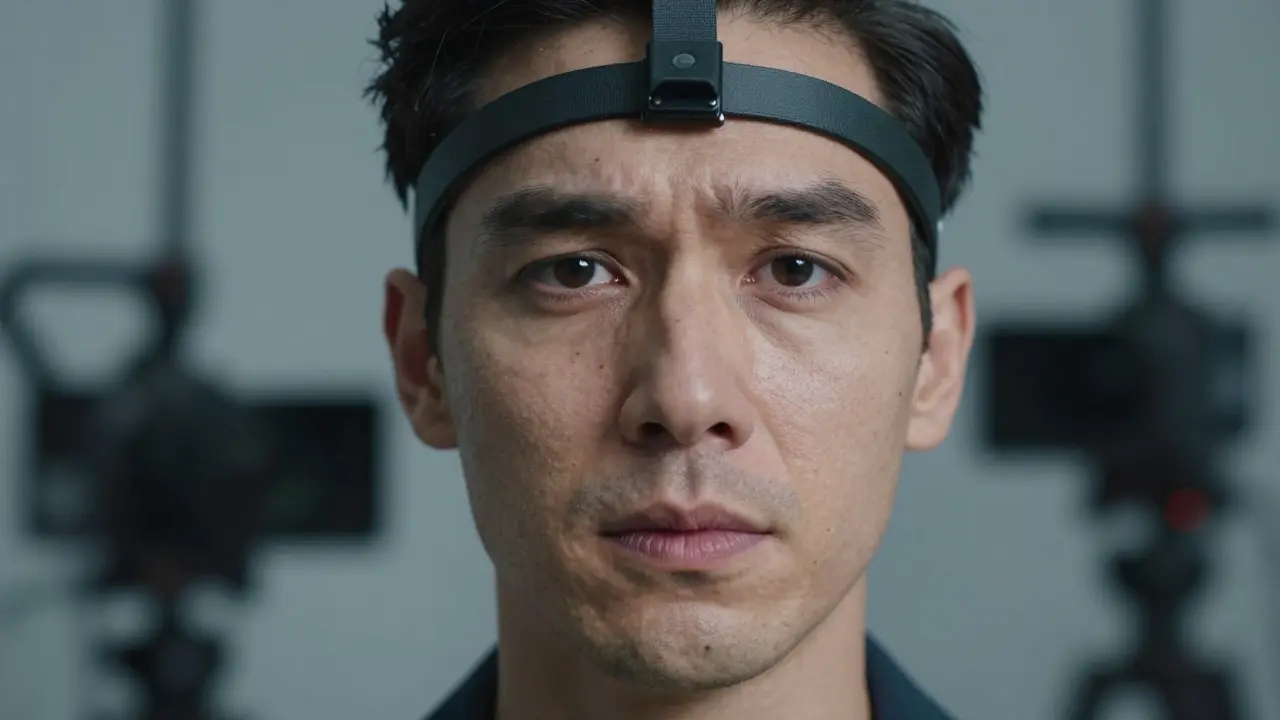
Ever noticed how some CGI characters feel genuinely human while others look like stiff mannequins? The difference usually comes down to one thing: performance fidelity. In modern filmmaking, facial capture technology has moved far beyond simple head tracking. It now captures the subtle micro-movements that define emotion-the slight twitch of a lip, the tension in an eyebrow, the way eyes soften during a sad scene. This shift has changed how directors work with digital actors and how audiences connect with them.
For years, animators had to manually keyframe every blink and jaw movement. That process was painstakingly slow and often missed the nuanced emotional beats of a live-action performance. Today, high-resolution cameras track hundreds of points on an actor’s face in real time. This data feeds directly into character rigs, allowing digital humans to mirror human expressions with startling accuracy. The result is a bridge between live-action acting and computer-generated imagery that feels seamless to viewers.
How Facial Capture Works in Modern Pipelines
At its core, facial capture relies on optical tracking systems. High-speed cameras monitor reflective markers or featureless skin surfaces using advanced algorithms. Unlike body motion capture suits, which use physical markers, modern facial rigs often rely on markerless computer vision or lightweight sensor arrays. These systems track over 50 distinct muscle groups simultaneously. When an actor smiles, the software doesn't just move the mouth; it calculates the contraction of the zygomaticus major and orbicularis oculi muscles.
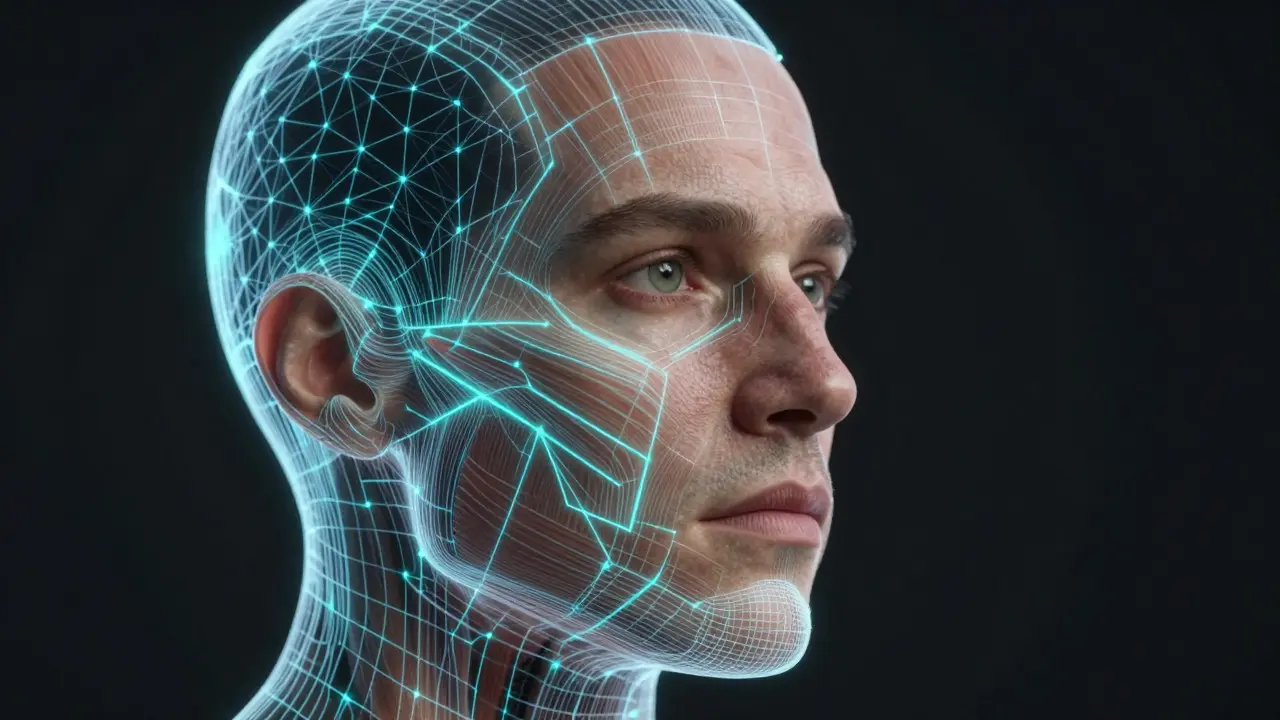
The raw data from these sensors creates a 3D mesh that maps onto a digital character model. This process involves solving complex inverse kinematics problems to ensure the virtual face moves naturally without distorting geometry. For example, when a character frowns, the forehead wrinkles must align correctly with the brow ridge. If this mapping is off, the character looks uncanny. Studios like ILM and Weta Digital have refined these pipelines over decades, ensuring that even extreme close-ups hold up under scrutiny.
- Optical Tracking: Uses multiple cameras to triangulate position. Best for high-budget films requiring maximum precision.
- Magnetic/Inertial Sensors: Lightweight headsets worn by actors. Useful for on-set flexibility but less accurate than optical systems.
- Markerless AI Tracking: Emerging technology that uses machine learning to detect facial landmarks from standard video. Reduces setup time significantly.
The Role of Performance Fidelity in Emotional Impact
Why does fidelity matter so much? Because humans are hardwired to detect deception in faces. We read emotions through micro-expressions that last only milliseconds. If a digital character misses a subtle hesitation before speaking, the audience subconsciously registers it as "wrong." This breaks immersion. High-fidelity capture preserves these fleeting moments, allowing the digital actor to convey complex emotional states that go beyond basic happiness or anger.
Consider the difference between a generic smile and a genuine Duchenne smile. A generic smile involves only the mouth corners pulling up. A Duchenne smile includes crinkling at the eyes. Facial capture systems designed for high fidelity distinguish between these two. This distinction allows directors to guide performances with the same nuance they would use with live actors. An actor can perform a lie with a tight-lipped smile while their eyes remain cold, and the digital character will replicate that disconnect perfectly.
| Feature | Traditional Keyframing | High-Fidelity Facial Capture |
|---|---|---|
| Setup Time | Long (hours per shot) | Short (minutes per take) |
| Emotional Nuance | Limited by animator interpretation | Direct transfer from actor performance |
| Revision Cost | High (re-animating required) | Low (re-capture or adjust weights) |
| Realism Level | Stylized or simplified | Photorealistic potential |
Challenges in Achieving Photorealism
Despite technological advances, achieving true photorealism remains difficult. The "uncanny valley" effect still looms large. Even minor errors in skin subsurface scattering or hair simulation can distract viewers. Facial capture provides the motion data, but rendering engines must handle the visual appearance equally well. Lighting interactions with wet lips, oily skin, and individual pores require sophisticated shading models.
Another challenge is the integration of captured performance with pre-existing character designs. Not all characters are human. For non-human species, like the Na’vi in Avatar or Gollum in The Lord of the Rings, animators must blend captured human performance with stylized features. This requires careful retiming and exaggeration. Too much fidelity makes a fantasy creature look human; too little loses the emotional connection. Finding this balance is an art form in itself.
Technical limitations also exist regarding resolution. While 4K and 8K cameras capture incredible detail, the underlying digital mesh must be dense enough to support it. A low-poly mesh cannot display fine details like eyelash movement or skin texture shifts. Therefore, studios invest heavily in high-density topology creation, ensuring the digital face has enough vertices to deform realistically.
Impact on Directorial Workflow
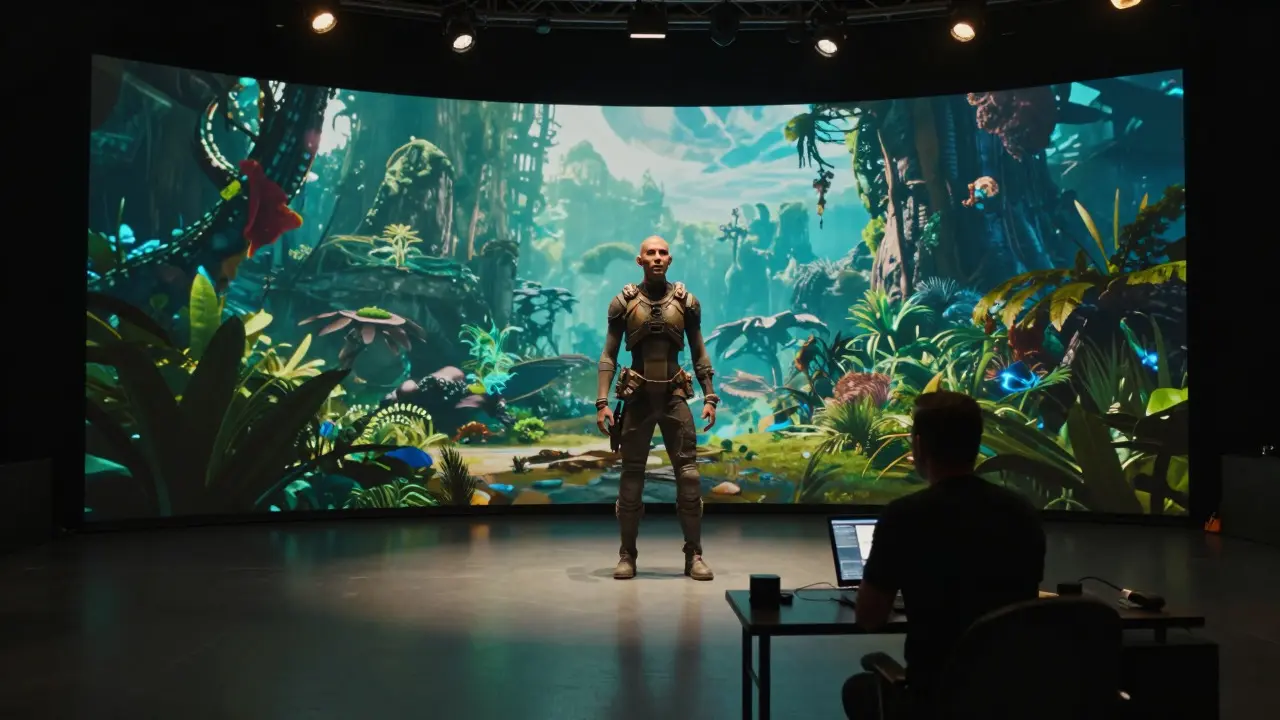
Facial capture has fundamentally altered how directors collaborate with VFX teams. In the past, directors might describe a desired emotion verbally, hoping the animation team would interpret it correctly. Now, they can watch the actor's performance immediately on a monitor. This instant feedback loop allows for iterative direction. A director can say, "Make the fear more subtle," and the actor can re-perform the take right away. The VFX supervisor can then approve the capture in real time, saving weeks of post-production revisions.
This workflow also benefits actors. They know their performance isn't being discarded or heavily altered later. This confidence often leads to more committed and nuanced acting. For instance, in Alice Through the Looking Glass, Helena Bonham Carter's performance as the Queen of Hearts was captured with such fidelity that her vocal inflections matched her facial movements precisely. This synchronization enhances believability, making the digital character feel like a real person rather than a puppet.
Future Trends: AI and Real-Time Rendering
Looking ahead, artificial intelligence is set to play a bigger role in facial capture. Machine learning models can now predict missing data points, filling in gaps where camera angles are obstructed. This means fewer cameras are needed, reducing setup complexity. Additionally, AI-driven denoising algorithms clean up noisy capture data automatically, improving the quality of the final animation without manual cleanup.
Real-time rendering engines like Unreal Engine are also changing the landscape. Previously, facial capture data was processed offline, taking days to render. Now, virtual production stages allow directors to see fully lit, textured characters in real time. This immediacy accelerates decision-making and reduces costs. As hardware power increases, the gap between pre-rendered and real-time visuals continues to shrink, offering new possibilities for interactive storytelling and virtual reality experiences.
What is the difference between facial capture and full-body motion capture?
Full-body motion capture tracks the entire skeleton and limb movements using suits with markers. Facial capture specifically focuses on the head and face, tracking muscle contractions and subtle expressions. Often, both systems are used together in a single session to capture a complete performance.
Can facial capture be used for animated cartoons?
Yes, though it's more common in photorealistic projects. For stylized animation, facial capture can provide a base layer of movement that animators then exaggerate or simplify. This hybrid approach speeds up production while maintaining natural timing and rhythm.
How much does facial capture cost for a film?
Costs vary widely depending on the scale of the project and the technology used. A small indie project using markerless software might spend thousands, while a major blockbuster using high-end optical rigs could spend millions. The cost includes hardware, software licenses, studio space, and labor for data processing.
Is facial capture replacing traditional animation?
Not entirely. Traditional keyframing is still essential for highly stylized characters, creatures with non-human anatomy, or scenes requiring impossible physics. However, for realistic human characters, facial capture has become the industry standard due to its efficiency and fidelity.
What software is commonly used for facial capture?
Popular tools include Autodesk Maya, Houdini, and specialized plugins like Faceware or IC Motion. Many studios also use proprietary internal tools developed in-house to integrate seamlessly with their specific rendering and pipeline requirements.




Comments(5)