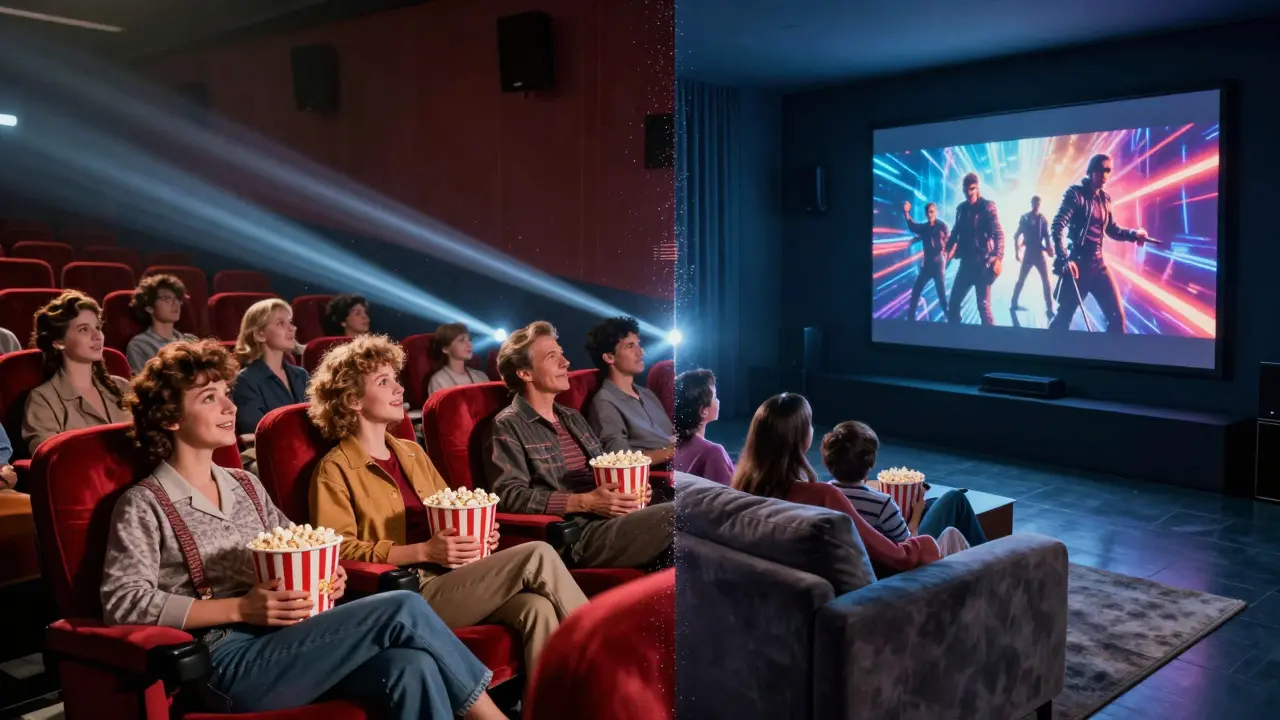
Remember when a movie night meant buying a ticket and smelling the popcorn? That era is fading fast. In 2026, the line between cinema and living room has blurred so much that many major releases now skip theaters entirely or arrive there for just a few days. This shift isn't just a trend; it's a structural change in how Hollywood makes money. For viewers, this means more content at home but less of that shared cultural moment. For studios, it’s a gamble on whether subscribers will pay for exclusivity or if audiences still crave the big screen experience.
The Death of the Traditional Window
For decades, the industry ran on a strict hierarchy. A film would play in theaters for 90 to 120 days before hitting DVD or digital rental. Then, months later, it landed on cable TV. Today, that timeline has collapsed. The concept of an "exclusive streaming window" refers to the period where a title is available only on one specific platform, often bypassing the theater step altogether or shortening it drastically.
This model emerged during the pandemic but stuck because it worked. Studios realized that waiting six months for a physical disc sale was no longer profitable. Instead, they started releasing films directly to their own streaming services. Take Netflix as an example. The company has spent billions producing original films that never see a theatrical run unless they win awards. These titles rely entirely on subscriber engagement metrics rather than box office receipts. It’s a different beast, and it’s changing what gets made.
Why Studios Are Choosing Stream-First Releases
Money talks, and right now, streaming pays faster. Theatrical distribution is expensive. You have to print copies, market heavily in local markets, and deal with complex revenue splits with theater chains. When a studio puts a film directly on its streaming platform, the cost per view drops significantly. There are no physical prints, and marketing can be targeted digitally with precision.
There’s also the risk factor. Theaters are unpredictable. A bad review or a strong competitor opening the same weekend can tank a release. Streaming offers a safety net. If a movie doesn’t blow up, it just sits in the library, generating modest views over time. If it does blow up, the platform gains buzz and potentially new subscribers. It’s a lower-risk, higher-volume strategy that appeals to executives who answer to quarterly earnings reports.
The Hybrid Model: Short Theatrical Runs
Not every film skips the big screen completely. Many major players use a hybrid approach. They give a film a limited theatrical run-usually two to four weeks-to satisfy award eligibility rules and create hype. Then, they move it to streaming quickly. This is common with prestige dramas from studios like A24 or Searchlight Pictures.
This strategy serves two purposes. First, it keeps the film eligible for major awards like the Oscars, which often require a certain number of theatrical screening days. Second, it creates a sense of event. People talk about seeing it in theaters, generating social media buzz that drives subscriptions when it lands online. It’s a clever way to get the best of both worlds: the cultural cachet of cinema and the financial stability of streaming.

Impact on Film Quality and Genre
You might wonder if skipping theaters changes the movies themselves. It absolutely does. Films designed for streaming often lean into genres that perform well at home. Think horror, thriller, or intimate character studies. These genres don’t need massive sound systems or IMAX screens to work. They thrive on close-ups, dialogue, and suspense.
On the other hand, big spectacle films-think superhero blockbusters or epic fantasy sagas-are still almost exclusively theatrical. Why? Because audiences want to share the experience. Watching a giant robot fight on a phone screen lacks impact. So, we’re seeing a bifurcation. High-concept, visual-heavy films stay in theaters, while mid-budget narratives go straight to stream. This means the middle ground is disappearing. There are fewer films that feel like traditional summer blockbusters but aren’t tentpole events. They’re either huge or niche.
What This Means for Viewers
If you’re a moviegoer, the landscape looks different now. You have more options, but you also have to decide where to spend your money. Do you subscribe to three different platforms to catch all the exclusives? Or do you wait for films to rotate through libraries?
- Cost Efficiency: Watching at home is cheaper, but subscription fatigue is real. Keeping up with every exclusive window can cost more than occasional theater tickets.
- Convenience: No traffic, no parking, no loud kids. You control the pause button. For busy schedules, this is a major plus.
- Cultural Moments: Shared experiences are rarer. When a hit film goes direct-to-streaming, it’s harder for it to become a watercooler topic because everyone sees it at different times.
The Role of Awards and Prestige
Let’s not ignore the Oscar factor. The Academy Motion Picture Arts and Sciences still requires theatrical runs for most categories. This rule acts as a brake on the full migration to streaming. Studios know that winning an Oscar boosts a film’s profile and justifies its existence in the catalog. So, even if a film is destined for a streaming service, it often gets a token theatrical release in key cities like Los Angeles and New York. It’s a strategic move to protect brand value and award chances.
However, some independent filmmakers are pushing back. They argue that the theatrical requirement is outdated. They want freedom to release whenever they choose, regardless of location. This tension between tradition and innovation defines the current debate in Hollywood.
Future Trends: What’s Next?
Looking ahead, expect the windows to get even shorter. We’ve already seen cases where films drop on streaming just days after their limited theatrical debut. Some analysts predict that by 2030, the standard theatrical window for non-blockbuster films could shrink to under two weeks. Meanwhile, streaming platforms are investing in exclusive hardware or features to justify their prices. Imagine a future where certain films offer enhanced audio or interactive elements only available on specific streaming devices. That level of exclusivity could keep audiences locked in.
Also, don’t count out the rise of ad-supported tiers. More platforms are offering cheaper plans with ads. This allows them to experiment with releasing older films or lower-budget titles to broader audiences without requiring a premium subscription. It’s a way to test the waters for future exclusives.
| Strategy | Theatrical Duration | Primary Revenue Source | Best For | Risk Level |
|---|---|---|---|---|
| Traditional Theatrical | 90+ Days | Box Office Tickets | Blockbusters, Spectacles | High |
| Hybrid (Short Run) | 2-4 Weeks | Streaming Subscriptions + Box Office | Prestige Dramas, Award Contenders | Medium |
| Direct-to-Streaming | None | Subscriber Retention/Acquisition | Niche Genres, Mid-Budget Films | Low |
Frequently Asked Questions
Do all movies have to go to theaters before streaming?
No. Since the pandemic, many films release directly to streaming platforms. However, if a studio wants the film to be eligible for major awards like the Oscars, it usually needs a limited theatrical run in select cities.
Why do some movies skip theaters entirely?
Studios often skip theaters to save on distribution costs and reduce financial risk. Direct-to-streaming releases allow for quicker monetization through subscriptions and avoid the unpredictability of box office performance.
Is the theatrical experience dying out?
Not entirely, but it is changing. Big spectacle films still dominate theaters, while smaller films increasingly go to streaming. Theaters are becoming more selective, focusing on high-impact visual experiences rather than every single release.
How long is a typical exclusive streaming window in 2026?
There is no fixed standard. Some films remain exclusive for 30 days, others for 90 days, and some indefinitely until they rotate out. It depends on the platform’s strategy and the film’s genre.
Does watching a movie at home affect its success?
Success is measured differently. At home, success is defined by viewer retention, completion rates, and subscriber growth. In theaters, it’s defined by ticket sales. Both models have their own metrics for determining if a film was a hit.



Comments(10)