Submitting an Errors and Omissions (E&O) application for a film project feels like filling out a tax return if you’re an accountant. You know exactly what they want, but getting it right the first time saves weeks of back-and-forth. Most producers think E&O is just about copyright clearance, but insurers look much deeper into your production’s operational hygiene. If your paperwork is messy, your premium goes up or your policy gets rejected. Here is what underwriters actually scrutinize when they review your file.
The Core of the Application: Project Details
Before asking about legal risks, insurers need to understand the scale and nature of the work. They don’t just want the title; they want the context. A short documentary has different risk profiles than a feature-length narrative with international distribution rights.
- Title and Format: Is it a feature, series, documentary, or commercial? This determines the base rate structure.
- Budget Breakdown: Underwriters look at the total budget versus the insured limit. If you’re insuring a $5 million film for only $1 million in coverage, they might question why the gap exists.
- Distribution Territory: Domestic only? Global? Streaming platforms often require specific wording in the policy that affects pricing.
- Completion Status: Is the picture locked? Has sound mixing been completed? Policies issued after picture lock are generally cheaper because the creative risk is lower.
Be precise here. Vague answers like “budget is approximately $2M” lead to follow-up emails. Provide the final agreed-upon budget sheet from your production accountants.
Creative Clearance: The Biggest Risk Factor
This is where most applications fail. Errors and Omissions Insurance is a type of professional liability coverage that protects against claims of negligence, breach of contract, or infringement arising from the content itself. For film, this usually means intellectual property disputes. Insurers will ask for proof that you own or have licensed every element in the film.
| Element | Required Documentation | Common Pitfall |
|---|---|---|
| Music | Synchronization licenses and Master Use Licenses | Assuming fair use applies without legal opinion |
| Footage | Release forms for talent and locations | Missing releases for background extras who became recognizable |
| Script Rights | Written agreement with writer or studio option | Verbal agreements or expired options |
| Third-Party Assets | Licenses for logos, brands, or artwork visible on screen | Forgetting trademark issues for props |
Pay special attention to music. It is the most frequent source of E&O claims. If you used a track from a library, provide the invoice and the license certificate. If you commissioned original score, ensure the composer signed a full buyout or clear sync license. Underwriters check these documents line by line.
Legal History and Prior Claims
Insurers assume you might have had issues before. Even if no lawsuit was filed, they want to know about any formal complaints, cease-and-desist letters, or arbitration notices related to previous projects or the current one.
- Disclosure of Prior Losses: List any past E&O claims, even if settled quietly. Hiding them voids the policy later.
- Pending Litigation: If there is an active dispute over a script or footage, disclose it. Underwriters may add exclusions or increase deductibles.
- Regulatory Fines: Did a previous production face fines from guilds (like SAG-AFTRA or DGA)? These signal poor compliance practices.
Transparency builds trust. An insurer who sees you disclosed a minor issue and resolved it professionally is more likely to offer competitive rates than one who discovers a hidden problem during the claim phase.
Production Practices and Compliance
How you run the set matters as much as what you film. Insurers assess whether your production follows industry standards to minimize the chance of errors occurring in the first place.
- Insurance Certificate of Insurance (COI): Do you have General Liability and Workers’ Comp? E&O doesn’t cover physical injury, but lacking other policies suggests a disorganized production office.
- Union/Guild Compliance: Are you shooting under union rules? Non-union shoots carry higher risk of labor disputes, which can bleed into E&O territory if contracts are breached.
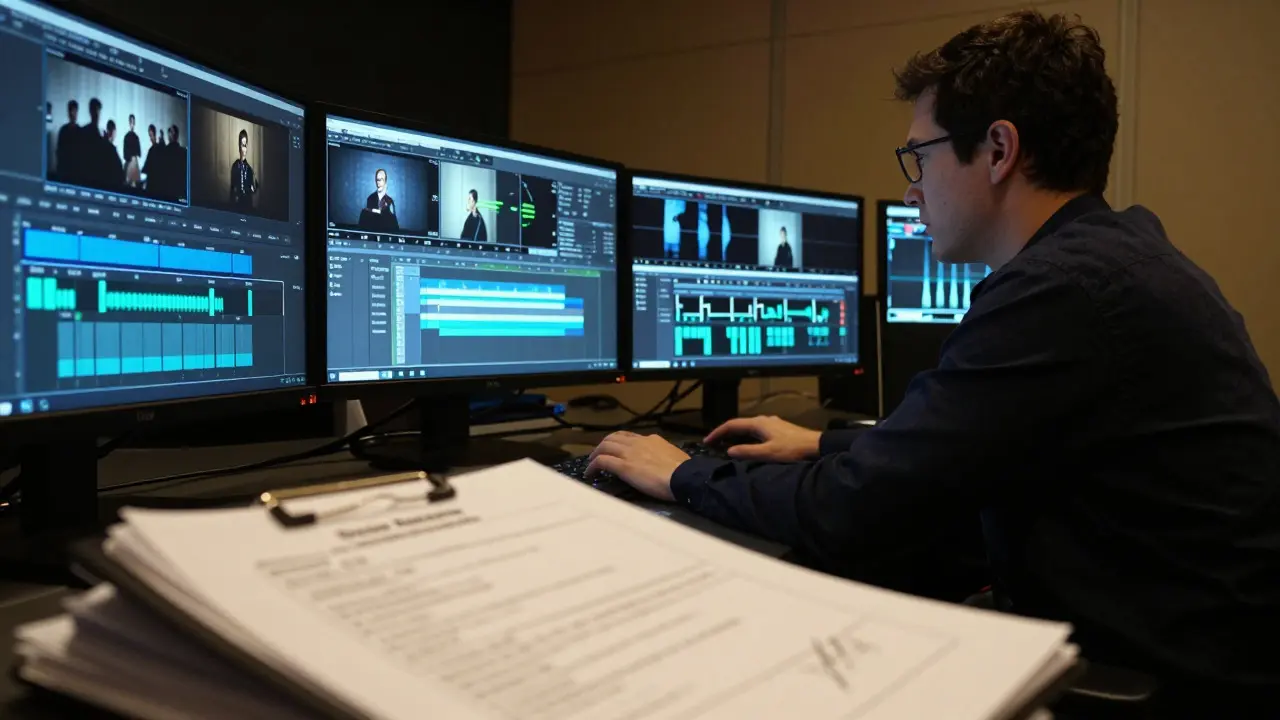
- Post-Production Workflow: Who handles color grading, sound mixing, and editing? Using uncredited freelancers without written contracts is a red flag.
- Subcontractor Agreements: Ensure all vendors (camera rental, lighting, transport) have signed indemnification clauses protecting the producer.
A clean production audit trail shows the insurer that you manage risk proactively. This can lower your deductible percentage.
Policy Limits and Deductibles
You aren’t just buying coverage; you’re negotiating terms. The limit is the maximum amount the insurer pays per claim or in aggregate. The deductible is what you pay out of pocket before coverage kicks in.
Typical limits for independent films range from $1 million to $5 million, depending on distribution reach. A local theatrical release might need $1 million, while a global streaming deal could require $5 million or more. Deductibles usually sit between 5% and 10% of the limit. If you have a strong track record with no prior claims, push for a 5% deductible. If you’re a new producer, expect 10% or higher.
Ask specifically about "per occurrence" vs. "aggregate" limits. Per occurrence covers each separate claim individually. Aggregate is the total pool for all claims during the policy period. For high-risk productions, clarify how multiple small claims affect your remaining coverage.

Common Mistakes That Delay Binding
Most delays happen because producers send incomplete files. Avoid these traps:
- Inconsistent Dates: The start date on your application must match your schedule of production. Mismatches cause underwriters to re-verify timelines.
- Missing Signatures: Every release form and license needs a wet ink or verified digital signature. Unsigned documents are treated as non-existent.
- Vague Descriptions: Don’t say “various actors.” List principal cast and specify if extras were released via group waiver.
- Ignoring Exclusions: Read the policy draft. Some E&O policies exclude known defects. If you already know a logo appears in frame without permission, disclose it now or it becomes an exclusion later.
Next Steps for Producers
Start your E&O application as soon as your script is finalized and your main cast is attached. Don’t wait until post-production. The earlier you engage brokers, the more leverage you have to negotiate terms. Gather your clearance binder early. Keep a dedicated folder for every license, release, and contract. When you submit the application, include a brief cover letter summarizing your production’s compliance status. This human touch helps underwriters see you as a partner, not just a risk.
What is the difference between E&O and General Liability insurance?
General Liability covers physical injuries and property damage (e.g., someone falls off a ladder). E&O covers financial losses due to mistakes in the content itself, such as copyright infringement or failing to deliver promised services. You need both for a complete risk profile.
How long does it take to bind an E&O policy?
With a complete file, binding typically takes 5 to 10 business days. Incomplete files can extend this to 3-4 weeks. Submitting all clearance documents upfront is the fastest way to secure coverage.
Do I need E&O insurance for a short film?
If you plan to distribute the short film commercially or enter it into festivals with screening fees, yes. Many festivals require proof of E&O coverage. If it’s purely for personal use, it may not be necessary, but it protects you from future disputes.
What happens if I find a clearance issue after binding the policy?
Notify your broker immediately. If the issue is minor, they may endorse the policy. If it’s significant, the insurer might add an exclusion. Hiding it risks having the claim denied later for misrepresentation.
Can I switch E&O providers mid-production?
Yes, but it’s complex. You’ll need to cancel the old policy and bind a new one, potentially paying prorated premiums. Make sure the new policy’s effective date overlaps with the old one to avoid gaps in coverage.