
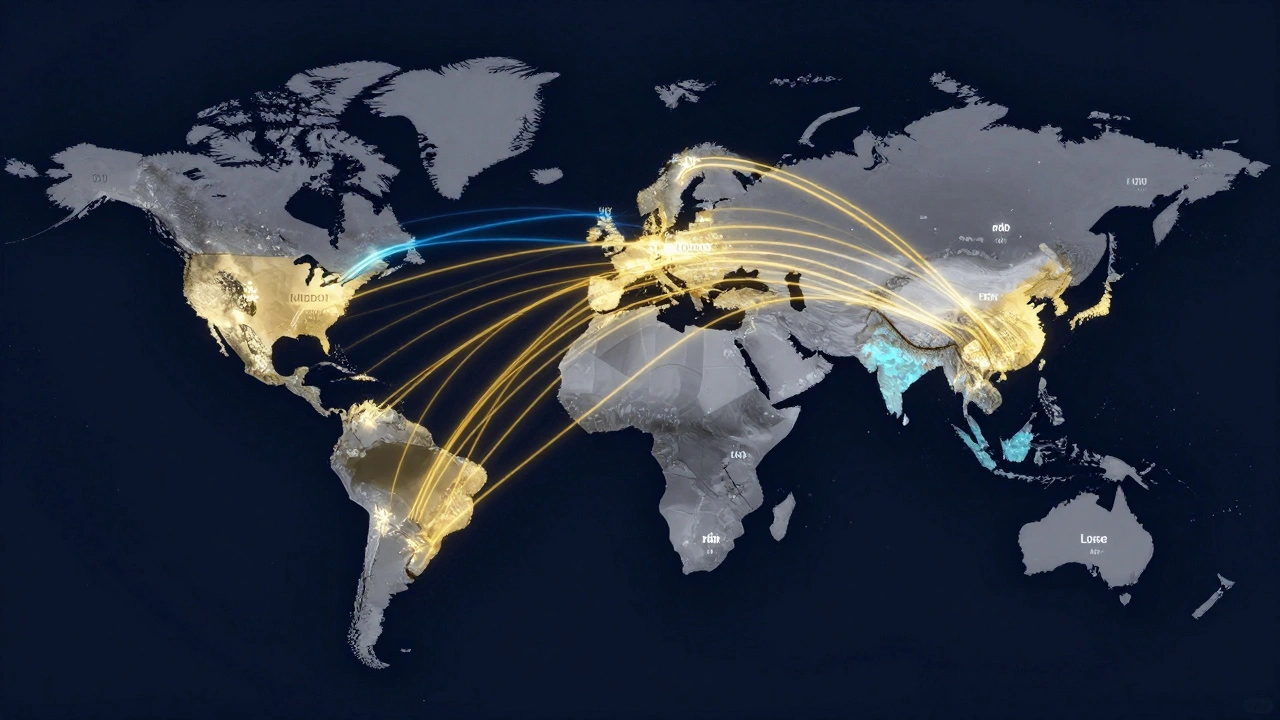
For decades, the movie business operated on a simple assumption: if you made it big in North America, you made it big everywhere. That logic has completely collapsed. Today, the global cinema landscape is split down the middle, with International Box Office being the segment of film revenue generated outside North America (specifically excluding the US and Canada) often dwarfing local earnings for major releases. Understanding how these numbers break down by genre isn't just trivia for film buffs; it's the blueprint for how studios greenlight projects, allocate marketing budgets, and decide which stories get told.
The shift wasn't overnight. It was driven by rising disposable incomes in Asia, Europe, and Latin America, combined with the universal appeal of visual spectacle over dialogue-heavy scripts. When you look at the raw data from recent years, a clear pattern emerges: certain genres thrive globally because they transcend language barriers, while others struggle to find an audience beyond their cultural origin. Let’s look at the actual splits and what they mean for the industry.
The Global Powerhouses: Action and Adventure
If there is one genre that defines the modern global market, it is Action Cinema being a film genre characterized by physical stunts, chases, fights, and high-energy sequences designed to excite audiences. These films are engineered for universality. A car chase or an explosion looks the same in Beijing as it does in Boston. Because the narrative relies less on complex dialogue and more on visual storytelling, localization costs are lower, and audience comprehension is higher.
Historically, action and adventure blockbusters have seen international revenues account for 60% to 70% of their total gross. For massive franchises like the Marvel Cinematic Universe or *Fast & Furious*, this split often tips even further, with international markets contributing up to 75% of the final take. The reason is straightforward: these films offer a high-adrenaline experience that doesn’t require cultural context to enjoy. Studios know this, which is why we see increasingly generic, globe-trotting plots that avoid specific political or social nuances that might alienate foreign viewers.
- Visual Dominance: Action scenes rely on special effects and choreography, which translate easily across cultures.
- Franchise Loyalty: Established brands reduce risk for international distributors who already have fan bases.
- Marketing Efficiency: Posters featuring stars and explosions work universally without needing significant adaptation.
The Cultural Anchors: Comedy and Drama
In stark contrast to action, Comedy Films being movies designed primarily to elicit laughter through humor, satire, or situational irony face a steep wall when crossing borders. Humor is deeply rooted in culture, language, timing, and social norms. A joke that lands perfectly in New York might fall flat-or worse, offend-in Tokyo or Mumbai. As a result, comedies typically see a much smaller international share, often hovering between 30% and 40% of their total box office.
Drama follows a similar but slightly less pronounced trend. While emotional stories can be universal, the specific cultural contexts of family dynamics, legal systems, or historical events in American dramas don't always resonate with international audiences. Unless the drama is part of a recognized franchise or features internationally known actors, its reach remains largely domestic. This is why mid-budget dramas are increasingly rare in theaters; they simply cannot justify the cost of international distribution and dubbing.
| Genre | Domestic Share (%) | International Share (%) | Primary Driver |
|---|---|---|---|
| Action/Adventure | 30-40% | 60-70% | Visual Spectacle |
| Sci-Fi/Fantasy | 35-45% | 55-65% | World-Building |
| Horror | 70-80% | 20-30% | Cultural Fear Tropes |
| Comedy | 60-70% | 30-40% | Language/Humor Nuance |
| Drama | 55-65% | 35-45% | Cultural Context |
The Visual Universals: Sci-Fi and Fantasy
Science Fiction being a speculative fiction genre exploring futuristic concepts, advanced technology, space exploration, and parallel worlds and fantasy occupy a sweet spot in the global market. Like action, they rely heavily on world-building and visual effects, which travel well. However, they also benefit from strong mythological underpinnings that many cultures share. Stories about heroes, monsters, and magical quests have roots in folklore worldwide, making them easier to adapt.
Films in this category usually achieve a balanced split, with international markets contributing around 55% to 65% of the total gross. The key here is scale. Big-budget sci-fi epics, such as those produced by Lucasfilm or Warner Bros., are marketed as event cinema. Audiences in China, India, and South Korea view these films as premium experiences worth seeing on the biggest screens available. The immersive nature of IMAX and Dolby Cinema formats boosts ticket prices in these regions, further inflating the international share.

The Local Favorites: Horror and Romance
Horror Movies being films intended to frighten, scare, or disgust audiences through suspense, terror, and shock present a fascinating anomaly. While American horror films dominate domestically, they rarely crack the top 10 globally unless they are part of a established franchise like *Saw* or *The Conjuring*. Why? Because fear is culturally specific. What terrifies an American audience-such as home invasion or supernatural hauntings-might not resonate with audiences in countries where different societal fears prevail.
This has led to a boom in local horror productions. Countries like South Korea, Thailand, and Japan have developed robust domestic horror industries that cater to local sensibilities. These films often stay local, generating minimal international revenue. Consequently, the average horror film sees a domestic-to-international split of roughly 75% to 25%. The same applies to romance, though to a lesser extent. Romantic narratives are universal, but the execution-dating customs, gender roles, and social expectations-varies wildly, limiting cross-border appeal for non-franchise titles.
The Impact of Streaming on Box Office Splits
We cannot discuss box office splits in 2026 without addressing the elephant in the room: streaming. Platforms like Netflix, Amazon Prime Video, and Disney+ have changed how audiences consume content. For genres that traditionally struggled internationally, like comedy and drama, streaming has become a lifeline. Instead of failing in foreign theaters, these films find long-tail audiences online.
This shift has altered studio strategy. We are seeing fewer mid-budget comedies released exclusively in theaters. Instead, studios are focusing theatrical releases on genres that benefit from the communal experience-action, horror, and event-driven sci-fi. Theatrical exhibition is now reserved for spectacles, while nuanced storytelling moves to digital platforms. This bifurcation means that future box office splits will likely become even more skewed toward visually dominant genres, as the other options migrate away from the traditional cinema model.
Regional Variations: Beyond the Average
Averages can be misleading. The "international" market is not a monolith. China, for instance, is a unique beast. With strict quotas on foreign films and a preference for local productions, Chinese audiences drive huge numbers for action and sci-fi but ignore most Western dramas and comedies. Conversely, European markets often embrace arthouse dramas and comedies more readily than Asian markets do.
India represents another distinct segment. Bollywood dominates locally, but Hollywood action and sci-fi films perform exceptionally well there due to shared cinematic traditions of spectacle and emotion. Latin America shows a strong affinity for animated features and family-friendly adventures, often outperforming darker genres. Understanding these regional nuances is critical for distributors who want to maximize returns. A one-size-fits-all release strategy no longer works; successful studios tailor their marketing and release dates to each region's preferences.
What This Means for Filmmakers and Investors
For independent filmmakers, the data suggests a hard truth: if you want global success, your film needs to speak a visual language. Dialogue-heavy scripts will limit your earning potential to domestic markets. This doesn't mean you should abandon character-driven stories, but it does mean understanding the financial realities of distribution.
For investors, the implication is clear. Betting on high-concept, visually spectacular projects offers a higher ceiling for global returns. However, these films come with higher production risks and costs. Mid-budget genres like comedy and drama may offer safer, smaller returns domestically, but they lack the upside of international expansion. The key is aligning the project's creative vision with its commercial distribution strategy from day one.
Why do action movies earn more internationally than comedies?
Action movies rely on visual storytelling, such as stunts and special effects, which do not depend on language or cultural nuance. Comedies, however, rely on wordplay, timing, and cultural references that often fail to translate across borders, limiting their international appeal.
Which country contributes the most to international box office revenue?
China is consistently the largest contributor to international box office revenue, followed by the United Kingdom, Japan, and South Korea. China's massive population and growing middle class make it a critical market for global blockbusters.
How has streaming affected the box office performance of dramas?
Streaming has reduced the theatrical window for dramas, as these films struggle to find large international audiences in cinemas. Instead, they find sustained viewership on platforms like Netflix and Amazon Prime, shifting revenue models from ticket sales to subscription views.
Do horror movies perform well globally?
Generally, no. Horror films are highly culturally dependent, meaning fears that resonate in one country may not in another. While franchise horrors like *The Conjuring* succeed globally, most horror films remain domestic successes with limited international earnings.
What percentage of a blockbuster's budget comes from international sales?
For major global blockbusters, international sales often cover 60% to 75% of the total box office gross. This makes international pre-sales and distribution deals crucial for recouping high production and marketing costs.