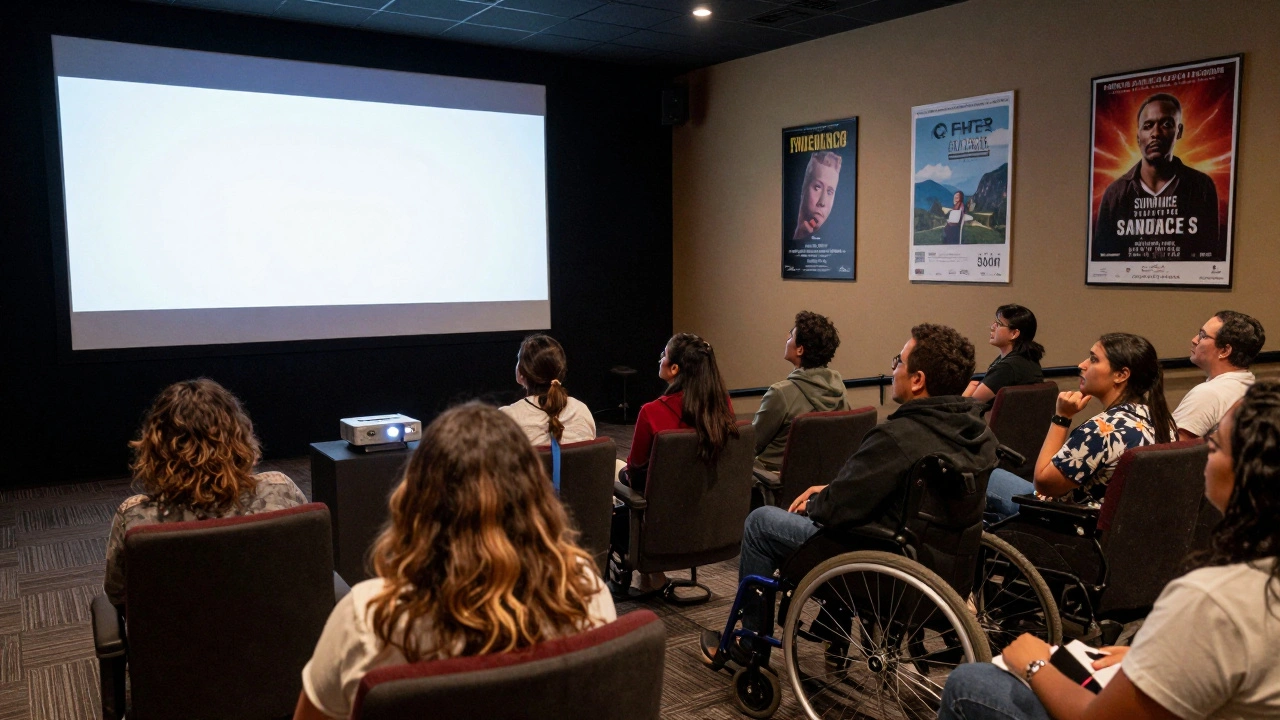
For years, film festivals have been seen as gatekeepers of cinematic culture-places where groundbreaking stories find their audience and new voices break through. But behind the red carpets and standing ovations, many festivals struggled with who got to tell those stories. In 2026, that’s changing. Diversity and inclusion initiatives at film festivals aren’t just buzzwords anymore. They’re structural changes, funded programs, and measurable goals that are reshaping what films get made, who gets to screen them, and who gets to decide.
Why It Matters Now More Than Ever
In 2020, the Oscar nominations sparked global outrage when not a single person of color was nominated in any acting category. That moment didn’t disappear. It fueled real pressure on festivals to do better. Sundance, Cannes, Toronto, and even smaller regional fests like Slamdance and the Santa Barbara International Film Festival started publishing annual inclusion reports. These aren’t PR stunts-they’re accountability tools. In 2025, Sundance revealed that 52% of its U.S. dramatic competition films were directed by women, and 41% by filmmakers of color. That’s up from 27% and 19% just five years earlier.It’s not just about gender or race. Inclusion now covers disability, LGBTQ+ identity, socioeconomic background, and geographic representation. A filmmaker from rural Appalachia has just as much right to be seen as someone from Los Angeles. Festivals are actively seeking stories from places they once ignored.
How Festivals Are Changing Their Selection Process
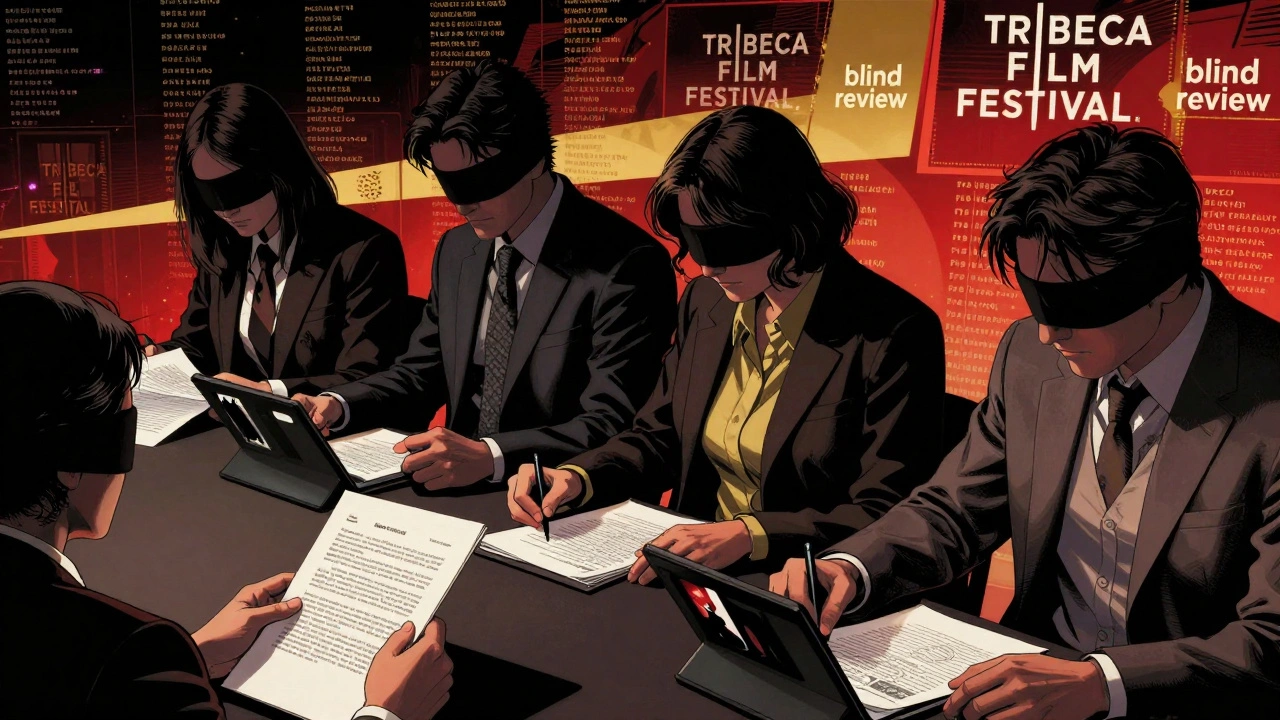
The biggest shift? Moving away from who you know to what you’ve made. Many festivals used to rely on personal connections, film school alumni networks, or agency referrals. That system naturally favored people with access-usually white, male, and financially supported.Now, festivals are using blind submission reviews. At the Tribeca Film Festival, jurors no longer see names, bios, or production companies until after the initial scoring. They evaluate only the script, the first 10 minutes of the film, and a short statement from the filmmaker about their intent. This simple change led to a 37% increase in first-time directors being selected in 2024.
Some festivals now require diversity statements as part of submissions. Not to judge, but to understand context. A filmmaker from a remote Indigenous community in Canada might not have a film school resume, but their story might be the only one of its kind. That context helps jurors see the value beyond traditional credentials.
Financial Support That Actually Helps
Talent alone doesn’t get you to the screen. Production costs, travel, insurance, editing software-these aren’t optional. They’re barriers.That’s why funding programs are now central to inclusion efforts. The Berlinale’s Talent Campus is a global initiative that provides grants, mentorship, and production support to emerging filmmakers from underrepresented regions. In 2025, they funded 87 projects from 42 countries, including 32 from nations with no prior film industry infrastructure.
The Sundance Institute’s Indigenous Storytelling Lab gives Native and First Nations creators up to $50,000 in production funding, plus access to editors, sound designers, and distribution consultants. Since 2018, 92% of projects from this program have been accepted into major festivals.
Even smaller fests are stepping up. The Durham Bulls International Film Festival in North Carolina launched a $10,000 grant for Southern-based BIPOC filmmakers in 2023. Last year, five of those films were picked up by streaming platforms.
Screening Isn’t Enough-Access Matters Too
You can have the most diverse lineup in the world, but if only wealthy urban audiences can see it, you’ve missed the point.That’s why festivals are expanding access beyond theaters. The Locarno Film Festival in Switzerland now partners with community centers, libraries, and prisons to screen films for free. They’ve installed closed captioning and audio descriptions on every film, meeting WCAG 2.2 accessibility standards. In 2025, over 12,000 people attended screenings outside the main venue-many for the first time.
Online access is also being rethought. Instead of just putting films on a paywall, festivals like the True/False Film Fest now offer free, password-protected streams to educators, students, and nonprofit organizations. They track who’s watching and use that data to build outreach programs in underserved schools.
Who’s Leading the Way?
Some festivals are clearly ahead. Here’s what’s working:| Festival | Key Initiative | Impact |
|---|---|---|
| Sundance | Blind selection + financial grants | 52% women directors, 41% filmmakers of color |
| Berlinale | Talent Campus global funding | 87 projects from 42 countries |
| Toronto International Film Festival | Free community screenings + accessibility upgrades | 35% increase in non-urban attendees |
| Slamdance | Zero submission fees for marginalized creators | 68% of selected films from first-time directors |
| Santa Barbara | Local high school film mentorship program | 12 student films screened annually |
What’s clear? The most successful festivals don’t just add diversity-they redesign their entire system. They remove fees, change jury structures, invest in infrastructure, and measure outcomes. It’s not about checking boxes. It’s about building pipelines.
What’s Still Missing?
Progress is real-but incomplete. Many festivals still lack long-term commitments. A grant here, a panel there, a diversity statement on the website-it’s not enough. True inclusion requires sustained funding, staff training, and leadership change.There’s also a gap in representation behind the scenes. While more women and people of color are directing films, they’re still underrepresented in programming committees, board rooms, and executive roles. In 2025, only 28% of major festival directors were women. That’s progress, but not parity.
And what about disability? Most festivals still treat accessibility as an afterthought. Closed captions are common, but audio descriptions and tactile tours for blind audiences are rare. Sign language interpreters are still not standard at Q&As.
What Can You Do?
If you’re a filmmaker: Apply everywhere. Don’t wait for an invitation. Use grant programs. Network with community orgs. Submit blind if you can.If you’re an audience member: Attend films outside your usual genre. Support festivals that publish inclusion data. Ask: Who’s missing from this lineup? Who’s not in the room?
If you’re a festival organizer: Stop relying on referrals. Remove submission fees. Hire diverse programmers. Fund local creators. Measure what matters.
The future of film isn’t just about better stories. It’s about who gets to tell them-and who gets to see them. Festivals are no longer just cultural events. They’re social experiments in equity. And right now, they’re the most powerful platform we have to change the narrative.
Do film festivals really make a difference in diversifying the film industry?
Yes. Festivals act as launchpads. A film that premieres at Sundance or Toronto often gets picked up by distributors, streaming services, or studios. When those platforms see diverse films succeed at festivals, they’re more likely to greenlight similar projects. In 2024, 63% of films that won awards at major festivals later received theatrical or streaming distribution-compared to just 21% of films that didn’t screen at festivals.
Are diversity initiatives just performative, or are they backed by real funding?
Some are, and some aren’t. But in 2026, the most credible festivals have dedicated budgets. Sundance’s Artist Programs spent $12.8 million in 2025 on grants, mentorship, and production support. Berlinale’s Talent Campus had a $5.1 million fund. These aren’t token gestures-they’re institutional investments. The difference? Real funding means real change. You can’t fix systemic exclusion with a tweet.
Why don’t more festivals eliminate submission fees?
Costs. Running a festival is expensive. But many festivals are realizing that fees exclude the very people they want to include. Slamdance eliminated fees for marginalized creators in 2022 and saw a 72% increase in submissions from rural and low-income filmmakers. The cost of losing those voices is higher than the cost of waiving fees. More festivals are now using sponsorships and grants to cover submission costs instead of passing them to filmmakers.
How can I tell if a festival is genuinely inclusive?
Look for three things: public data (do they publish annual inclusion reports?), funding transparency (do they list grant recipients?), and structural changes (do they use blind reviews or remove fees?). If a festival only talks about diversity on social media without showing how they’ve changed their process, it’s likely performative. Real change leaves a paper trail.
Are international festivals doing better than U.S. ones?
It’s mixed. European festivals like Rotterdam and Locarno have long prioritized global representation, often funding films from Africa, Southeast Asia, and Latin America. But U.S. festivals are catching up fast-especially in funding for BIPOC and Indigenous creators. The key difference? U.S. festivals are now measuring outcomes. Europe still focuses on cultural exchange; the U.S. is shifting toward equity. Both have room to grow, but the U.S. model is becoming more results-driven.
What Comes Next?
The next frontier? Hiring. Festivals are starting to hire diverse staff-not just for outreach, but for programming and leadership. The Gotham Awards appointed their first Black executive director in 2024. The Toronto International Film Festival now requires at least two women of color on its programming committee. These aren’t symbolic moves. They’re structural shifts.Soon, we may see festivals that don’t just showcase diverse films-but are themselves led by people who’ve lived the stories they tell. That’s the real goal. Not just inclusion on screen. Inclusion in the room.





Comments(5)